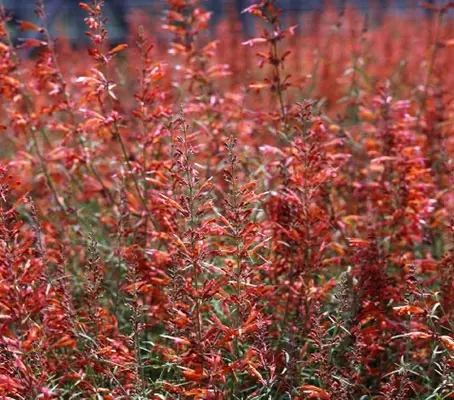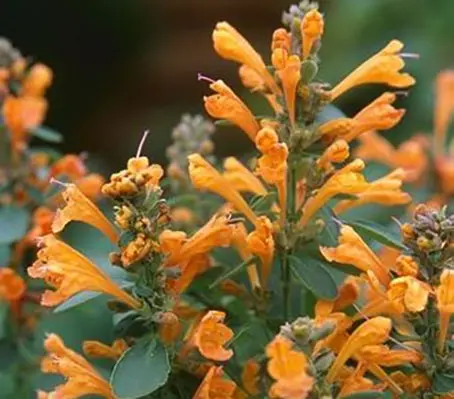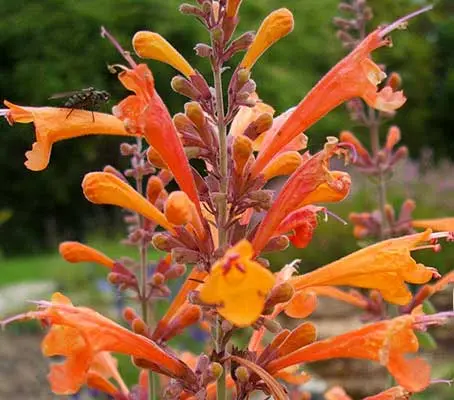
It is only within the past decade that a number of new noteworthy members of the genus Agastache have emerged from botanical obscurity. ‘Apricot Sprite’ is an outstanding perennial that provides a sizzling blast of tubular, peachy-apricot flowers. Compact and quick growing, they flower in the first year from seed.
Originally bred by and developed in Japan, Agastache ‘Golden Jubilee’ was named to honour Queen Elizabeth II’s 50th year of rule, celebrating the Golden Jubilee in 2002. This bright gold-chartreuse beauty has one of the most remarkable leaf colour of any plant. Offering late season punctuation the flowers are a powerhouse source of nectar and pollen for bees, butterflies and other beneficial insects.
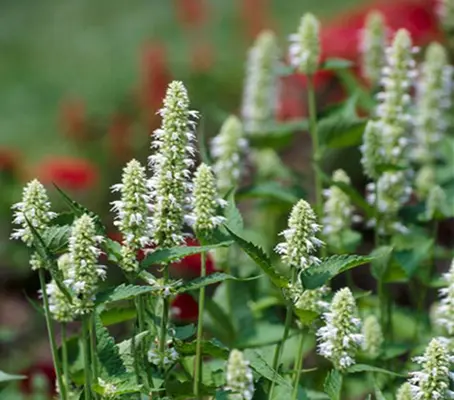
Agastache ‘Liquorice White’ has tall spikes of white lipped flowers and like all Agastache produces copious amounts of nectar for bees and butterflies to feast upon. Flowering late in the season, it is a boon for building up bees’ honey reserves before winter and will produce a honey surplus where drifts are grown.
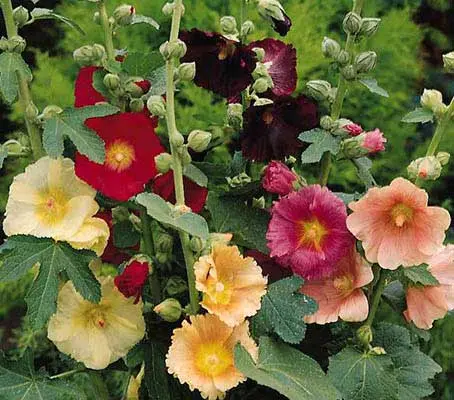
Hollyhocks are almost as easy to grow as sunflowers and would probably be grown as often if gardeners were aware of their good nature. Alcea ficifolia ‘Happy Lights’ is a beautiful strain, reliably perennial they produce many upright stems, resulting in a bushy form.
This gorgeous award winning Hollyhock has the distinction of being the shortest in the Alcea rosea family. ‘Queeny’ is a dwarf Hollyhock that reaches only 60cm in height with fully double blooms. Unlike the tall varieties, it is a perennial that can also be used as an annual as it will bloom in its first year.
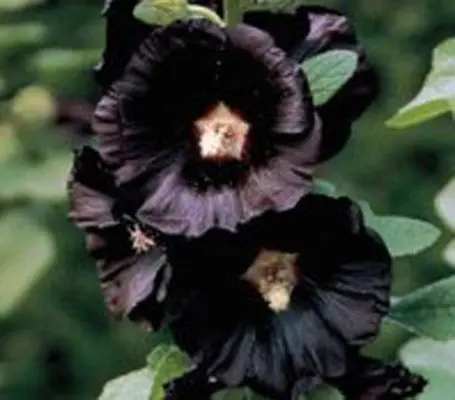
Hollyhocks are a mysterious and prolific flower with a long and rich history. Traditionally associated with cottage-style borders, the dramatic, near-black flowers of Nigra work equally well in a contemporary, minimalist garden. This unique variety creates an impressive impact against most backgrounds.
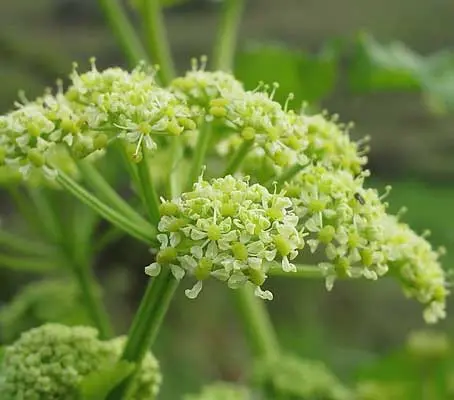
Alexanders are an ancient food source, cultivated for many centuries. This biennial wild flower, with dark green, shiny leaves and umbels of yellow-green flowers can be grown as an ornamental or can be put to use as a culinary herb or spice, the flavour is said to be similar to myrrh.
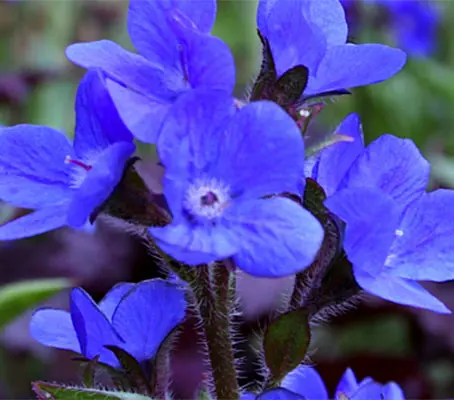
Anchusa ‘Dropmore’ is a 1905 selection that is still available today. They will thrive in a sunny border, are much loved by almost all bee species and make a great companion to rich plums and purple tones.
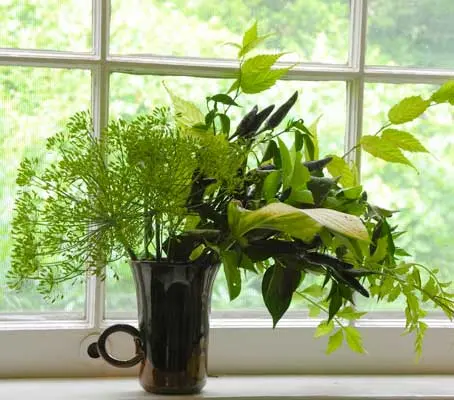
‘Mariska’ is a little known compact variety of Dill often referred to as ‘Florist’s Dill’. With starry bright yellow flower heads and abundant foliage it is an excellent variety for use as a cut flower, yet is still a great variety for the kitchen.
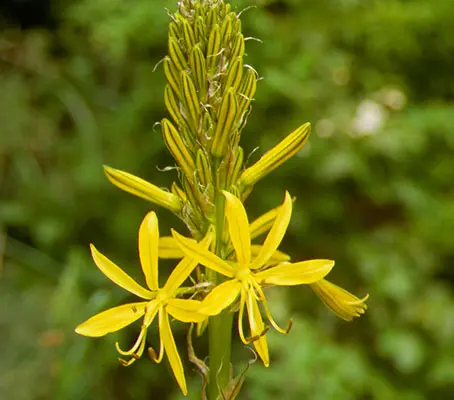
Asphodeline lutea is an easy to grow perennial that has great architectural form. The overall impression is distinctly upright, so it is good for adding vertical interest to the garden. In early summer leafy stems arise that bear dense, unbranched cylindrical spikes of gorgeous yellow, star-shaped flowers.
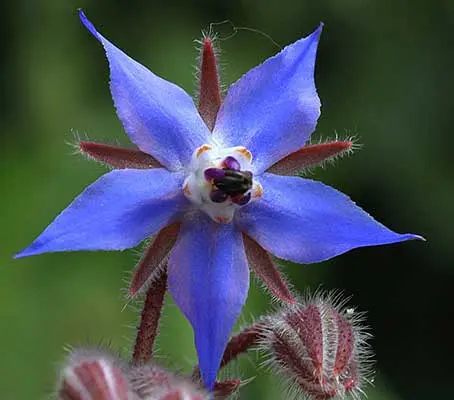
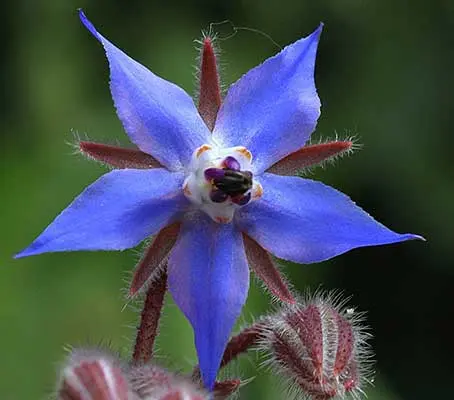
The beautiful blue star-shaped flowers of Borage are edible with a cool cucumber flavour. Use them as garnish in fruit cups, summer drinks, wines and Pimms. Garden visitors can be converted to herbal advocates simply by offering a taste of its flower! Organic Seeds.The herb borage is a well known annual. Not so well known and not often written about is the equally beautiful form ‘alba’ which boast pure white, perfectly star-shaped flowers. Each flower is centred by five black stamens which heighten the drama. The flowers are edible, garden visitors can be converted to herbal advocates simply by offering a taste of its white flower.
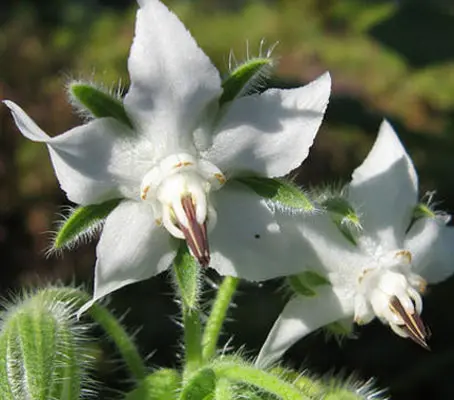
Borage is one of the most reliable sources of blue flowers, often flowering lavishly for weeks after sowing. The beautiful blue star-shaped flowers are edible and very important for bees, providing pollen and nectar in prodigious amounts.
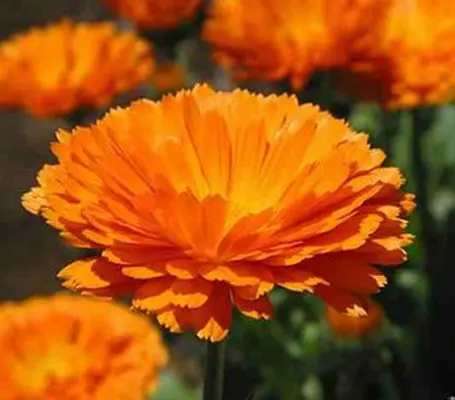
Cheerful and bright, use Calendula in beds, borders or containers. Calendula is prolific and durable, and like most hardy annuals it is easy to grow, simply sow where it is to flower. It is currently one of the top herbs used for medicinal use. Sprinkle salads and decorate cakes with the edible tangy petals.
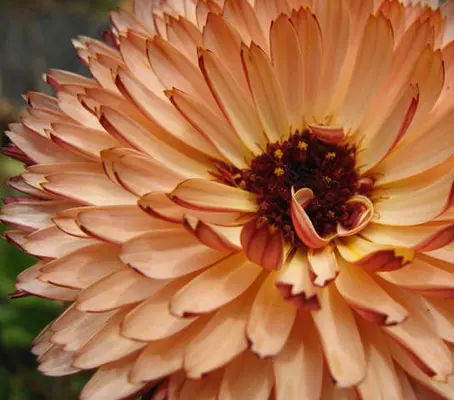
‘Sunset Buff’ is a lovely, more subtle coloured calendula. It is the soft apricot-buff version of ‘Indian Prince’ with the same crimson petal backs. They grow to a height of around 60cm and a spread of 45cm, are an excellent variety for borders and make a stunning cut flower.
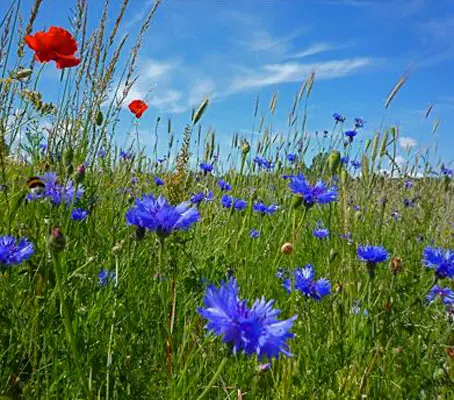
Today cornflowers are rare in the wild, they flourish instead in our gardens. They are the most splendid of annuals. Aside from their electric blue, which is breathtaking when they’re grown in dense drifts, they are easy to grow, they flower all summer, make great cut flowers and bees adore them.
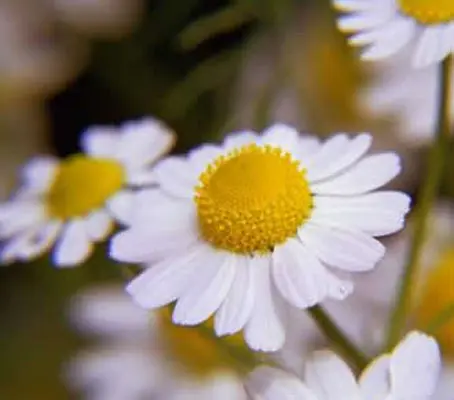
Camomile is a most useful plant. It can be used to make beautiful lawns and raised beds, an infusion of the plant is an ideal family remedy, calming and sedative, perfect for restlessness or travel sickness, while for gardeners the tea is effective as a spray to prevent ‘damping-off’ of seedlings
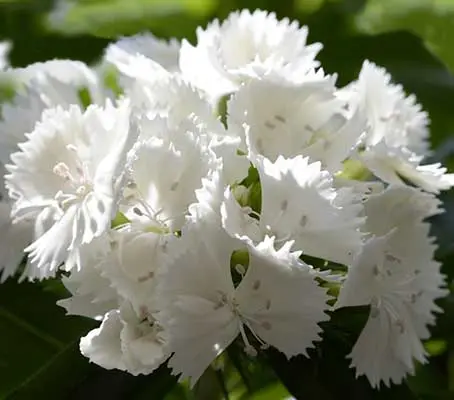
Intensely fragrant, with a delicious, sweet perfume, Dianthus barbatus ‘Alba’ is a pure white form of Sweet William. Absolutely beautiful and easy to grow, everybody can grow them to perfection.
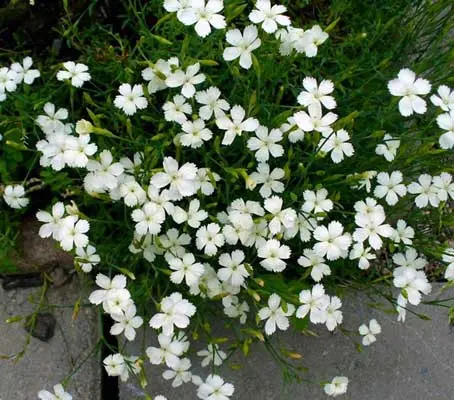
Dianthus deltoides ‘Confetti White’ is a quite exceptional little plant. Growing to just 10cm tall it will spread up to 50cm wide. The pure white blooms appear in abundance, just poking their heads above the deep green foliage. In the early morning dew or after a shower of rain they sparkle like clear white diamonds.
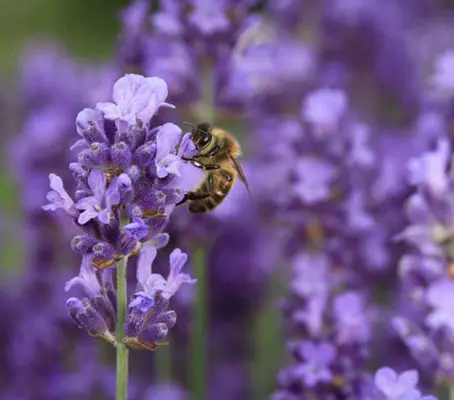
Lavendula angustifolia is an excellent plant for low informal hedging and as a specimen evergreen for borders and formal gardens. Flowering generally begins from mid to late June to early July. The flowers have a rich sweet scent and are highly attractive to bees and other beneficial insects.
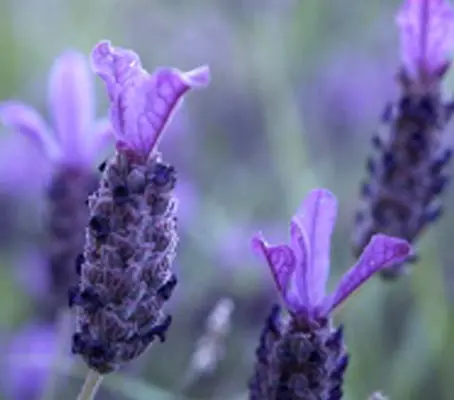
Lavender stoechas is an old variety, cultivated for more than 400 years, it is a favourite both for its intense fragrance and for the short dense flower spikes. French Lavender blooms from spring to frost and has a good clean scent. ‘Panorama’ must be rated a marvelous achievement in the perfection of the whorls of flowers and the brilliance of the colours. In many shades of scarlet, bright red, pink, salmon and crimson, each plant bears up to 20 long stems. They are as long-lasting as they are dramatic and excellent for cutting.
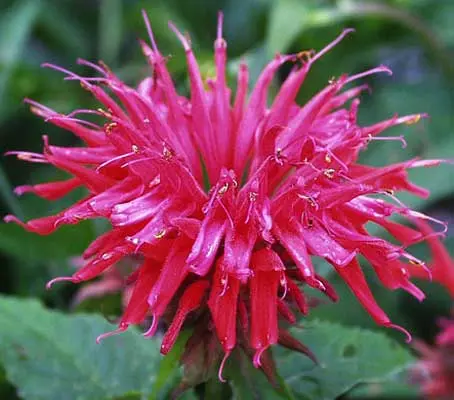
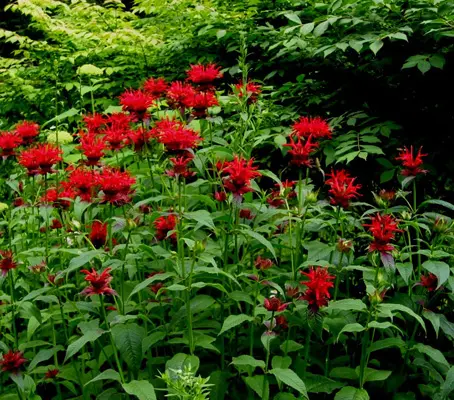
Monarda ‘Panorama Red Shades’ is the first separate colour available from seed. This foolproof plant is trouble-free and a joy for the garden and vase. They bloom profusely with very distinctive flower-heads, each plant bearing up to 20 long stems and are as long-lasting as they are dramatic.
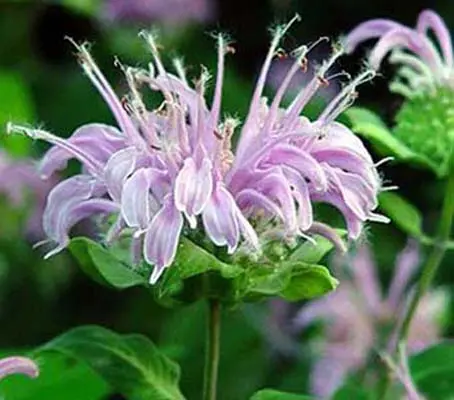
Monarda fistulosa, also known as Bergamot is famed for its medicinal qualities. While in the perennial border these lovely plants produce a mass of mauve-purple blooms (even in their first year from an early sowing) and have uniquely scented foliage. Highly attractive to bees and butterflies.
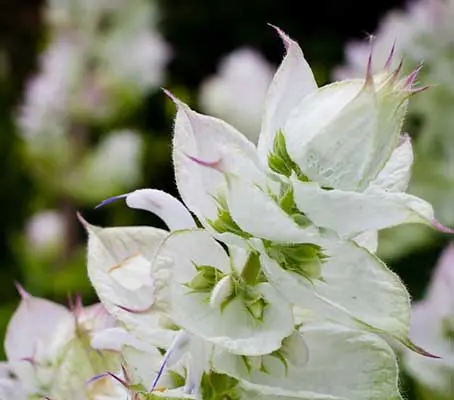
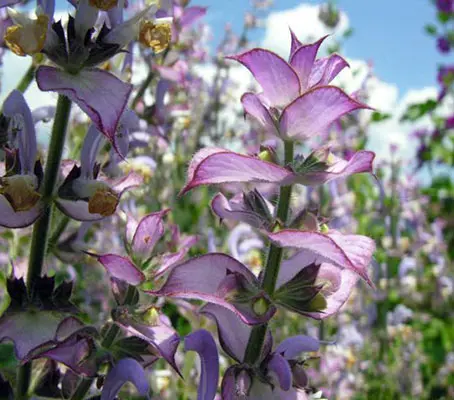
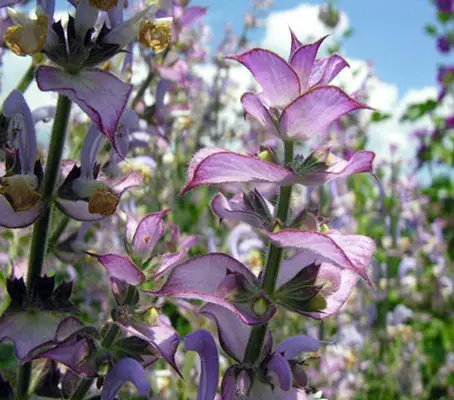
Salvia sclarea var. turkestanica ‘Vatican White’ is a choice white cultivar that is not that easy to find. A nobly architectural Sage, each of its branched stems is topped with a profusion of blossoms with brilliant white bracts. The flowers are attractive and are boosted in impact by the large petioles that surround them.
This hardy biennial Sage has been grown in almost every botanical sanctuary in human history and has many plus points: it grows well in poor soil resists slugs and other beasties, and doesn’t slump or need staking. It copes well in sun or light shade and the blooms are a magnet for bees and butterflies.
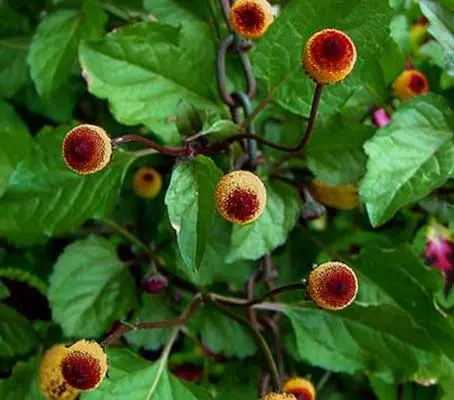
This hardy biennial Sage has been grown in almost every botanical sanctuary in human history. Each stem is topped with a profusion of pale blue blossoms and large pinkish white bracts. A truly architectural plant. Organic Seed.Spilanthes acmella is a unique and versatile plant that will add texture and interest to your garden. Used by herbalists, the pretty yellow and red cone-shaped flowers and leaves have properties similar to Echinacea and has numbing properties when the leaves and flowers are chewed.
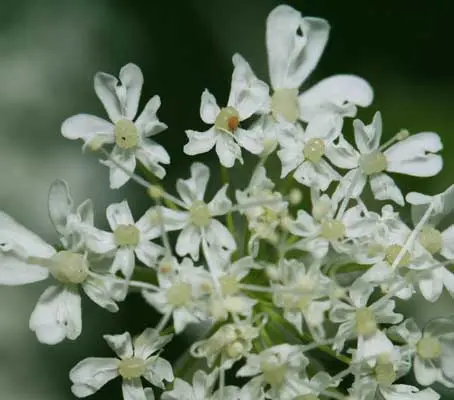
Sweet Cicely is an attractive plant that is a striking component of herb gardens and hedgerows. Growing to around 90cm, umbels of tiny white flowers appear from spring to early summer. Formerly a widely cultivated culinary herb, the fern-like leaves are deeply divided and smell of aniseed when crushed.
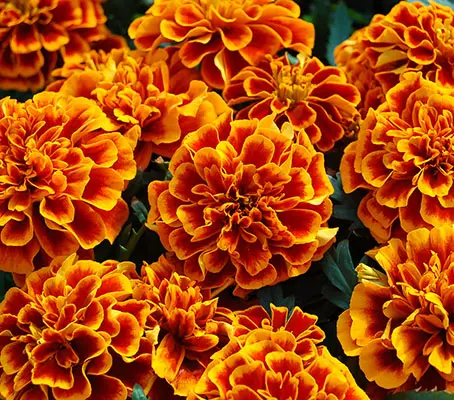
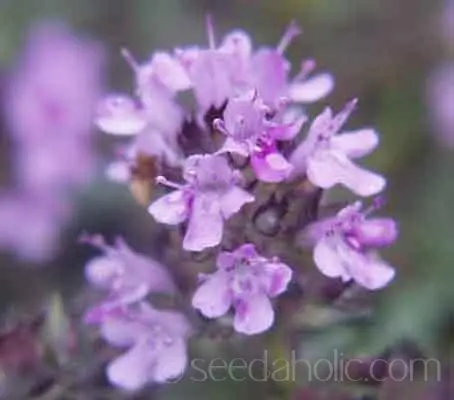
Tagetes patula ‘Queen Sophia’ is an extremely popular, award winning variety that was introduced in the early 1900’s. Gorgeous to the point of excess, it produces semi-double blooms. Deep orange-to-russet petals that are intricately edged with russet and gold.Thymus serpyllum is one of the most versatile groundcovers. Forming dense evergreen cushions of flowers these low maintenance plants don’t require mowing, watering or care, and can take a lot of abuse. Its leaves can be used as a culinary herb and its uses in the garden are almost unlimited.
Nasturtium ‘Gleam Hybrids’ is a moderate spreading variety and the variety we would recommend for hanging baskets and for containers. They offer a particularly nice colour selection with all the shades you expect, primrose, gold, orange, red and mahogany plus a few surprises.
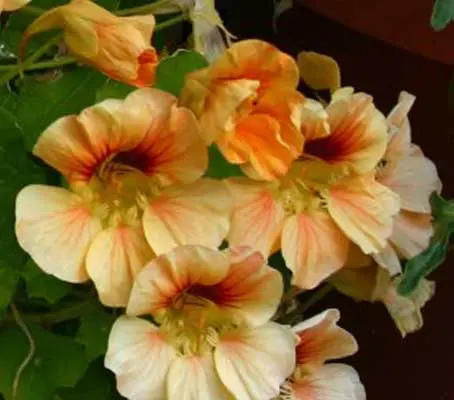
Nasturtium “Peach Melba Superior” is a gorgeous variety, with bright cream, semi-double flowers with mahogany-red markings in the throat. Uniform and compact in habit, this dwarf plant is good excellent in containers, the beautiful flowers are carried well above the foliage for maximum effect.
Agastache are very seductive. You start with one, and the next thing you know, you’ve got ten and are wondering how you can sneak another one in. ‘Apache Sunset’ with coral-peach blooms and rose and violet buds is just gorgeous and, of course, extremely tempting.
Agastache ‘Heather Queen’ is a dynamic landscape plant and a particularly beautiful form. Dark pink tubular flowers on tall stiff stems from mid-summer until late autumn. Pollinators are drawn to the fragrance, the intense coloration and their sweet nectar.
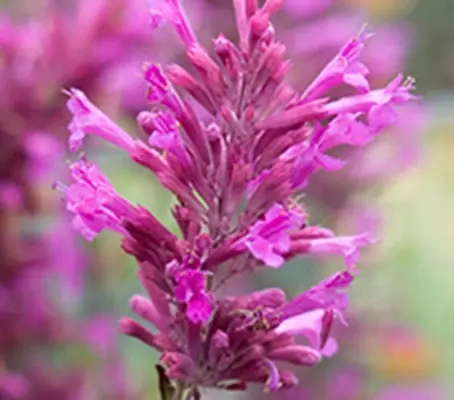
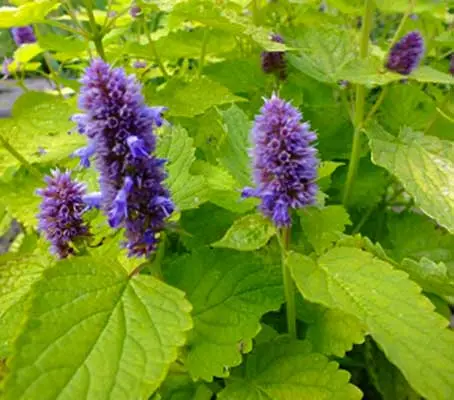
Agastache ‘Arcado Pink’ is a magnificent first year flowering perennial. An extremely floriferous variety with lovely purple-pink flower spikes and fresh green aromatic foliage. This Fleuroselect Novelty Award Winner is both vibrant in colour and stamina. The aromatic leaves are edible, young growth can be sprinkled in salads, used to decorate cakes, to make a tea or floated in drinks. Agastache added to your Pimms lifts it to a higher sphere altogether.
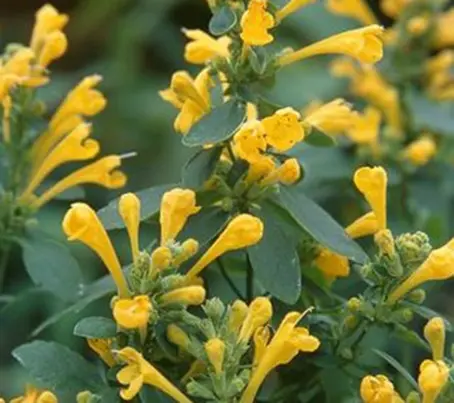
The Arizona Agastache Collection has been specially bred for their compact habit, extensive flowering time and strong heat tolerance. In three fabulous colours, ‘Arizona Sandstone’ produces delicate golden yellow flowers. The elegant spires and delicate foliage create a haze of colour all summer and into autumn.
The Arizona Agastache Collection has been specially bred for their compact habit, extensive flowering time and strong heat tolerance. ‘Arizona Sun’ produces elegant spires of golden yellow. Pick a sprig or two and bring indoors to enjoy in a vase. The flowers are also edible, and will colour a salad beautifully.
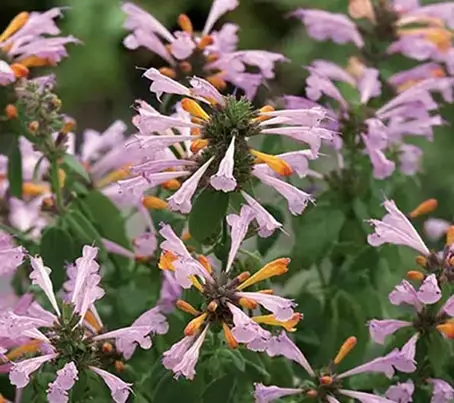
The Arizona Agastache Collection has been specially bred for their compact habit, extensive flowering time and strong heat tolerance. ‘Arizona Sunset’ produces delicate blooms in sunset colours of pink, lavender and peach. The elegant spires are ideal for providing long lasting colour and act like magnets to bees and butterflies.
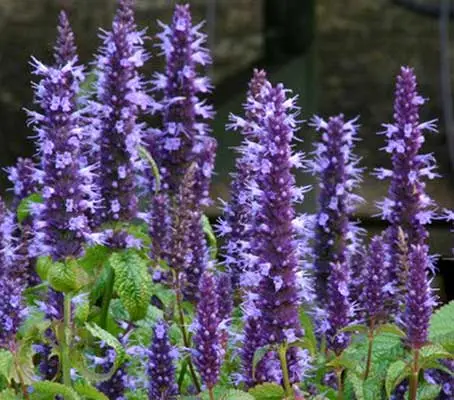
‘Astello Indigo’ is the most exciting breakthrough in Agastache yet. Awarded Europe’s coveted Fleuroselect Gold Medal, it is ideal for Northern European-type climates, they are at their best in more temperate conditions.
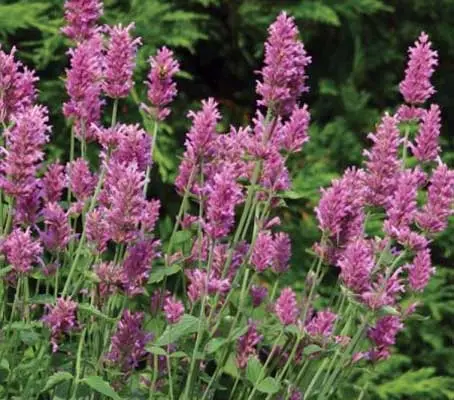
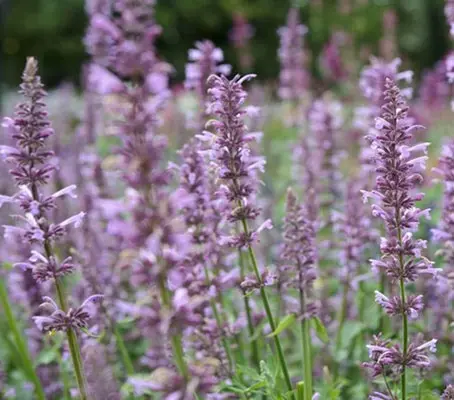
Agastache pallidiflora produces a continual mass of lavender-rose, scented flowers from June to September. The soft, touchable flower spikes must be one of the prettiest flowers of all this pretty family. Exceptionally long-flowering, they will flower in the same year given an early sowing and can be used as an annual.
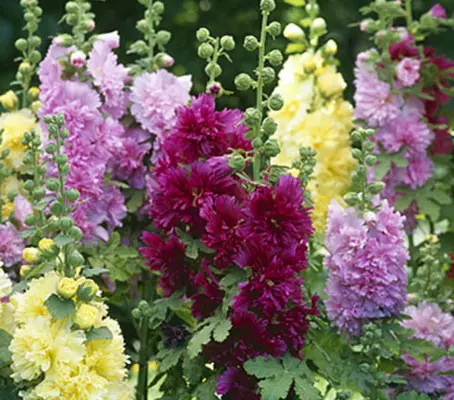
Alcea rosea ‘Chater’s Rose’ is a dramatic, upright plant, with a spike-like inflorescence that is covered with large buds that open, in a staggered manner, from June to September, from the bottom to the top. Fully double and almost pom-pom in appearance, the fine crepe texture of the petals is so delicate that it allows light to pass through.
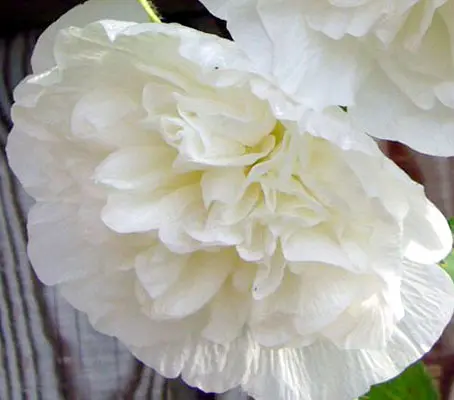
Alcea rosea ‘Chater’s White’ is a dramatic, upright plant, with a spike-like inflorescence that is covered with large buds that open, in a staggered manner, from June to September, from the bottom to the top. Fully double and almost pom-pom in appearance, the fine crepe texture of the petals is so delicate that it allows light to pass through.
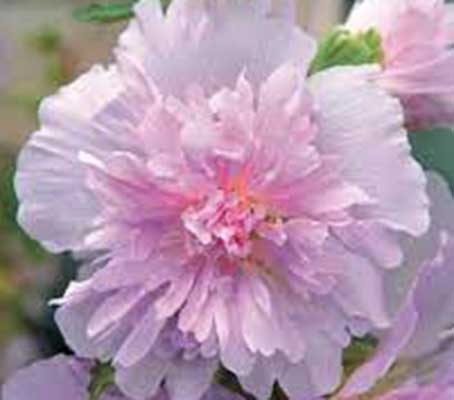
Softly ruffled, fully double blooms in a an elegant, romantic shade, a delicate blend of lilac-pink and rose. ‘Queeny Lilac Rose’ is a compact variety perfect for borders, pots, or small gardens. It flowers its heart out in the first year from seed, an unusual trick for a hollyhock.
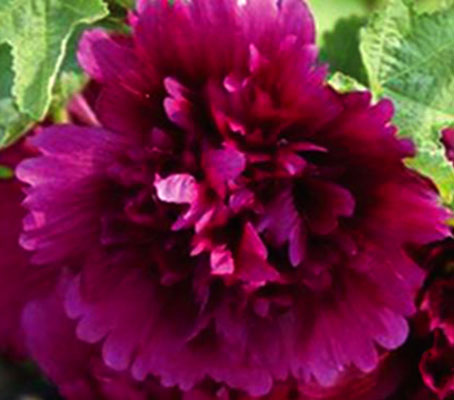
Alcea ‘Queeny Purple’ is a charming, compact hollyhock bred to bring all the grandeur of the cottage garden to smaller spaces. Unlike the tall varieties, it is a perennial that will bloom in its first year. Sturdy, well-branched stems are resistant to rust and are topped with rich, royal-purple blooms that open through to autumn.
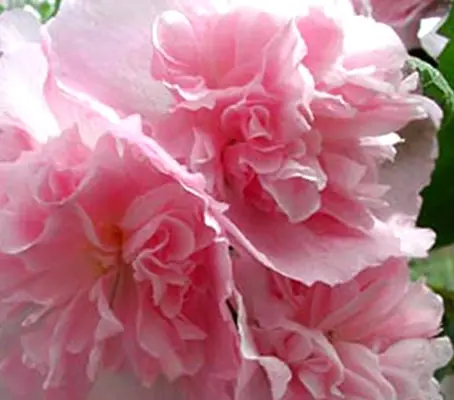
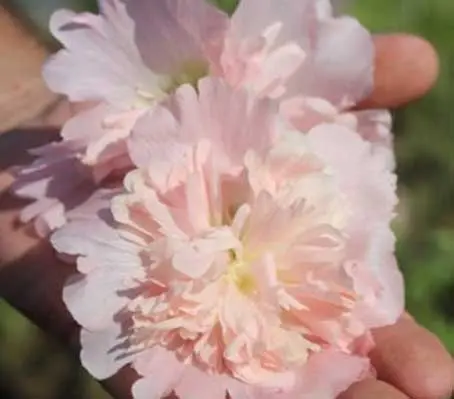
‘Queeny Salmon’ is a knockout hollyhock, shorter, showier, and dressed in ruffled petals the colour of antique blush silk. Sow either in spring or in late summer, the blooms are almost peony like, a beautiful soft pink that catches the light.
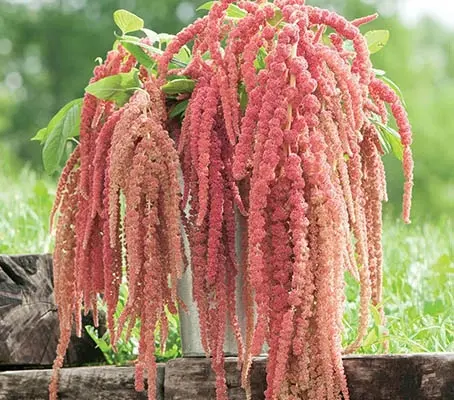
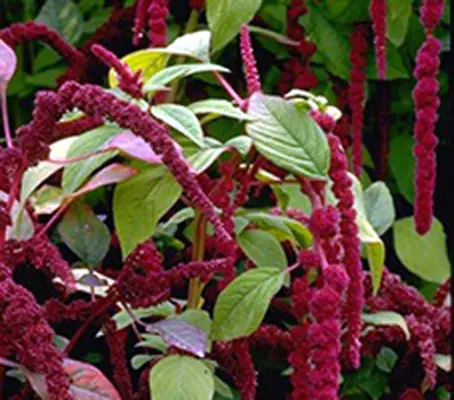
With cascading tassels of the most wonderful coral-pink. Amaranthus ‘Coral Fountain’ is a great addition to the garden and a superb filler for the vase. With generous treatment, specimens three or four feet or more with enormous drooping tassels of flowers can be obtained.
This ever-popular annual is perhaps more versatile than you might imagine – good in the border, most effective as a cut flower in arrangements, a good pot-plant and, not often appreciated – if carefully dried, the colour of the spikes remains unchanged for a considerable time.
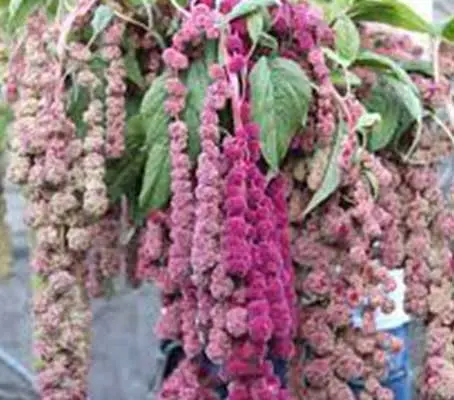
The blooms of Amaranthus caudatus ‘Mira’ have a unique ombre colour that transitions from light sage green, to lilac, to deep purple. The trailing locks are like jeweled necklaces, thick, pendulous tassels that extend 60 to 90cm long. They add exceptional texture and visual interest to gardens and floral designs alike.
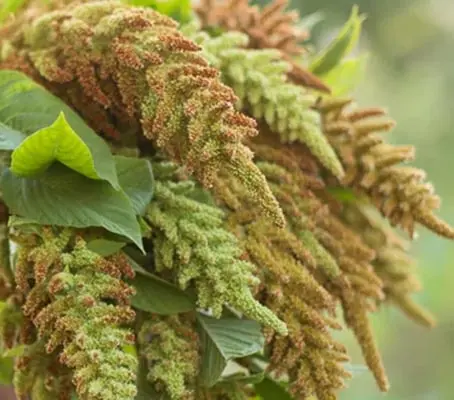
Blending perfectly into the late summer and autumn landscape, the large plumes atop Amaranthus cruentus ‘Autumn’s Touch’ combine soft pistachio-green and bronze tones to create restful, airy beauty in the sunny annual bed. They make exciting vase material that hold their colour longer than other amaranths and delight the songbirds who flock to feast on their seeds throughout autumn.
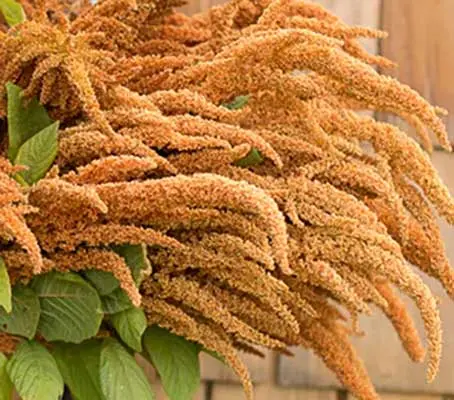
Amaranthus cruentus ‘Bronze’ is a tall, upright amaranth with fresh green leaves topped by dense bronze to chestnut plumes. Very autumnal, it’s a beauty for texture in borders and especially for cutting, where the plumes add instant drama to arrangements.
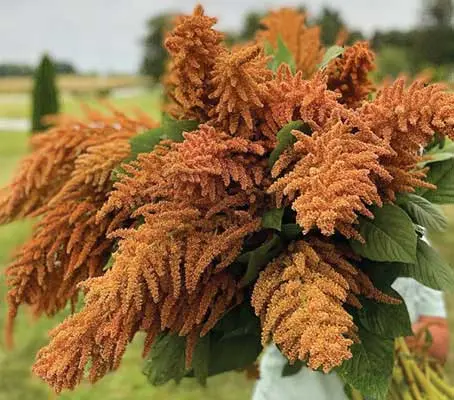
Amaranthus ‘Hot Biscuits’ is a rather splendid ornamental addition to the garden and the vase. This gorgeous and graceful amaranth feature bold spikes of coppery-bronze branching plumes. They make an excellent cut flower and make exciting vase material that hold their colour longer than other amaranths.
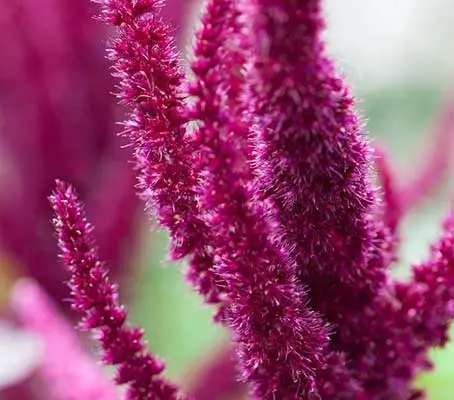
Amaranthus cruentus ‘Velvet Curtains’ provides intense crimson foliage and inflorescence. The dramatic plants with large plumes of flowers, ideal for a sunny, sheltered border. Flower heads will turn to seed and retain their colour for a long season of interest. The gluten free, protein rich seeds can be eaten as a grain, perfect for vegetarians and vegans.
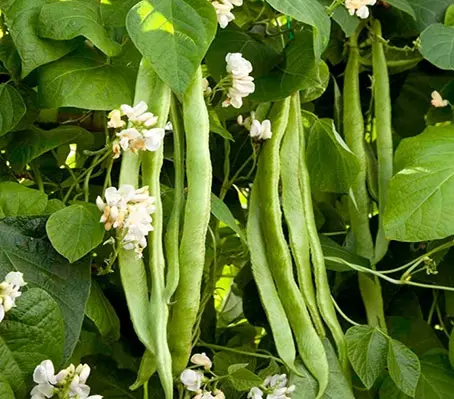
Runner Bean ‘Mergoles’ produces decorative clear white blooms and white beans. This high quality variety sets well in almost all conditions and produces abundant yields of delicious, stringless, fleshy pods, which can be eaten fresh or frozen, or left on the plants to mature and harvest the mature creamy white seeds.
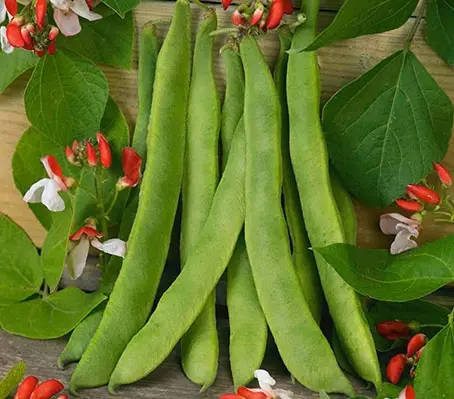
An improved selection of this well known and much loved variety, Runner Bean ‘Painted Lady’ is well know, as much for its astonishing bicolour, coral red and creamy white blooms as for the superior beans produced. The beans are deliciously thick and meaty with a sweet balanced flavour.
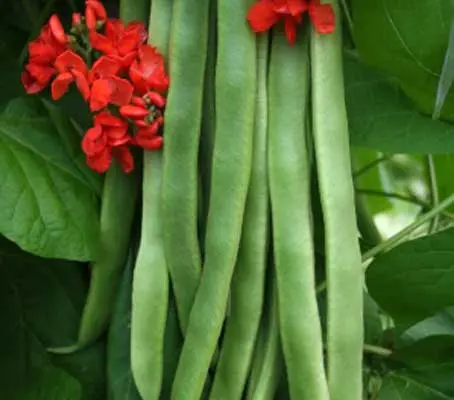
When I was young and idle, I’d dream of a self-refilling pint of cider. Now I’m older I dream of the slightly more realistic horticultural equivalent: beans and plenty of them. Bred for high yields and reliability, ‘Streamline’ gives heavy yields of fantastic tasty pods giving you effortless food for weeks.
€3.50
€2.25
€2.95
€1.95 – €5.95Price range: €1.95 through €5.95
€2.25 – €7.95Price range: €2.25 through €7.95
€1.95 – €7.95Price range: €1.95 through €7.95
€2.65 – €7.95Price range: €2.65 through €7.95
€1.95
€2.25
€2.75 – €9.75Price range: €2.75 through €9.75