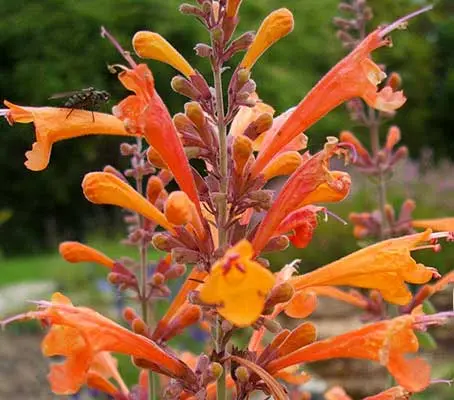
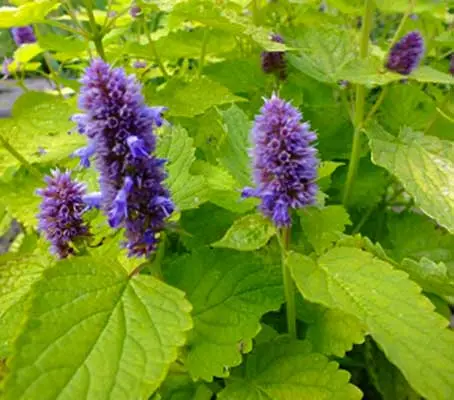
It is only within the past decade that a number of new noteworthy members of the genus Agastache have emerged from botanical obscurity. ‘Apricot Sprite’ is an outstanding perennial that provides a sizzling blast of tubular, peachy-apricot flowers. Compact and quick growing, they flower in the first year from seed.
Originally bred by and developed in Japan, Agastache ‘Golden Jubilee’ was named to honour Queen Elizabeth II’s 50th year of rule, celebrating the Golden Jubilee in 2002. This bright gold-chartreuse beauty has one of the most remarkable leaf colour of any plant. Offering late season punctuation the flowers are a powerhouse source of nectar and pollen for bees, butterflies and other beneficial insects.
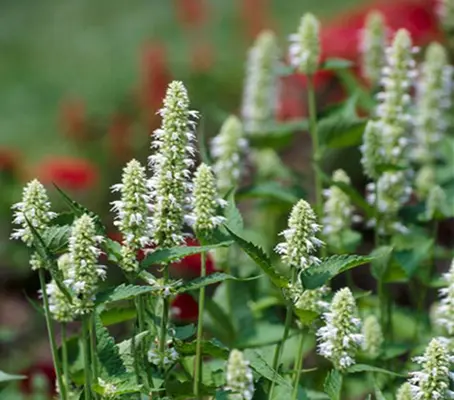
Agastache ‘Liquorice White’ has tall spikes of white lipped flowers and like all Agastache produces copious amounts of nectar for bees and butterflies to feast upon. Flowering late in the season, it is a boon for building up bees’ honey reserves before winter and will produce a honey surplus where drifts are grown.
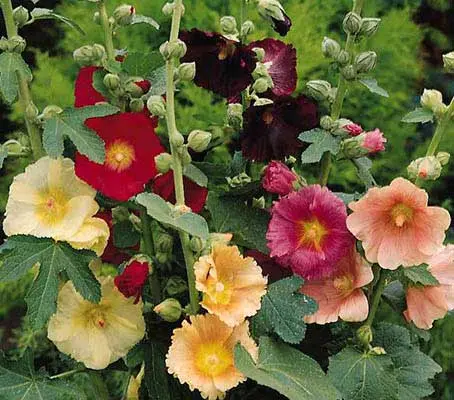
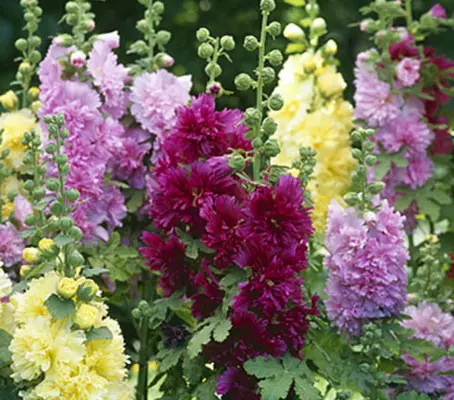
Hollyhocks are almost as easy to grow as sunflowers and would probably be grown as often if gardeners were aware of their good nature. Alcea ficifolia ‘Happy Lights’ is a beautiful strain, reliably perennial they produce many upright stems, resulting in a bushy form.
This gorgeous award winning Hollyhock has the distinction of being the shortest in the Alcea rosea family. ‘Queeny’ is a dwarf Hollyhock that reaches only 60cm in height with fully double blooms. Unlike the tall varieties, it is a perennial that can also be used as an annual as it will bloom in its first year.
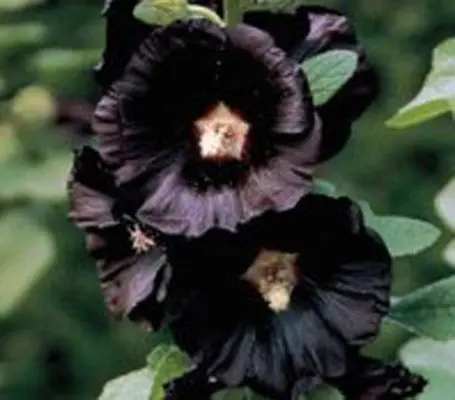
Hollyhocks are a mysterious and prolific flower with a long and rich history. Traditionally associated with cottage-style borders, the dramatic, near-black flowers of Nigra work equally well in a contemporary, minimalist garden. This unique variety creates an impressive impact against most backgrounds.
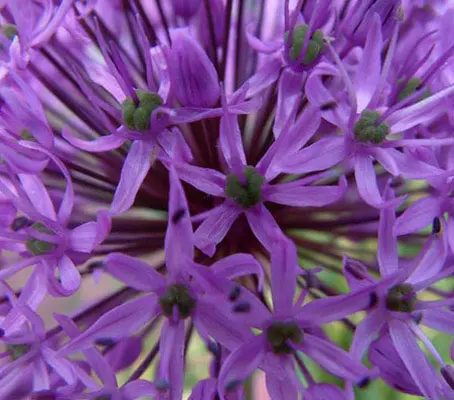
This is a stunning fashionable plant, with globes of rosy-purple crowded spherical umbels, and strap shaped leaves. The flowers are very long lasting and help fill that awkward gap between the later spring bulbs and the perennials.The Semi-Tall Flowers Mix is a richly flowering mixture of that produces large quantities of 50cm (20in) tall annual flowers for the border or for cutting. As well as being ornamental, they will provide nectar and pollen for bees, butterflies and other insects from early in the year to late in the season.
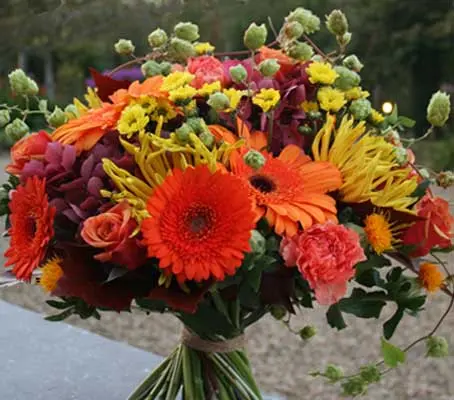
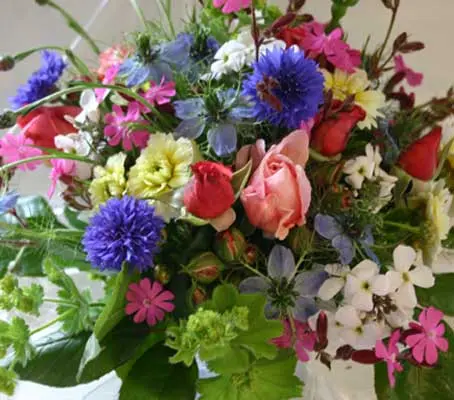
Composed of a finely balanced selection of annual flowers designed to provide a long succession of flowers from June to September, the Tall Flowers Mix grows 60 to 70cm (24 to 28in) tall and produces large quantities of flowers that are ideal for the border and for the vase.
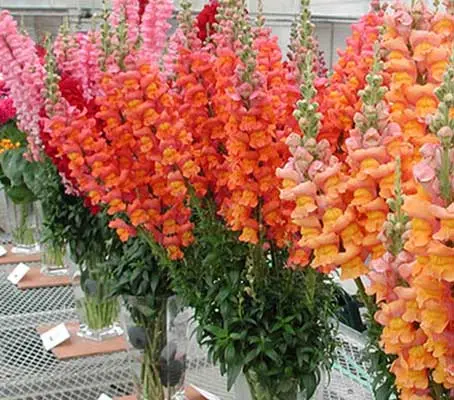
Worldwide, Antirrhinum is one of the most important ‘summer cut-flowers’ grown from seed. Adored by florists and gardeners alike and available in a rich range of single colours, they are cultivated as an annual or as a biennial.
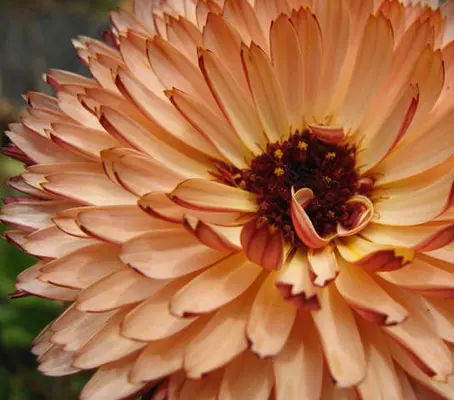
‘Sunset Buff’ is a lovely, more subtle coloured calendula. It is the soft apricot-buff version of ‘Indian Prince’ with the same crimson petal backs. They grow to a height of around 60cm and a spread of 45cm, are an excellent variety for borders and make a stunning cut flower.
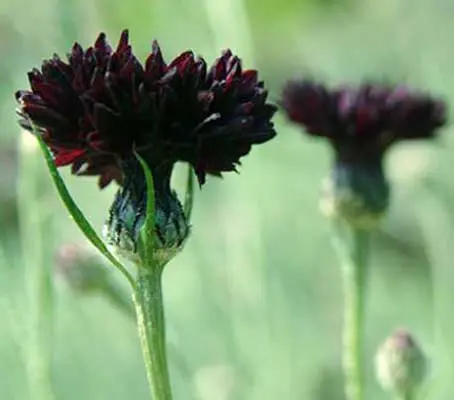
The Boy Series, which all feature double flowered blooms on tall stems for garden or cutting, are available in many colours. These beauties grow well as border plants and are wonderful in a cutting garden. ‘Black ball’ flowers are a lovely rich dark-chocolate hue, almost black on cloudy days.
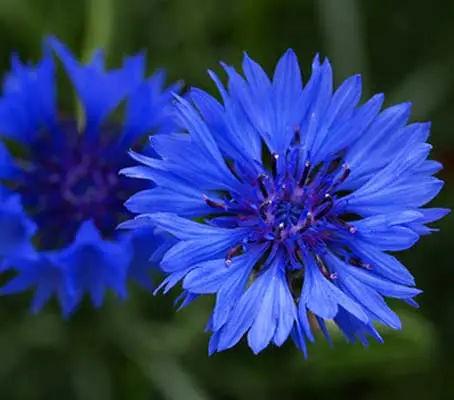
A favorite annual flower and cottage garden staple, Centaurea ‘Blue Boy’ has piercing, bright blue flowers with ruffled petals and violet-blue centres. The blooms appear from early to late summer. These beauties grow well as border plants and are wonderful in a cutting garden.
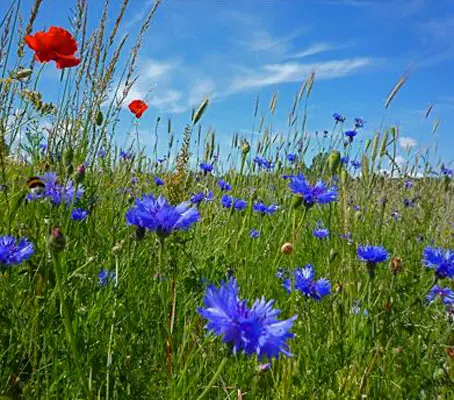
Today cornflowers are rare in the wild, they flourish instead in our gardens. They are the most splendid of annuals. Aside from their electric blue, which is breathtaking when they’re grown in dense drifts, they are easy to grow, they flower all summer, make great cut flowers and bees adore them.
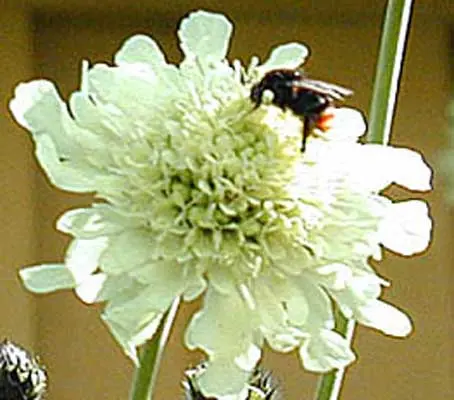
Cephalaria gigantea is a gentle giant that has an informal look that is perfect for looser planting styles. Tall but airy with very pretty pale butter-yellow flowers, use it planted at the back of the border.
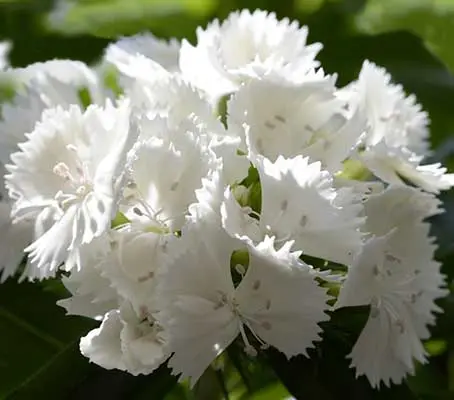
Intensely fragrant, with a delicious, sweet perfume, Dianthus barbatus ‘Alba’ is a pure white form of Sweet William. Absolutely beautiful and easy to grow, everybody can grow them to perfection.
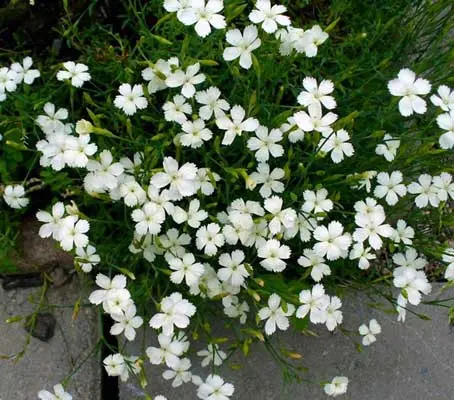
Dianthus deltoides ‘Confetti White’ is a quite exceptional little plant. Growing to just 10cm tall it will spread up to 50cm wide. The pure white blooms appear in abundance, just poking their heads above the deep green foliage. In the early morning dew or after a shower of rain they sparkle like clear white diamonds.
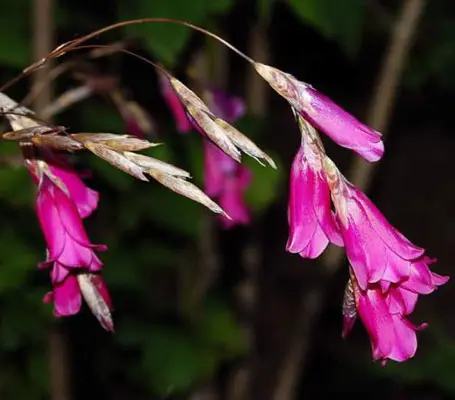
Dierama pulcherrimum is a distinctive-looking perennial with tall arching stems of bell-shaped, flowers. The flowers bloom in shades of pink, mauve and carmine appear in mid summer. Each stem drops with the weight of the flowers which earns them the most romantic of names – Angel’s Fishing Rods.
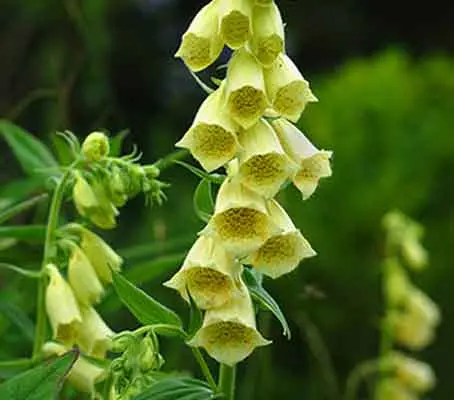
Digitalis grandiflora is one of the few truly perennial foxgloves. Extremely hardy and one of the best performers. Bearing upright stalks of beautiful creamy-yellow bells through the summer, the lovely soft shade allows this plant to blend with almost anything in the garden.This rare and lovely foxglove is one of the very best in cultivation. Digitalis obscura, the Sunset Foxglove has striking bell-shaped blooms in all the colours of the sunset. Rusty orange and amber with red veining.
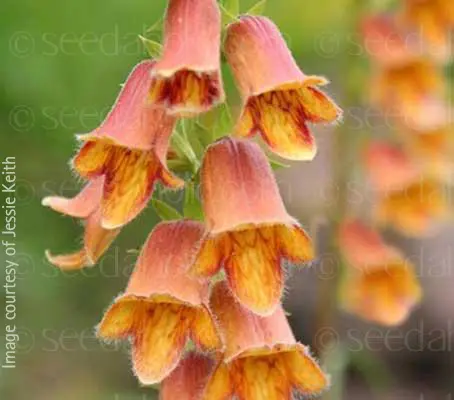
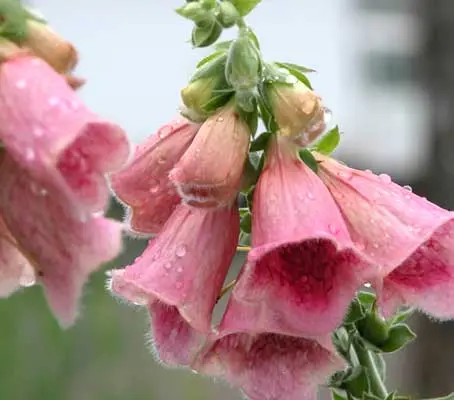
This striking and robust foxglove, a hybrid between the pink flowered D. purpurea and the yellow flowered D. grandiflora produces a beautiful mix of the two shades. Warm pink, speckled flowers that are larger than the traditional foxglove.Native to the central and south-eastern parts of the United States, Echinacea angustifolia is valued as a short-term stimulant to the immune system. This classic purple flower is easy to grow and continues to be a favorite in home and public gardens, a ‘tried and true’ classic sure to please any home gardener.
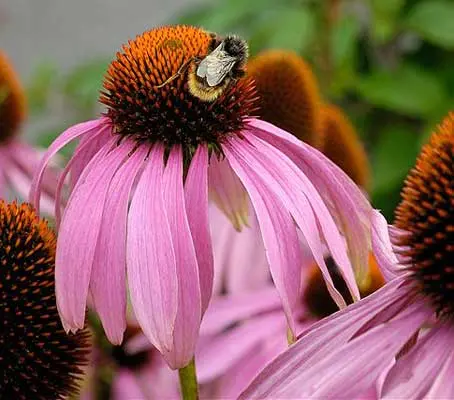
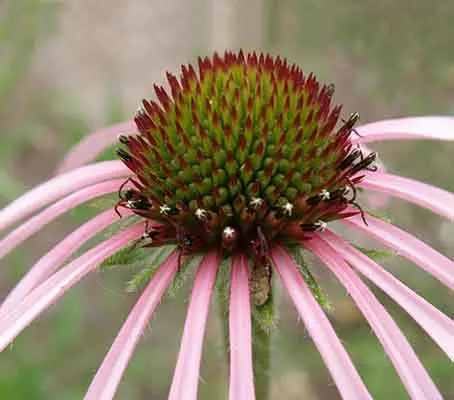
Echinacea pallida is one of the more rare members of the Echinacea family. They have much longer, ray flowers than those of the more familiar purple coneflower, the plants bloom earlier and continue to bloom sporadically through the autumn months.
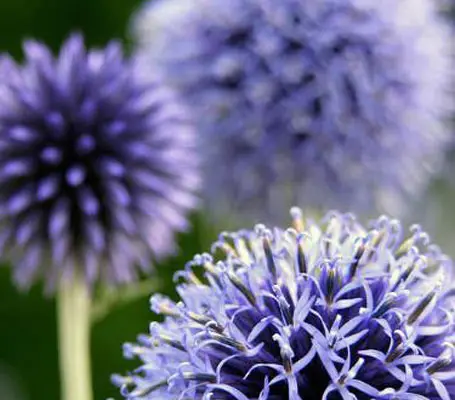
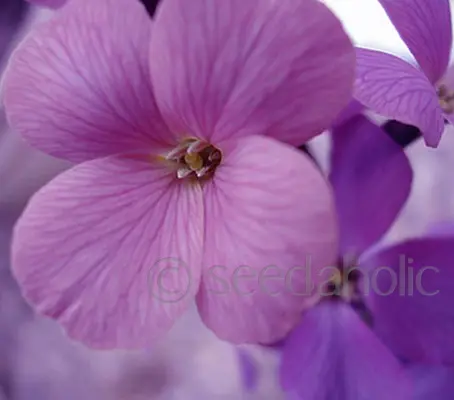
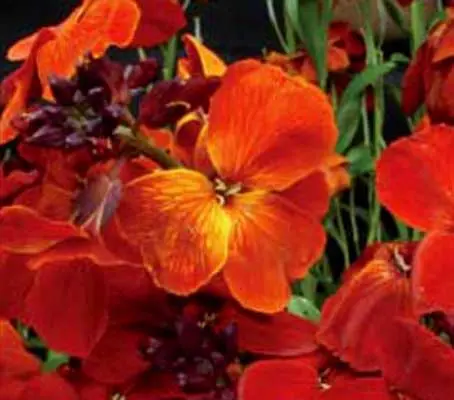
One of my favourites for the back row. The rounded, violet-blue flower heads on silvery, branched, leafy stems are actually much softer than they look. An unusual colour and structure, so a great conversation piece and an excellent dried flower.Siberian wallflowers are at their best in early to mid-May. With cheerful deep orange blooms, they are very easy to grow and combine well with other plants; indeed wallflowers demand companions and set the mind racing regarding potential planting combinations.
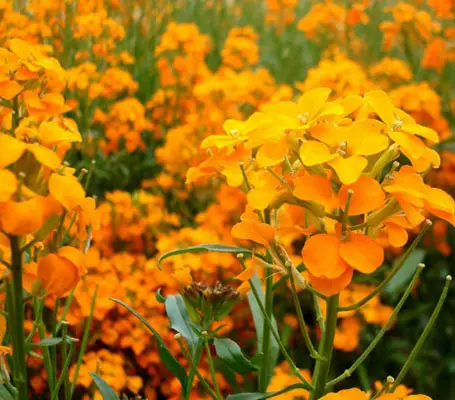
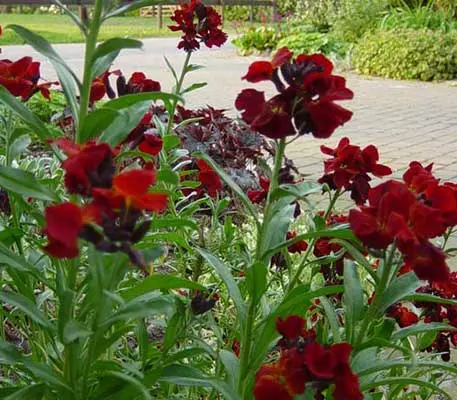
This old English cottage plant is making a comeback, and no wonder. Blood Red’ is a favourite with gardeners, the astonishing, deep crimson, velvety red flowers they are sure to be a focal point. Ideal for borders and edging, they could also be used in large containers….and of course, walls!
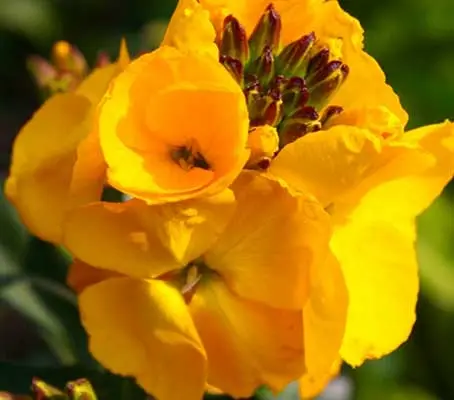
‘Cloth of Gold’ is a favorite with gardeners, each plant wears a cloak of the finest gold and the large golden-yellow flowers are filled with a sweet fragrance, from mid-spring and throughout summer. They are a perfect foil for daffodils and many other spring bulbs.
‘Fair Lady Mixed’ is a classic tried and trusted variety. Reliably hardy, this uniform mixture blooms in a wide range of colours, both pastels and bright colours and includes the more unusual dusky-pink shades. This marvellous; fragrant, floriferous flower is extremely easy to grow and very rewarding.
Erysimum (formerly Cheiranthus) cheiri ‘Fire King’ is another old and tried variety, with striking, flame-like, glowing orange-scarlet flowers. A compact variety with a bushy habit and a rich fragrance, they will supply the household with an abundance of cut flowers for many weeks.
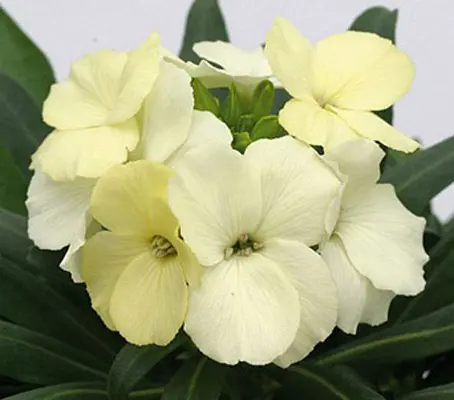
What spring garden would be complete without a bed of delightful, sweet-scented Wallflowers, harbingers of warmer weather to come? Erysimum cheiri, formerly Cheiranthus cheiri ‘Ivory-White’ is a fabulous form. A compact variety with a bushy habit which is ideal as an underplanting to tulips and other spring bulbs.
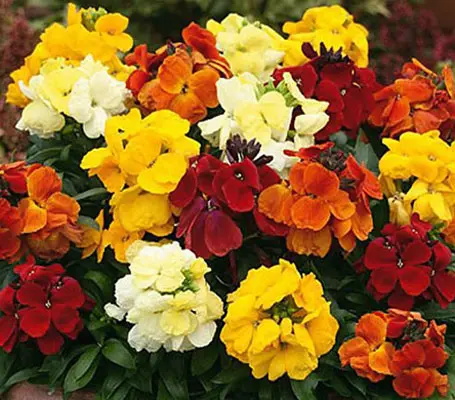
This is a classic Wallflower mixture, with the super rich colours you’d expect to see in a Persian Carpet (at a fraction of the cost!) purple, gold, orange, rose, cream and apricot. It is not without reason that this bushy variety so impressed the RHS judges.A favourite with gardeners, Erysimum cheiri ‘Scarlet Emperor’ is a classic wallflower with bold, fiery blooms in shades of rich scarlet and glowing crimson. Strongly scented, the flowers carry the sweet, spicy perfume that wallflowers are famed for.
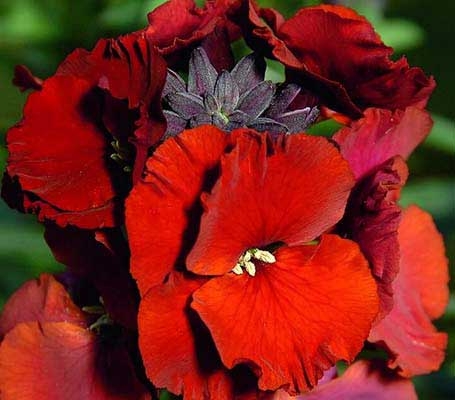
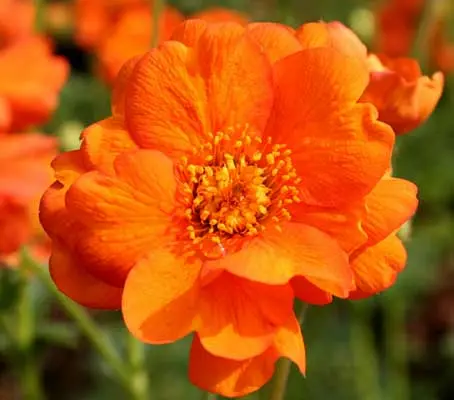
Many gardeners look for easy to grow, reliable perennials that provide a bright, cheerful display of colour early in the season. Geum coccineum ‘Borisii-Strain’ flowers the first year from seed producing wonderful vivid orange-red toned flowers from late spring into summer.
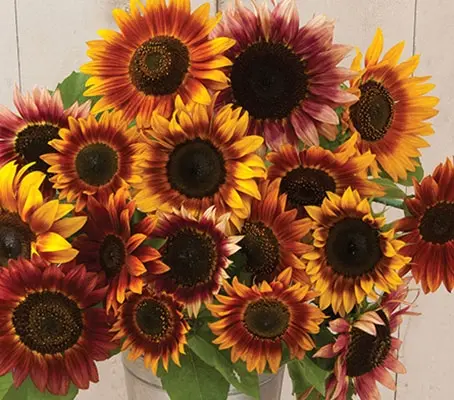
Sunflower ‘Autumn Beauty’ produces numerous long-stemmed flowers from summer to late autumn in a variety of solid and bi-colour bright warm colours – golden yellow, bronze, brown and burgundy. The long stems are excellent for cut flowers and look absolutely stunning in a vase on their own.
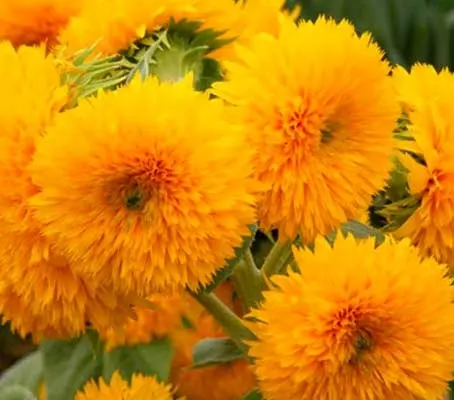
Great big fluffy golden heads the size of a dinner plate. This whopper of a sunflower has the same stunning densely packed yellow petals as the beloved dwarf ‘Teddy Bear’ sunflower but on a far larger scale. They make excellent cut flowers, long lasting and are very impressive in a vase.
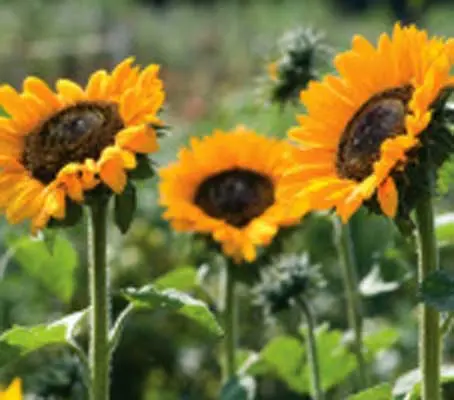
Sunflower “Soraya” is an award-winning new arrival. It is the first Sunflower ever to win an AAS award. It produces lovely rich tangerine-orange flowers with dark brown centres. This branching sunflower is prized for cut flower arrangements, producing 20 to 25 flowers from each plant.
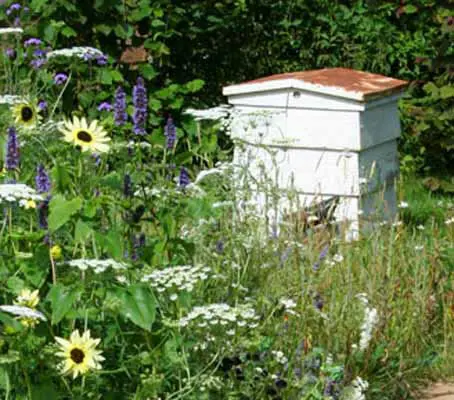
One of the best loved summer flowers, ‘Vanilla Ice’ is one of the prettiest sunflowers varieties available. With clusters of delicate pale creamy-yellow flowers with dark chocolate centres this compact variety is suitable for the border or can be left add a naturalised charm to a wildlife friendly garden.
Perennial sunflowers typically don’t grow quite as tall as their annual friends, however Helianthus maximiliani is a wonderful exception. They grow slowly until late summer when the flowers bolt and head for the sky!
Most gardeners are familiar with the annual sunflower, however, it is the perennial varieties that coexist most happily with other garden plants. Helianthus mollis is a lovely perennial with butter-yellow flowers. It grows 120cm tall and requires little more attention than an annual cutting to the ground.
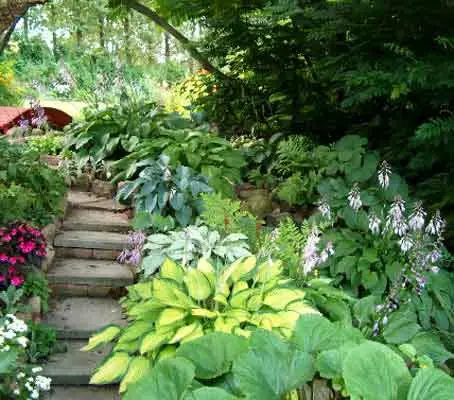
Hosta are grown predominantly for their outstanding foliage, from leaves as small as a teaspoon up to those larger than a dinner plate, colours range from deep blues to silvers, darkest shiny greens to bright yellows, from a single solid hue to the myriad of variegations the choice is almost overwhelming.
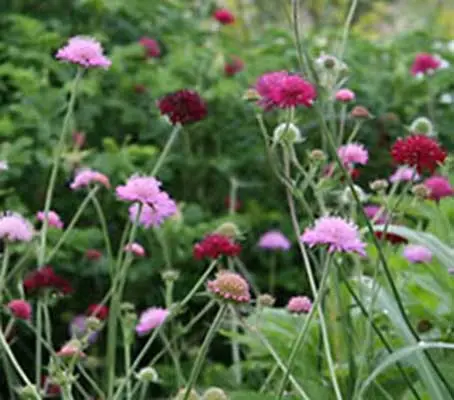
‘Melton Pastels’ is a great border plant, densely flowering plant with strong stalks of pin cushion flowers in shades of shades of pink, cherry red, mauve and purple. The tall stems make excellent cut flowers and are good for the middle of the border, giving a succession of blooms through till autumn.
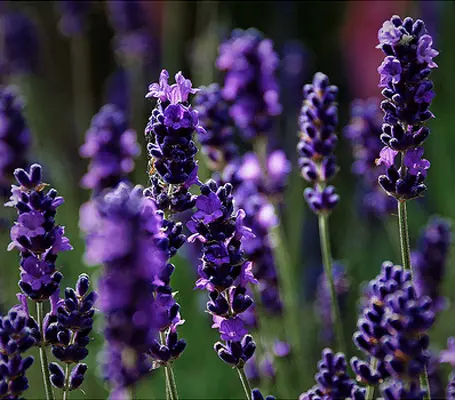
The deepest purple of all and one of the most popular lavenders is ‘Hidcote Blue’. A compact variety, suitable for growing in borders or as dwarf hedging, with dense silver-grey foliage covered in fragrant, dark purple-blue flower spikes in mid-summer.Munstead Lavender is a fragrant robust English lavender that, due to its short size and tightly held blooms, makes a great hedge. It flowers profusely in the spring, after which a good pruning will provide an attractive grey bush with highly aromatic leaves.
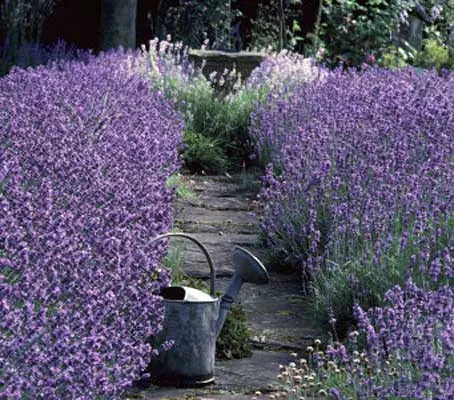
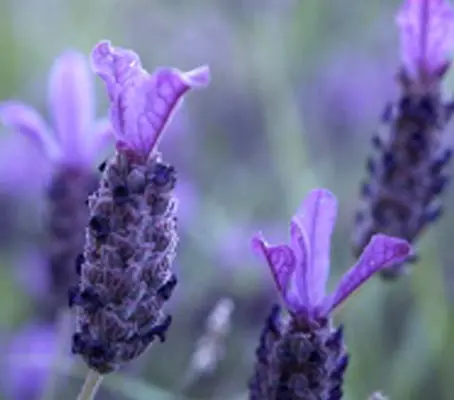
Lavender stoechas is an old variety, cultivated for more than 400 years, it is a favourite both for its intense fragrance and for the short dense flower spikes. French Lavender blooms from spring to frost and has a good clean scent. The more I see of this rather attractive little plant, the more I grow to appreciate it. Now I seem to spot it all over the place, in meadows, woodland, road verges and gardens. The bright yellow fragrant flowers can be seen in blossom from the end of April through until mid September.
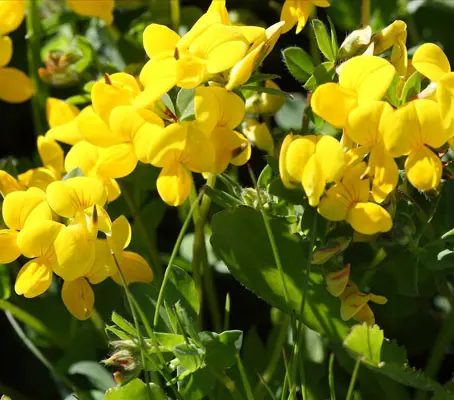
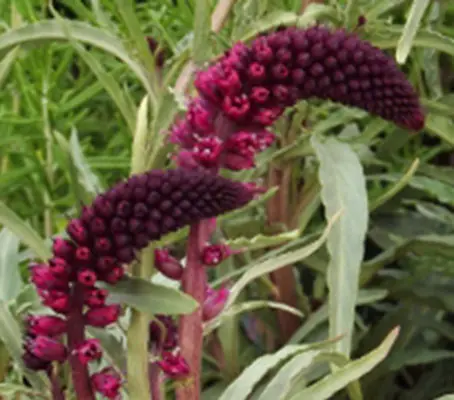
Recently introduced to gardens and a hit Chelsea Flower Show, Lysimachia ‘Beaujolais’ feature flower spikes of deep claret which bloom continuously from May to September. The plants give a good effect used in tight drifts through grasses and other perennials. Ideal for cutting, the dark flowers are adorable in bunches.
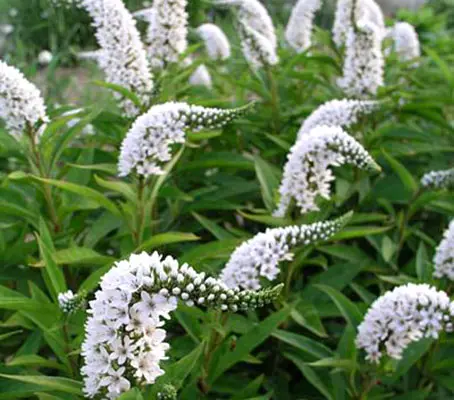
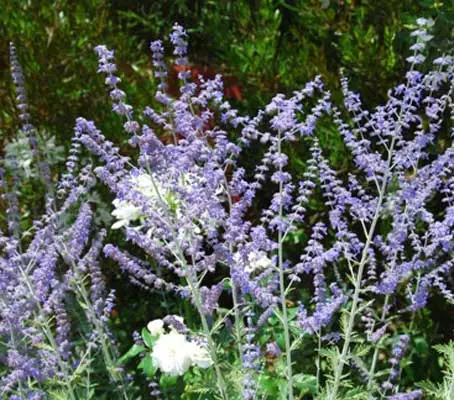
Lysimachia ‘Lady Jane’ produces spires of white blossoms right above the foliage, they arch over then tip up at the ends and grow in beautiful curvy forms. Absolutely loved by butterflies, an additional feature is the good autumn foliage colour.Russian Sage is one of the great garden plants of all time, but if you’ve been frustrated by their floppy nature, this new variety will be a welcome addition. Growing to about 60 to 75cm tall, Perovskia atriplicifolia ‘Taiga’ is also the first Russian sage available as a first year flowering perennial.
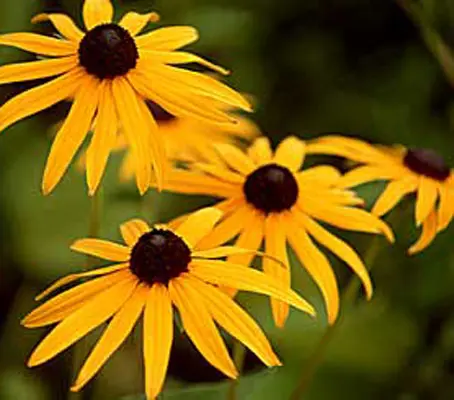
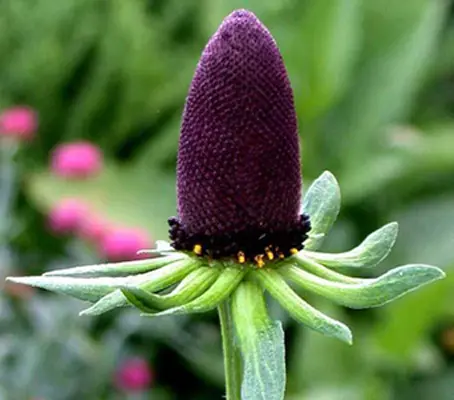
Rudbeckia are one of the top ten favorites of many gardeners’. Goldsturm is a compact form of the yolk-yellow black-eyed Susan, it is short enough not to need staking and never flops. An excellent cut flower and a great choice for mass planting.An absolute gift to flower arrangers, this is a noble and ornamental plant for the back of any border making nice clumps of foliage. It is, of course, the flowers that are remarkable: three or four inches across, “green” is one’s immediate impression on seeing them.
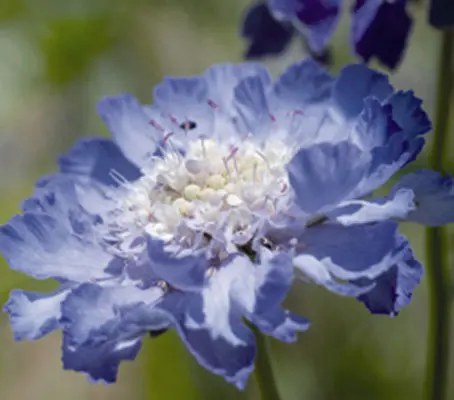
‘Fama’ is a most elegant flower. With long stems and intense blue blooms, it is the largest flowering and most uniform strain of the Blue Pincushion. They mature into dense tufts of lance shaped, grey-green leaves from which arise a beautiful display of intense lilac-blue flowers each with a silvery centre.
Scabiosa caucasica ‘Fama’ is a most elegant flower. With long stems and intense blue blooms. Beloved by flower arrangers, it is the largest flowering and most uniform strain of the perennial blue pincushion.
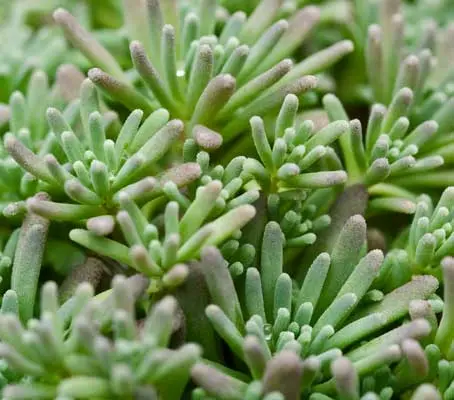
Sedum Ruben’s Lizard is a low-growing sedum that has tight, rosy-green cushion of needles with reddish tips. Throughout the summer the plant is covered with many tiny, star-shaped white flowers. Drought and heat tolerant or low maintenance, whatever you want to call it, ‘Lizard’ takes a lot of abuse.
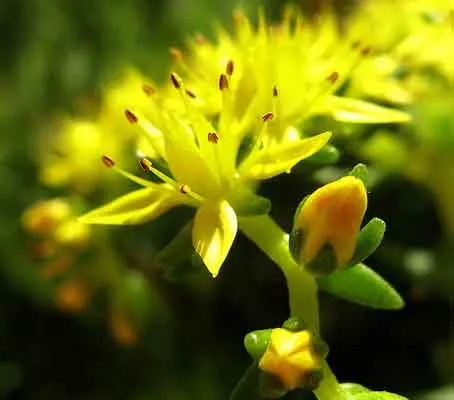
Delicate in appearance and yet very cold hardy, Sedum acre is beautiful from the first stirrings of early spring to the twilight of autumn. Hardy and very easy to grow. Started early it will form a nice dense ground cover the very first season. If the weather is favourable it will flower within six months.
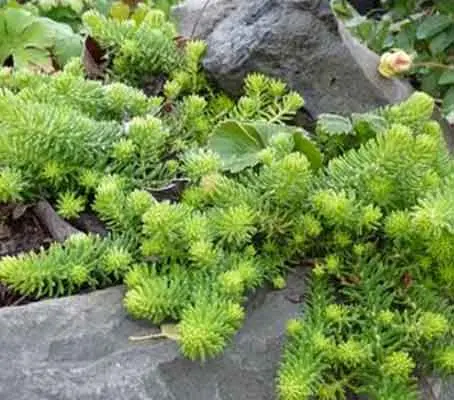
If you’re looking for a beautiful plant that thrives with virtual neglect, Sedum reflexum just might fit the bill. The small bushes spread over the ground and the foliage resembles mini spruce branches. They are at their loveliest spilling over edges of walls and rocks to create the illusion of a living waterfall.
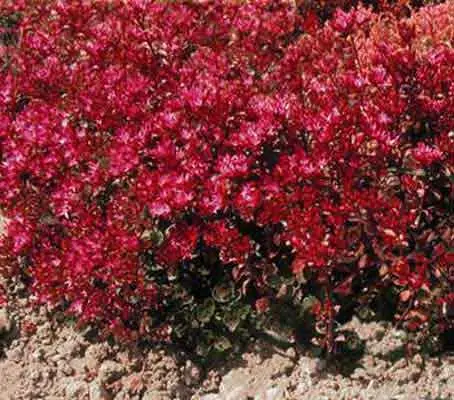
Sedum spurium coccineum is the most robust sedum, with deep crimson blooms and bronze-green leaves. Low maintenance, durable and interesting, they enhance the appearance of green roofs, rockeries and containers. In July, dense clusters of showy crimson blooms smother the evergreen plants.
€3.50
€2.25
€3.50 – €19.50Price range: €3.50 through €19.50
€1.95 – €7.95Price range: €1.95 through €7.95
€1.95
€2.25
€2.95
€2.45
€2.65
€2.45
€2.75
€2.75