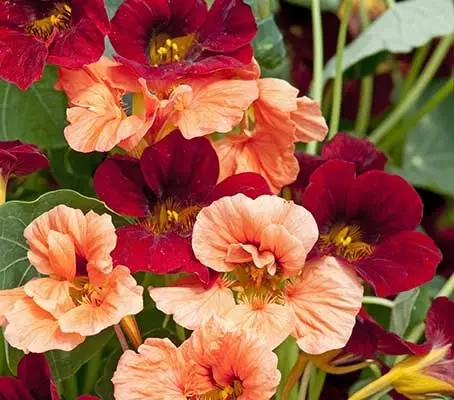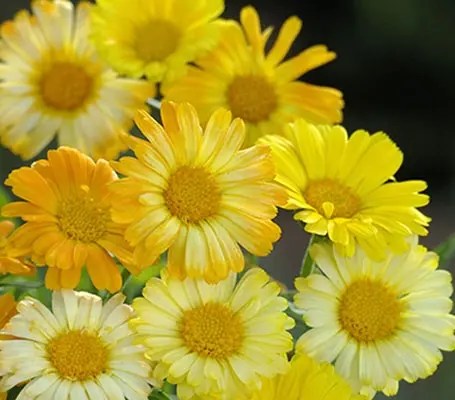
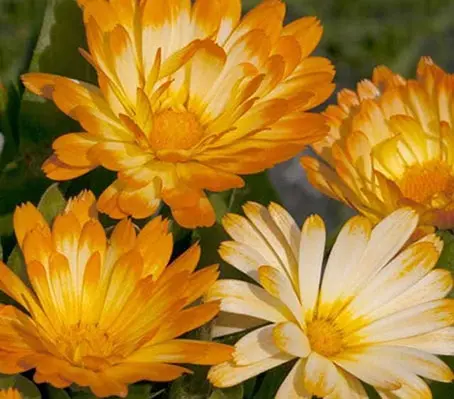
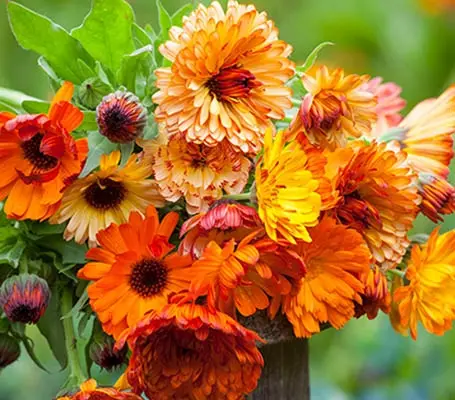
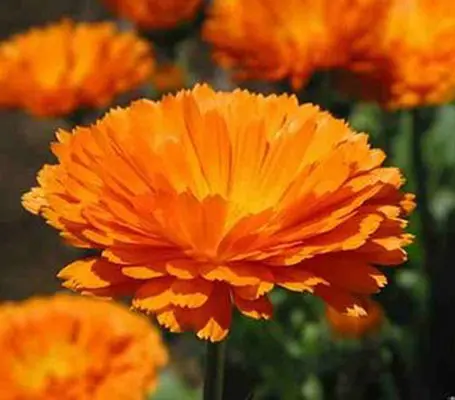
Calendula officinalis ‘Citrus Mixed’ is a highly attractive hardy annual variety producing a bright mixture of apricot, orange, lemon and cream blooms from May to September. Among the most popular of hardy annuals, they are very easy to grow, and thrive in the cooler weather of spring and autumn.
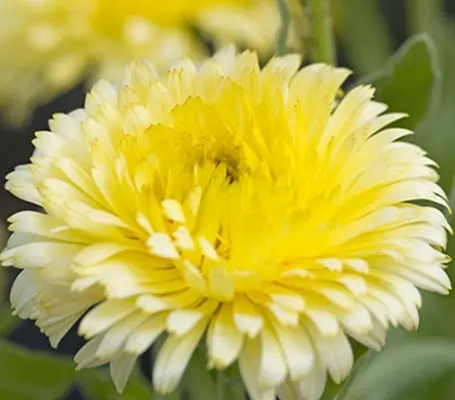
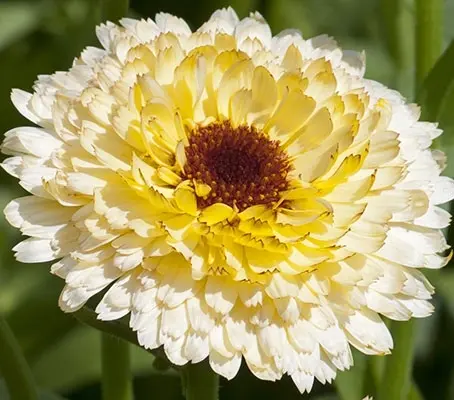
A unique new colour in Calendula, ‘Double Lemon’ is an award winning variety that produces large double, pale lemon blooms, each with a deep yellow heart. Compact, bushy and free flowering. it is an excellent variety for borders and containers.
Calendula officinalis ‘Cut Flower Mix’ is a specially selected mix of colours and types, each with long stems designed for cutting. They grow to a height of around 70 to 80cm, are an excellent variety for borders and make a stunning cut flower. Clip spent flowers to achieve a longer blooming season.
A delightful compact mix of single and semi-double forms, the daisy-like open petals of ‘Oopsy Daisy’ are bright in the centre with dark tips. Easy to grow, they thrive in the cooler weather of spring and autumn. This is an excellent variety for borders and containers and will add cheer to any location.
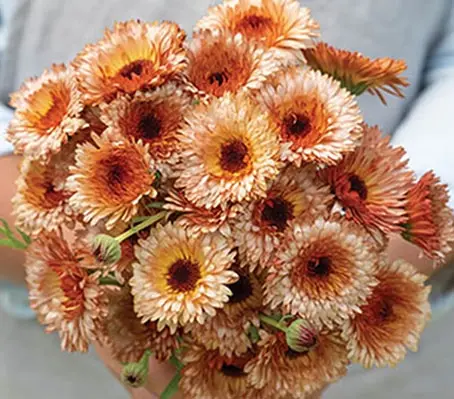
Don’t be misled by the name – Calendula officinalis ‘Orange Flash’ produces stunning apricot-copper coloured blooms with darker shades of ombré-rose on the reverse. They grow to a height of around 60cm and a spread of 45cm, are an excellent variety for borders and make a stunning cut flower.
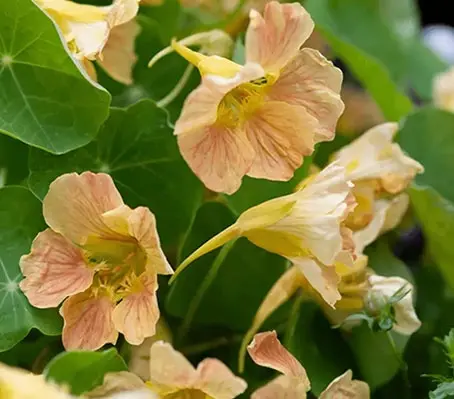
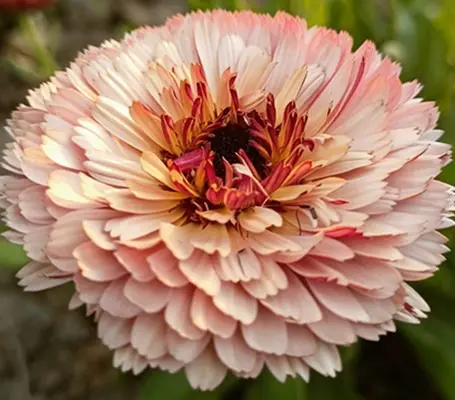
Calendula ‘Touch of Red Buff’ is a very interesting and unusual colour, a very contemporary beige-pink with darker petal tips giving a beautiful antique and vintage effect. For cut flowers, harvest when blooms are partially open and clip spent flowers to achieve a longer blooming season.
‘Touch of Red Mix’ is an exceptional, unusual and dramatic mix of colours. Containing the three colours in the ‘Touch of Red’ series, Buff, Orange and Yellow, each with deep bronze and red edges and backs of each petal. A very pleasing effect that will brighten up the garden or any floral arrangement.
Calendula officinalis is prolific and durable and so are perfect candidates for cutting and flower arrangements. Sprinkle salads and decorate cakes with the edible tangy petals. Organic Seed.

Today cornflowers are rare in the wild, they flourish instead in gardens. Aside from their electric blue flowers, breathtaking when grown in dense drifts, they are easy to grow, flower all summer, make great cut flowers and bees adore them. Organic Seed.Sweet Williams are one of those lovely old-fashioned flowers, easy to grow and famous for their delicious spicy-scent. The Auricula-eyed Group are irresistible, dense clusters of flowers in dark tapestry rubies, fuchsia, scarlet, purple and white.
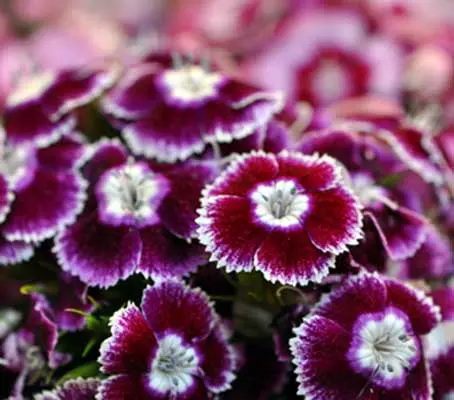
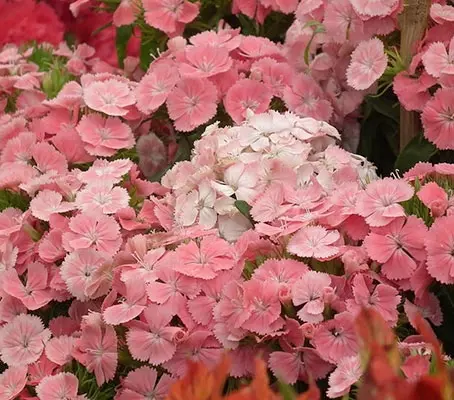
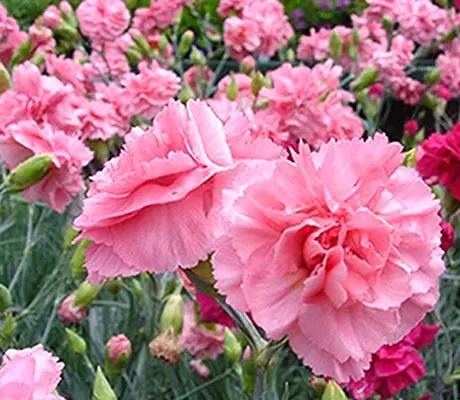
Sweet Williams are one of those lovely old-fashioned flowers, easy to grow and famous for their delicious scent. They are biennial, sown in May to July and will flower in late spring to early summer the year after sowing. ‘Newport Pink’ are irresistible, coral-pink flowers with delicately fringed petals.
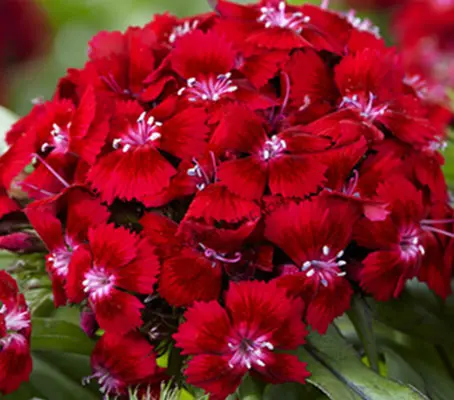
Treasured in the garden for their bright colour and strong fragrance, Dianthus barbatus ‘Scarlet Beauty’ flower all summer from May to August with clusters of single, brilliant scarlet red flowers, and best of all, they are intensely fragrant, with a delicious rich perfume.
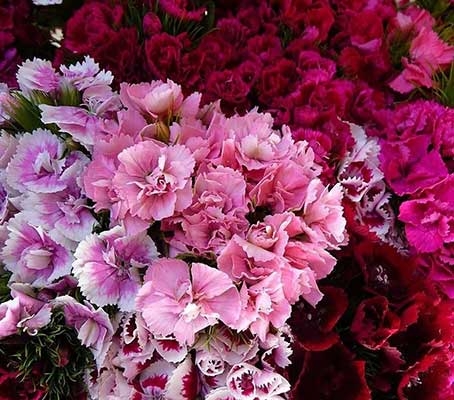
A striking strain of Sweet William, Dianthus barbatus ‘Super Duplex Mix’ has been bred for its exceptionally large, fully double blooms. The flowers form dense, rounded clusters, with ruffled petals in a very wide colour range. Easy to grow, with a light, sweet clove scent, everybody can grow them to perfection.
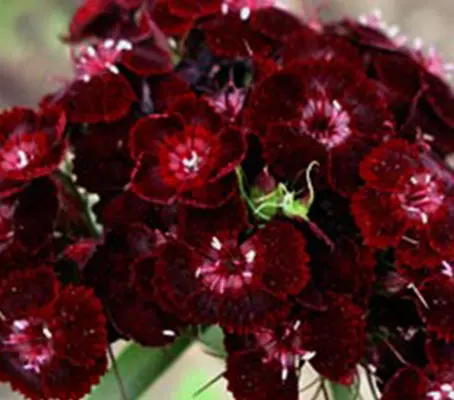
‘Sooty’ is one of the most unique of all Sweet Williams. It bears multiple densely packed heads of darkest ruby, almost black, fragrant blooms on red stems, and leaves that mature to a shimmering metallic mahogany.
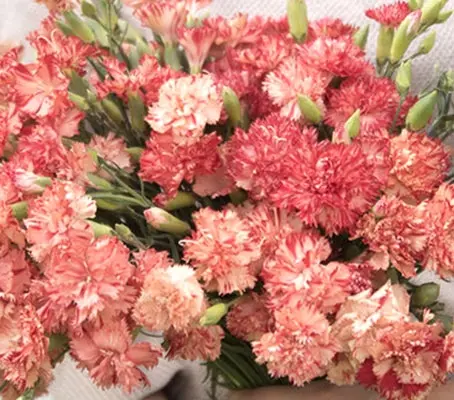
Developed for florists for use as a cut flower, the super tall stems of Dianthus ‘Chabaud Aurora’ display the most beautiful range of coral, salmon, blush, pink and cherry flowers. They will provide a continuous harvest of blooms for cutting from the end of April until the end of September.
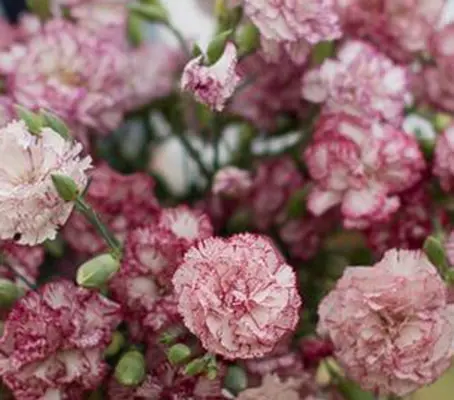
Dianthus Chabaud is a vintage carnation, developed for florists around 1904. With long stems, they are famously scented and provide a continuous harvest of blooms from April until September. Deliciously coloured, the creamy white petals of ‘Benigna’ are outlined with the fruitiest of plums and raspberry reds.
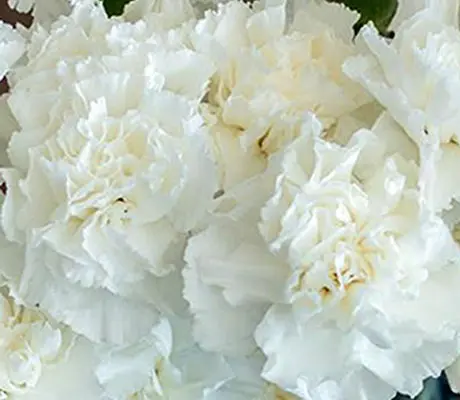
Boasting ruffled white petticoat-like blooms on strong stems, Dianthus ‘Chabaud Jeanne Dionis’ has the fullest of flowers. An ideal cut flower and perfect for wedding work, they will bloom all summer long from an early sowing.
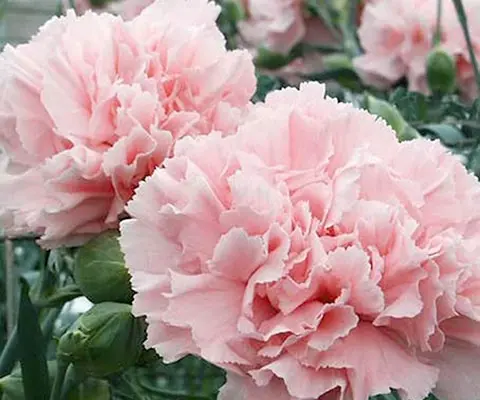
Developed for florists for use as a cut flower, the super tall stems of Dianthus ‘Chabaud La France’ are topped with blooms in the most delicate shades of seashell pinks to creamy blush. They will provide a continuous harvest of blooms for cutting from the end of April until the end of September.
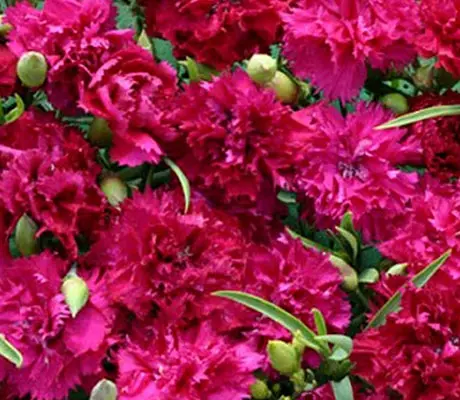
‘Chabaud Magenta’ provides armfuls of deep magenta, frilly double blooms with the spicy fragrance of clove. Pronounced shab-o, they were developed specifically for florists for use as a cut flower. With a heavenly scent, tall stems and an extremely long vase life.
Developed for florists for use as a cut flower. Dianthus Chabaud is a vintage carnation that dates back as early as 1904. Displayed profusely on slender, sturdy stems, the apricot and soft orange blushing petals of Chabaud ‘Orange Sherbet’ are striped with dark raspberry red and coral.
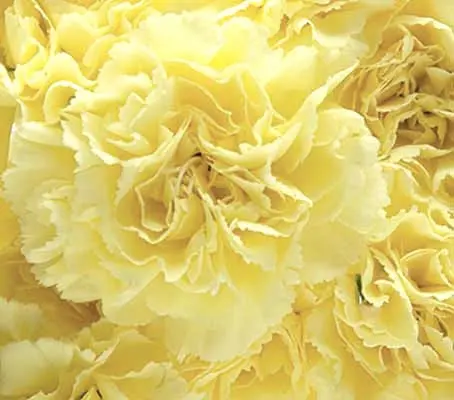
Hardy, tough and very easy to grow, Dianthus Chabaud were developed for florists for use as a cut flower and will provide a continuous harvest of blooms for cutting. ‘Marie Chabaud’ provides armfuls of delicate, pale lemon yellow, frilly double blooms.
This fabulous range of Edible Flowers and Herbs give decorative petals and leaves for use as garnishes and flavourings. Some are spicy, and some herbaceous, while others are floral and fragrant, the range is surprising. They will bring a stunning finish to the food and drinks you that you love.
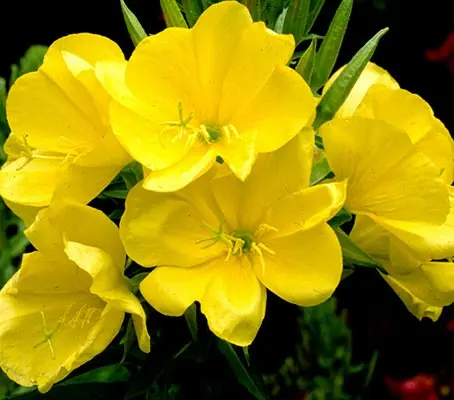
Evening Primrose is a classic plant, with its beautiful yellow flowers is a feast for the eyes as well as the belly. The whole plant is edible: the leaves can be cooked as greens, and the nutty-flavoured roots can be boiled and eaten like parsnips. The flowers make a lovely salad garnish.
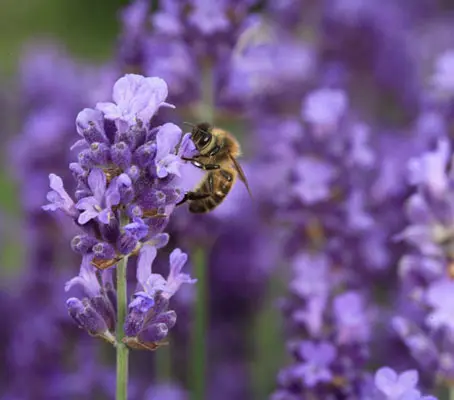
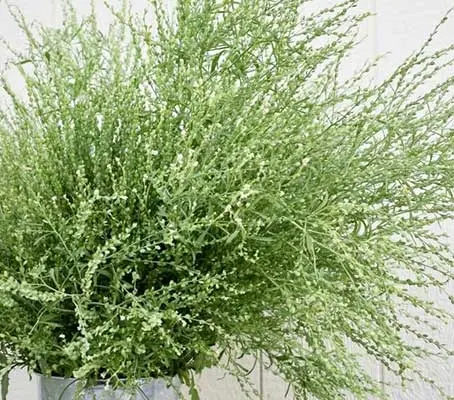
Lavandula angustifolia, also called Lavender vera is the best Lavender for medicinal and aromatherapy purposes. It is a staple plant for the herb garden, the fragrant flowers have been used in perfumes, poultices and potpourris for centuries. Organic Seed.Lepidium sativum, commonly called Persian Cress or Ornamental Cress is a trendy filler green among floral artists and they keep it in regular demand. This easy to grow filler foliage grows upright, sturdy branches decorated with tiny, silvery seed pods by the thousands.
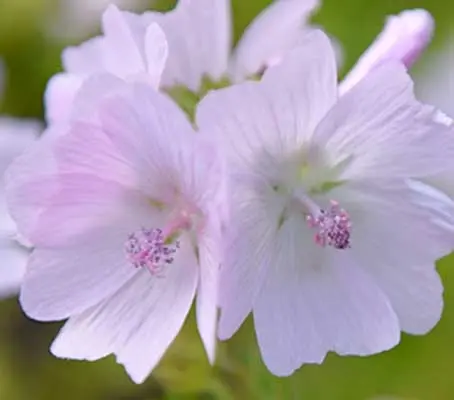
Shorter than the species, Malva moschata ‘Appleblossom’ grows 45 to 60cm in height. The satiny, single flowers in a lovely soft shade of silver-pink, are textured and striated like crepe, they have a lustrous lacquered quality in sunlight. Wonderfully appealing to bees and other pollinators, they also make a good cut flower.
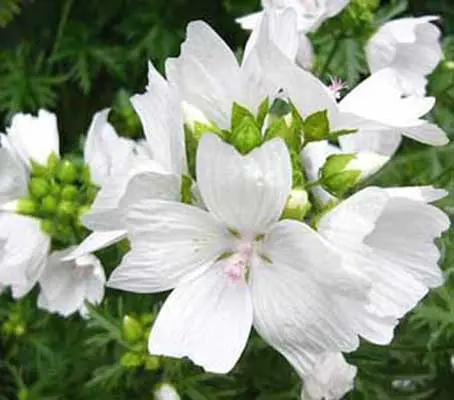
Considered by many gardeners to be the most desirable of the Malva species, this rare white-flowered form is even lovelier than the normal rose-pink Musk Mallow. Flowering throughout the summer, the pure white, scented flowers contrast beautifully with the ferny foliage.
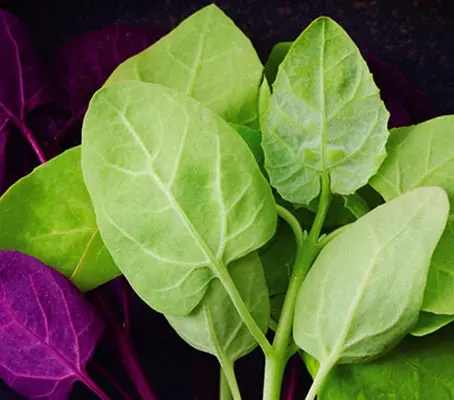
Orach is a heat and cold tolerant green for all seasons, supplying large quantities of mild heart-shaped leaves with a pleasant flavour and texture. It grows quickly early in the year and has a nice citrus touch, great for salads and are a great alternative to spinach. Organic Seed.
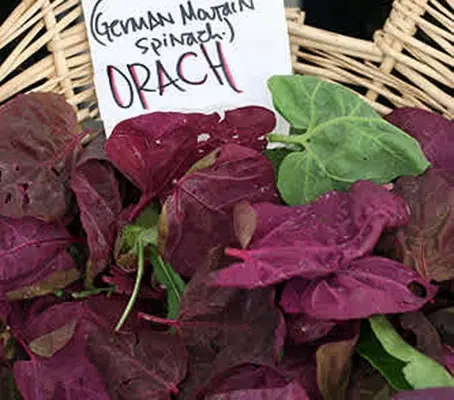
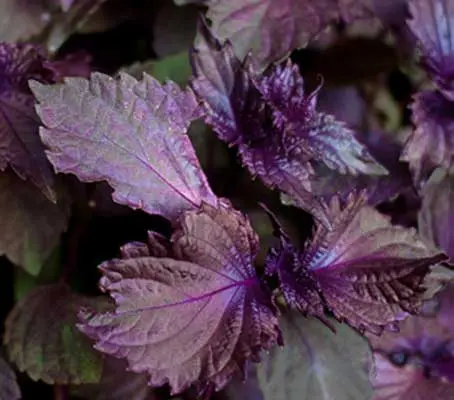
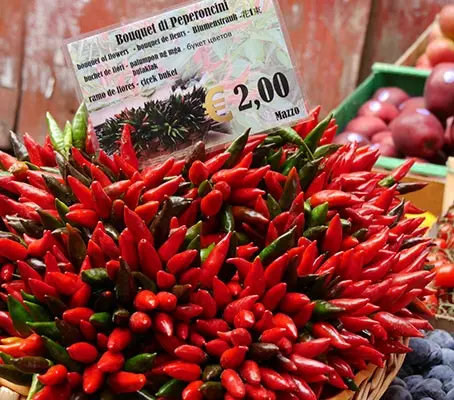
Orach is a heat and cold tolerant green for all seasons. With red-purple leaves that look great in the garden and on the table. Whether using individual leaves in salad mix, cooked like spinach or as a micro-green, the colour is always spectacular. Organic Seed.Pepper ‘Picante a Mazzetti’ produces attractive cone shaped, chillies which grow vertically with many fruits per bunch. They mature to a festive, deep scarlet red, and have a multitude of ornamental uses. Sown May to June they will produce fruits in perfect time for Christmas.
Shiso ‘Akajiso’ the red leaf variety of Perilla is used extensively in Japan to season vegetables, rice, soups, fish, etc. It has a wonderful complex aroma, the taste is almost always said to be quite hard to describe – the words cinnamon, basil, anise, and citrus pop up in the attempts.
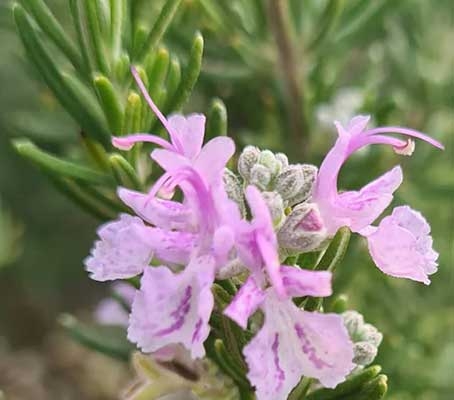
A fresh twist on a classic, Rosemary ‘Rosy’ keeps all the familiar virtues of this herb garden favourite but dresses them in soft pink. Neatly branching plants carry slender, aromatic leaves and, from early spring, are studded with clouds of small rose-pink flowers that hum with bees and other pollinators.
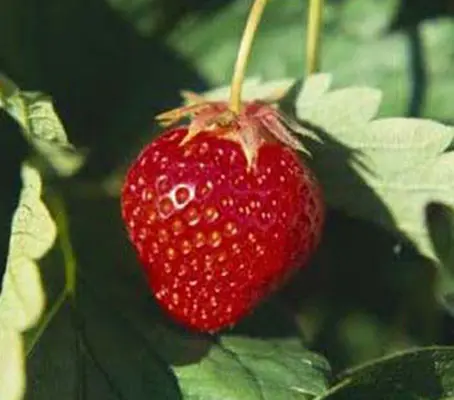
This wonderful heritage variety of alpine Strawberry produces loads of little red strawberries that are bursting with flavour. Much sweeter than their traditional commercial cousins they possess a fine, old fashioned flavour. Plants have compact growth with few runners. An alpine Strawberry that is very hard to find, excellent for high altitude climates!
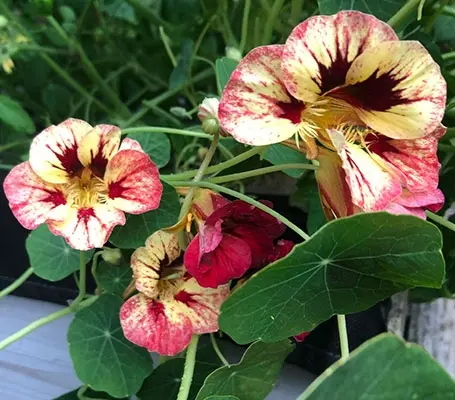
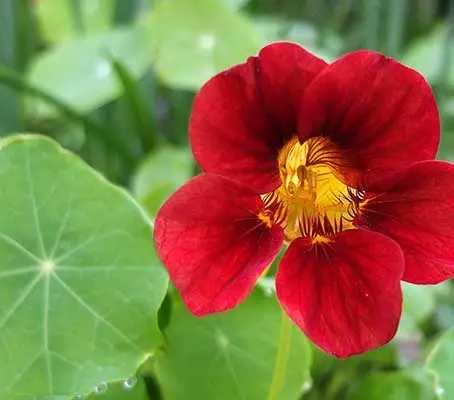
Nasturtium ‘Bloody Mary’ is an award winning Nasturtium with a unique flower pattern. Dramatic 5cm flowers in shades of dark red, coral red, cream, and unique bicolours, make a melodramatic scene in the flower bed, container or vase. Highly decorative they are in flower from May right through to October.
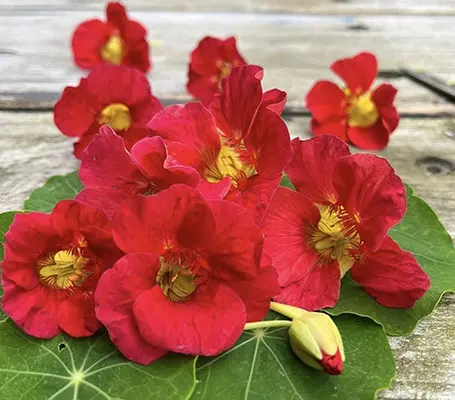
Tropaeolum ‘Fiery Festival’ is a trailing nasturtium variety that boasts vibrant bright red blooms with yellow centers. Its vines can extend up to 150cm, making it ideal for ground cover, hanging baskets, or climbing supports. Additionally the flowers are edible and serve a useful role in companion planting.
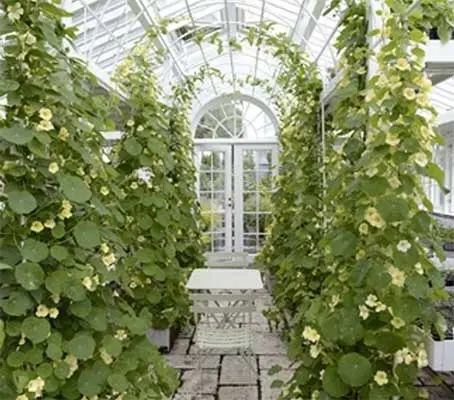
Notable for its rare flower colour, Nasturtium ‘Milkmaid’ produces blooms in a lovely soft, creamy hue. The top of the milk rather than full cream, and at around 2 metres in length it can be trained to ascend trellises, fences, or arches, or allowed to trail gracefully. An excellent choice for gardeners seeking a more understated palette.
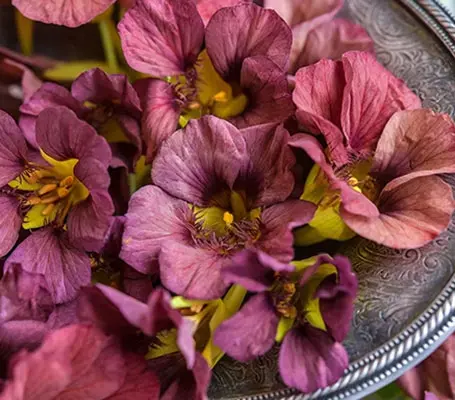
‘Purple Emperor’ is an exciting new palette with a vintage colouration that is quite unique to nasturtiums. Initially opening a dusky, antique burgundy they fade in the most beautiful way to a vintage lavender-rose.
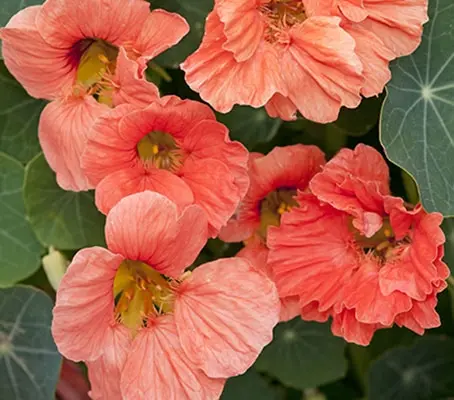
Tropaeolum ‘Salmon Baby’ is a very striking and attractive nasturtium that produces an abundance of semi-double salmon-pink flowers which contrast beautifully against the dark foliage. Extremely easy to cultivate, this neat and compact variety has edible flowers and is an excellent companion plant.
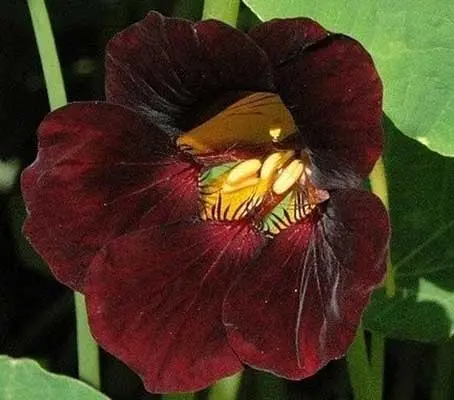
Celebrated for its striking, velvety deep-red to near-black flowers, which provide dramatic contrast, Tropaeolum ‘Black Velvet’ is a visually captivating and versatile plant that combines ornamental beauty with culinary and ecological benefits.
Glowing cherry-coral blooms give this variety a warm, tropical quality, and the versatile colour mixes well with so many things. Nasturtium ‘Jewel Cherry Rose’ has a more mounding growth habit than other trailing nasturtiums, but stem length is sufficient for arranging, and it won’t overtake the garden.
Celebrated for its striking, velvety deep-red to near-black flowers, which provide dramatic contrast, Tropaeolum ‘Black Velvet’ is a visually captivating and versatile plant that combines ornamental beauty with culinary and ecological benefits.
In multiple hues of apricot, the petals of Tropaeolum ‘Tip Top Apricot’ have a darker veining with a deeply shaded throat. This award winning, premium series produce 45 to 50cm mounded plants that are extremely floriferous and have a long flowering season.
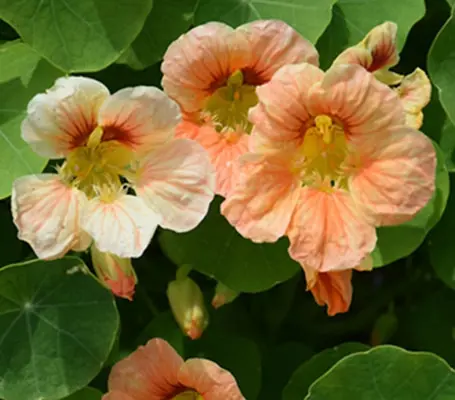
‘Tip Top, Pink Blush’ is a premium series that provides uniquely coloured flowers that are a great addition to the nasturtium family. Vintage-cream flowers, finely veined with apricot-pink. The subtle palette gives a relaxed, modern look to borders and larger containers alike.
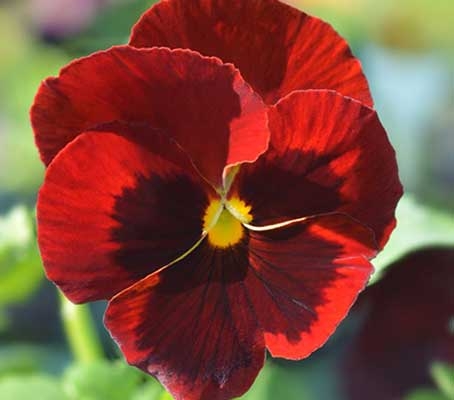
Viola ‘Arkwright Ruby’ is an antique variety that is a favourite among gardeners for both its historical charm and ornamental beauty. The rich, velvety ruby-red blooms are incredibly versatile, perfect for almost anywhere in the garden or for the vase.
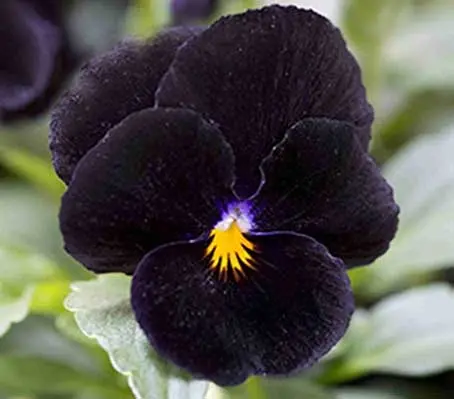
Viola cornuta ‘Back to Black’ is a striking cultivar of the horned violet, admired for its exceptionally dark, velvety flowers. The blooms are an intense black-purple, so deep that they often appear pure black. If you want to achieve long stems for the vase, plant them close, 5 to 10cm apart.
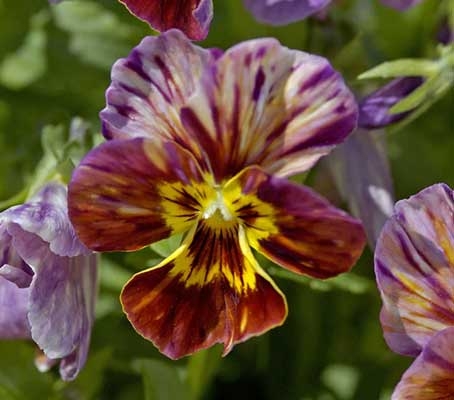
Renowned for its unique, hand painted, Viola ‘Brush Strokes’ is a captivating variety that has been carefully chosen from a cherished collection of historic strains. A harmonious blend of soft apricot, honey, plum, cream and lavender tones, often accented by intricate flecks and fine veining.
Viola ‘Chantreyland’ is a compact, cool-season charmer. Soft apricot petals with hints of cream, washed with a blush of sunset pink. She’s made for edging, containers, or nestling into cracks in old stone. Quite unforgettable once you’ve met her. no wonder she has been in cultivation since 1923.
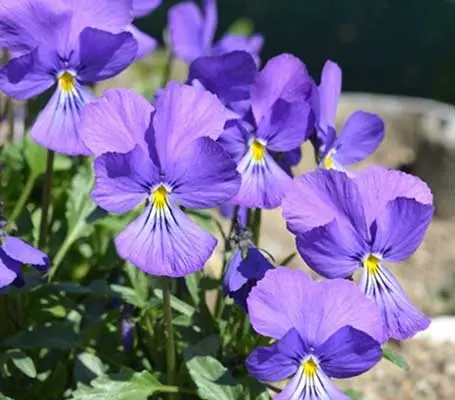
A real gem from the mountains of Italy, Viola corsica ‘Bertolonii’ is a rare but easy-to-grow viola that deserves a spot in any sunny garden. It forms tidy clumps of dark green, lance-shaped leaves and puts on a gorgeous display of large, azure-blue flowers from April through June.
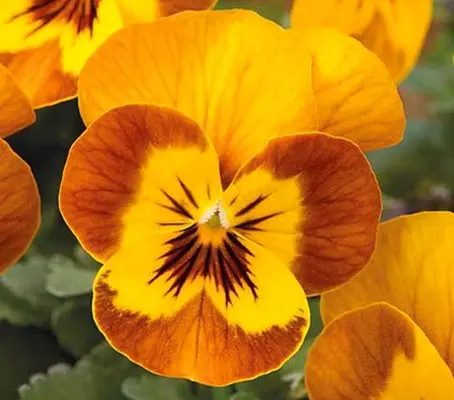
Viola ‘Sorbet F1 Honeybee’ is a real heartbreaker in a six-petal suit. They bloom with rich mahogany and warm golden yellow petals – rather like sunlit honey. Near the centre there’s a soft black whisker pattern. Perfect for use in beds or containers and for attracting pollinators to the garden.
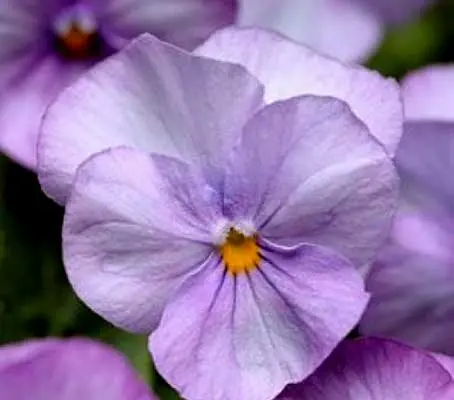
A delicate lavender kissed with rosy pink undertones, the top petals of Viola ‘Sorbet F1 Lavender Pink’ lean a little more to lavender, the lower ones more pink, giving it a subtle watercolor fade. Refined, elegant and easy on the eye.
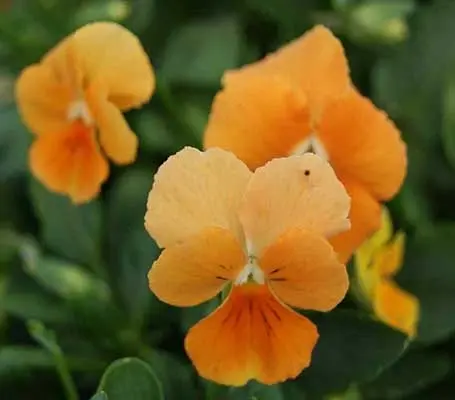
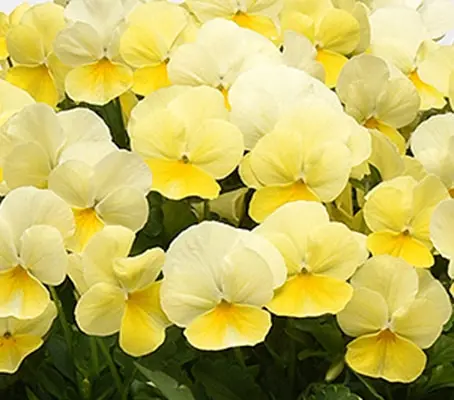
Viola hybida ‘Sorbet F1 Lemon Chiffon’ is pure joy in the form of a flower, with pale lemon-yellow upper petals with warm yellow lower petals. The compact, mound shaped plants grow 15cm high and up to 30cm wide. They are very tolerant of heat and cold, and in climates with mild weather they will flower all winter.
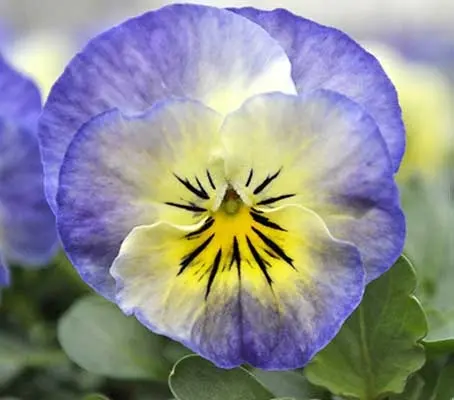
Well-regarded in horticultural circles, Viola Sorbet XP Neptune F1 is a premium cultivar, for its consistent performance across a wide range of climates and seasons. ‘Neptune’, displays striking blooms characterised by a soothing blend of soft blue and cream petals, often with a delicate yellow center and a faint blue picotee edge.
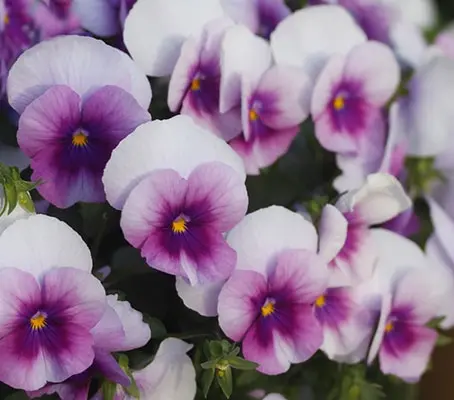
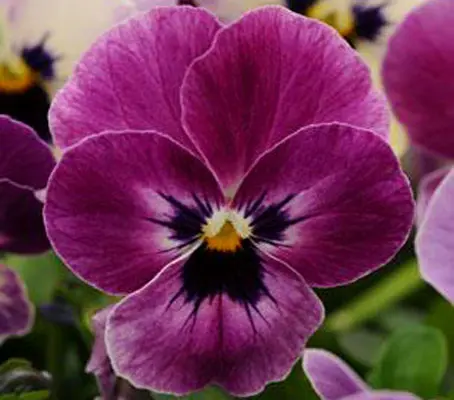
One of the most striking colour combinations of the series, Sorbet ‘Orchid Rose Beacon’ blooms with bicoloured flowers of bicoloured flowers of with rose and purple-pink face, with dark whiskers and a golden eye. Absolutely gorgeous, it can be slipped into almost any gaps where you need a little brightness.
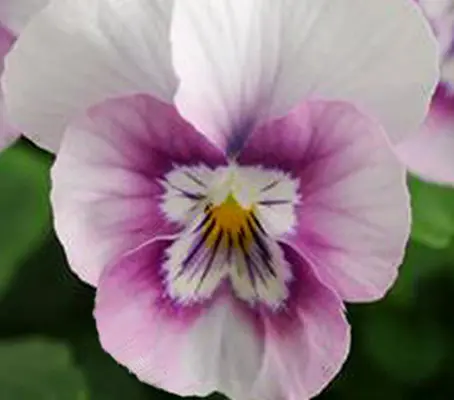
The Sorbet series is the premier series of Violas. Bred to have more blooms and less stretching, it is a standout performer in both spring and autumn. Sorbet F1 ‘Pink Halo’ have petals that are a crisp white. At the centre there’s a raspberry-pink halo that fades outward and dark whiskers that radiate from the centre.
Sorbet ‘F1 Raspberry’ has tricolour patterns with cap, face, whiskers and eye colours, with luscious deep raspberry red upper and lower petals with dark whiskers and a golden eye. It is a stunning new colour pattern, with a bright face that seems to be basking in the spring or autumn sunshine
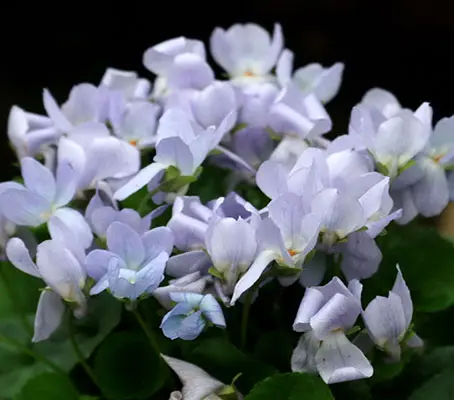
Cultivated in Switzerland in 2004 from the famous ‘Queen Charlotte’, One would think that ‘Reine de Neiges’, or ‘Snow Queen’ would be a white bloomer. The flowers are almost white, a clear crisp ice-blue. Long blooming and upward facing, their fragrance is intense.
€3.95 – €23.95Price range: €3.95 through €23.95
€2.65
€2.00