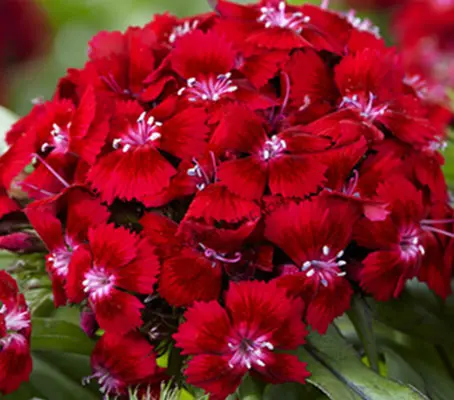
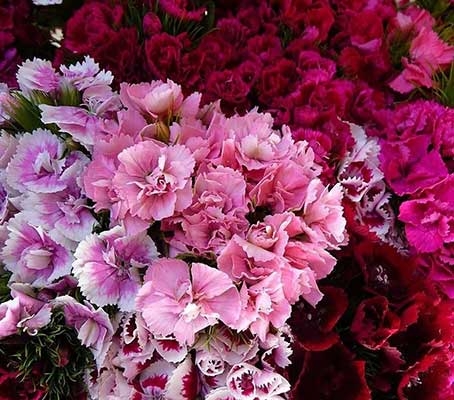
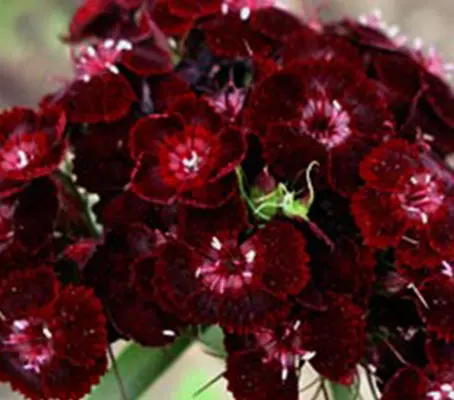
Sweet Williams are one of those lovely old-fashioned flowers, easy to grow and famous for their delicious spicy-scent. The Auricula-eyed Group are irresistible, dense clusters of flowers in dark tapestry rubies, fuchsia, scarlet, purple and white.
Sweet Williams are one of those lovely old-fashioned flowers, easy to grow and famous for their delicious scent. They are biennial, sown in May to July and will flower in late spring to early summer the year after sowing. ‘Newport Pink’ are irresistible, coral-pink flowers with delicately fringed petals.
Treasured in the garden for their bright colour and strong fragrance, Dianthus barbatus ‘Scarlet Beauty’ flower all summer from May to August with clusters of single, brilliant scarlet red flowers, and best of all, they are intensely fragrant, with a delicious rich perfume.
A striking strain of Sweet William, Dianthus barbatus ‘Super Duplex Mix’ has been bred for its exceptionally large, fully double blooms. The flowers form dense, rounded clusters, with ruffled petals in a very wide colour range. Easy to grow, with a light, sweet clove scent, everybody can grow them to perfection.
‘Sooty’ is one of the most unique of all Sweet Williams. It bears multiple densely packed heads of darkest ruby, almost black, fragrant blooms on red stems, and leaves that mature to a shimmering metallic mahogany.
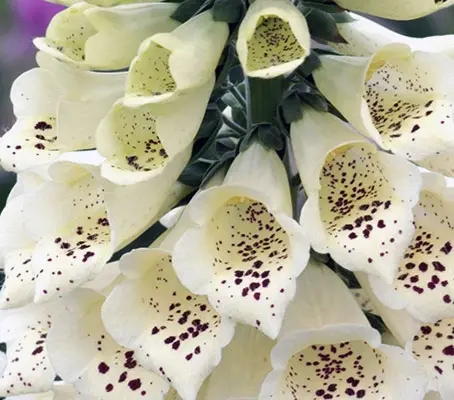
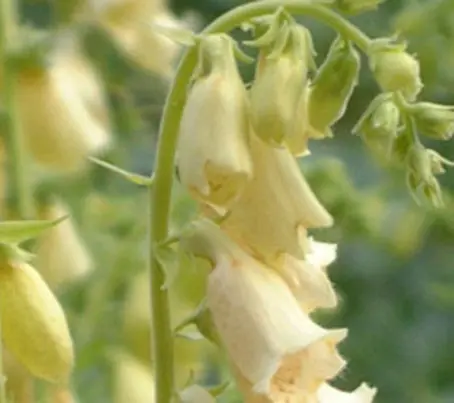
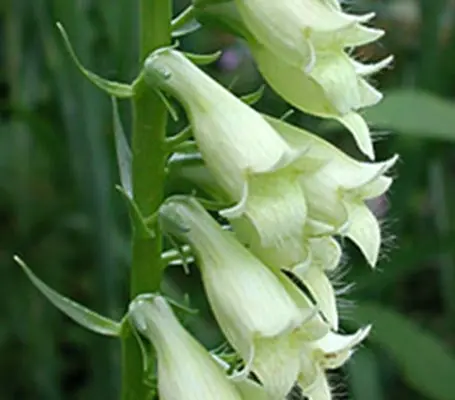
There are not many yellow flowering foxgloves and as they are so rare each one is joyfully celebrated. Digitalis ‘Cream Bell’ is one of the few truly perennials. Extremely hardy it bears upright stalks of beautiful creamy-yellow bells. A lovely soft shade that blends with almost anything in the garden.
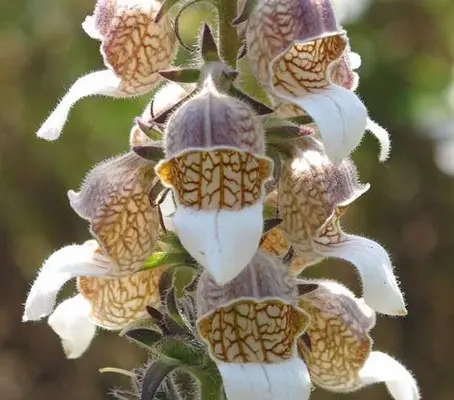
Digitalis lanata has a beautiful colouration, from late spring to mid summer it produces spikes of densely packed, fawn-coloured flowers each with a pearl coloured lower lip. Each of the blooms is delicately patterned with dark brown veins. Digitalis lutea is a quite a different species to the traditional cultivated foxglove, with delicate small flowers; it is an easily grown plant that is reliably perennial. It bears delicate pale cream-yellow tubular flowers and grows to just 60cm in height. This delicate foxglove is a charming beauty wherever it is planted.
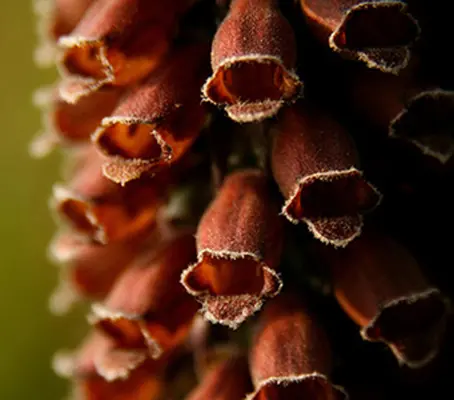
An aristocrat from Spain with densely packed spikes of cylindrical small chocolate funnels above dark green coloured glossy leaves. The rich foliage has a sheen that sets these dramatic flower spikes off wonderfully. A plant that will stop viewers in their tracks and have them enquiring its identity.
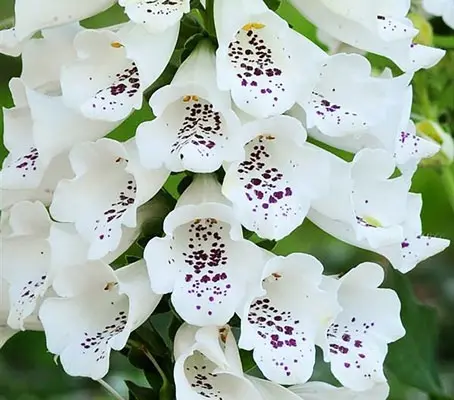
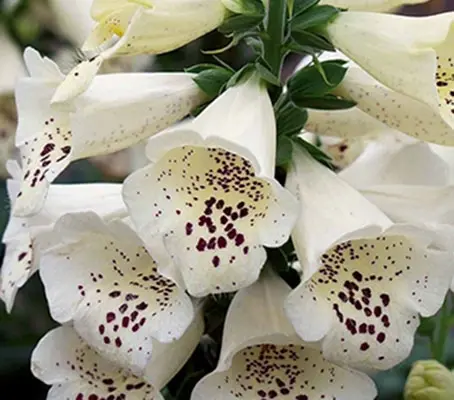
Digitalis ‘Elsey Kelsey’ is one of the best new foxgloves found in recent years. Their elegant upright habit, long spikes of flowers and their heavenly white bell shaped flowers with densely speckled throats of deep maroon-purple make impressive features in the garden.
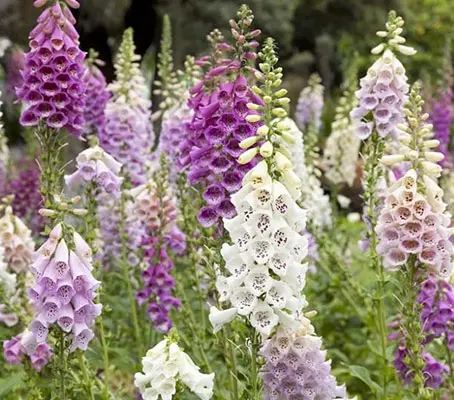
Digitalis purpurea ‘F1 Camelot Cream’ produces towers of a delicate buttercream colour, the dense spikes of blooms are borne all the way around the stem. Developed to flower in the first year, they can be sown anytime from January to September. This premium series has been developed for florists to be first year flowering, with good-quality, dense spikes that are long flowering and well-branched, Digitalis ‘F1 Camelot Lavender’ produces towers of an exquisite colour with blooms borne all the way around the stem.
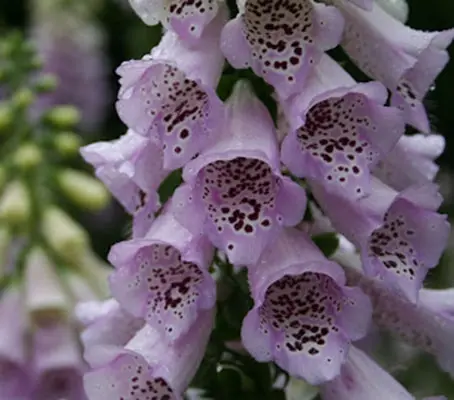
Developed for florists to be first year flowering, this premium series produces dense spikes that are long flowering and well-branched. Digitalis ‘F1 Camelot Rose’ produces towers of an exquisite colour with outward facing blooms borne all the way around the stem.
Digitalis purpurea ‘F1 Camelot Cream’ produces towers of a delicate buttercream colour, the dense spikes of blooms are borne all the way around the stem. Developed to flower in the first year, they can be sown anytime from January to September.
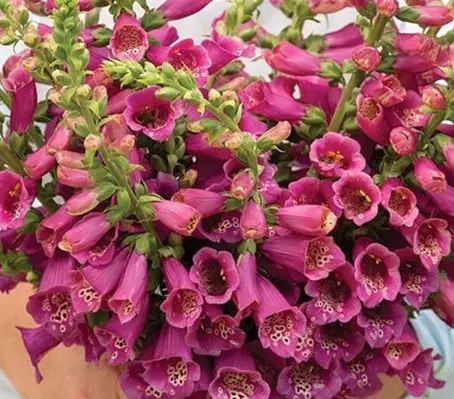
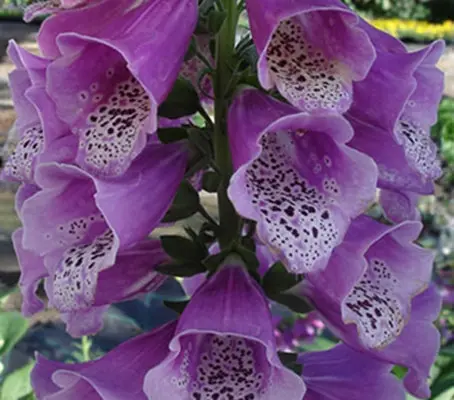
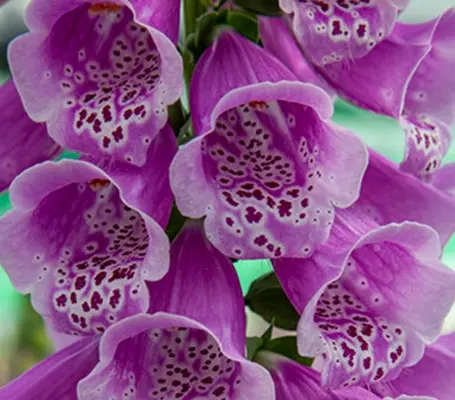
Early flowering and fast growing, award winning Digitalis ‘Dalmatian Purple’ produces towers of gorgeous lavender-purple blooms with deep mauve interior markings. The good-quality spikes are uniform in height, well-branched with excellent habit and compact foliage.
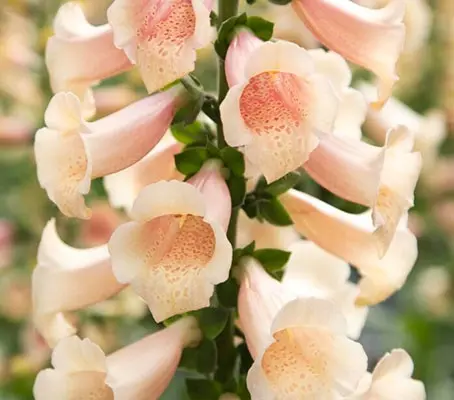
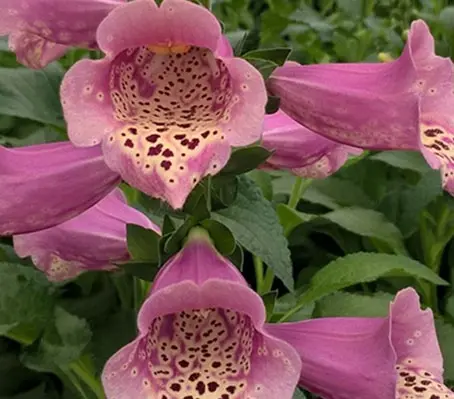
Early flowering and fast growing, award winning Digitalis purpurea ‘Dalmatian Peach’ produces towers of swoon-worthy peachy blooms with freckled interiors. A huge bonus is that the series blooms the first year from an early indoor sowing. Sow successionally for continuity of blooms
Early flowering and fast growing, award winning Digitalis ‘Dalmatian Purple’ produces towers of gorgeous lavender-purple blooms with deep mauve interior markings. The good-quality spikes are uniform in height, well-branched with excellent habit and compact foliage. A new a super-fast, first year flowering perennial, Digitalis ‘Dottie Mix’ produces flowers in five gorgeous, soft colours just 20 to 24 weeks from sowing. The plants grow quickly to 75cm tall and are more compact at flowering than other F1 series, the showy spikes carry big blooms and quickly fill large 15 to 25cm pots with ease
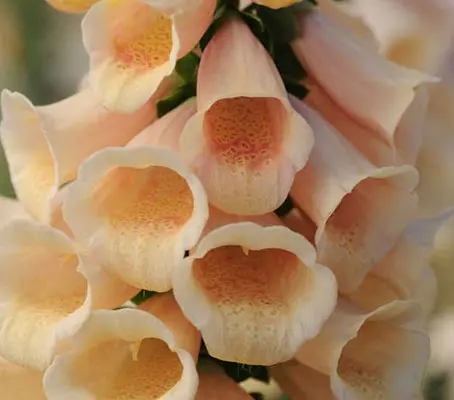
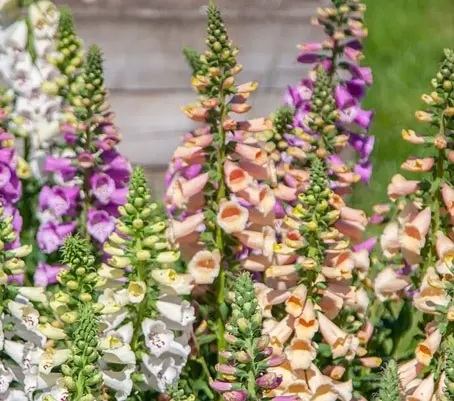
A new a super-fast, first year flowering perennial, Digitalis ‘Dottie Mix’ produces flowers in five gorgeous, soft colours just 20 to 24 weeks from sowing. The plants grow quickly to 75cm tall and are more compact at flowering than other F1 series, the showy spikes carry big blooms and quickly fill large 15 to 25cm pots with ease
Digitalis ‘F1 Dottie Purple’ is an outstanding colour, deep purple tubular flowers with contrasting dark speckling. The showy spikes provide numerous high quality stems for a flower-packed display. This first year flowering type that lends itself to successional planting. Sow in late summer to autumn for the earliest spring blooms.
A new a super-fast, first year flowering perennial, Digitalis ‘Dottie Mix’ produces flowers in five gorgeous, soft colours just 20 to 24 weeks from sowing. The plants grow quickly to 75cm tall and are more compact at flowering than other F1 series, the showy spikes carry big blooms and quickly fill large 15 to 25cm pots with ease
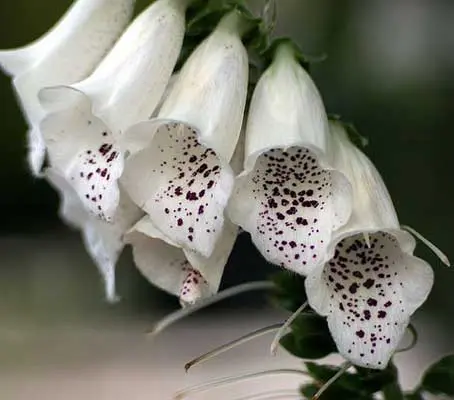
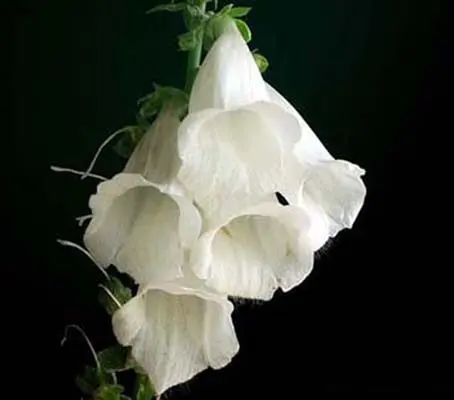
The pure unadulterated white form of this supremely elegant woodlander. Pure white foxgloves lighten up those shaded corners, giving a sense of depth and interest to an otherwise dark area. Grown as a single colour in a perennial bed they are outstanding for their simplicity alone.
Digitalis purpurea var gloxinioides is an outstanding and unusual strain of Foxglove. Resembling the Gloxinia plant, the open flowers are tubular, each with frilled edges. With tall dense spikes of blooms, they are held horizontally and display the heavily spotted throat markings to better advantage.Digitalis thapsi ‘Spanish Peaks’ foxglove is a lovely compact foxglove that produces elegant, apricot-cream to raspberry-rose blooms with interior markings. A superb perennial species that can be counted on for a glorious floral show each spring. Very easy to grow in virtually any location, it is often the first foxglove to flower.
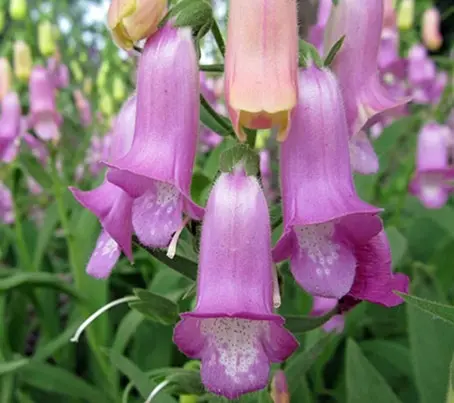
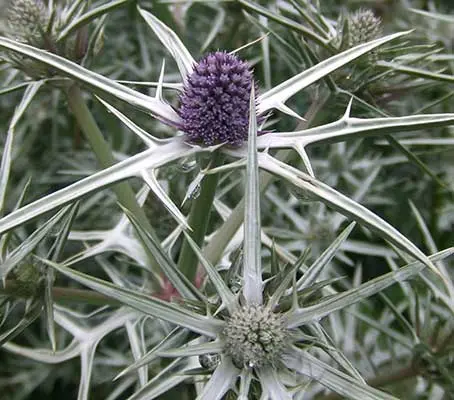
Eryngium variifolium ‘Miss Marble’ is a spectacular evergreen perennial. The neat mound of basal leaves are attractively marbled with silver veining. In summer upright stems bear silvery-blue flowers, each thimble is surrounded by long, slender bracts which splay outwards, adding to the prickly appearance.
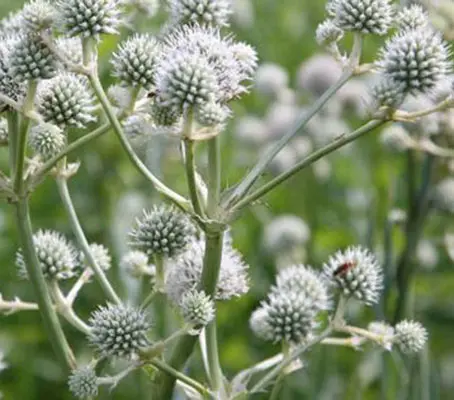
Long sword-shaped leaves, tight set white spheres and ivory-white bracts on smooth stiff stems. Eryngium yuccifolium have a unique structure that make it highly desirable.
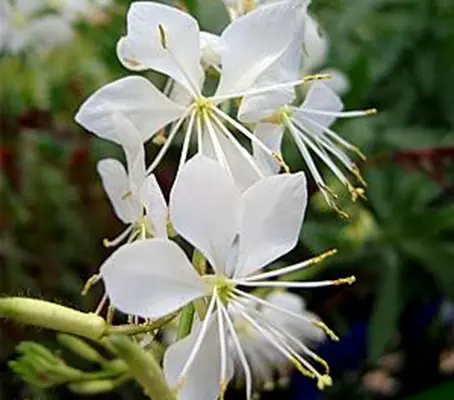
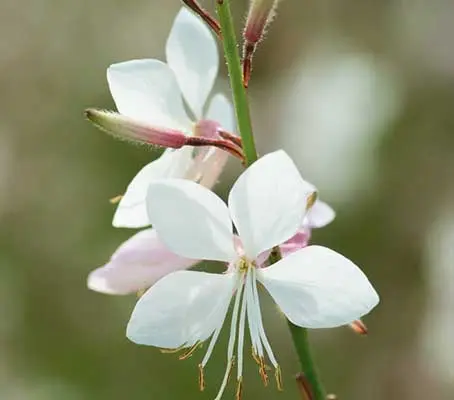
Gaura ‘Cool Breeze’ is a stunning new variety that is now available from seed. It produces a flurry of dazzling pure white, starry blooms on graceful slender stems. They have pale green stamens and buds instead of the usual pink. A first year flowering perennial, very easy to grow it will bloom in around 14 weeks from an early sowing.
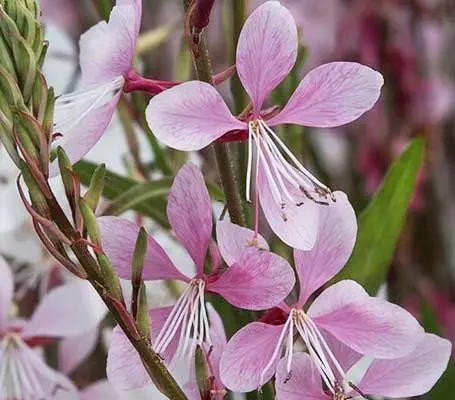
Gaura ‘Emmeline Pink Bouquet’ is a graceful perennial with an airy, romantic presence. Light on her feet, she never asks for much – just sun, well-drained soil, and a bit of space to dance.
Gaura lindheimeri ‘Sparkle White’ is a stunning hardy perennial. A Winner of the Fleuroselect Gold Medal, this bushy, clump forming variety has a neat, compact habit and produces a flurry of dazzling white, starry blooms on graceful slender stems from early summer right through to autumn.
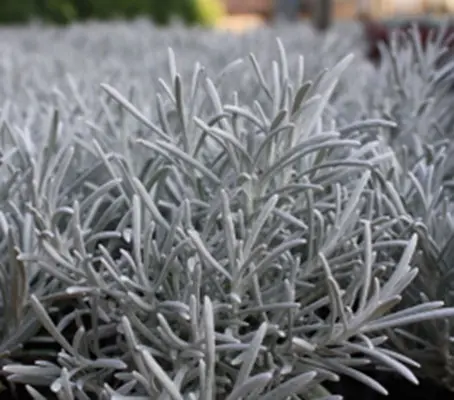
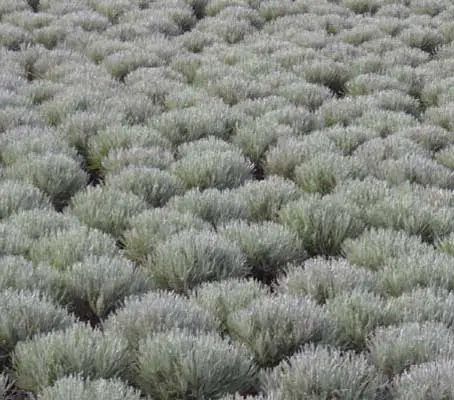
Helichrysum italicum is an easy to care for silver-leaved, perennial. In addition to its lovely light silveriness the foliage is endowed with interesting textures which provides contrast among green-leafed plants and the clusters of yellow flowers are useful for cutting. From the Tian Shan Mountains of northern China comes this tough little subshrub that is among the finest expressions of silver foliage to be found. Helichrysum thianshanicum is a superb silver leaved evergreen, subshrub that forms a tight mound of eye-catching silver foliage.
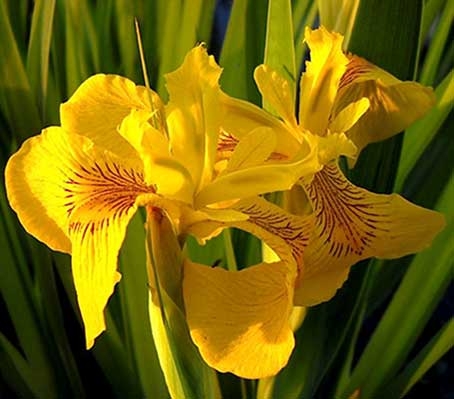
Yellow Flag Iris is a common and widespread native plant. This good-looking plant is a wetland plant that is especially showy in bloom and has been transplanted into well-watered gardens all over the world.
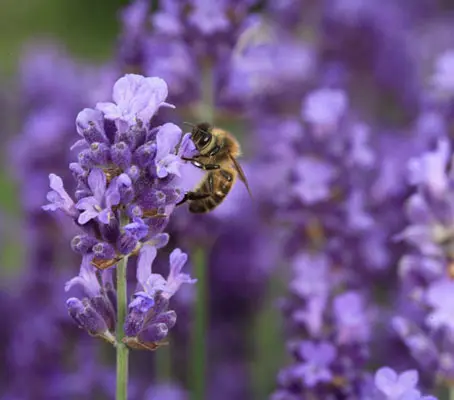
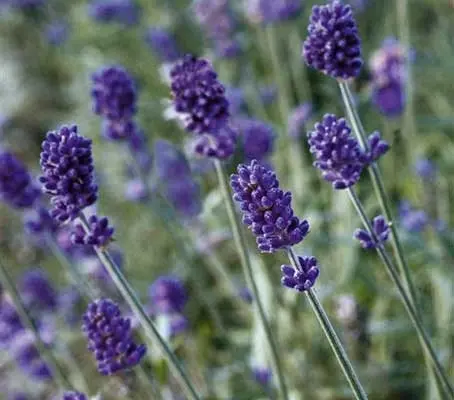
Lavandula angustifolia, also called Lavender vera is the best Lavender for medicinal and aromatherapy purposes. It is a staple plant for the herb garden, the fragrant flowers have been used in perfumes, poultices and potpourris for centuries. Organic Seed.Fragrant, free flowering and heat and drought tolerant. Lavandula angustifolia ‘Vicenza Blue’ bloom the first year from seed. This especially fine lavender has bold clustered flower spikes of deep lavender-blue from mid July to early September.
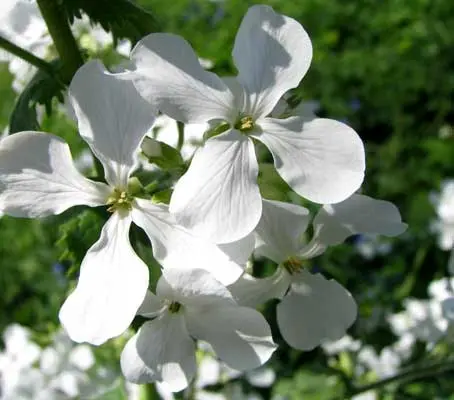
Lunaria annua alba has pure white starry blooms which are almost fluorescent at sunset. Over a long season it produces masses of silvery pods. It is properly grown as a biennial, and makes large, well-branched plants in its second year. Very easy to grow it is also a vital nectar plant.
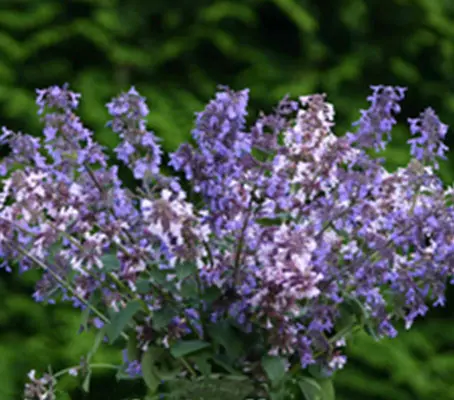
Nepeta grandiflora is a superb catnip garden performer and one of the best garden plants in this family. ‘Border Ballet’ is a striking new catmint, lusher than true catnip, with dark green leaves. It flowers in shades of blue and pink in perfect harmony. This easy to sow and grow perennial flowers in the first year of sowing.
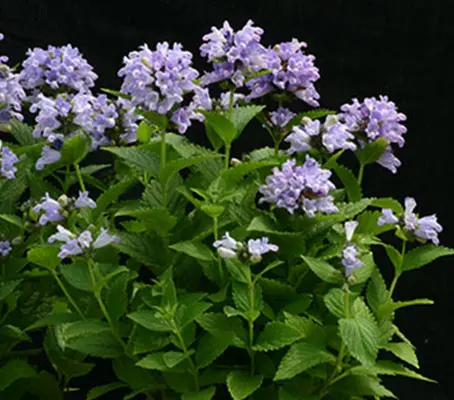
Nepeta ‘Dark Blue Panther’ is the dark blue flowered variety and sister to ‘Pink Panther’ and the beautiful white ‘Snow’ Panther. This award winning variety starts to flower just 15 weeks after sowing and can be can be grown as an annual or as a flowering perennial.
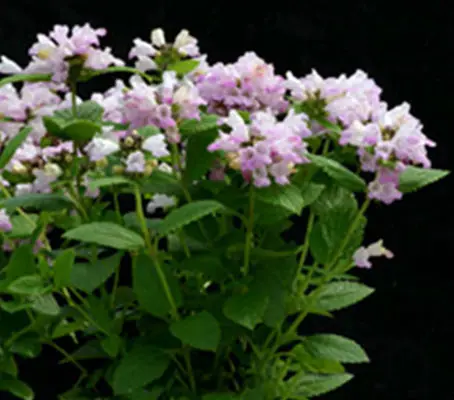
Nepeta subsessilis ‘Pink Panther’ is a bright pink form of large-flowered Nepeta which is grown from seed and flowers during the first year. It can be grown as an annual or as a flowering perennial. Flowering from June until the end of September, they work well as an informal low hedge or mixed in with other larger plants.
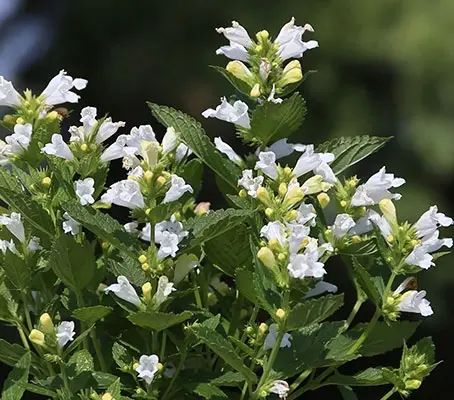
Recognised as having the largest flowers of all the nepetas and only one with white flowers, Nepeta subsessilis ‘Snow Panther’ flowers during the first year and can be grown as an annual or as a flowering perennial. This award winning variety is extremely attractive to bees and butterflies they are also excellent for containers.
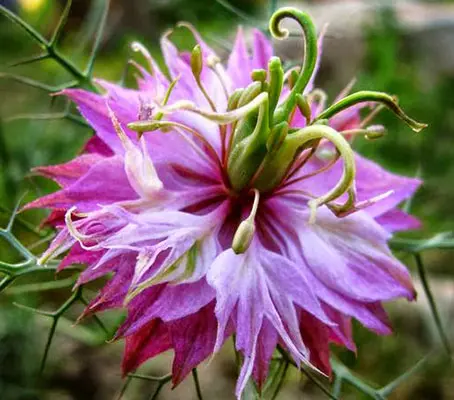
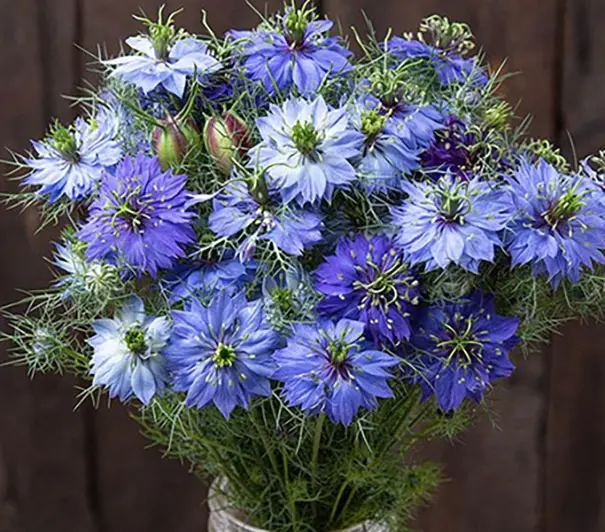
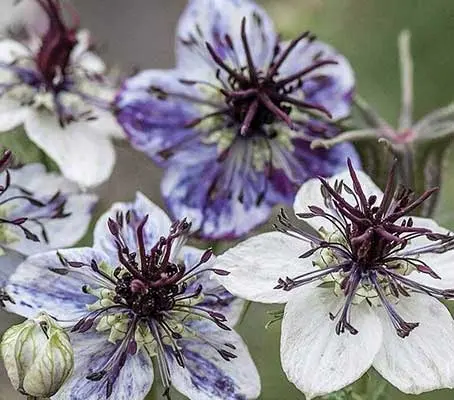
‘Love-in-a-Mist’ as it is commonly known is both beautiful and easy to grow, “Miss Jekyll” bears rich indigo-blue flowers which seem to float amongst the finely cut leaves. It is one of the most interesting shaped flowers you will ever see. They provide a charming show of bloom during the summer months.Once the petals drop, the blossoms transform into little fairy lanterns
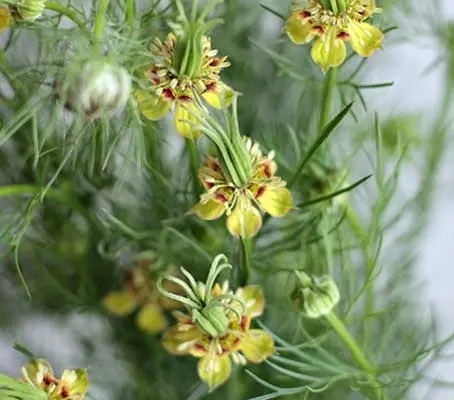
Nigella ‘Moody Blues’ is ridiculously easy to grow. Sown directly, they will be flowering in just three months and bloom through to October. In cool summer climates, additional sowings can be done every 3 to 4 weeks until mid-summer.
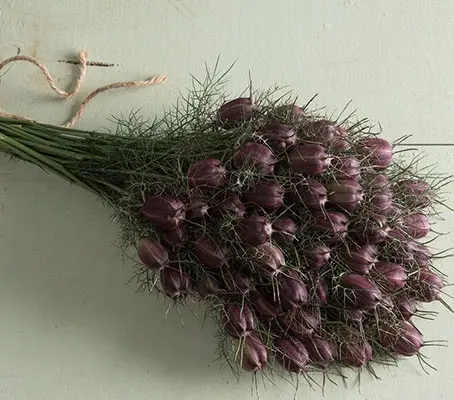
‘Albion Black Pod’ is much less common than the usual Nigella varieties, It bears delicate romantic white flowers with intriguing little green stamens that are surrounded by ferny foliage. At the end of the season, the petals drop and the blossoms transform into dark plum fairy lanterns.
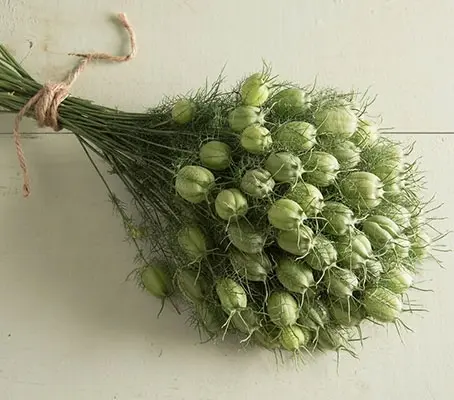
‘Albion Green Pod’ is an unusual species of Nigella. The flowers are followed by fresh green, very ornamental seed capsules, are held on stiff stems. They dry readily and easily, are very decorative and very useful for fresh and dried bouquets. They can also be dried for winter decorations indoors.
An unusual twist on the classic cottage garden flower, Nigella ‘Transformer’ adds intriguing texture with its uniquely shaped flowers and upright, seed pods. A good choice for borders, mass plantings or cut flowers. Used fresh or dried the seed pods are a great filler in bouquets, cut flower production is just 12 to 16 weeks.
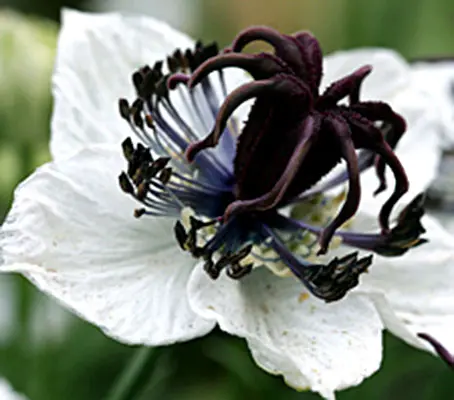
Nigella papillosa ‘African Bride’ is a most attractive variety. Deep rich purple stamens that highlight pure white blooms are followed by intriguing red seed pods. also known as White Love-in-a-Mist or Eclipse, this hardy annual is very easy to grow, rather special as a cut flower, and lovely in summer borders too.
An unusual twist on the classic cottage garden flower, Nigella ‘Transformer’ adds intriguing texture with its uniquely shaped flowers and upright, seed pods. A good choice for borders, mass plantings or cut flowers. Used fresh or dried the seed pods are a great filler in bouquets, cut flower production is just 12 to 16 weeks.
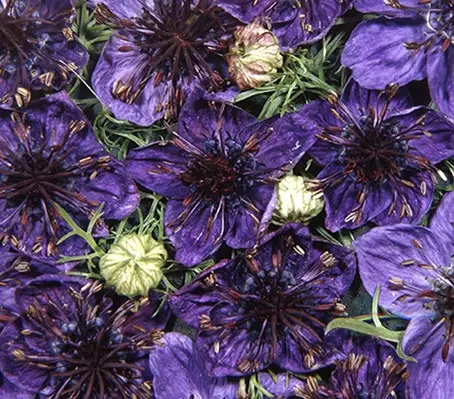
Nigella papillosa ‘Midnight’ is a very handsome variety with gorgeous, velvety, dark purple flowers which stand above attractive, lush green feathery foliage. Ornamental, dark purple, spider-like seed pods extend the interest of this border star well into autumn. Sowing to flowering takes just three months.
Salvia patens is undoubtedly one of the very best blue flowering plants and one of the truest blues found in nature. ‘Patio Deep Blue’ is a compact variety that is perfect for containers or for the front of the border, there is little else that can compete with the richness of its colour.
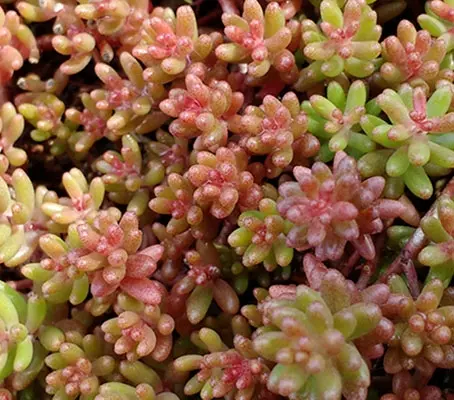
Sedum album is one of the most popular forms of sedum, known for its dense foliage as it changes colour throughout the seasons. The leaves emerge a coral-salmon in spring, change to bright green in summer and then to reddish bronze with the arrival of cooler temperatures. In summer the plants explode in masses of tiny, white star-shaped flowers.
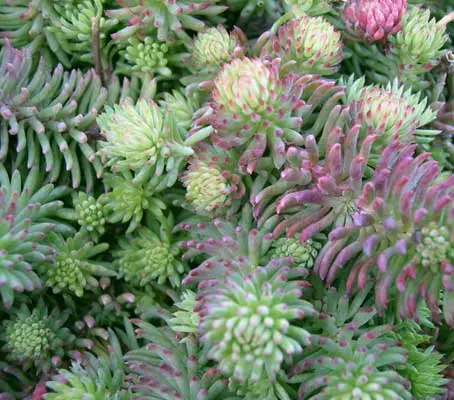
Sedum forsterianum ‘Silver Stone’ is one of the more unusual textured species, with whorls of silver-green foliage. In late summer bright yellow star shaped flowers appear. This low-growing succulent plant grows to a height of 15 to 20cm, extremely hardy it can cope with temperatures down to minus 34°C.
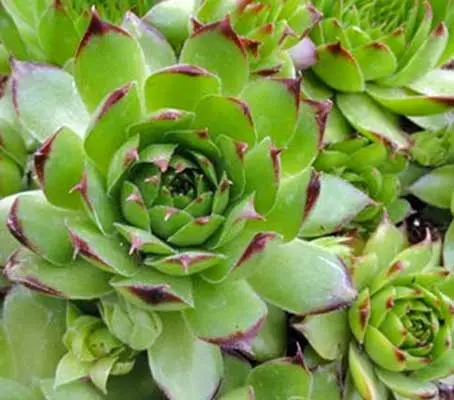
Native to Europe, Sempervivum tectorum is a widely-planted succulent that has been grown in and around human settlements for millennia. Their rosettes are fascinating with their succulent leaves radiating around the centre, their colour hues are stunning and their tendency to produce offsets makes for easy increase.
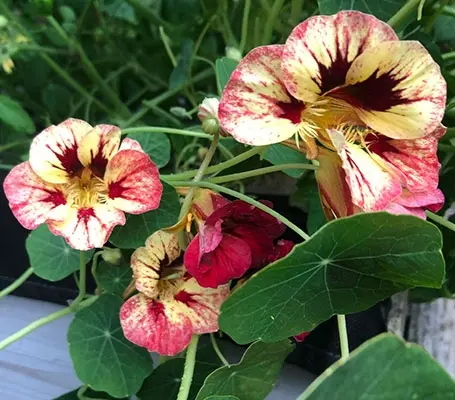
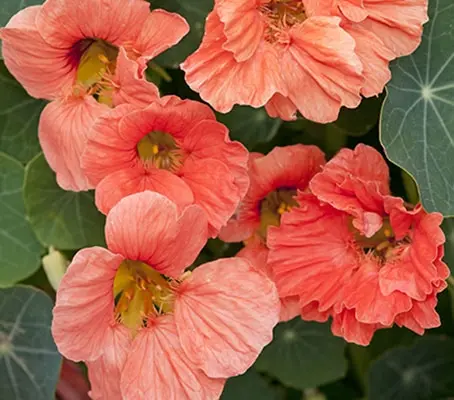
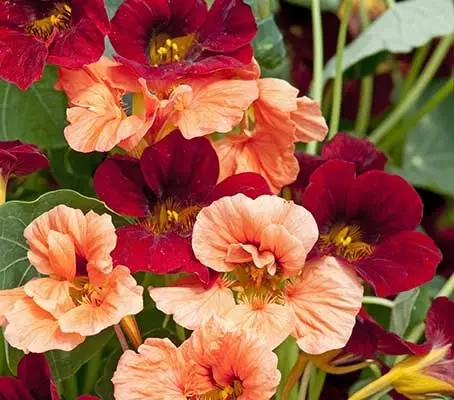
Nasturtium ‘Bloody Mary’ is an award winning Nasturtium with a unique flower pattern. Dramatic 5cm flowers in shades of dark red, coral red, cream, and unique bicolours, make a melodramatic scene in the flower bed, container or vase. Highly decorative they are in flower from May right through to October.
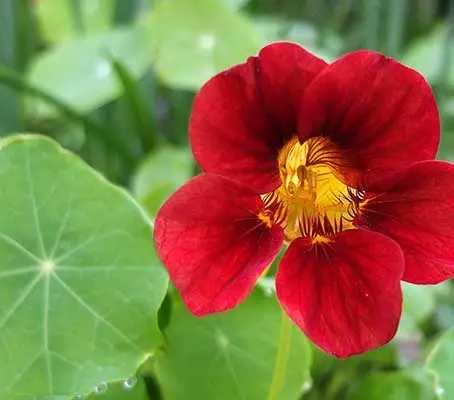
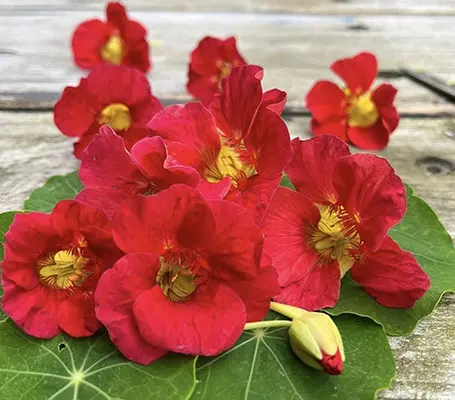
Tropaeolum ‘Fiery Festival’ is a trailing nasturtium variety that boasts vibrant bright red blooms with yellow centers. Its vines can extend up to 150cm, making it ideal for ground cover, hanging baskets, or climbing supports. Additionally the flowers are edible and serve a useful role in companion planting.
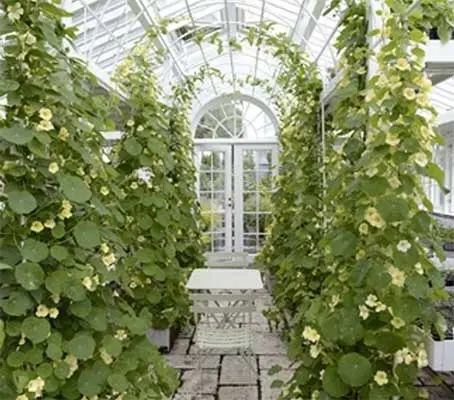
Notable for its rare flower colour, Nasturtium ‘Milkmaid’ produces blooms in a lovely soft, creamy hue. The top of the milk rather than full cream, and at around 2 metres in length it can be trained to ascend trellises, fences, or arches, or allowed to trail gracefully. An excellent choice for gardeners seeking a more understated palette.
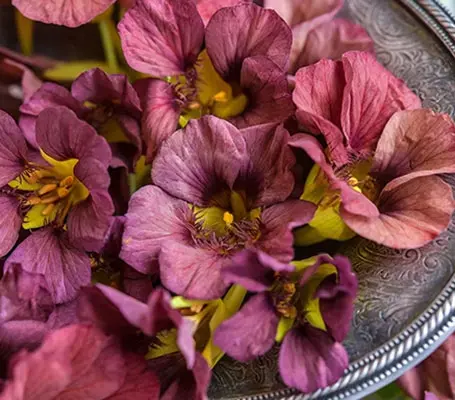
‘Purple Emperor’ is an exciting new palette with a vintage colouration that is quite unique to nasturtiums. Initially opening a dusky, antique burgundy they fade in the most beautiful way to a vintage lavender-rose.
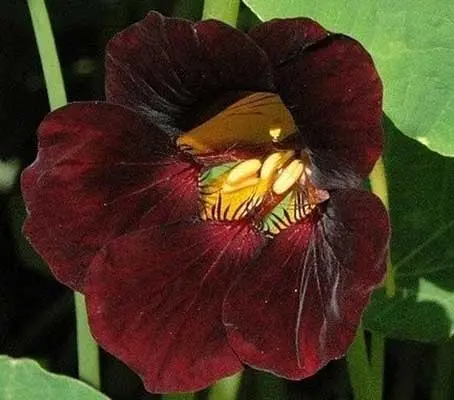
Celebrated for its striking, velvety deep-red to near-black flowers, which provide dramatic contrast, Tropaeolum ‘Black Velvet’ is a visually captivating and versatile plant that combines ornamental beauty with culinary and ecological benefits.
€2.95
€2.50
€2.10