 Skip to content
 Sort by:
Sort by:
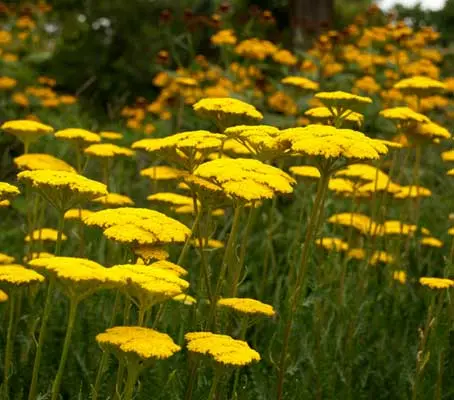
Fernleaf Yarrow
 Achillea filipendulina ‘Cloth of Gold’ is an easy to grow plant which tolerates a fair amount of neglect which makes it a very versatile plant for use in many situations. It does require full sun for best flower production, but this is little to ask for such a grand reward.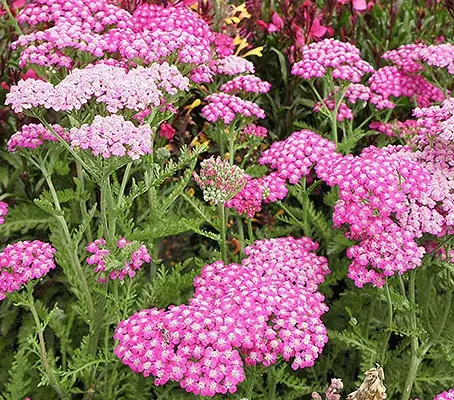
Yarrow, Milfoil
Achillea ‘Cerise Queen’ is a carefree and generously blooming perennial which requires little maintenance to create an explosion of late summer colour. Irresistible to butterflies they also make excellent cut flowers.
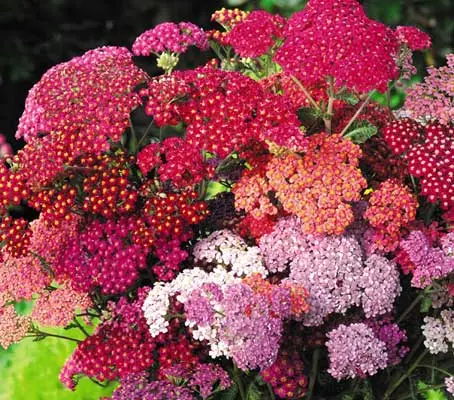
Yarrow, Milfoil
Achilleas are traditional border flowers valued for their feathery foliage and striking flat, circular heads of flowers ‘F2 Summer Berries’ is a compact variety growing to only 60cm tall at maturity. This beautiful improved mixture includes the richer tones of red, cerise and pink in addition to many pastel shades.
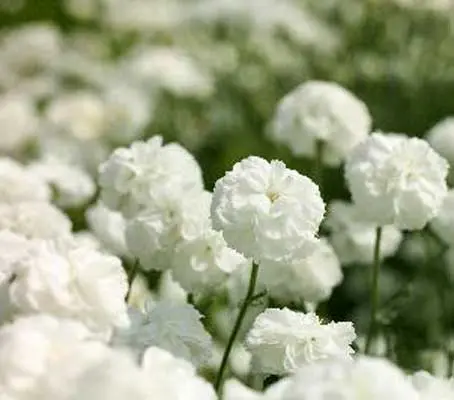
Sneezewort
A favourite of garden designer Gertrude Jekyll. The ‘Pearl’ is excellent for the middle of a sunny, well-drained border, especially when planted as a large drift. A unique, easy and reliable plant to add to any border.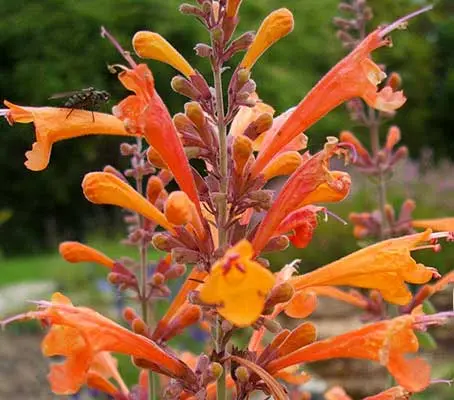
Jewel of the Sierra Madre
It is only within the past decade that a number of new noteworthy members of the genus Agastache have emerged from botanical obscurity. ‘Apricot Sprite’ is an outstanding perennial that provides a sizzling blast of tubular, peachy-apricot flowers. Compact and quick growing, they flower in the first year from seed.
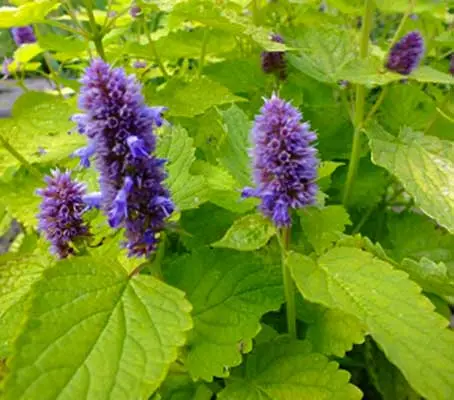
Mexican Hyssop, Hyssop-Anise
Originally bred by and developed in Japan, Agastache ‘Golden Jubilee’ was named to honour Queen Elizabeth II’s 50th year of rule, celebrating the Golden Jubilee in 2002. This bright gold-chartreuse beauty has one of the most remarkable leaf colour of any plant. Offering late season punctuation the flowers are a powerhouse source of nectar and pollen for bees, butterflies and other beneficial insects.
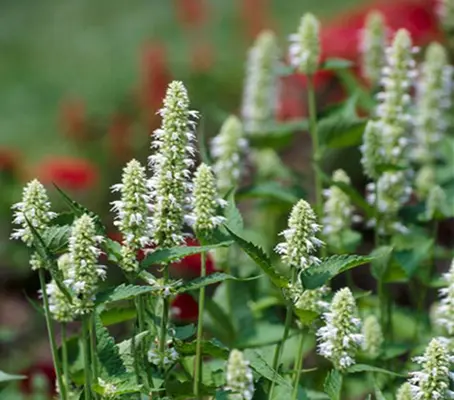
Korean Mint, Huo Xiang
Agastache ‘Liquorice White’ has tall spikes of white lipped flowers and like all Agastache produces copious amounts of nectar for bees and butterflies to feast upon. Flowering late in the season, it is a boon for building up bees’ honey reserves before winter and will produce a honey surplus where drifts are grown.
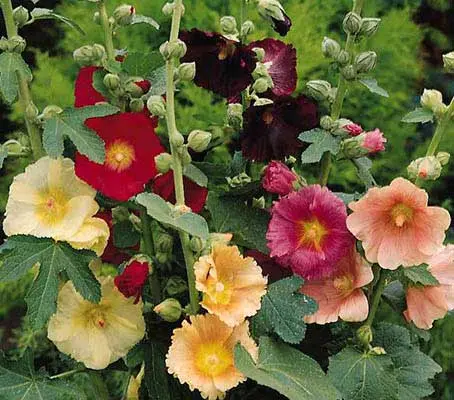
The Antwerp or Fig-leaved Hollyhock
Hollyhocks are almost as easy to grow as sunflowers and would probably be grown as often if gardeners were aware of their good nature. Alcea ficifolia ‘Happy Lights’ is a beautiful strain, reliably perennial they produce many upright stems, resulting in a bushy form.
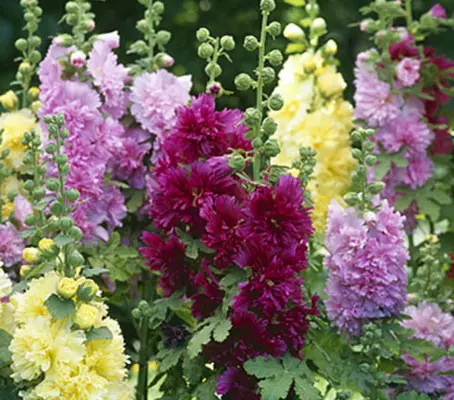
Althaea rosa, Hollyhock
This gorgeous award winning Hollyhock has the distinction of being the shortest in the Alcea rosea family. ‘Queeny’ is a dwarf Hollyhock that reaches only 60cm in height with fully double blooms. Unlike the tall varieties, it is a perennial that can also be used as an annual as it will bloom in its first year.
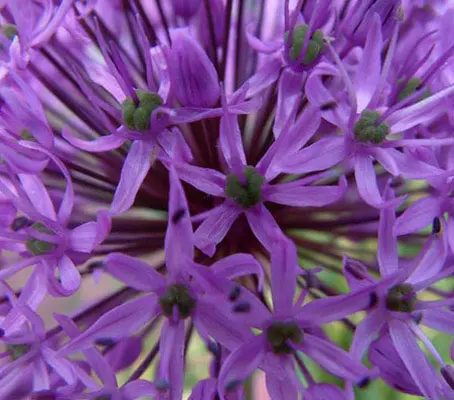
Syn Allium aflatunense.
This is a stunning fashionable plant, with globes of rosy-purple crowded spherical umbels, and strap shaped leaves. The flowers are very long lasting and help fill that awkward gap between the later spring bulbs and the perennials.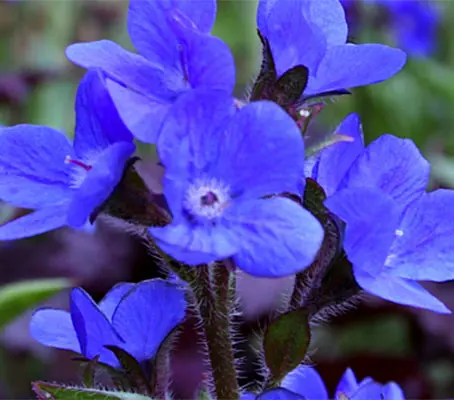
Aka Anchusa azurea or Italian Bugloss
Anchusa ‘Dropmore’ is a 1905 selection that is still available today. They will thrive in a sunny border, are much loved by almost all bee species and make a great companion to rich plums and purple tones.
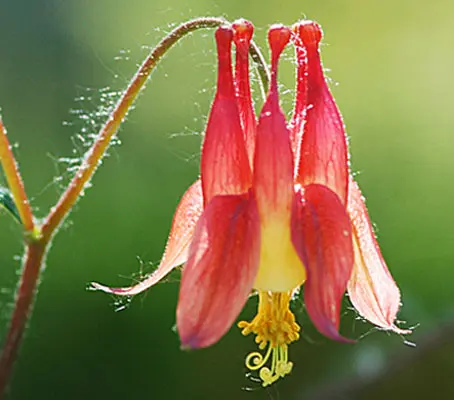
Rock Bells, Dwarf Red Columbine
Native to Canada and the US in all states east of the Rockies, this superb variety is quite unlike the usual Aquilegia. Growing just twelve to eighteen inches tall, with dark-green foliage and eye-catching, scarlet and lemon-yellow flowers which hang like drifts of softly illuminated lanterns.
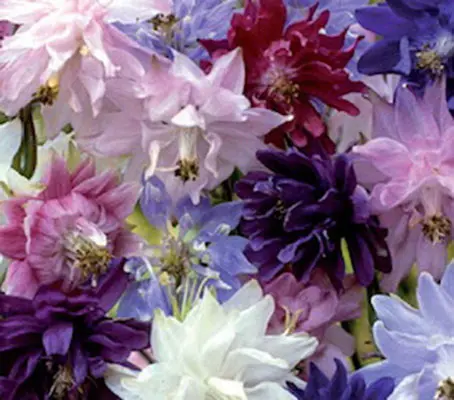
Clematis Flowered or Rose Columbine.
Aquilegia var. stellata ‘Barlow Mix’ is one of the really exceptional doubles forms of Aquilegia. It is the first Aquilegia series with fully double, spurless flowers. Stylish and elegant, with a graceful upright habit they grow to around 80cm tall. It produces many stems and makes an ideal cut flower.
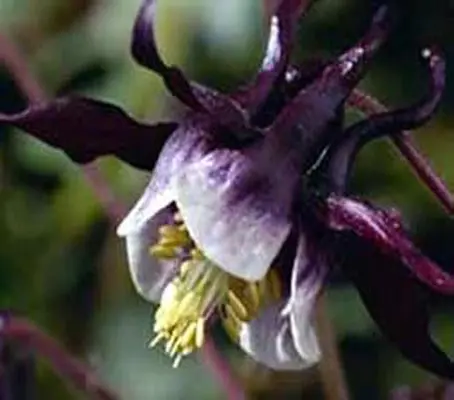
Eye-catching, purple-black flowers with contrasting white centres appear in late spring and early summer above fern-like, mid-green leaves this variety is something special. ‘William Guinness’ is a superb and reliable Aquilegia variety that makes an ideal cut flower, it grows and blooms well in shady areas.
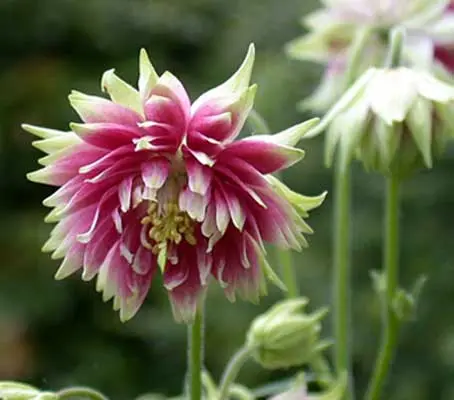
Clematis Flowered or Rose Columbine.
Emma Nora Barlow was a formidable woman and a granddaughter of Charles Darwin. She enjoyed hybridising plants and gave some seeds to the nurseryman Alan Bloom who named his commercial stock after her. They produced a cottage garden classic.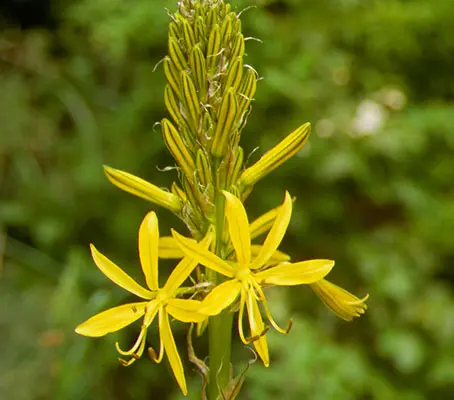
King's Spear, Yellow Jacob's Rod
Asphodeline lutea is an easy to grow perennial that has great architectural form. The overall impression is distinctly upright, so it is good for adding vertical interest to the garden. In early summer leafy stems arise that bear dense, unbranched cylindrical spikes of gorgeous yellow, star-shaped flowers.
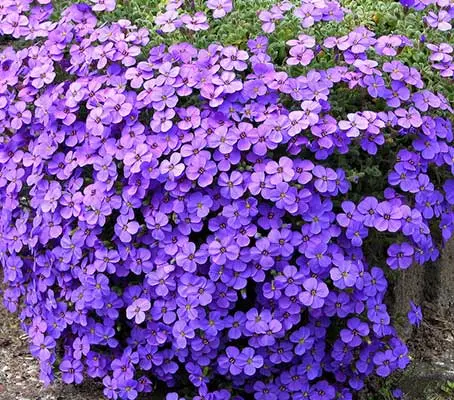
False Rockcress, Large-flowered Aubrieta
Aubrieta ‘Hendersonii’ is a vigorous variety that is smothered by rich lilac-purple flowers for several months in spring. It grows to only 10 to 15cm tall at maturity, but with a spread of around 45cm it makes a lively edging to a sunny border, growing over rock walls or placed in stonewalls.

False Rockcress, Large-flowered Aubrieta
Aubrieta has long been treasured for its delightful spring show of brightly coloured flowers. ‘Whitewell Gem’ is smothered by large, intense reddish-purple flowers for several months. Lovely spilling out of crevices or over rock walls, the plants can also be used in paving with other ground hugging plants.
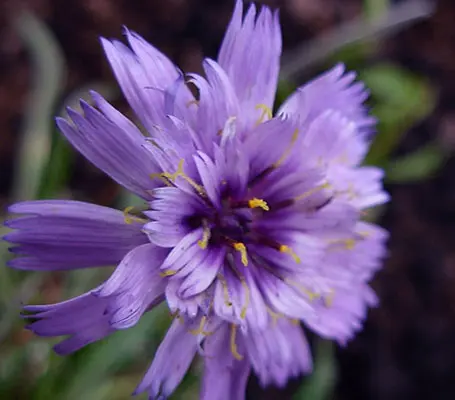
Cupids Dart, Love Plant.
Catananche caerulea ‘Amor Blue’ is a charming plant, with blue, star like flowers each with a dark eye and unique papery petals. They look best when grown in groupings, rather than one or two plants and don’t mind crowding. Plant en-masse in prairie style or meadow plantings, mix them up a little with other hardy perennials and grasses.
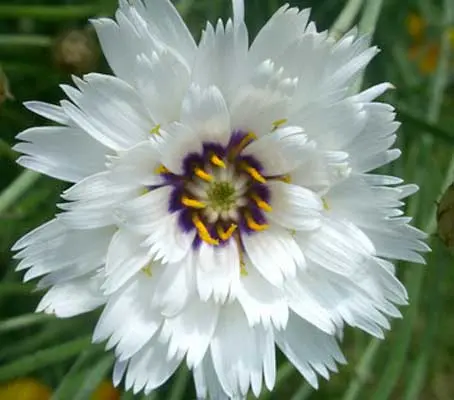
Cupids Dart, Love Plant.
Catananche caerulea ‘Amor White’ produces stunning blooms of white, star like flowers each with a dark purple-blue eye and unique papery petals. The blooms rise on single stems above neat clumps of grey-green foliage. Super when planted the border, they also make a wonderful, long lasting cut or dried flowers.
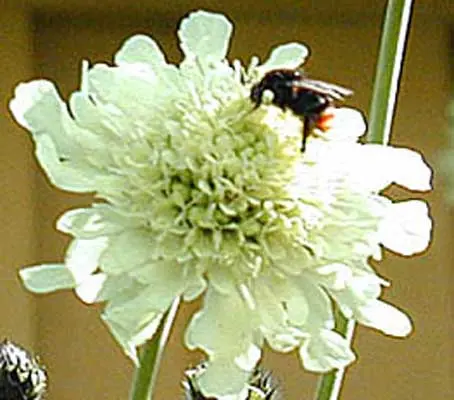
Giant Scabious, Caucasian scabious
Cephalaria gigantea is a gentle giant that has an informal look that is perfect for looser planting styles. Tall but airy with very pretty pale butter-yellow flowers, use it planted at the back of the border.
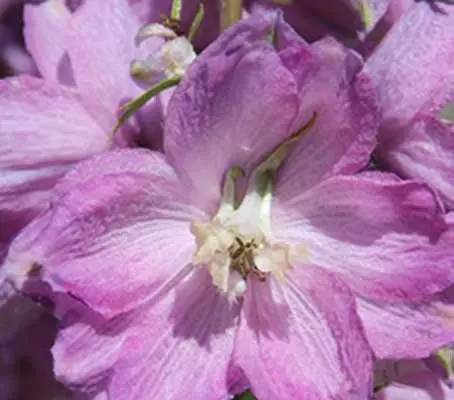
Candle Delphinium
Astolat is a rare and unusual delphinium colour; it blooms with spires of soft blush to deep rose-pink flowers, each with a dark central ‘bee’. It is a stunning delphinium that looks gorgeous planted in bold clumps for a dramatic statement.
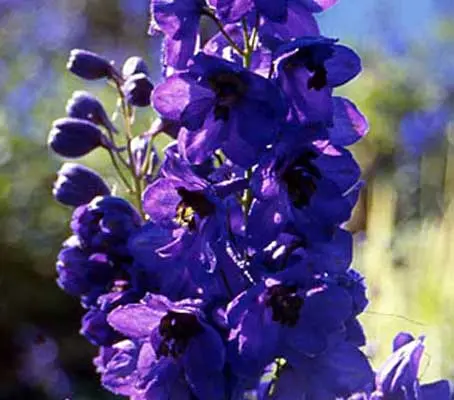
Candle Delphinium
Delphinium ‘Black Knight’ produces gorgeous spires that are laden with intensely coloured deep purple flowers. These dark-eyed delphiniums are stunning when planted in bold clumps in the garden and are one of the most spectacular cut flowers you can grow.
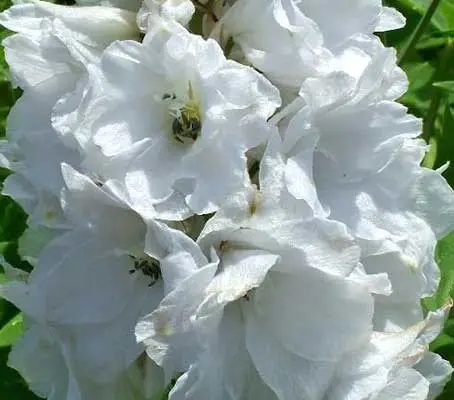
Candle Delphinium
In the Arthurian legends Sir Galahad is renowned for his gallantry and purity, he is perhaps the knightly embodiment of pure virtue. In the garden, Delphinium ‘Galahad’ is a subtle and beautiful delphinium with spires of elegant pure white blooms.
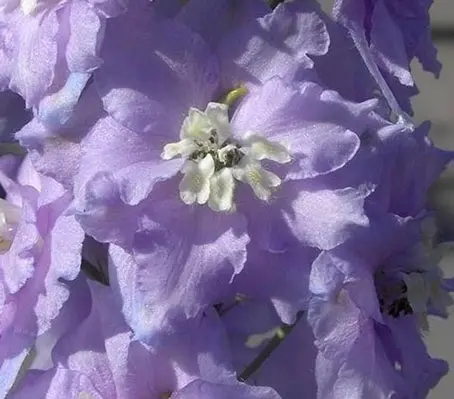
Candle Delphinium
Often called the Queen of the Border, Delphinium ‘Guinevere blooms with spires of Lavender rose with white bees that bloom the first year from a December greenhouse sowing. Bring a touch of nostalgia back to the garden, they are worth almost any effort to grow because they are so beautiful.
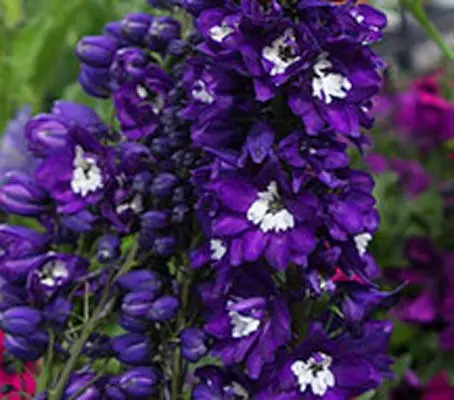
formerly known as Delphinium elatum
Delphinium ‘King Arthur’ blooms with deep, royal purple flowers, each with a brilliant white bee. These stately plants add structure and presence to the back of any perennial border or cottage garden where their majesty will truly reign supreme.
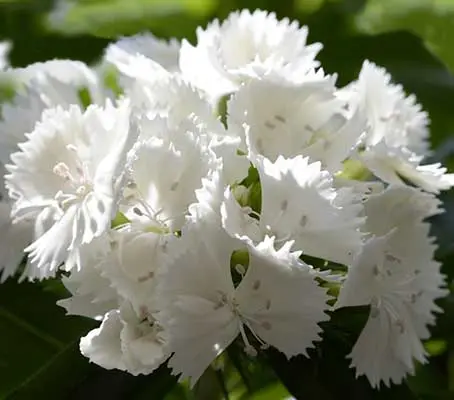
Poet's Pink, Sweet John, Sweet William
Intensely fragrant, with a delicious, sweet perfume, Dianthus barbatus ‘Alba’ is a pure white form of Sweet William. Absolutely beautiful and easy to grow, everybody can grow them to perfection.
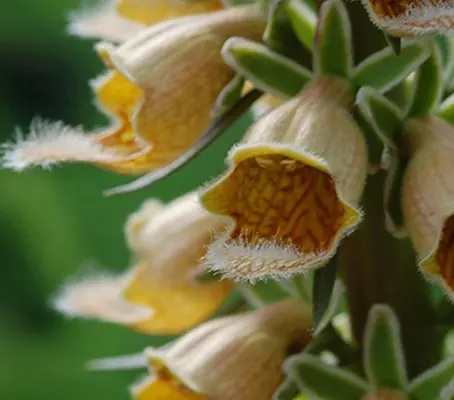
Perennial Foxglove, Rusty Foxglove
Digitalis ferruginea is an interesting and exotic looking foxglove. With elegant, leafy spires and closely packed golden blooms, each orchid-like flower has an interior of rich red-brown veins.
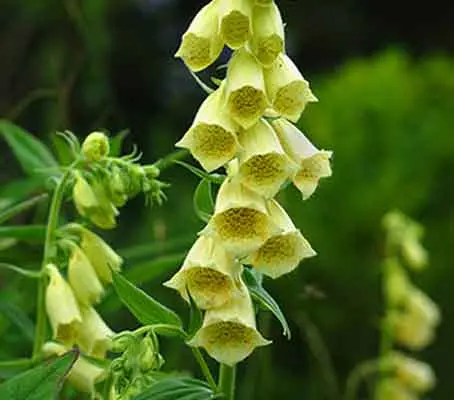
Syn: Digitalis ambigua. Perennial Foxglove
Digitalis grandiflora is one of the few truly perennial foxgloves. Extremely hardy and one of the best performers. Bearing upright stalks of beautiful creamy-yellow bells through the summer, the lovely soft shade allows this plant to blend with almost anything in the garden.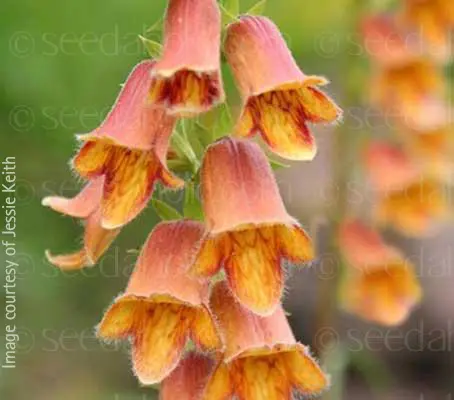
Dwarf Perennial Foxglove, Willow Leaf Foxglove
This rare and lovely foxglove is one of the very best in cultivation. Digitalis obscura, the Sunset Foxglove has striking bell-shaped blooms in all the colours of the sunset. Rusty orange and amber with red veining.
Native Pink Foxglove
Wildflower of Britain and Ireland
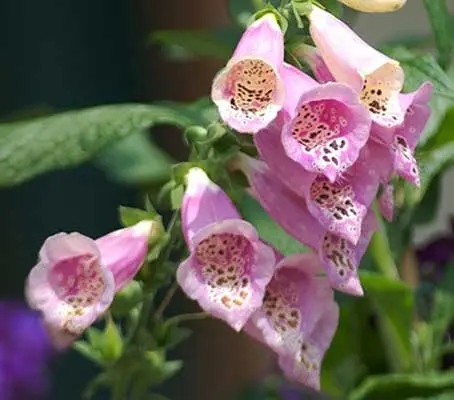
This lovely native European woodland plant is a beauty to add to any garden and a popular biennial for shaded places. Plants form rosettes of lance shaped leaves, the second year the rosette begins to shoot skyward with beautiful large spikes and drooping bell shaped blooms that are spotted inside.
Aka Suttons Apricot, Apricot Delight, Apricot Beauty Foxglove
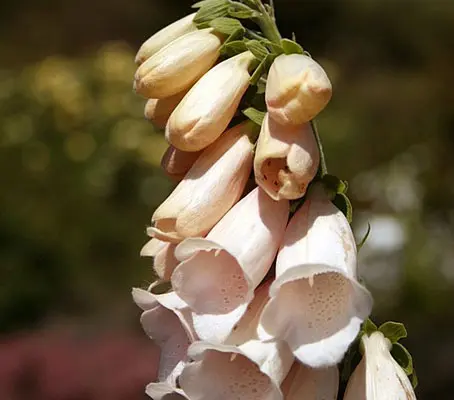
Digitalis purpurea ‘Apricot’ produces large spikes in the most beautiful shade of coral-apricot. One of its greatest assets is the ability to mingle, a quality particularly important in contemporary gardens where the accent is on informality.
Dwarf Foxglove
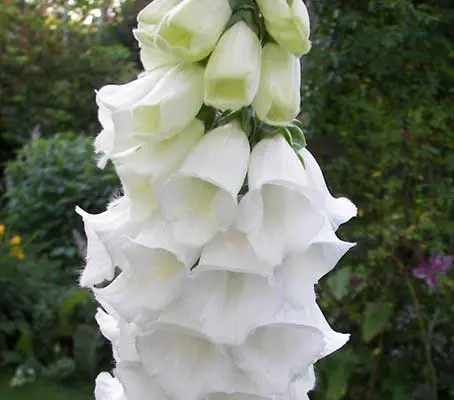
Digitalis purpurea ‘Snow Thimble’ is bred for its large pure-white, bell-shaped blooms, born on short spikes only 100cm tall. It is one of the most elegant dwarf Foxgloves, easy to place in the garden it is especially suited to cottage gardens, shade gardens, wildflower and cutting gardens.
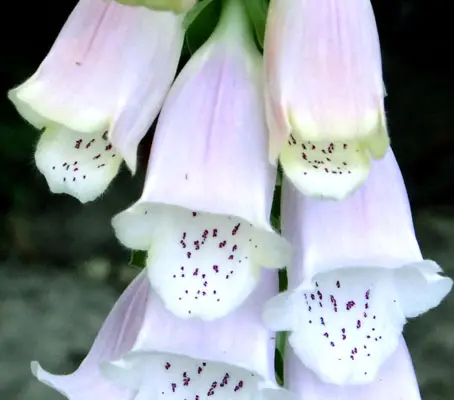
Aka 'Pink Champagne'
Digitalis ‘Silver Fox’ is one of the most beautiful dwarf Foxgloves for the cottage garden and border. Growing to just 60 to 70cm tall, the creamy-white speckled bells are flushed with soft lavender-pink. An elegant and rare foxglove that is ideal for borders or containers.
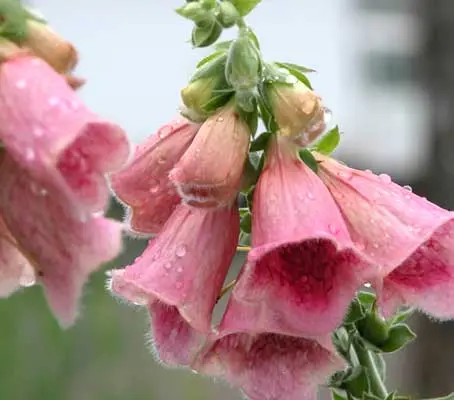
Merton's Foxglove
This striking and robust foxglove, a hybrid between the pink flowered D. purpurea and the yellow flowered D. grandiflora produces a beautiful mix of the two shades. Warm pink, speckled flowers that are larger than the traditional foxglove.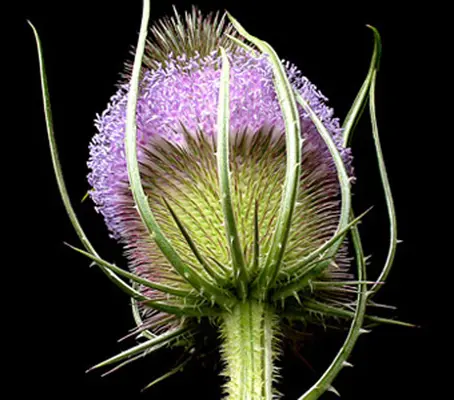
Fuller’s Teasel, Wildflower of Britain and Ireland
Fullers Teasel a sub-species of the common teasel. The bristly flower heads were cultivated, matured and dried. Inserted into wooden frames, they were used to bulk up the pile on woolen cloth. The variant name ‘fullonum’ refers to the name of the trade of the ‘fullers’ to raise the nap on woolen cloth – to ‘tease’ it. Teasel is still used today by some who weave wool by hand.
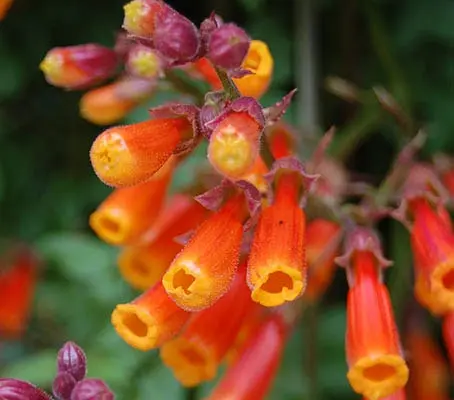
Chilean Glory Flower
The Chilean glory flower is an exotic-looking climber with dark fern-like foliage and twining tendrils that cling to fences and trellises.This useful climbing plant will quickly cover walls, archways or pergolas. The clusters of small tubular flowers range from bright orange-scarlet and carmine rose to clear golden yellow. 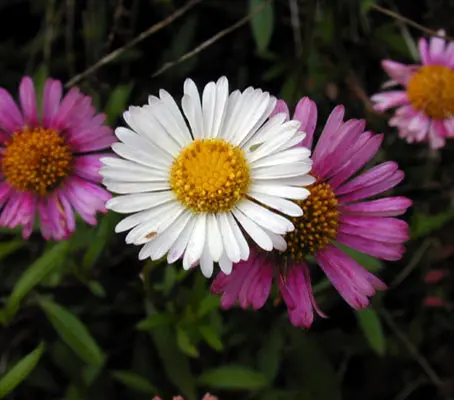
Mexican Daisy, Fleabane
Producing a profusion of daisy like blooms from May right through till November, Erigeron is easy to grow and an amazingly versatile plant, being low-growing, happy in sun or partial shade and thriving in any well-drained soil. 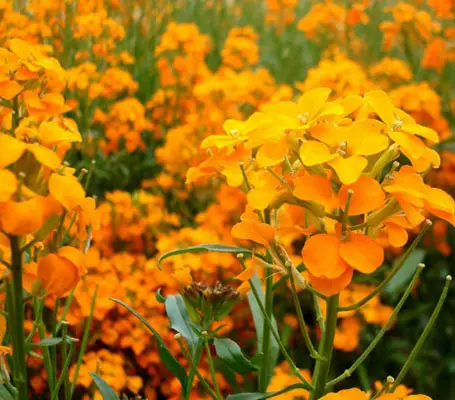
Siberian Wallflower
Siberian wallflowers are at their best in early to mid-May. With cheerful deep orange blooms, they are very easy to grow and combine well with other plants; indeed wallflowers demand companions and set the mind racing regarding potential planting combinations.
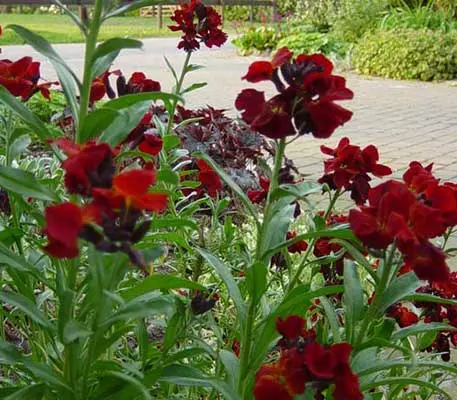
English Wallflower. Also known as 'Covent Garden'
This old English cottage plant is making a comeback, and no wonder. Blood Red’ is a favourite with gardeners, the astonishing, deep crimson, velvety red flowers they are sure to be a focal point. Ideal for borders and edging, they could also be used in large containers….and of course, walls!
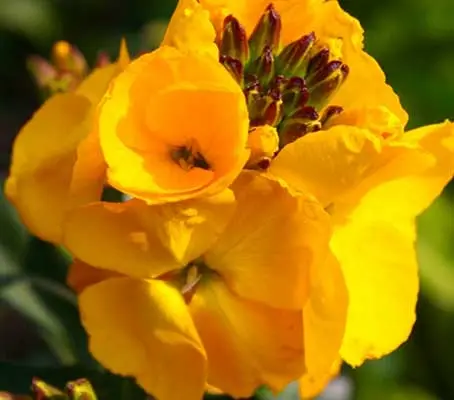
English Wallflower
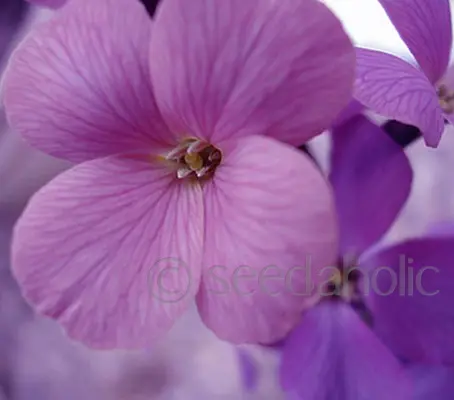
‘Cloth of Gold’ is a favorite with gardeners, each plant wears a cloak of the finest gold and the large golden-yellow flowers are filled with a sweet fragrance, from mid-spring and throughout summer. They are a perfect foil for daffodils and many other spring bulbs.
English Wallflower
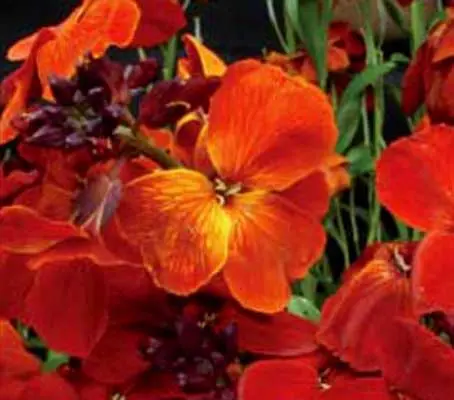
‘Fair Lady Mixed’ is a classic tried and trusted variety. Reliably hardy, this uniform mixture blooms in a wide range of colours, both pastels and bright colours and includes the more unusual dusky-pink shades. This marvellous; fragrant, floriferous flower is extremely easy to grow and very rewarding.
English Wallflower
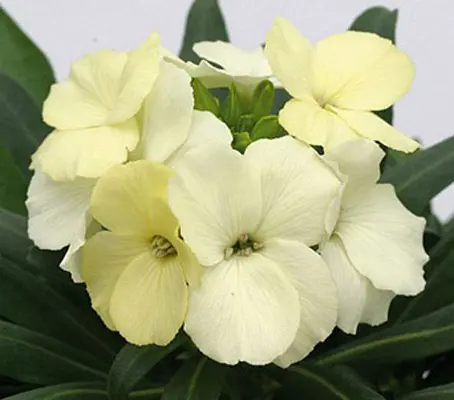
Erysimum (formerly Cheiranthus) cheiri ‘Fire King’ is another old and tried variety, with striking, flame-like, glowing orange-scarlet flowers. A compact variety with a bushy habit and a rich fragrance, they will supply the household with an abundance of cut flowers for many weeks.
English Wallflower
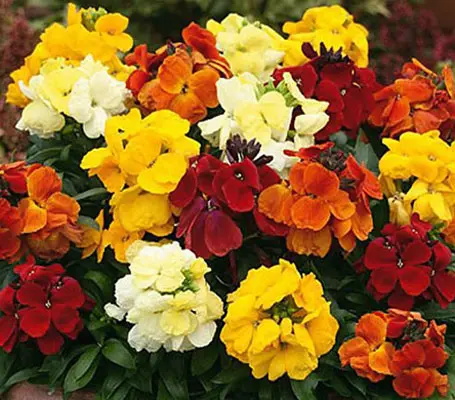
What spring garden would be complete without a bed of delightful, sweet-scented Wallflowers, harbingers of warmer weather to come? Erysimum cheiri, formerly Cheiranthus cheiri ‘Ivory-White’ is a fabulous form. A compact variety with a bushy habit which is ideal as an underplanting to tulips and other spring bulbs.
English Wallflower
This is a classic Wallflower mixture, with the super rich colours you’d expect to see in a Persian Carpet (at a fraction of the cost!) purple, gold, orange, rose, cream and apricot. It is not without reason that this bushy variety so impressed the RHS judges.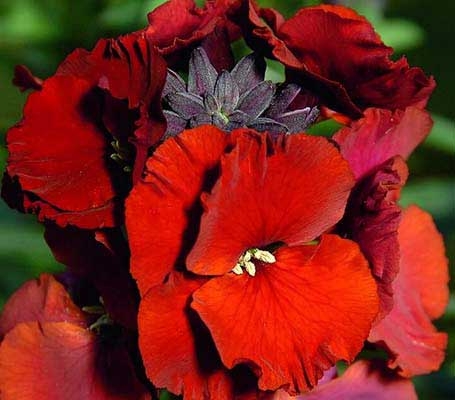
Wallflower, Siberian Wallflower
A favourite with gardeners, Erysimum cheiri ‘Scarlet Emperor’ is a classic wallflower with bold, fiery blooms in shades of rich scarlet and glowing crimson. Strongly scented, the flowers carry the sweet, spicy perfume that wallflowers are famed for.
Hollow Joe Pye weed, Queen of the Meadow
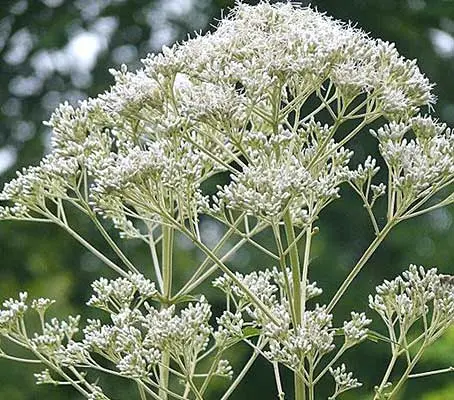
Introduced in 2010, Eupatorium ‘Ivory Towers’ is relatively new to our gardens. This architectural plant bears generously clusters of ivory-white blooms which are long-lasting and beloved by butterflies. Given an early sowing, will flower the first year. 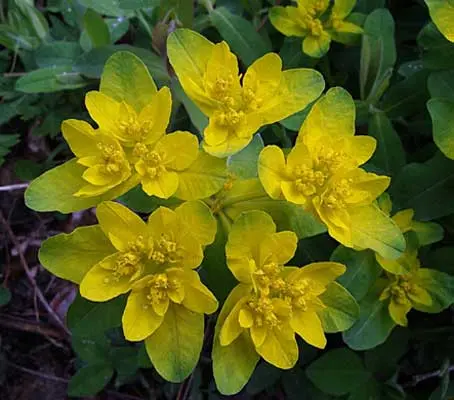
Cushion spurge, Many-coloured spurge.
Euphorbias give us some of the best early spring herbaceous colour, but Euphorbia polychroma has the most impact. This compact variety grows to only 50cm with a great mound of yellow-green flowers in spring and echoes the daffodils. 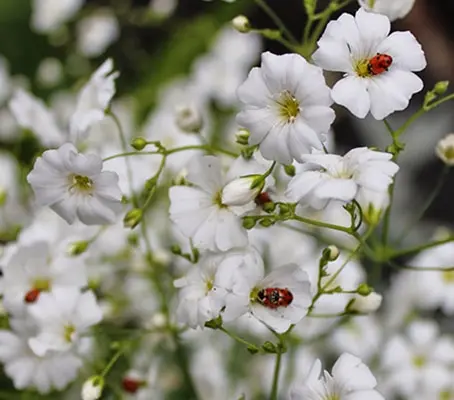
Babys Breath
Gypsophila has been cultivated since 1759 in England, so its use by florists has a long pedigree. It has recently become rather trendy among celebrity and designer florists, even taking centre stage as the main flower focus of bouquets and arrangements.
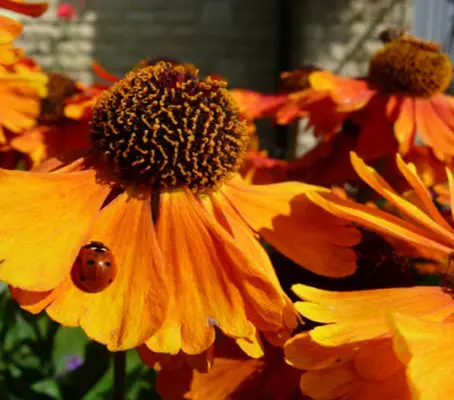
Helens's Flower, Autumn Helenium
If there’s one plant that can inject a little razzle-dazzle into the border during gloomy late summers it is Helenium. From late July ‘Helena’ blooms with masses of vibrant blooms. Very hardy and easy to grow, all this plant needs is sunshine and well-drained soil.
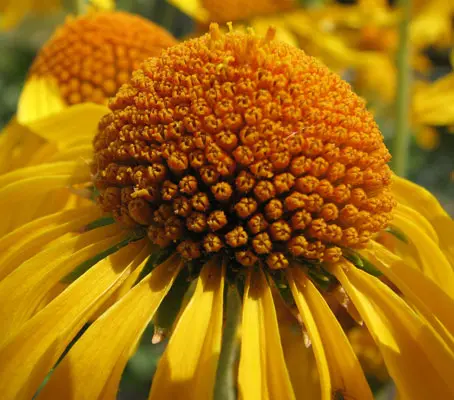
Mountain helenium, Owls-Claws
Helenium hoopesii is considered by some to be the most valuable of the species. It blooms with bright golden yellow disk florets that each form a kind of rounded knob that transforms the flower from your typical two-dimensional daisy into something much more interesting and sculptural.
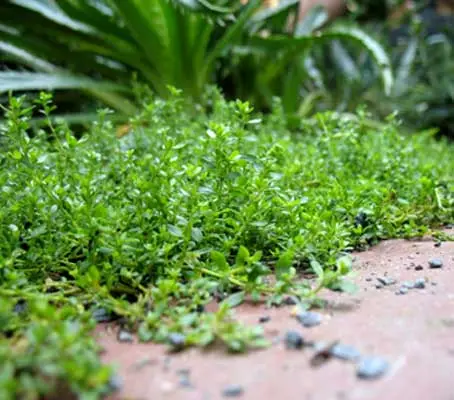
Smooth Rupturewort
Herniaria glabra is a relatively unknown perennial that deserves to be used more often in our gardens. The nursery industry calls it ‘Green Carpet’ and well they should. This lovely bright green creeper spreads effortlessly in all directions. An excellent choice for between flagstones or as a lawn substitute.
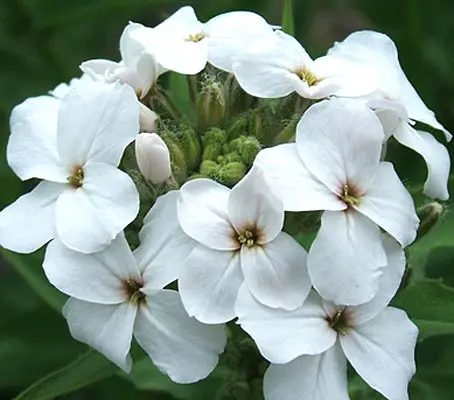
White Sweet Rocket, Dames Violet, Summer Lilac.
Gorgeously scented pure white flowers are held above rosettes of dark green leaves. Like all sweet rockets it is highly attractive to bees and other beneficial insects, the fragrant flowers perfume the air in late spring and early summer evenings. The night-scented stock is a close relative.
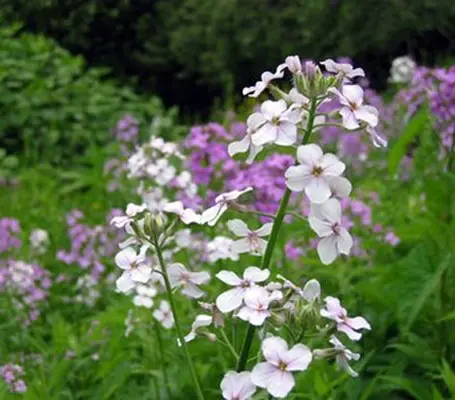
Sweet Rocket, Dames Violet, Summer Lilac.
Dames Rocket produce flowers varying in colour from deep rich purple, through all the paler lilac shades to white. Highly attractive to bees and other beneficial insects, the fragrant flowers perfume the air in late spring and early summer evenings.
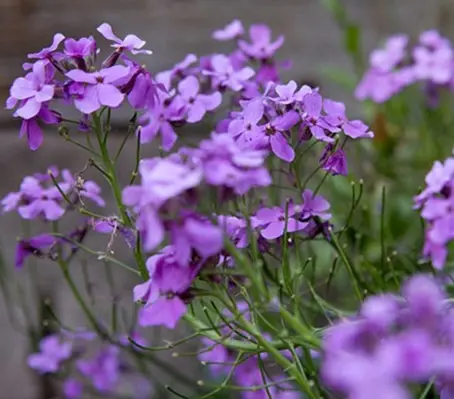
Sweet Rocket, Dames Violet, Summer Lilac.
In spring, Dame’s Rocket lights up the woodland edges with her blossoms, providing nectar for hummingbirds, moths and butterflies, and fragrance for the soul. Sow seeds directly where they are to flower in early summer
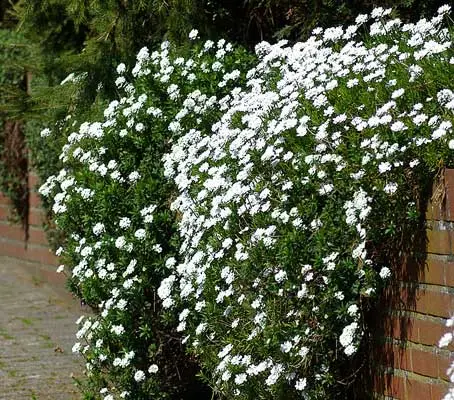
Perennial or Evergreen Candytuft
Iberis sempervirens is an early season favorite. This low bushy plant produces mounds of blinding white flowers in spring to early summer. An all round tough plant suitable for problem areas, use for containers, for pathways and crevices of ornamental walls. €3.50
€2.35
€2.95
€1.95
€2.25
€2.10 – €5.95Price range: €2.10 through €5.95
€2.35
€2.75
€2.80
€3.45
€2.10