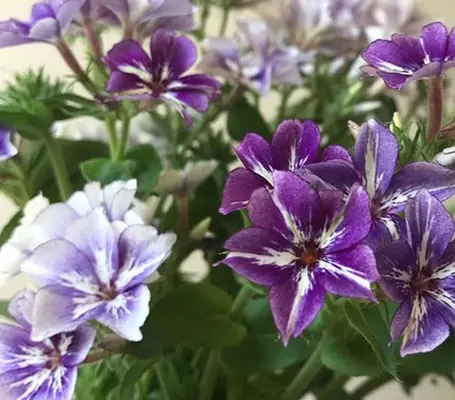
‘Sugar Stars’ is a fabulous new annual Phlox variety that blooms with a confection of purple-blue and white clustered blooms. One of the most useful of annuals they flower from mid July right through to October. For spectacular display, romantic excess and sweet fragrance, they are without peer.
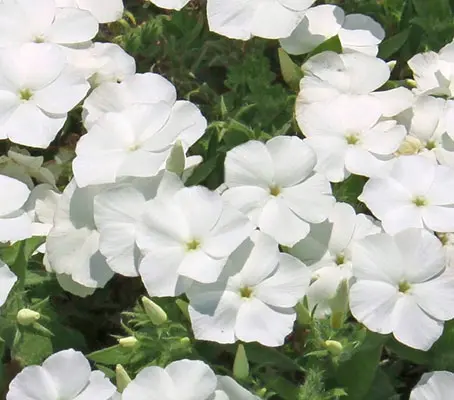
Phlox is one of the most useful of annuals, they are extremely rewarding garden subjects and lack real competition in the late summer garden. Uniform, with outstanding weather tolerance they will flower from mid July right through the summer until October. Perfect for wedding work and bouquets, Grandiflora ‘Alba’ provides pure white flowers combined with a delicious scent.
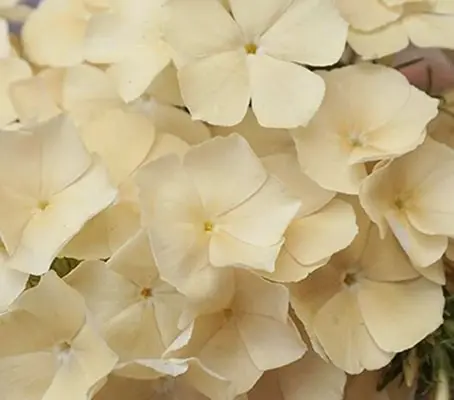
Phlox drummondii grandiflora ‘Isabellina’ is fast to flower and produces abundant clusters of creamy, linen-yellow flowers that are the colour of condensed milk. A must-have for wedding work, this delicious variety is a great addition to the garden border and bouquets.
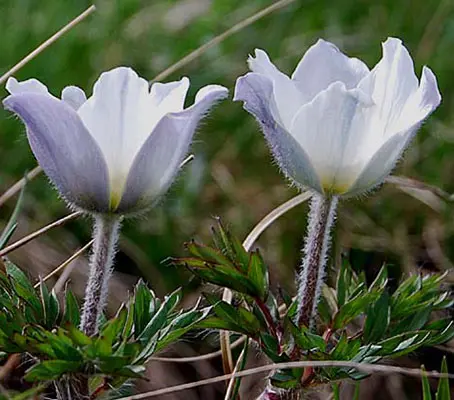
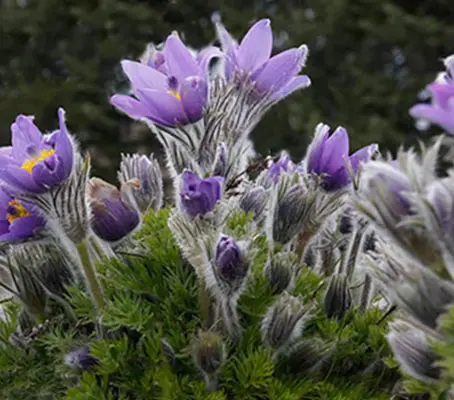
Pulsatilla alpina subsp. alpina is a charming form, with white flowers, the outer segments flushed with bluish-purple. A favourite for collectors, they have a protracted flowering period and followed by attractive seed heads, they are showy, long-lived and reliable plants with a lengthy period of interest.
The Pulsatilla genus includes some of the loveliest of all flowering plants. From the time in early spring when their woolly, hairy flower buds first appear; through the time their enchanting, hairy, feathery seed-heads are formed, these plants are always a delight.
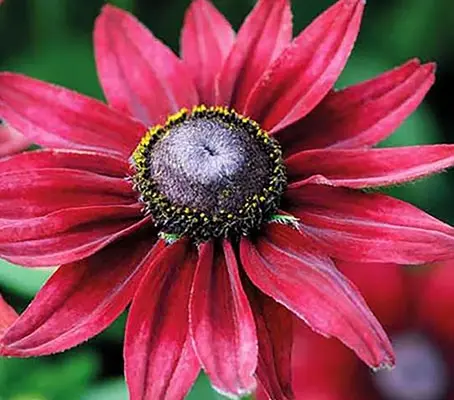
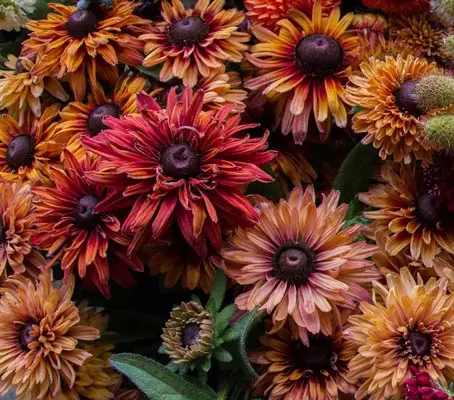
Considered by many gardeners as the most complete border flower, when Rudbeckia ‘Cherry Brandy’ was first introduced, it took the plant world by storm. This stunning cultivar is the world’s first red Rudbeckia, it produces a mass of spectacular cherry-coloured blooms all summer long.
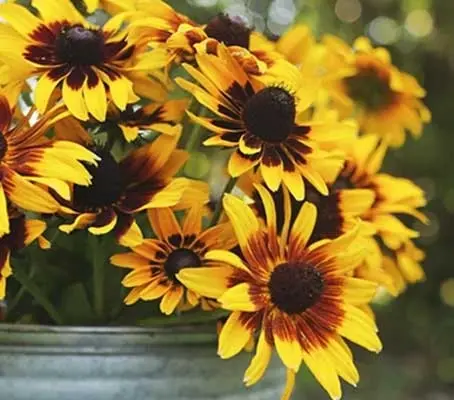
Rudbeckia hirta ‘Denver Daisy’ has large, golden daisies with chocolate brown centres and marks at the base of each petal. Growing to around 75cm (30in) tall, this lovely variety performs well, is exceptionally heat tolerant and blooms for a long time in summer.
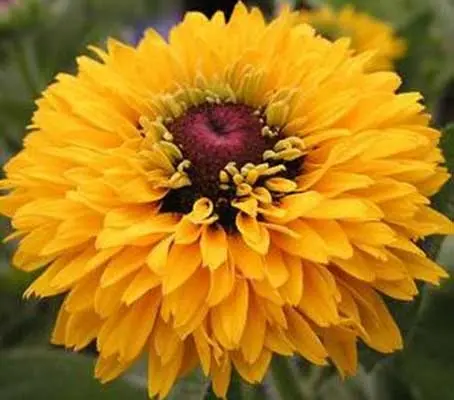
Rudbeckia hirta ‘Maya’ is a fabulous variety, bearing beautifully doubled golden daisies with petals so dense they almost look like pincushions. Golden yellow, with a kiss of green in the centre — almost like a Zinnia in appearance. An outstanding cut flower and wonderful in mixed containers.
Velvety blooms in subtle shades, pale cappuccino, deep caramel, copper, dusty raspberry and everything in between. Rudbeckia ‘Sahara’ is one of the most spectacular blooms in the late summer border, coming to its peak just as others are starting to fade.
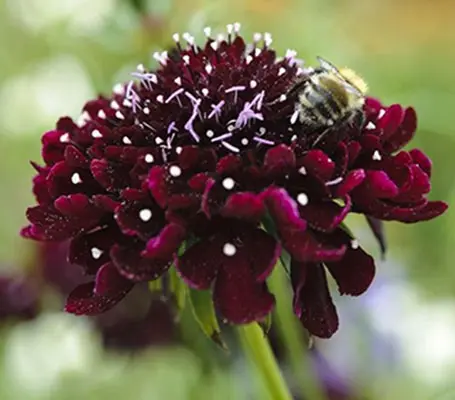
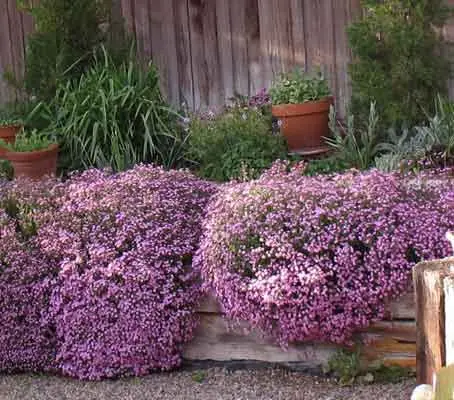
Saponaria is a pretty little plant that forms a mound of bright-green leaves, smothered by starry bright-pink clusters of flowers. Use as a ground cover, in paving or rock features or allow it to trail over the sides of raised beds and low walls. RHS Award of Garden Merit. Boasting the most desirable of deep blue flowers, Scabiosa ‘Oxford Blue’ is a reselected form that stands out from other varieties. The large, domed, dark centred cushions with contrasting white ‘pins’, bob atop strong stems.
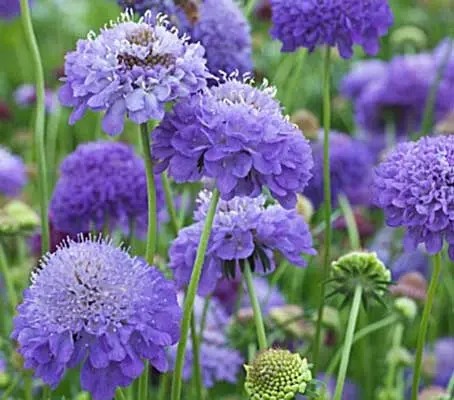
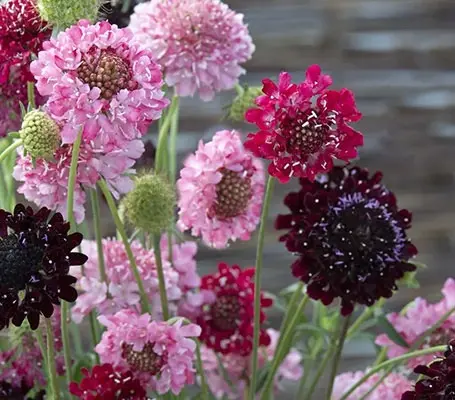
One of the longest-flowering and most glamorous of flowers that you can grow from seed, Scabiosa ‘Summer Fruits’ is a fantastic, fruity blend of delicious colours including raspberry, plum and blackberry. For weekly inclusions in the vase keep the flowers cut to keep the production of flowers right throughout the season.
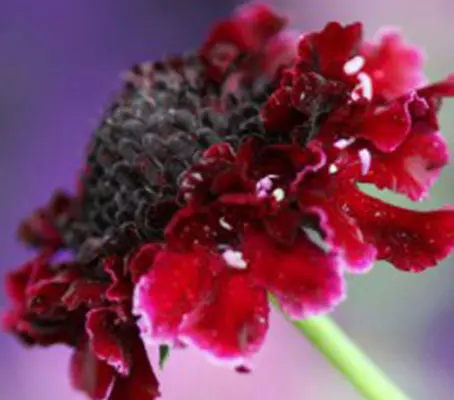
Scabiosa atropurpurea is one of the longest-flowering and most glamorous of flowers that you can grow from seed. Easy to grow and fast to flower, this invaluable plant will attract many butterflies and bees to the garden and the long, straight stems will supply you with cut flowers throughout the season.
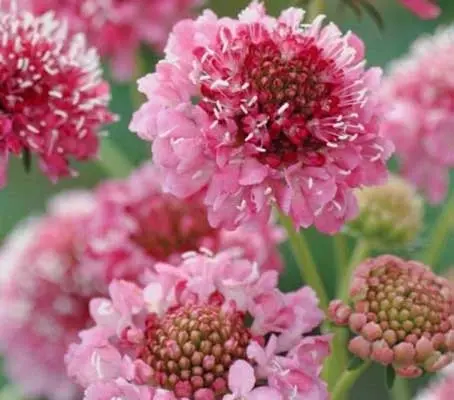
A prodigious bloomer and a tough, hardy garden performer Scabiosa atropurpurea grows quickly and is fast to flower. Rose-pink petals surround a domed, dark centred cushion, this invaluable plant will attract many butterflies and bees to the garden and would look as happy in a wildflower meadow as in a manicured border.
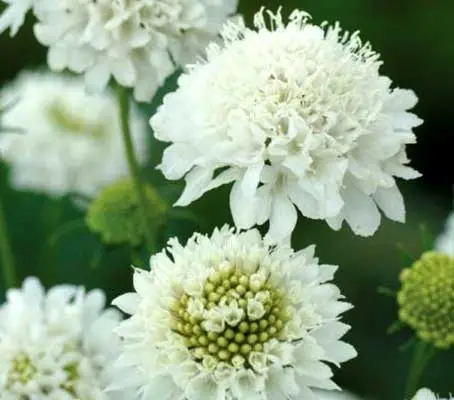
A prodigious bloomer and a tough, hardy garden performer Scabiosa atropurpurea grows quickly and is fast to flower. ‘Tall Double White’ blooms with delicate, pure white blooms. With strong, straight stems, they are valued for the contribution they make in the garden as well as the vase.
One of the longest-flowering and most glamorous of flowers that you can grow from seed, Scabiosa ‘Summer Fruits’ is a fantastic, fruity blend of delicious colours including raspberry, plum and blackberry. For weekly inclusions in the vase keep the flowers cut to keep the production of flowers right throughout the season.
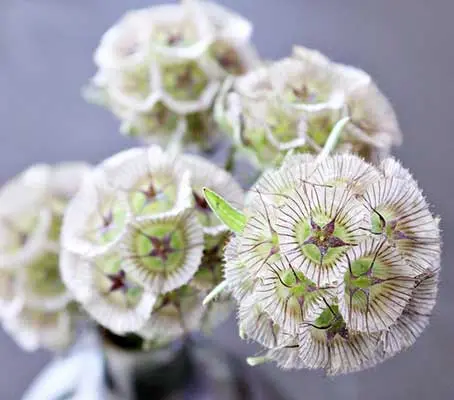
The papery bracts of Scabiosa stellata is an example of perfect geometry. A delicate geodesic sphere of translucent papery, cone shaped bracts adds a new shape to the garden. The everlasting seed heads make excellent cut flowers and are perfect for dried arrangements.
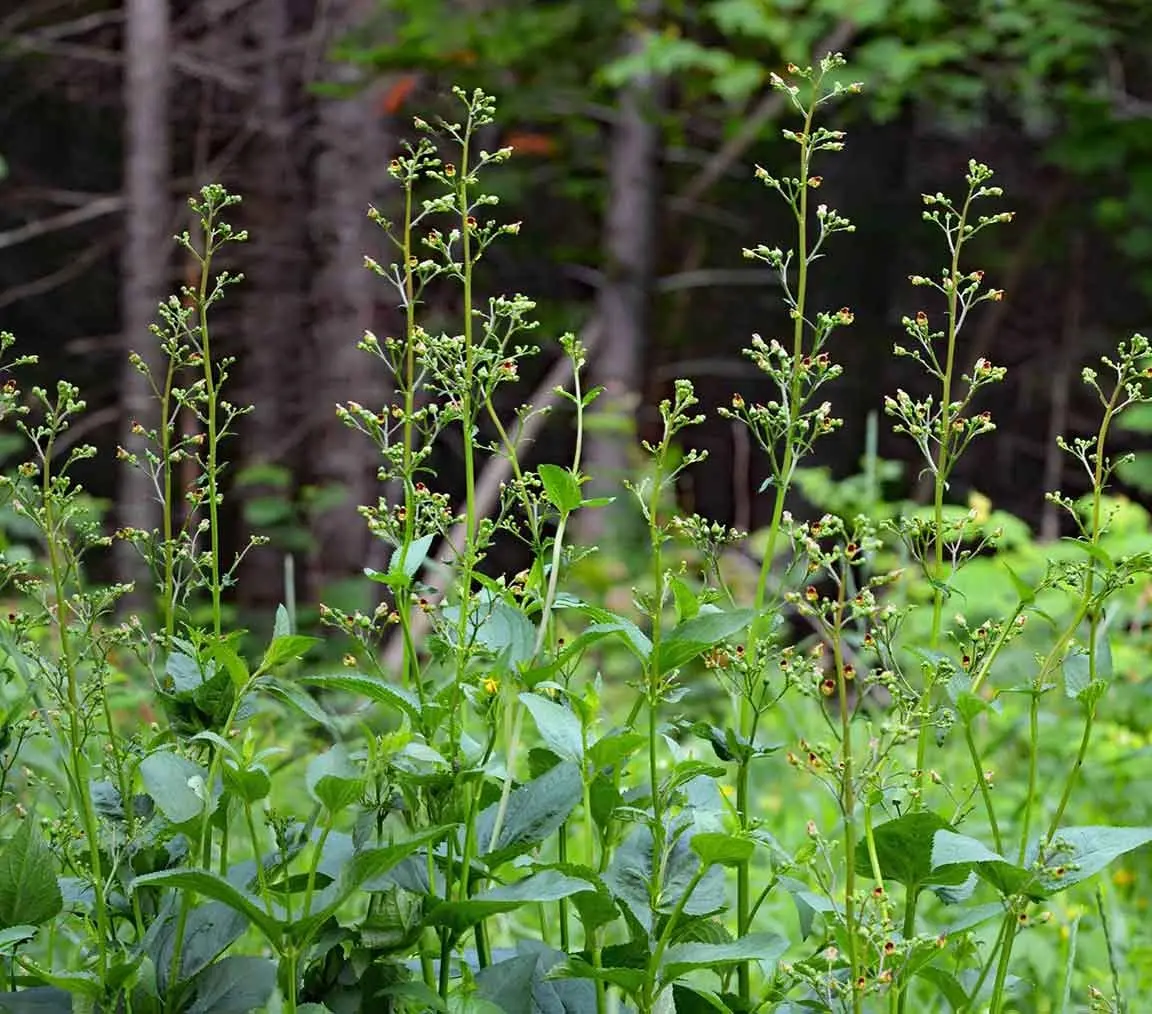
Our native Figwort is one of the most prolific nectar producers in the plant world, the long-lasting flowers attract more pollinators than any other plant around. The flowers, similar to tiny snapdragons ripen into egg-shaped seed pods, which are just the perfect bouquet filler for interest and movement!
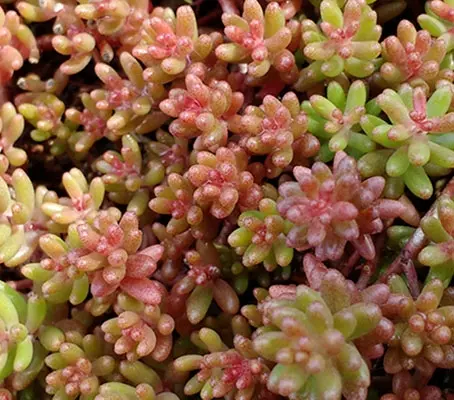
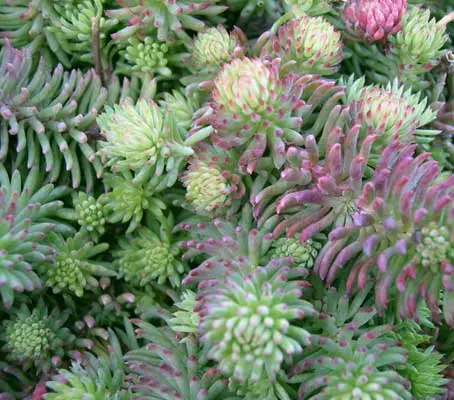
Sedum album is one of the most popular forms of sedum, known for its dense foliage as it changes colour throughout the seasons. The leaves emerge a coral-salmon in spring, change to bright green in summer and then to reddish bronze with the arrival of cooler temperatures. In summer the plants explode in masses of tiny, white star-shaped flowers.
Sedum forsterianum ‘Silver Stone’ is one of the more unusual textured species, with whorls of silver-green foliage. In late summer bright yellow star shaped flowers appear. This low-growing succulent plant grows to a height of 15 to 20cm, extremely hardy it can cope with temperatures down to minus 34°C.
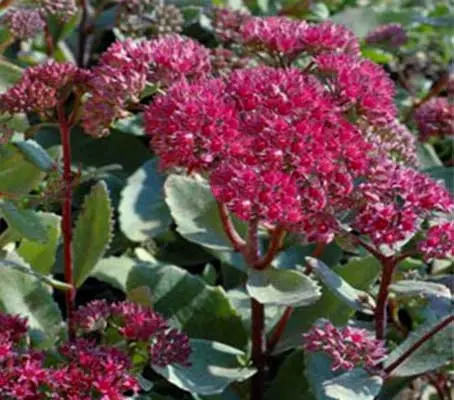
Hugely impressive in any garden, Sedum telephium ‘Emperors Wave’ boasts succulent, blue-green foliage and masses of star-shaped flowers in glorious shades of deep pink and purple. They are popular with late season perennials and ornamental grasses. The extreme contrast in flower shape enhance each other, adding to the textures and colours of the late season garden.
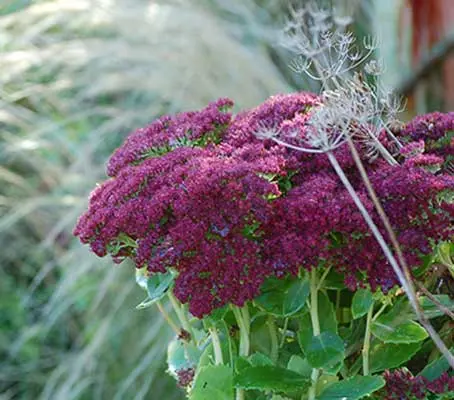
Sedum ussuriense is at its best in late summer when the blue-green succulent leaves are followed by glowing carmine-red flower clusters. It even pleases the eye in winter when it turns into a stage for dew drops and ice crystals.
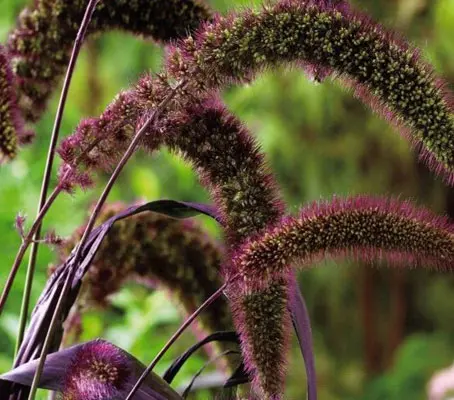
Setaria italica Red Jewel is a rarely-offered variety of annual grass with intensely coloured burgundy red foliage and dramatic foxtail-shaped flower heads. Suitable for growing in the garden or in containers the dark foliage is a great contrast in the garden or the vase.
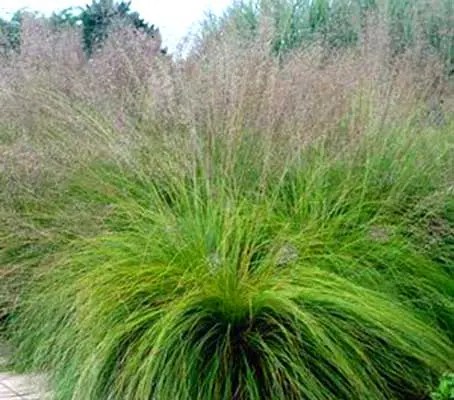
Sporobolus displays a magnificent fountain of fine textured, emerald-green leaves which develop rich shades of reddish-gold or deep orange in the autumn, but the great joy of this plant is that it produces a great cloudy haze of tiny flower heads.
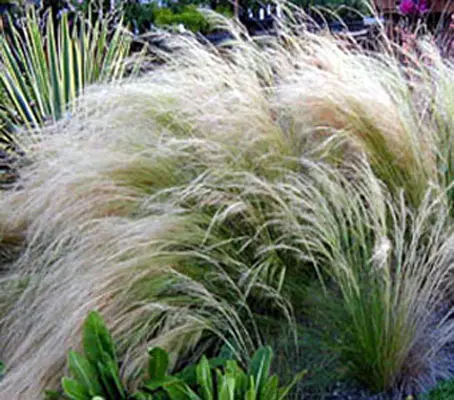
Stipa tenuissima ‘Pony Tails’ is wonderfully impressive. In summer, plants are covered with masses of elegant pale feathery seed-heads which are held a little above the foliage. These can be cut for use in arrangements indoors. Alternatively they make a useful winter food source for finches and other seed-eating birds.
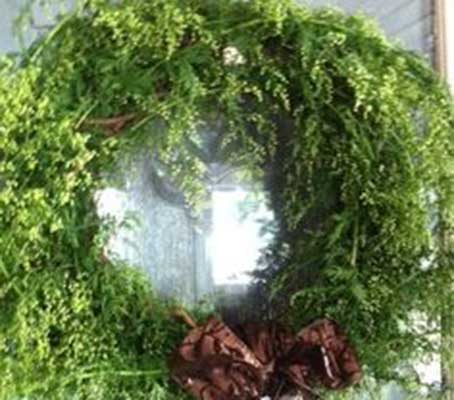
Artemisia annua, ‘Sweet Annie’ has tall stems with fine bright green, ferny foliage that is sweetly fragrant. This herb has a wide variety of uses but is most often grown for fresh and dried arrangements.
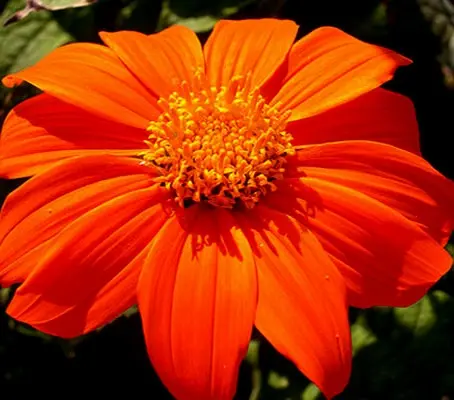
Brilliant sizzling, orange-scarlet flowers cover this vibrant ornamental plant, Tithonia produces one of the best flowers for attracting butterflies to the garden. Very easy and rewarding and perfect for new gardeners and children, sow direct in May and June for fast and furious, fabulous flowers.
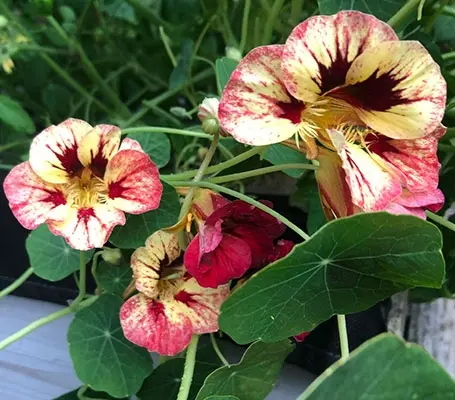
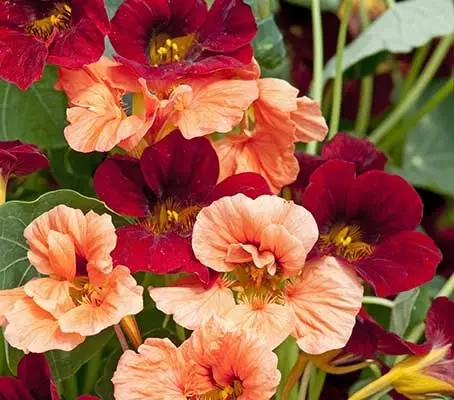
Nasturtium ‘Bloody Mary’ is an award winning Nasturtium with a unique flower pattern. Dramatic 5cm flowers in shades of dark red, coral red, cream, and unique bicolours, make a melodramatic scene in the flower bed, container or vase. Highly decorative they are in flower from May right through to October.
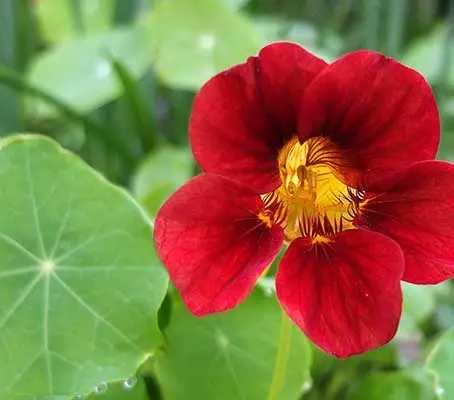
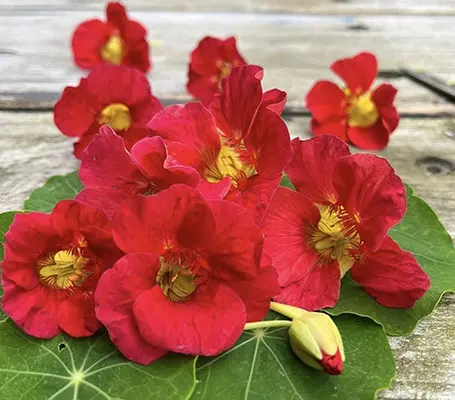
Tropaeolum ‘Fiery Festival’ is a trailing nasturtium variety that boasts vibrant bright red blooms with yellow centers. Its vines can extend up to 150cm, making it ideal for ground cover, hanging baskets, or climbing supports. Additionally the flowers are edible and serve a useful role in companion planting.
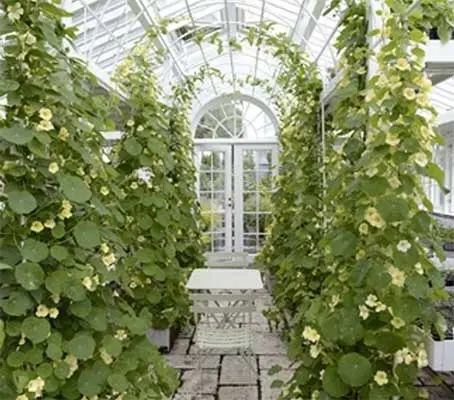
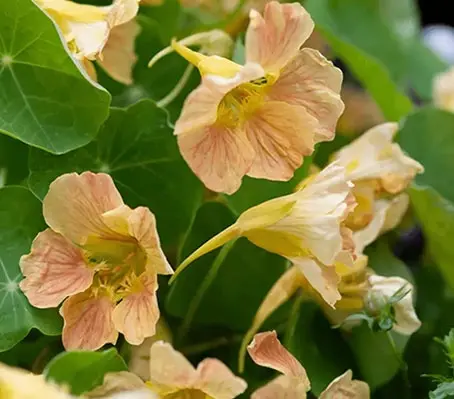
Notable for its rare flower colour, Nasturtium ‘Milkmaid’ produces blooms in a lovely soft, creamy hue. The top of the milk rather than full cream, and at around 2 metres in length it can be trained to ascend trellises, fences, or arches, or allowed to trail gracefully. An excellent choice for gardeners seeking a more understated palette.
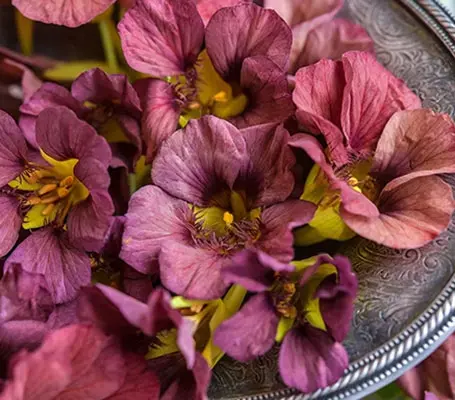
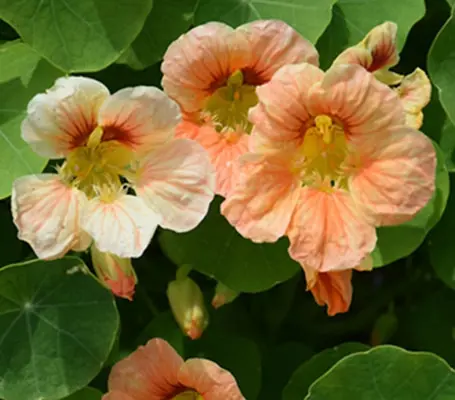
‘Purple Emperor’ is an exciting new palette with a vintage colouration that is quite unique to nasturtiums. Initially opening a dusky, antique burgundy they fade in the most beautiful way to a vintage lavender-rose.
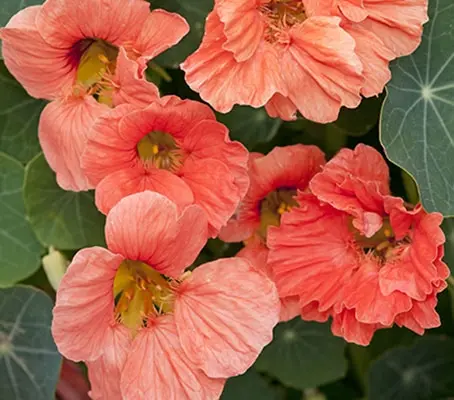
Tropaeolum ‘Salmon Baby’ is a very striking and attractive nasturtium that produces an abundance of semi-double salmon-pink flowers which contrast beautifully against the dark foliage. Extremely easy to cultivate, this neat and compact variety has edible flowers and is an excellent companion plant.
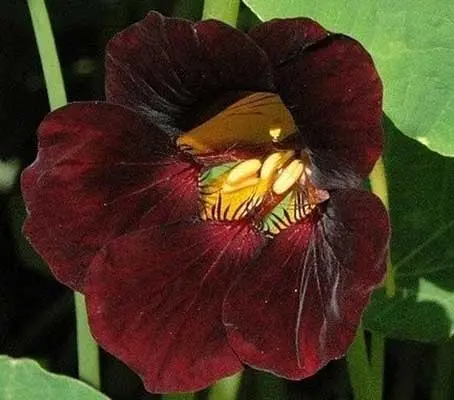
Celebrated for its striking, velvety deep-red to near-black flowers, which provide dramatic contrast, Tropaeolum ‘Black Velvet’ is a visually captivating and versatile plant that combines ornamental beauty with culinary and ecological benefits.
Glowing cherry-coral blooms give this variety a warm, tropical quality, and the versatile colour mixes well with so many things. Nasturtium ‘Jewel Cherry Rose’ has a more mounding growth habit than other trailing nasturtiums, but stem length is sufficient for arranging, and it won’t overtake the garden.
Celebrated for its striking, velvety deep-red to near-black flowers, which provide dramatic contrast, Tropaeolum ‘Black Velvet’ is a visually captivating and versatile plant that combines ornamental beauty with culinary and ecological benefits.
In multiple hues of apricot, the petals of Tropaeolum ‘Tip Top Apricot’ have a darker veining with a deeply shaded throat. This award winning, premium series produce 45 to 50cm mounded plants that are extremely floriferous and have a long flowering season.
‘Tip Top, Pink Blush’ is a premium series that provides uniquely coloured flowers that are a great addition to the nasturtium family. Vintage-cream flowers, finely veined with apricot-pink. The subtle palette gives a relaxed, modern look to borders and larger containers alike.
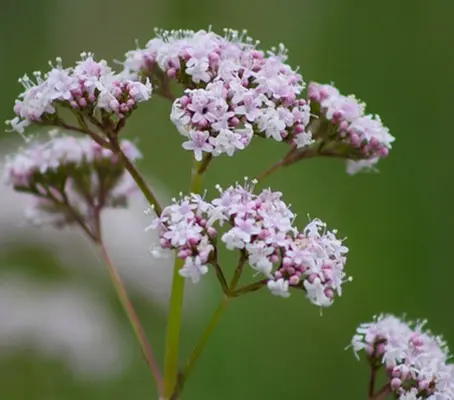
Valeriana officinalis is a graceful wildflower that is native to Europe and Western Asia. The tall, branched flower stalks are held atop a low mound of foliage, the densely clustered flowers are sweetly scented and usually white with a hint of pink.
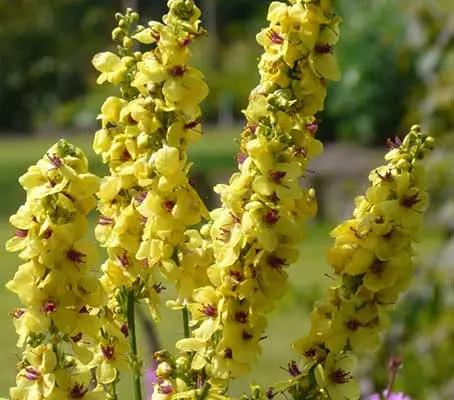
Verbascum nigrum is one of the most reliable and long-flowering verbascum, it is also one of the truly perennial species. This European native bloom profusely with masses of golden-yellow flowers. First thing in the morning, the flowers are alive with bees getting on with their day’s work. Take time to stand and admire them for a few minutes. They will pay you no heed, they’re far too busy.
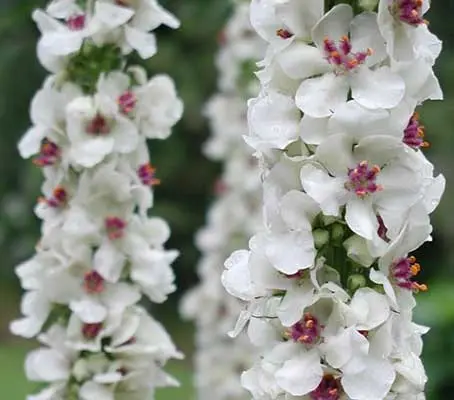
Verbascum nigrum is one of the most reliable and long-flowering verbascum, it is also one of the truly perennial species. The variety ‘Album’ bloom profusely in late spring with masses of white flowers with attractive violet filaments, held on candelabra like branches. They bloom throughout the summer, with a few sporadic flowers still in September to early October.
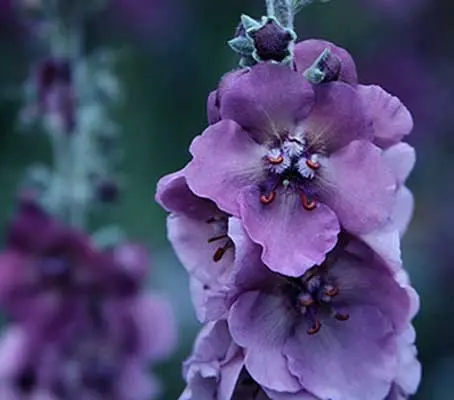
English gardeners are very familiar with this plant and consider it essential for a well-structured garden. Verbascum phoeniceum ‘Hybrids Mix’ flower freely, giving a glorious plethora of colours from delicate salmon to rich claret. A true perennial which can flower the first year given an early sowing.
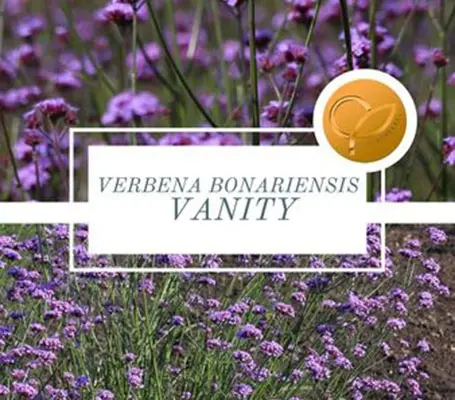
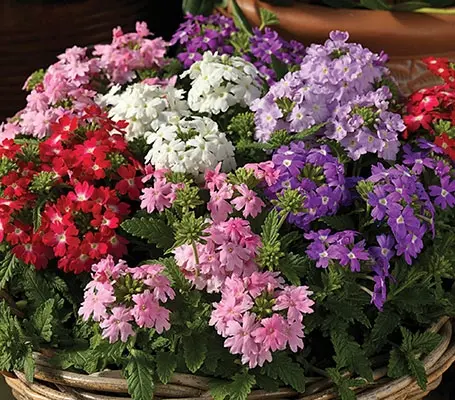
Verbena bonariensis ‘Vanity’ is a new compact cultivar of a perennial favourite. This award-winning variety has an open habit with gorgeous, intense purple-blue clusters atop branching thin, wiry stems. Its garden friendly neat habit makes it sturdier and easier to maintain while you create a pollinator paradise in your garden.
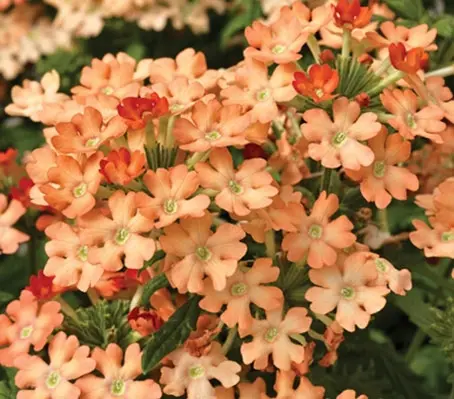
Verbena ‘Obsession Apricot’ is a new pastel colour of this exquisite series. Bred to be earlier to flower, the evenly spread buds open to reveal showy clusters of star-shaped, peach-apricot flowers at from late spring to mid autumn. They bring an extremely fine and delicate texture to any garden composition.
A beautiful pastel mixture of this exquisite series, Verbena ‘Obsession’ plants are compact with a trailing habit of growth they eventually spill over the edges of hanging baskets and containers. This award winning variety is an excellent performer flowering over a long period throughout summer, regardless of the weather.
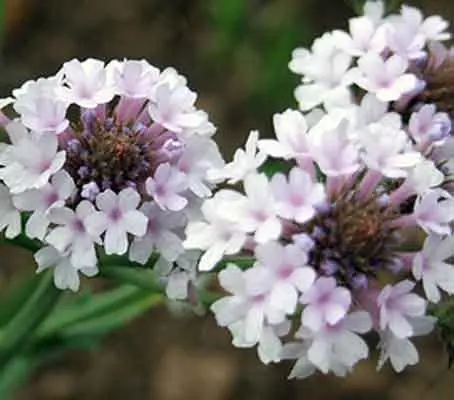
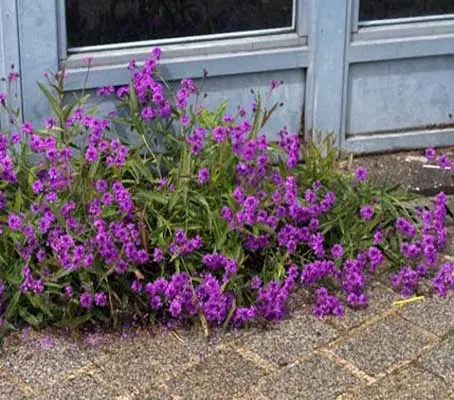
Named Verbena rigida after its upright habit, this front-of-the-border performer, although only a foot or two in height, can outshine almost everything else. Polaris is a dazzling, low-growing verbena that produces a candelabra of silver-blue flowers.Verbena venosa is a small and densely flowered version of Verbena with clusters of purple-pink fragrant flowers that are held in domed heads. A brilliant addition to the garden that will bloom from mid-spring right until the first cold of winter.
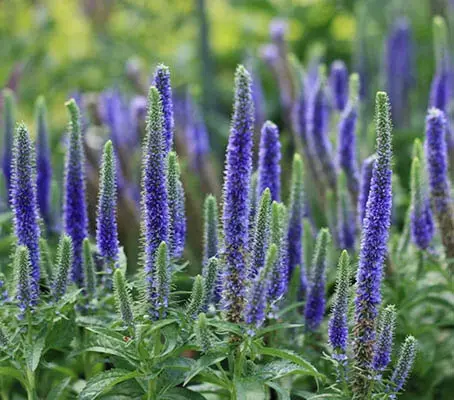
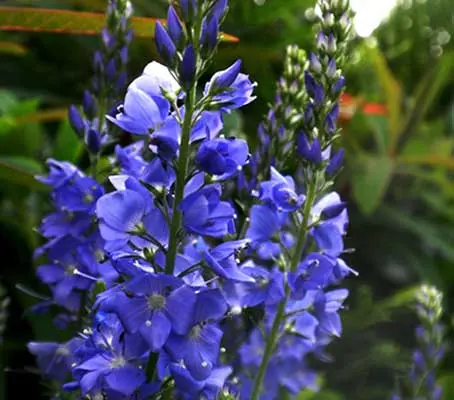
Gardeners are often looking for good solid perennials that will have attractive flowers, be easy to take care of, grow nicely but not take over the garden. One group of plants that should be considered is the Veronicas. They provide some of the clearest, truest blues in the perennial border.
Gardeners are often looking for good solid perennials that will have attractive flowers, be easy to take care of, grow nicely but not take over the garden. One group of plants that should be considered is the Veronicas.
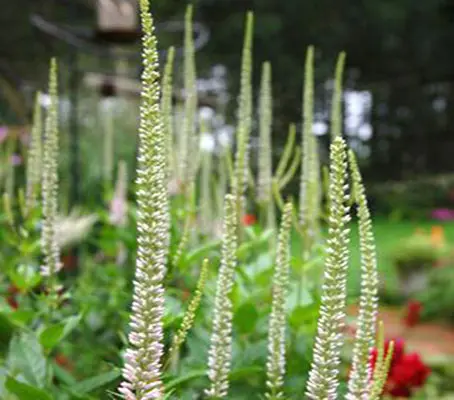
Veronicastrum is one of the most fashionable plants around. It is an excellent genus, full of hardy, trouble-free plants. The multiple tapering, soft spikes of white flowers look like elegant, living candelabras.
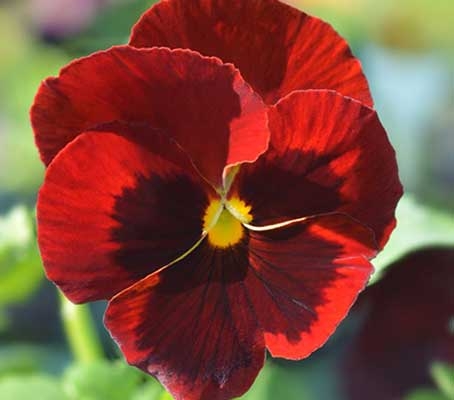
Viola ‘Arkwright Ruby’ is an antique variety that is a favourite among gardeners for both its historical charm and ornamental beauty. The rich, velvety ruby-red blooms are incredibly versatile, perfect for almost anywhere in the garden or for the vase.
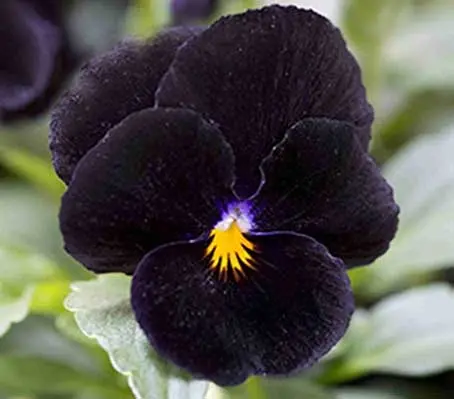
Viola cornuta ‘Back to Black’ is a striking cultivar of the horned violet, admired for its exceptionally dark, velvety flowers. The blooms are an intense black-purple, so deep that they often appear pure black. If you want to achieve long stems for the vase, plant them close, 5 to 10cm apart.
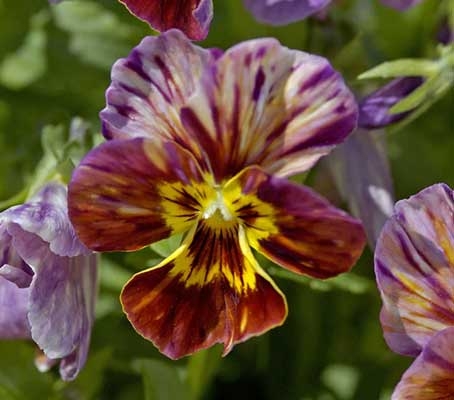
Renowned for its unique, hand painted, Viola ‘Brush Strokes’ is a captivating variety that has been carefully chosen from a cherished collection of historic strains. A harmonious blend of soft apricot, honey, plum, cream and lavender tones, often accented by intricate flecks and fine veining.
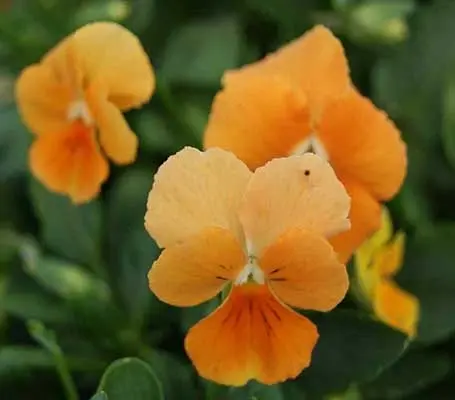
Viola ‘Chantreyland’ is a compact, cool-season charmer. Soft apricot petals with hints of cream, washed with a blush of sunset pink. She’s made for edging, containers, or nestling into cracks in old stone. Quite unforgettable once you’ve met her. no wonder she has been in cultivation since 1923.
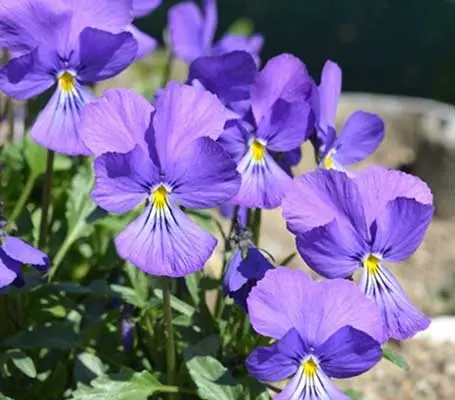
A real gem from the mountains of Italy, Viola corsica ‘Bertolonii’ is a rare but easy-to-grow viola that deserves a spot in any sunny garden. It forms tidy clumps of dark green, lance-shaped leaves and puts on a gorgeous display of large, azure-blue flowers from April through June.
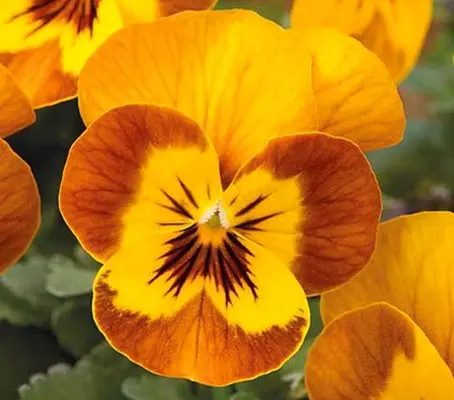
Viola ‘Sorbet F1 Honeybee’ is a real heartbreaker in a six-petal suit. They bloom with rich mahogany and warm golden yellow petals – rather like sunlit honey. Near the centre there’s a soft black whisker pattern. Perfect for use in beds or containers and for attracting pollinators to the garden.
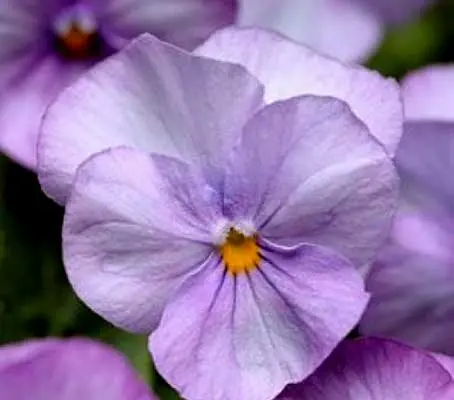
A delicate lavender kissed with rosy pink undertones, the top petals of Viola ‘Sorbet F1 Lavender Pink’ lean a little more to lavender, the lower ones more pink, giving it a subtle watercolor fade. Refined, elegant and easy on the eye.
€2.85
€2.95
€3.75
€2.00
€2.95
€2.95
€2.25
€2.25
€2.95
€2.45
€1.95