 Skip to content
 Sort by:
Sort by:
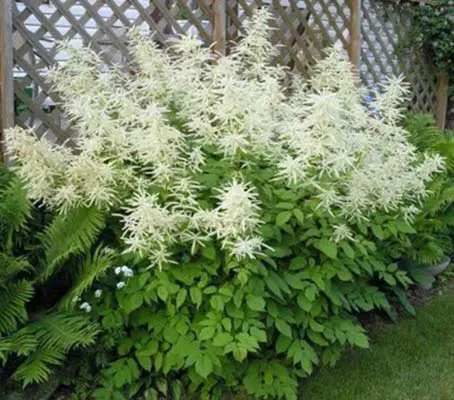
White Goat's Beard, Bride's Feathers
 Aruncus dioicus’ commonly known as Goat’s Beard or Bride’s Feathers is one of the most handsome plants for the perennial bed. Its leaves are large and it has an abundance of flowers and in the autumn it turns an impressive, autumnal yellow colour.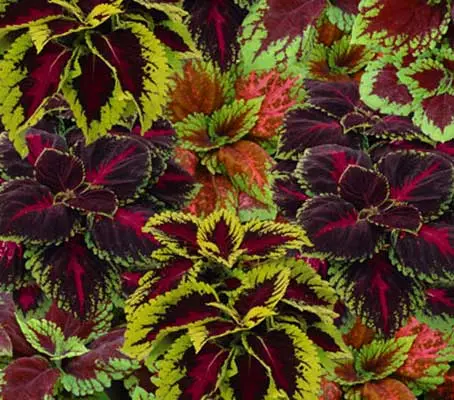
A Premium Shade variety
Coleus has enjoyed a resurgence in popularity over the past few years. The new breeding has taken a handful of series and exploded them into hundreds of wild and crazy types of colours and forms. Overwhelmingly the favourite is the Kong series for its sheer presence, each leaf is easily as big as your palm, and probably twice as large as the next biggest Coleus you can buy.
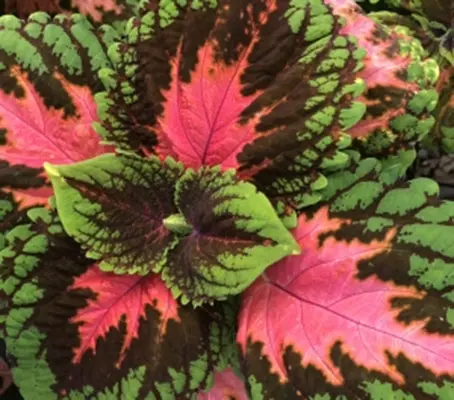
A Premium Shade variety
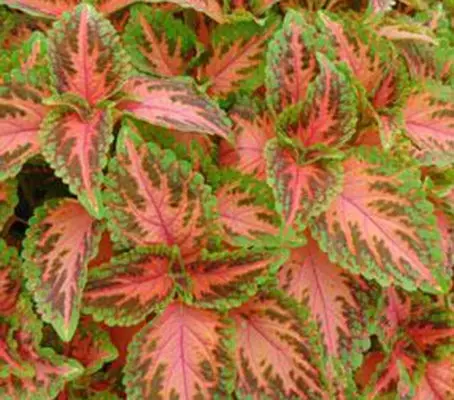
Featuring huge leaves that are coral in the centre and edged in bright green, Coleus ‘Kong Salmon-Pink’ is a ‘Premium Shade’ variety, that are great for large containers and mass plantings, performing best and showing the most intense colour in full shade, they also work well for indoor plant programs. It’s hard to go wrong with this plant.
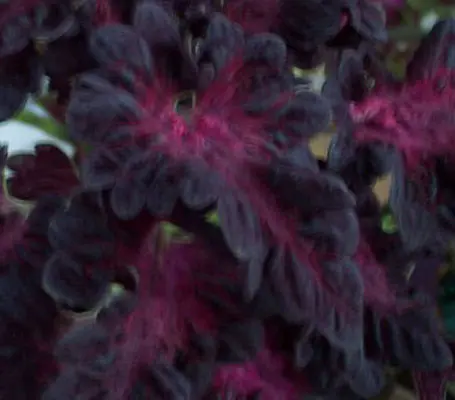
Painted Nettle. Flame Nettle
This wonderful Victorian type coleus ‘Black Dragon’ forms a riot of rumpled leaves in velvety purplish black leaves, each bordered by frilly edges. The ruby red centres are sometimes flecked with violet or pink. Easy to grow from seed, they will show their first colours in as little as two weeks.
Painted Nettle. Flame Nettle
Coleus have been perfected, the new varieties have colours that intensify in sun, but can also thrive in shade. “Coral Sunrise” is an excellent example of the new developments, The beautiful coral pink heart-shaped leaves have neatly serrated edges, with shades of olive and intense bright green margins.
Painted Nettle. Flame Nettle
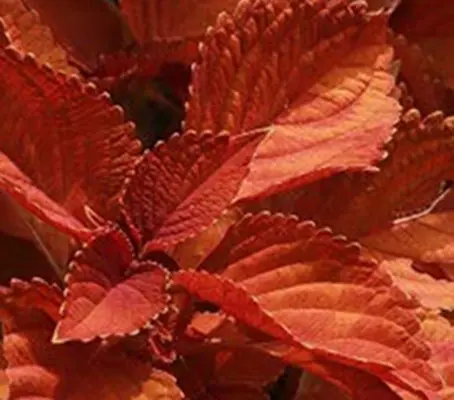
Ten years back coleus were gaudy relics from Grandmother’s generation, but now coleus are back and teetering on the cutting edge. “Wizard Sunset” is one of the softer colours from the Wizard series, with heart-shaped leaves in beautiful shades of bronze – apricot. Excellent in full sun.
Fairybells, Hairbells, Wedding Bells
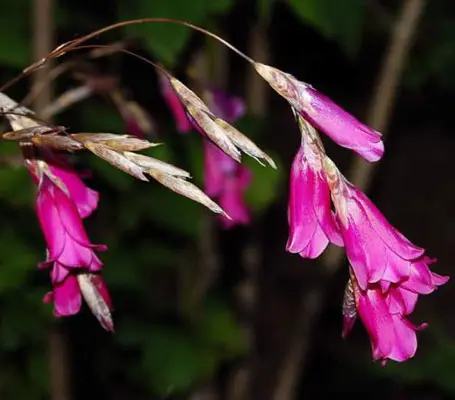
Dierama pulcherrimum is a distinctive-looking perennial with tall arching stems of bell-shaped, flowers. The flowers bloom in shades of pink, mauve and carmine appear in mid summer. Each stem drops with the weight of the flowers which earns them the most romantic of names – Angel’s Fishing Rods.
Alpine Sea Holly, Queen of the Alps
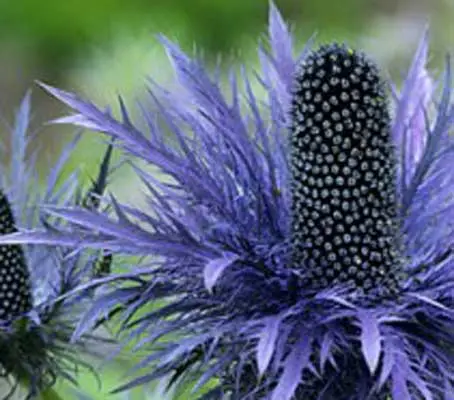
Eryngium alpinum Superbum is an elegant species, with metallic stems and large flowers that mature to an intense steel blue/purple in summer and autumn. A fascinating architectural plant for the border.
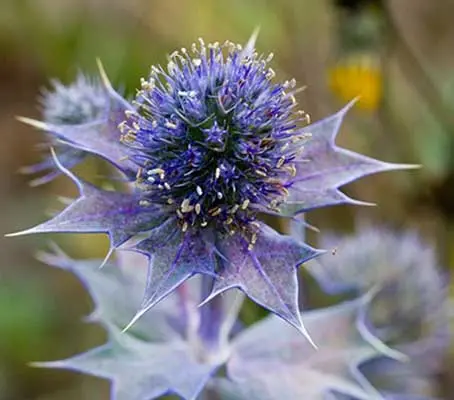
Seaside Eryngo, Sea Holly.
Ancient Crop. Wildflower of Britain and Ireland
Eryngium maritimum is an evergreen perennial plant native to Europe. Often found on sea shores, it is a protected species in many parts of the world. Highly ornamental, it is grown in gardens for its metallic bluish flowers and intensely whitish-glaucous leaves, it is very attractive to bees and butterflies.
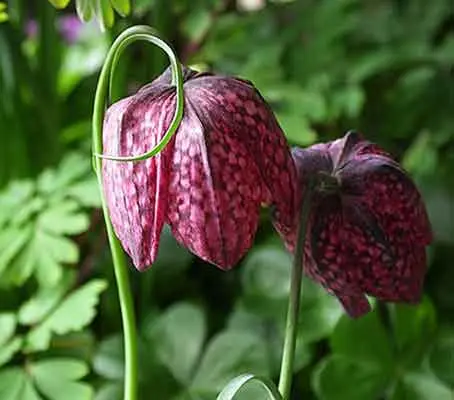
Snake's Head Fritillary, Chequered Lily,
Wildflower of Britain and Ireland
Snake’s head fritillaries always excite attention wherever they are seen. None of the other lovely members of the fritillaria genus can match this native wildflower for the bizarre and unmistakable colouring of its bell-shaped flowers.
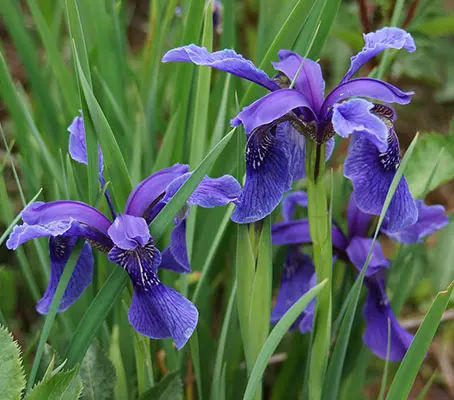
Bulley's Iris, Sino-Siberian Iris, Beardless Iris.
Iris bulleyana is a classic species Iris from western China. It belongs to a small group of oriental species which are entirely hardy and are of great value to the gardener. The plants are successful in any moist garden soil. Flowering from June to July, the blooms with mid purple flowers and dark purple veins.
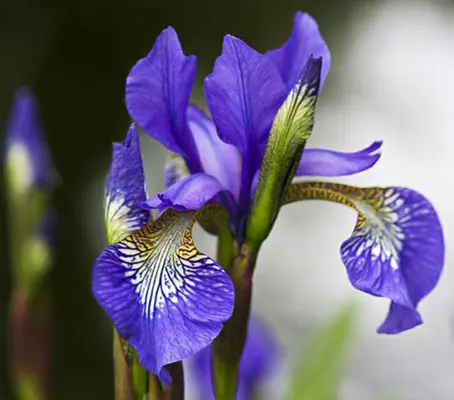
Northern Blue Flag Iris
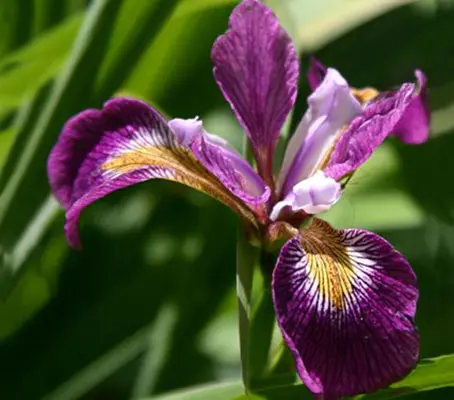
Iris versicolor is one of the few species in garden cultivation. Although happiest at the waterside the plants will also perform well under average to moist border conditions. Flowering from May through to July, each stalk produces up to five violet-blue flowers with ruffled petals and bold purple veining.
Northern Blue Flag Iris
‘Kermesina’ is an attractive and popular cultivar of Iris versicolor. Flowering from May through to July with claret-purple flowers with ruffled petals and bold purple veining. It may be grown in shallow standing water or moist shoreline soils and suitable to be grown in constantly moist humusy soils of a border.
Red Sally, Long Purples
Wildflower of Britain and Ireland
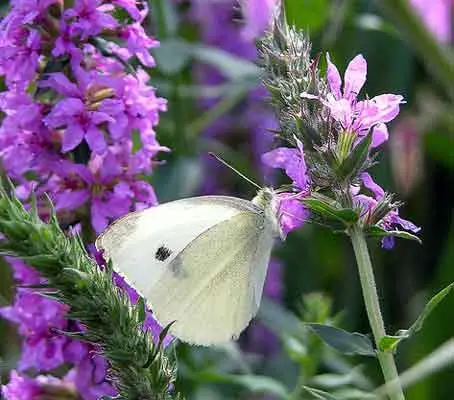
Magnificent and spectacular spikes of rose-purple flowers, which last from June throughout the summer distinguish this tall wetland plant. Purple loosestrife is an easy garden plant, thriving in any soil. It is a beautiful subject for late summer colour in a border, shrubbery, large pond or slow-moving water.
Bowles Golden Grass
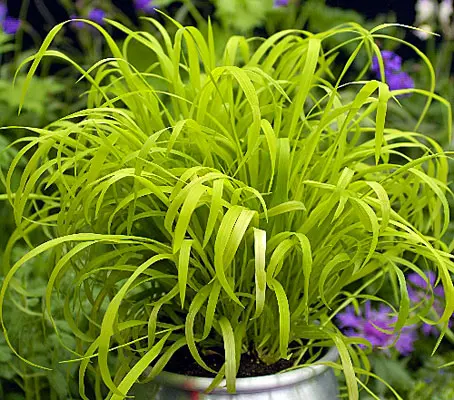
Milium effusum Aureum has a magical quality, bringing incandescent light to the shady places it prefers. As the season progresses tiny golden, bead-like flowers on hair-thin stems arch gracefully creating fountains of gold.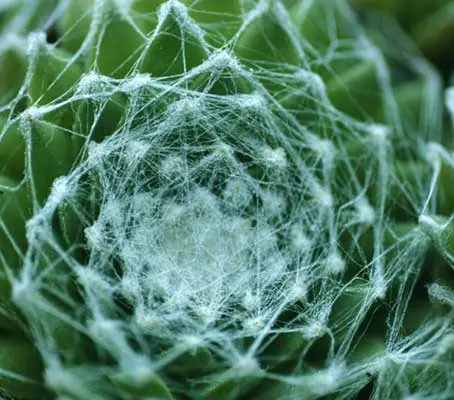
The Cobweb Houseleek
Always an interesting plant, Sempervivum arachnoideum is an exotic and interesting variation which forms small green rosettes of fleshy leaves, the tip of each leaf connected to another by a network of silvery filaments that resemble a spider’s web.
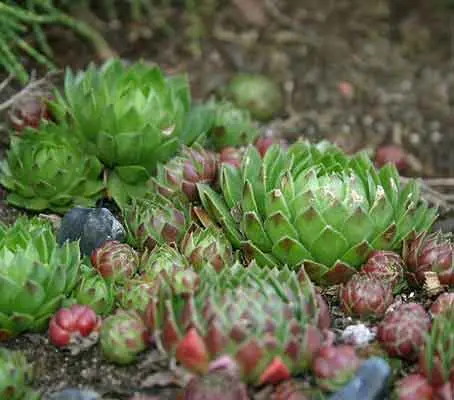
Winter Hardy Varieties. Hens and Chicks or 'Hippy Chicks'
Whether planted in large numbers or used as a single specimen Sempervivum are both beautiful and enduring. Their rosettes are fascinating, their colour hues are stunning and their tendency to produce offsets makes for easy increase.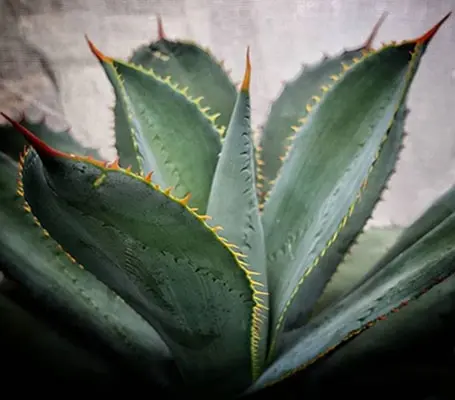
Raicilla Mescal Agave. Maguey Lechuguilla
Agave maximiliana is a rare and captivating species, admired for its large, imposing rosettes formed by wide, fleshy leaves that taper to a sharp point. The leaves often displaying a beautiful bluish-green hue with the impression of the newer leaves on the older leaves. It one of the bedrock agaves used in the distillation of Raicilla, the local Mezcal.
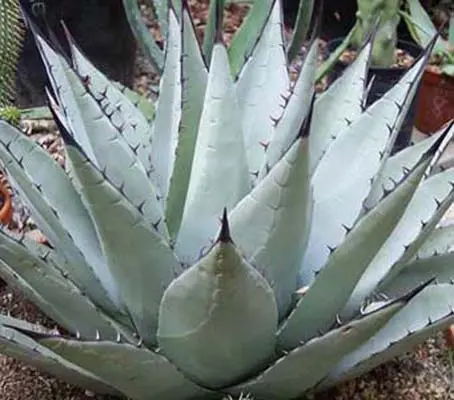
New Mexico Agave, Parry’s Agave or Mescal Agave.
Agave parryi is a dramatic specimen. This native Mexican succulent forms a compact rosette of soft fleshy, bluish green leaves. The foliage is wide and heavily armed with dark tipped spines. With the ability to grow 60cm wide and as tall, it is one of the most cold hardy Agave species.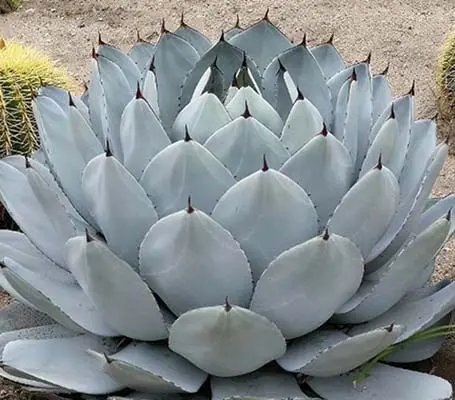
Artichoke Agave
Dense rosettes with almost metallic-looking, powdery blue, perfectly scooped leaves, Agave parryi var. truncata is a structural masterpiece that stays relatively small and compact. It makes a good container plant, and if you should happen to have something like a south facing rock wall in the hot sun, then this Agave really belongs there.
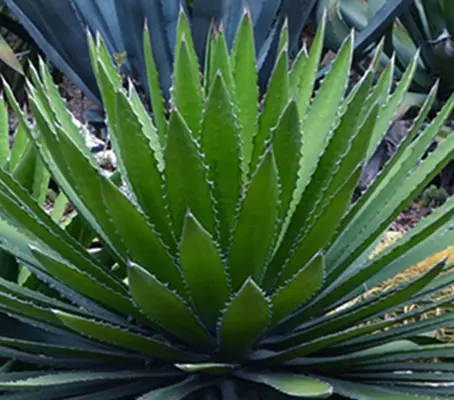
Sharks Tooth Agave, Maguey Diente de Tiburón
Agave xylonacantha ‘Blue’ is the beautiful blue-leafed form. Rare in cultivation, this dramatic specimen is heavily armed with the most bizarre large white teeth of all the family. One of its previous names being Agave carchariodonta, was in reference to the teeth (odonta) of the Great White Shark, Carcharodon carcharias.
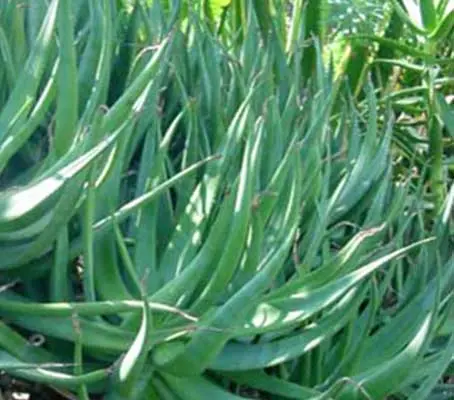
Cat's Tail Aloe
Aloe striata, commonly known as the Coral Aloe is one of the prettiest of all succulents. The smooth blue-green leaves are edged with a pink or red margin and no teeth.
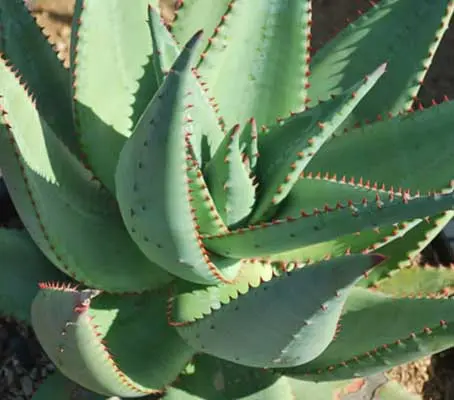
Ferocious Aloe, Cape Aloe
The Cape Aloe is a distinctly handsome plant, with broad, lance-shaped, fleshy leaves and a large candelabra-like flower-head. There are usually between five and eight branches, each carrying a spike-like head of many flowers.
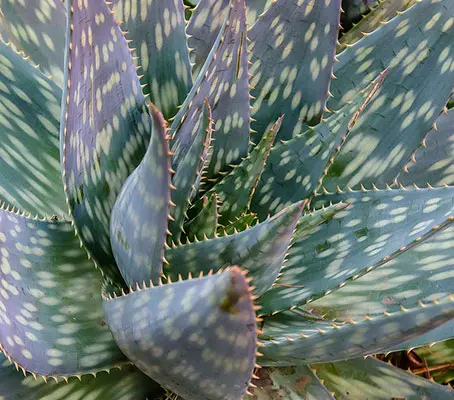
Cape Speckled Aloe
One of the most attractive and floriferous of Aloes of South Africa, Aloe microstigma, forms solitary or small clumps of beautiful rosettes of blue green leaves. The leaves are adorned with conspicuous white spots, which contrast nicely with the reddish teeth along the margins.
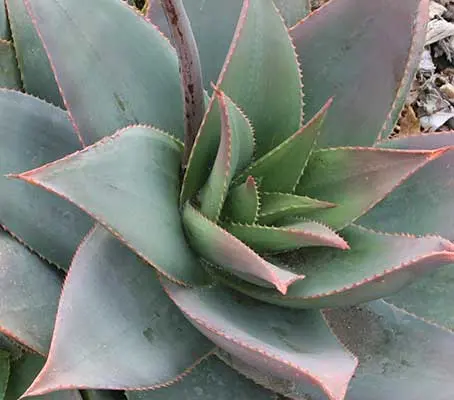
Coral Aloe
Aloe striata, commonly known as the Coral Aloe is one of the prettiest of all succulents. The smooth blue-green leaves are edged with a pink or red margin and no teeth.
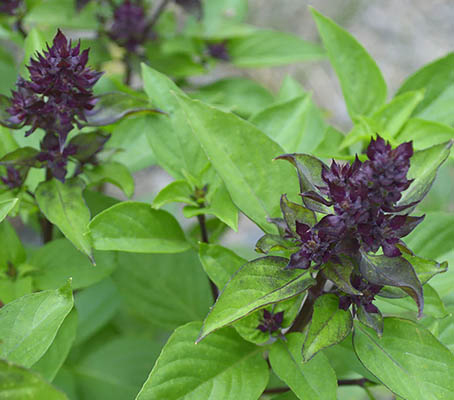
Basil
Part of the ornamental Spice Boys range, Basil ‘Queen of Sheba’ is one of the most ornamental varieties available. Intense purple flowers on tall flowering spikes rise above bright green, highly aromatic foliage. In the kitchen it is particularly well suited to Thai and Asian cooking, though it works just as well stirred through a simple pasta or tomato sauce.
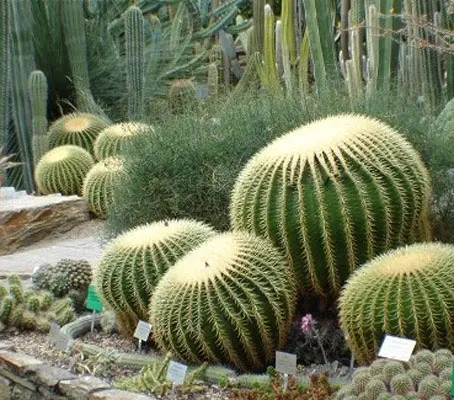
Cactus
Growing cacti is an addictive hobby and be much easier than commonly perceived. This premium cactus seed mix includes a variety various species including the famous and magnificent Saguaro Cactus. They germinate easily, grow slowly, but compared to many plants need relatively little care.
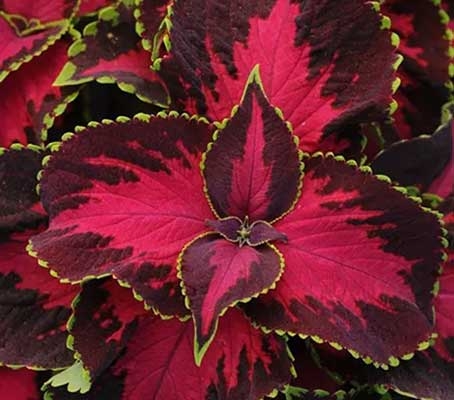
A Premium Sun variety
‘Chocolate Covered Cherry’ is one of the prettiest introductions of the series. Velvety leaves painted in a rich cocoa-brown, flushed with glowing cherry red, and trimmed with a bright green margin that sets the whole plant alight.
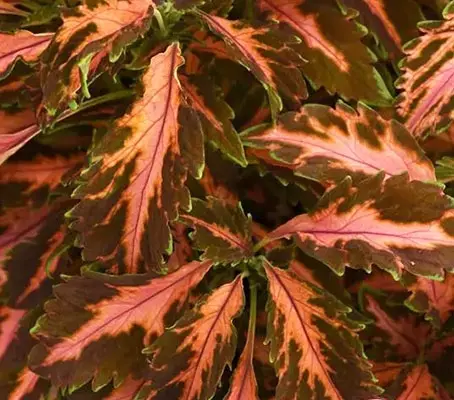
A Premium Sun variety
Coleus ‘Coral Candy’ features a new plant form – narrow, serrated leaves that gracefully drape down the mounded plants. The first seed coleus to ever win the coveted AAS Winner designation. The Judges noted that this beautiful variety holds its colour well, even when grown in full sun and holds up nicely in the autumn.
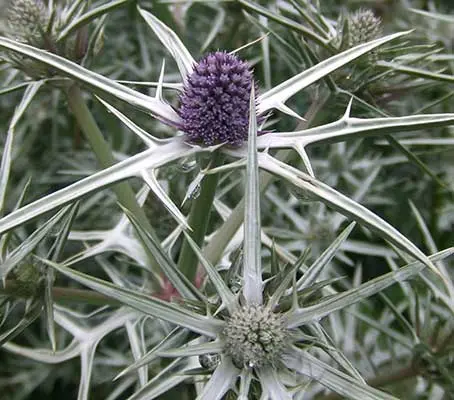
Variable-Leaved Sea Holly, Moroccan Sea Holly
Eryngium variifolium ‘Miss Marble’ is a spectacular evergreen perennial. The neat mound of basal leaves are attractively marbled with silver veining. In summer upright stems bear silvery-blue flowers, each thimble is surrounded by long, slender bracts which splay outwards, adding to the prickly appearance.
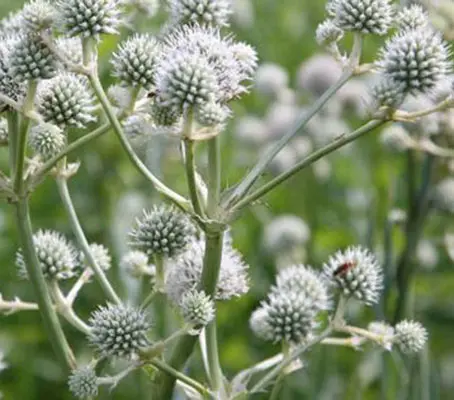
Button Sea Holly, Rattlesnake Master
Long sword-shaped leaves, tight set white spheres and ivory-white bracts on smooth stiff stems. Eryngium yuccifolium have a unique structure that make it highly desirable.
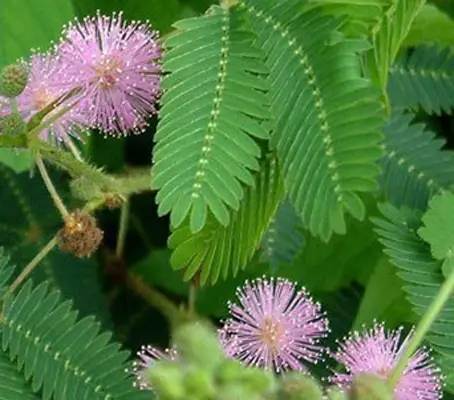
Touch-me-not
Mimosa pudica, the ‘sensitive plant’, is a source of fascination to adults and children alike. When touched, the narrow fern-like leaflets they almost instantaneously fold together and the leaf stalk droops. This sometimes sets off a chain reaction, with several leaf stalks falling on top of one another.
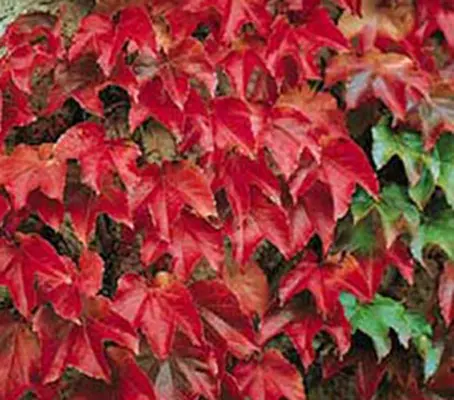
Boston Ivy, Bostonian Ivy, Wall Ivy
Boston ivy is a wonderful ornamental vine. The elegant, dark green glossy foliage is replaced with a vivid range of crimson reds in autumn. Sensational for covering walls, fences and arbors. If allowed, it will grow to impressive size and can turn the most mundane masonry building into a stately wall of foliage.
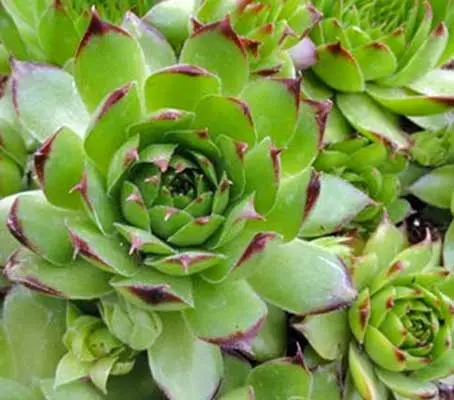
Hens 'n' Chicks, Houseleek
Native to Europe, Sempervivum tectorum is a widely-planted succulent that has been grown in and around human settlements for millennia. Their rosettes are fascinating with their succulent leaves radiating around the centre, their colour hues are stunning and their tendency to produce offsets makes for easy increase.
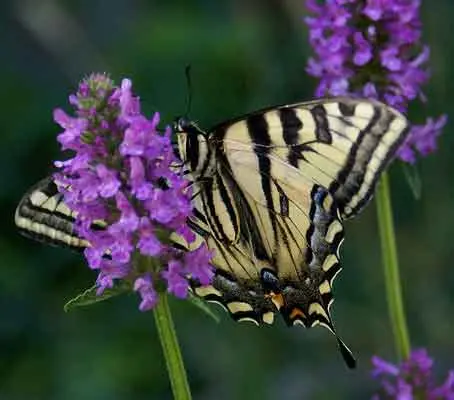
Betonica officinalis, Wood Betony, Bishopswort.
Wildflower of Britain and Ireland
This pretty little wildflower is a slow growing, long-lived plant with attractive spikes of rich pink-mauve flowers that are very attractive to bees and butterflies as a nectar source. The flowers, which rise from dark green crinkly leaves, keep their colour throughout summer and look stunning when growing en-masse.
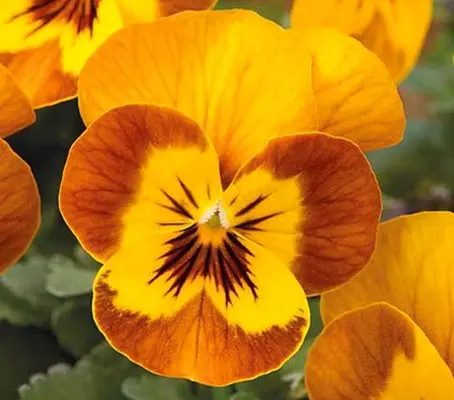
Horned Violet.
Viola ‘Sorbet F1 Honeybee’ is a real heartbreaker in a six-petal suit. They bloom with rich mahogany and warm golden yellow petals – rather like sunlit honey. Near the centre there’s a soft black whisker pattern. Perfect for use in beds or containers and for attracting pollinators to the garden.
Horned Violet.
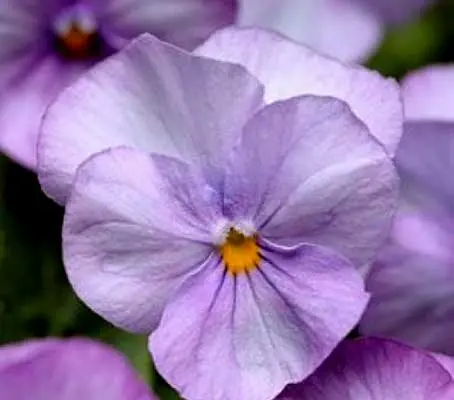
A delicate lavender kissed with rosy pink undertones, the top petals of Viola ‘Sorbet F1 Lavender Pink’ lean a little more to lavender, the lower ones more pink, giving it a subtle watercolor fade. Refined, elegant and easy on the eye.
Viola, Horned Violet.
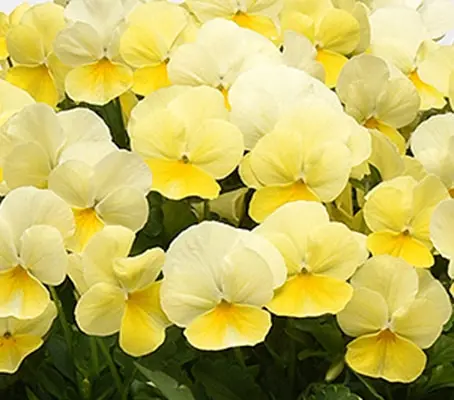
Viola hybida ‘Sorbet F1 Lemon Chiffon’ is pure joy in the form of a flower, with pale lemon-yellow upper petals with warm yellow lower petals. The compact, mound shaped plants grow 15cm high and up to 30cm wide. They are very tolerant of heat and cold, and in climates with mild weather they will flower all winter.
Horned Violet.
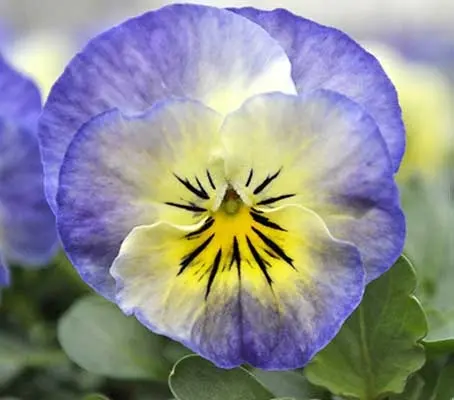
Well-regarded in horticultural circles, Viola Sorbet XP Neptune F1 is a premium cultivar, for its consistent performance across a wide range of climates and seasons. ‘Neptune’, displays striking blooms characterised by a soothing blend of soft blue and cream petals, often with a delicate yellow center and a faint blue picotee edge.
Horned Violet.
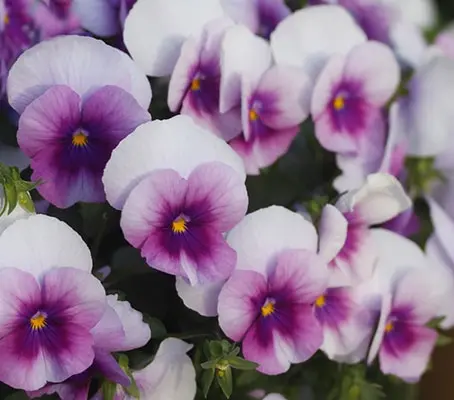
One of the most striking colour combinations of the series, Sorbet ‘Orchid Rose Beacon’ blooms with bicoloured flowers of bicoloured flowers of with rose and purple-pink face, with dark whiskers and a golden eye. Absolutely gorgeous, it can be slipped into almost any gaps where you need a little brightness.
Horned Violet.
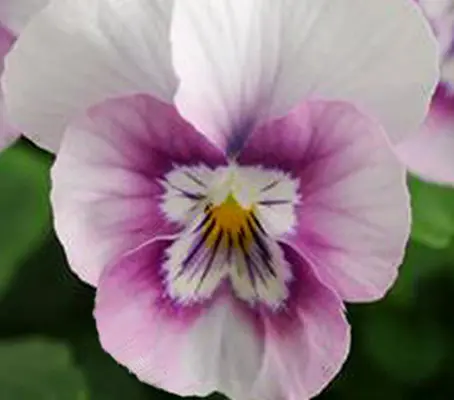
The Sorbet series is the premier series of Violas. Bred to have more blooms and less stretching, it is a standout performer in both spring and autumn. Sorbet F1 ‘Pink Halo’ have petals that are a crisp white. At the centre there’s a raspberry-pink halo that fades outward and dark whiskers that radiate from the centre.
Horned Violet.
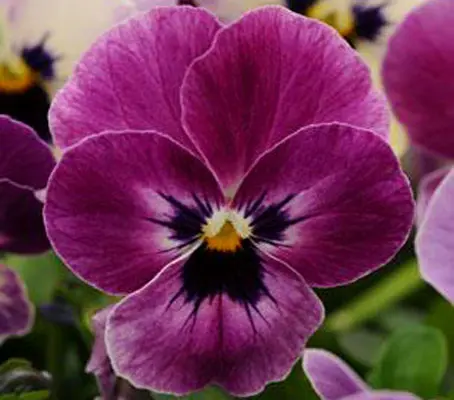
Sorbet ‘F1 Raspberry’ has tricolour patterns with cap, face, whiskers and eye colours, with luscious deep raspberry red upper and lower petals with dark whiskers and a golden eye. It is a stunning new colour pattern, with a bright face that seems to be basking in the spring or autumn sunshine
€3.25
€2.95
€2.75
€2.80
€2.95
€2.95
€2.75
€2.35
€2.25
€2.35
€2.45
€2.10
€3.50
€2.10