Sort by:

Sort by:

Sort by:

Sort by:
No. of Varieties: 94
Caucasus Catmint

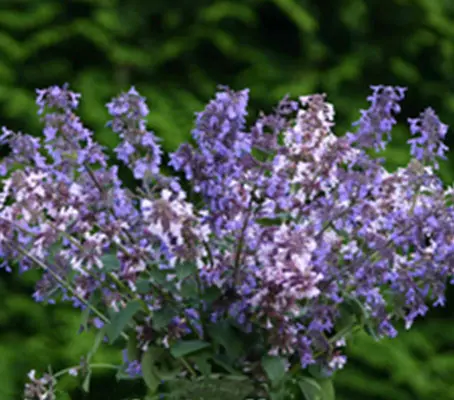
Nepeta grandiflora is a superb catnip garden performer and one of the best garden plants in this family. ‘Border Ballet’ is a striking new catmint, lusher than true catnip, with dark green leaves. It flowers in shades of blue and pink in perfect harmony. This easy to sow and grow perennial flowers in the first year of sowing.

Misogawo-so, Japanese Catmint

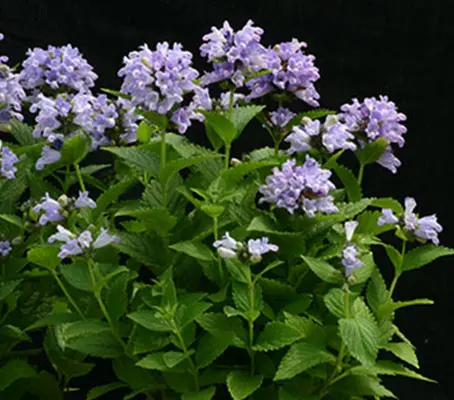
Nepeta ‘Dark Blue Panther’ is the dark blue flowered variety and sister to ‘Pink Panther’ and the beautiful white ‘Snow’ Panther. This award winning variety starts to flower just 15 weeks after sowing and can be can be grown as an annual or as a flowering perennial.

Misogawo-so, Japanese Catmint

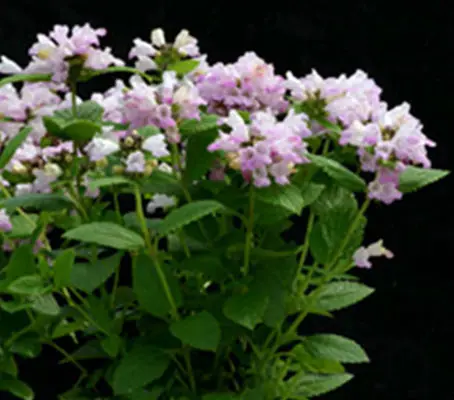
Nepeta subsessilis ‘Pink Panther’ is a bright pink form of large-flowered Nepeta which is grown from seed and flowers during the first year. It can be grown as an annual or as a flowering perennial. Flowering from June until the end of September, they work well as an informal low hedge or mixed in with other larger plants.

Misogawo-so, Japanese Catmint

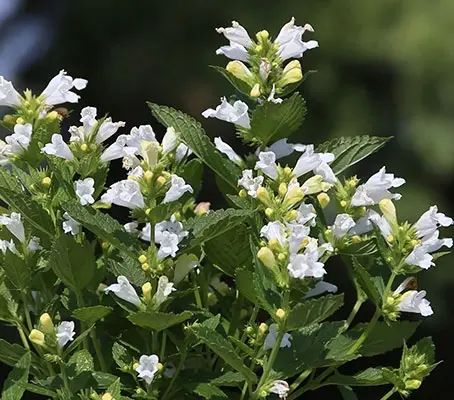
Recognised as having the largest flowers of all the nepetas and only one with white flowers, Nepeta subsessilis ‘Snow Panther’ flowers during the first year and can be grown as an annual or as a flowering perennial. This award winning variety is extremely attractive to bees and butterflies they are also excellent for containers.

Pudding Grass, Pulegium
Wildflower of Britain and Ireland, Ancient Crop

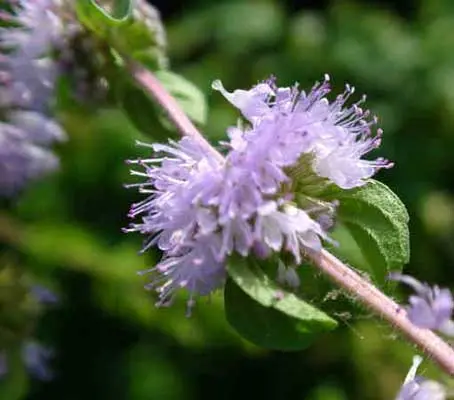
Pennyroyal is a cottage garden plant of old. This highly aromatic herb has a strong peppermint scent to its dark green leaves, even more so than other mints.With attractive whorls of lilac-blue flowers, it can be used to carpet a shady corner or make a ‘lawn’ smelling deliciously of peppermint.

Tumbling Ted, Trailing Rock Soapwort
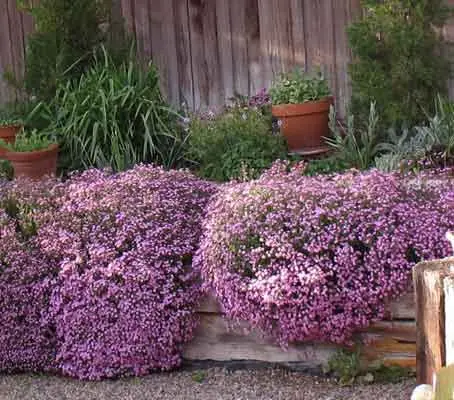
Saponaria is a pretty little plant that forms a mound of bright-green leaves, smothered by starry bright-pink clusters of flowers. Use as a ground cover, in paving or rock features or allow it to trail over the sides of raised beds and low walls. RHS Award of Garden Merit.
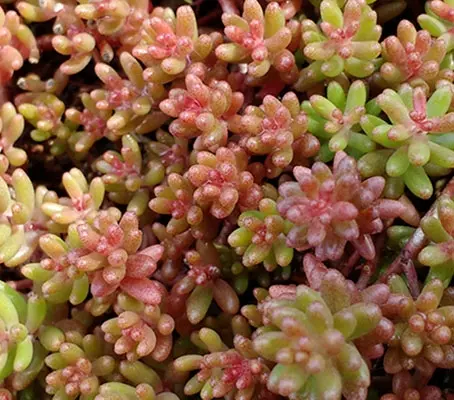
Coral Carpet Sedum

Sedum album is one of the most popular forms of sedum, known for its dense foliage as it changes colour throughout the seasons. The leaves emerge a coral-salmon in spring, change to bright green in summer and then to reddish bronze with the arrival of cooler temperatures. In summer the plants explode in masses of tiny, white star-shaped flowers.

Stonecrop

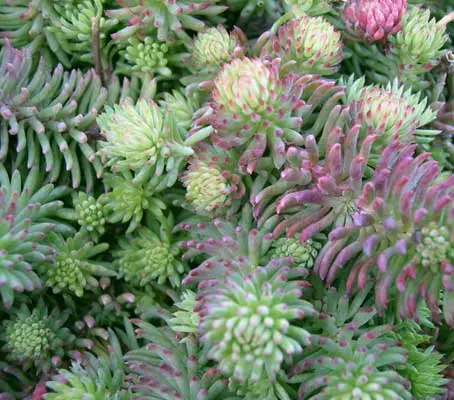
Sedum forsterianum ‘Silver Stone’ is one of the more unusual textured species, with whorls of silver-green foliage. In late summer bright yellow star shaped flowers appear. This low-growing succulent plant grows to a height of 15 to 20cm, extremely hardy it can cope with temperatures down to minus 34°C.

Hens 'n' Chicks, Houseleek

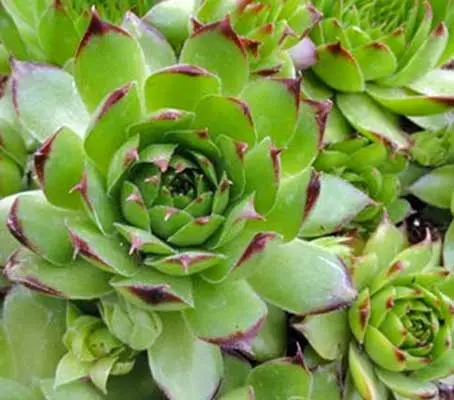
Native to Europe, Sempervivum tectorum is a widely-planted succulent that has been grown in and around human settlements for millennia. Their rosettes are fascinating with their succulent leaves radiating around the centre, their colour hues are stunning and their tendency to produce offsets makes for easy increase.

Thyme de Provence

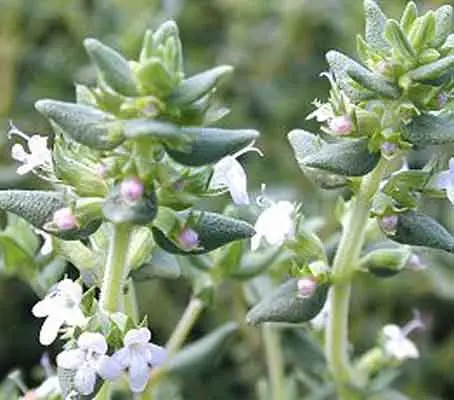
Aromatic French Summer Thyme has more narrow, pointed leaves with a bit of a grey tint. The famed culinary thyme from France, it is higher in essential oil content than other varieties and reputedly the most flavoursome Thyme you can grow with a stronger and sweeter taste.

Orange Thyme, Fragrant Thyme

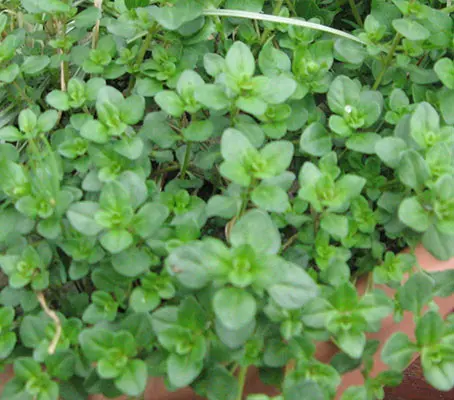
Orange Scented Thyme is a useful and versatile plant, the leaves are extremely fragrant with a delicious scent of balsam and oranges. An excellent herb, they blend their essence with both savory and sweet dishes to create some memorable flavours.

Compact Trailing Nasturtium

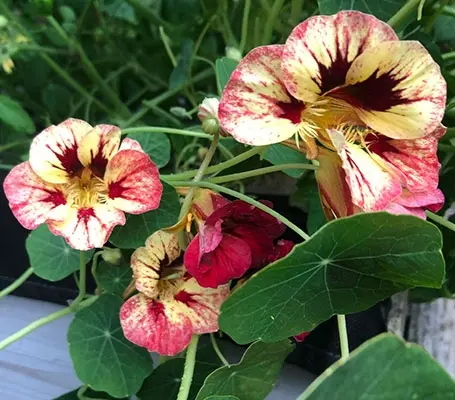
Nasturtium ‘Bloody Mary’ is an award winning Nasturtium with a unique flower pattern. Dramatic 5cm flowers in shades of dark red, coral red, cream, and unique bicolours, make a melodramatic scene in the flower bed, container or vase. Highly decorative they are in flower from May right through to October.

Tall, Climbing or Trailing Nasturtium

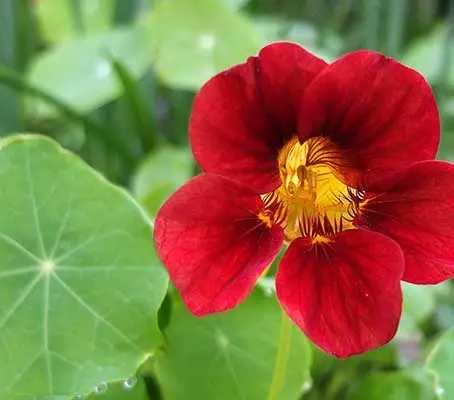
Tropaeolum ‘Fiery Festival’ is a trailing nasturtium variety that boasts vibrant bright red blooms with yellow centers. Its vines can extend up to 150cm, making it ideal for ground cover, hanging baskets, or climbing supports. Additionally the flowers are edible and serve a useful role in companion planting.

Trailing Nasturtium

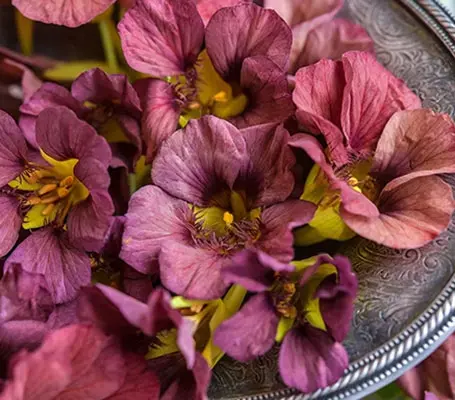
‘Purple Emperor’ is an exciting new palette with a vintage colouration that is quite unique to nasturtiums. Initially opening a dusky, antique burgundy they fade in the most beautiful way to a vintage lavender-rose.

Compact Nasturtium

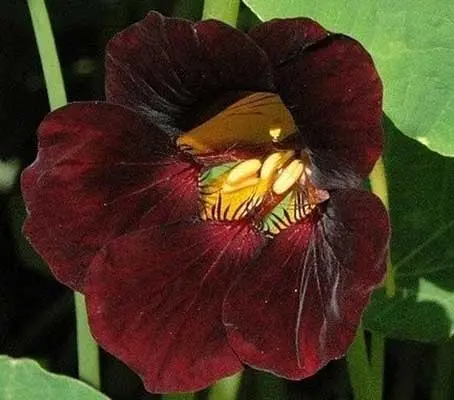
Celebrated for its striking, velvety deep-red to near-black flowers, which provide dramatic contrast, Tropaeolum ‘Black Velvet’ is a visually captivating and versatile plant that combines ornamental beauty with culinary and ecological benefits.

Compact Nasturtium

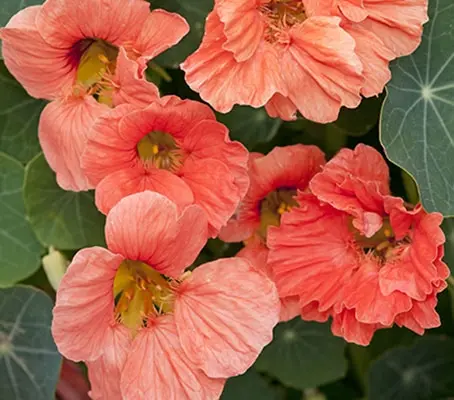
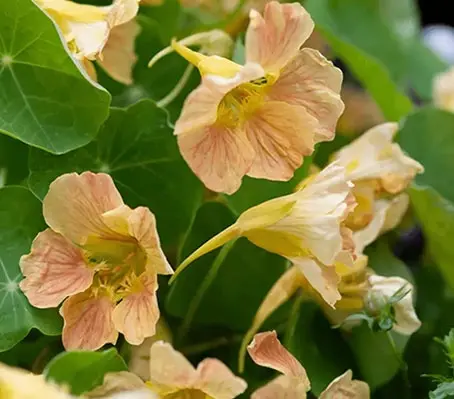
In multiple hues of apricot, the petals of Tropaeolum ‘Tip Top Apricot’ have a darker veining with a deeply shaded throat. This award winning, premium series produce 45 to 50cm mounded plants that are extremely floriferous and have a long flowering season.

Compact Nasturtium

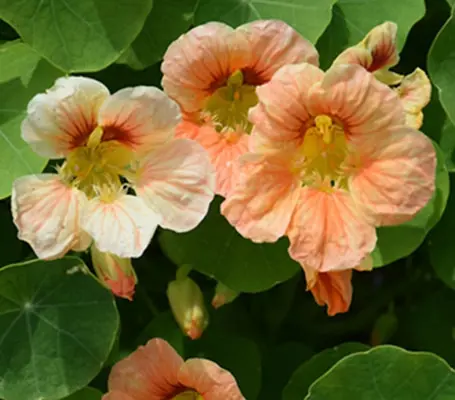
‘Tip Top, Pink Blush’ is a premium series that provides uniquely coloured flowers that are a great addition to the nasturtium family. Vintage-cream flowers, finely veined with apricot-pink. The subtle palette gives a relaxed, modern look to borders and larger containers alike.

Trailing Verbena, Clump Verbena

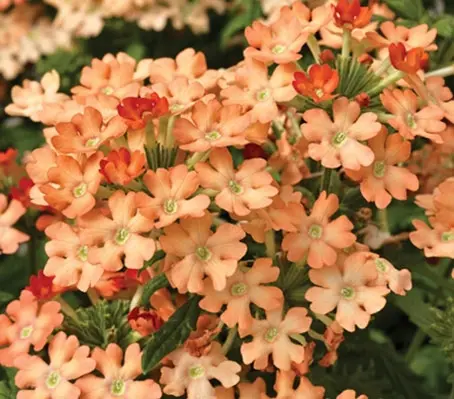
Verbena ‘Obsession Apricot’ is a new pastel colour of this exquisite series. Bred to be earlier to flower, the evenly spread buds open to reveal showy clusters of star-shaped, peach-apricot flowers at from late spring to mid autumn. They bring an extremely fine and delicate texture to any garden composition.

Trailing Verbena, Clump Verbena

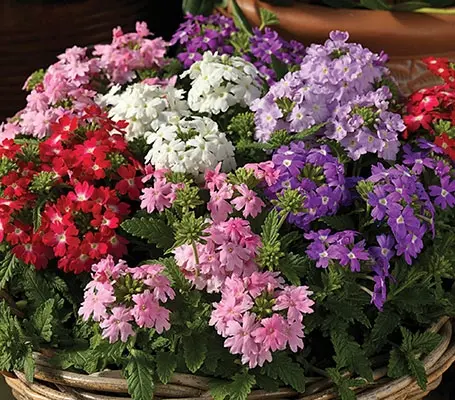
A beautiful pastel mixture of this exquisite series, Verbena ‘Obsession’ plants are compact with a trailing habit of growth they eventually spill over the edges of hanging baskets and containers. This award winning variety is an excellent performer flowering over a long period throughout summer, regardless of the weather.

Slender vervain
Named Verbena rigida after its upright habit, this front-of-the-border performer, although only a foot or two in height, can outshine almost everything else. Polaris is a dazzling, low-growing verbena that produces a candelabra of silver-blue flowers.
Slender vervain

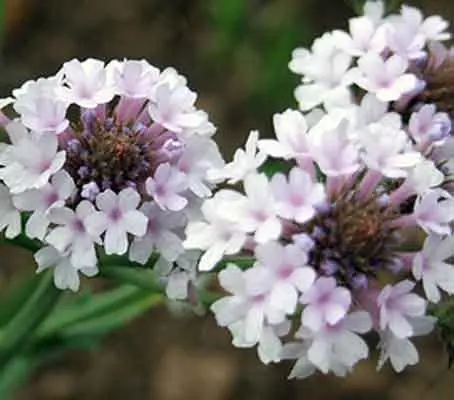
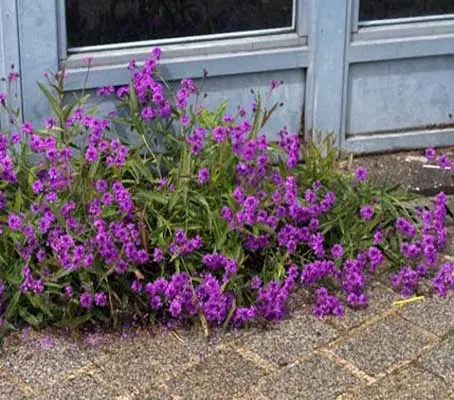
Verbena venosa is a small and densely flowered version of Verbena with clusters of purple-pink fragrant flowers that are held in domed heads. A brilliant addition to the garden that will bloom from mid-spring right until the first cold of winter.

Antique Pansy (Since 1923)

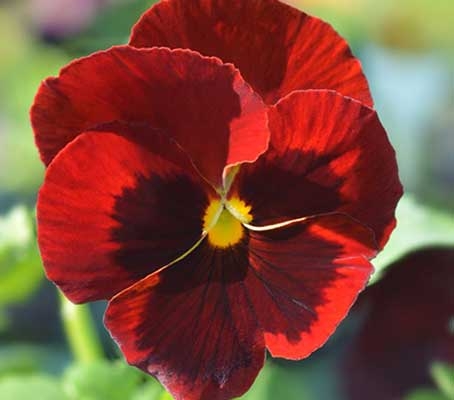
Viola ‘Arkwright Ruby’ is an antique variety that is a favourite among gardeners for both its historical charm and ornamental beauty. The rich, velvety ruby-red blooms are incredibly versatile, perfect for almost anywhere in the garden or for the vase.

Horned Violet.

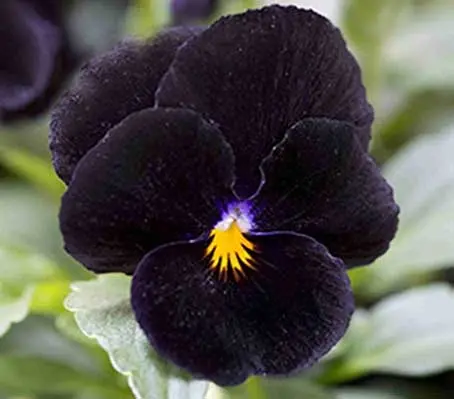
Viola cornuta ‘Back to Black’ is a striking cultivar of the horned violet, admired for its exceptionally dark, velvety flowers. The blooms are an intense black-purple, so deep that they often appear pure black. If you want to achieve long stems for the vase, plant them close, 5 to 10cm apart.

Antique Pansy (Early 1800's)

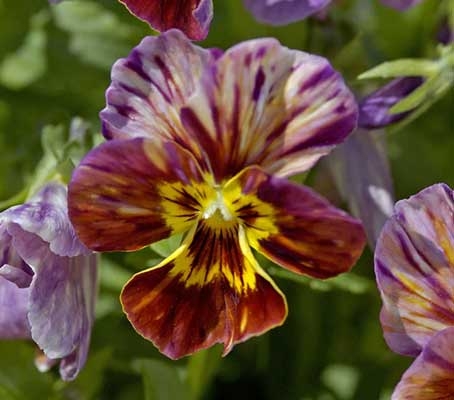
Renowned for its unique, hand painted, Viola ‘Brush Strokes’ is a captivating variety that has been carefully chosen from a cherished collection of historic strains. A harmonious blend of soft apricot, honey, plum, cream and lavender tones, often accented by intricate flecks and fine veining.

Antique Pansy (Since 1934)

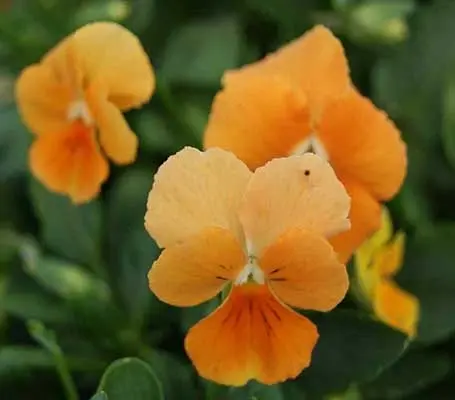
Viola ‘Chantreyland’ is a compact, cool-season charmer. Soft apricot petals with hints of cream, washed with a blush of sunset pink. She’s made for edging, containers, or nestling into cracks in old stone. Quite unforgettable once you’ve met her. no wonder she has been in cultivation since 1923.

The Italian or Corsican Violet

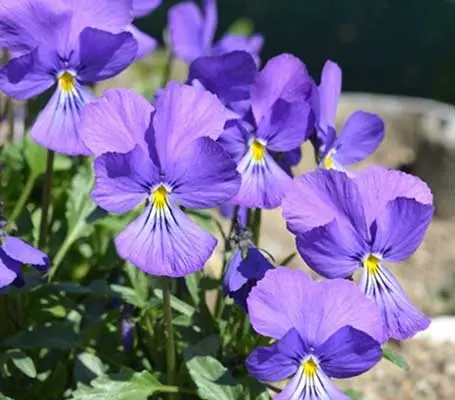
A real gem from the mountains of Italy, Viola corsica ‘Bertolonii’ is a rare but easy-to-grow viola that deserves a spot in any sunny garden. It forms tidy clumps of dark green, lance-shaped leaves and puts on a gorgeous display of large, azure-blue flowers from April through June.

Horned Violet.

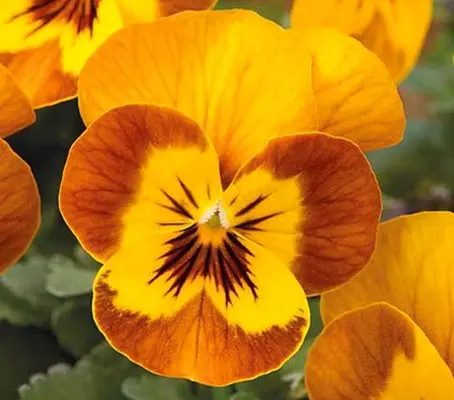
Viola ‘Sorbet F1 Honeybee’ is a real heartbreaker in a six-petal suit. They bloom with rich mahogany and warm golden yellow petals – rather like sunlit honey. Near the centre there’s a soft black whisker pattern. Perfect for use in beds or containers and for attracting pollinators to the garden.

Horned Violet.

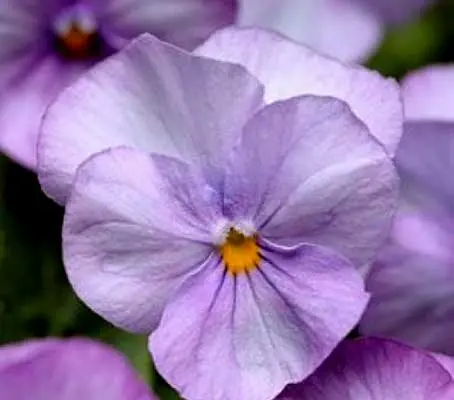
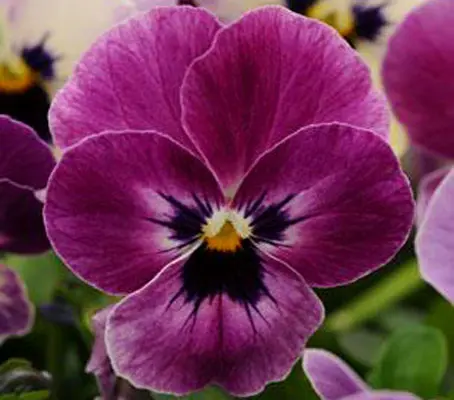
A delicate lavender kissed with rosy pink undertones, the top petals of Viola ‘Sorbet F1 Lavender Pink’ lean a little more to lavender, the lower ones more pink, giving it a subtle watercolor fade. Refined, elegant and easy on the eye.

Horned Violet.

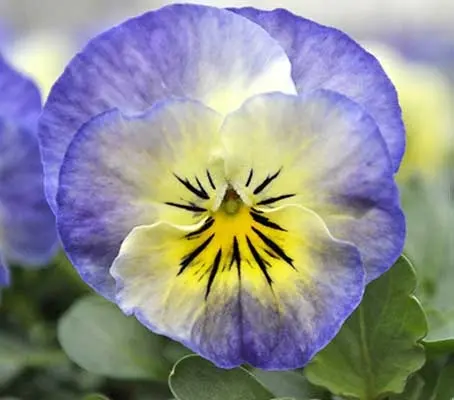
Well-regarded in horticultural circles, Viola Sorbet XP Neptune F1 is a premium cultivar, for its consistent performance across a wide range of climates and seasons. ‘Neptune’, displays striking blooms characterised by a soothing blend of soft blue and cream petals, often with a delicate yellow center and a faint blue picotee edge.

Horned Violet.

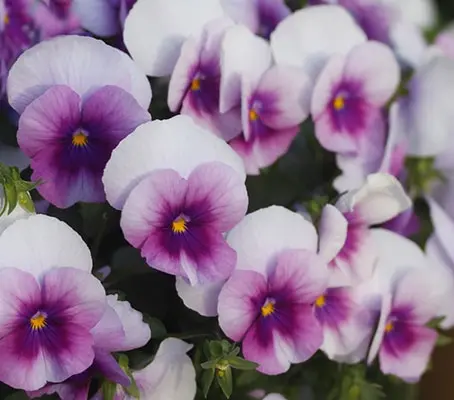
One of the most striking colour combinations of the series, Sorbet ‘Orchid Rose Beacon’ blooms with bicoloured flowers of bicoloured flowers of with rose and purple-pink face, with dark whiskers and a golden eye. Absolutely gorgeous, it can be slipped into almost any gaps where you need a little brightness.

Horned Violet.

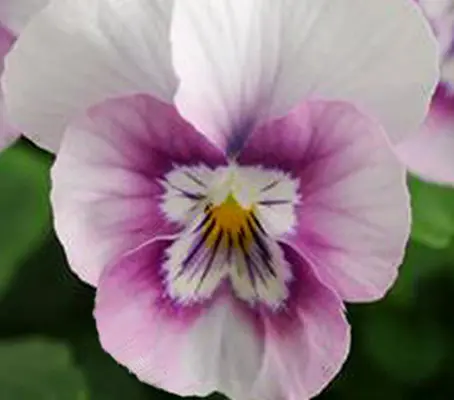
The Sorbet series is the premier series of Violas. Bred to have more blooms and less stretching, it is a standout performer in both spring and autumn. Sorbet F1 ‘Pink Halo’ have petals that are a crisp white. At the centre there’s a raspberry-pink halo that fades outward and dark whiskers that radiate from the centre.

Horned Violet.

Sorbet ‘F1 Raspberry’ has tricolour patterns with cap, face, whiskers and eye colours, with luscious deep raspberry red upper and lower petals with dark whiskers and a golden eye. It is a stunning new colour pattern, with a bright face that seems to be basking in the spring or autumn sunshine

Sweet Violet. 'Snow Queen'
Also marketed as 'Scheekonigin' and 'Eismeer'.

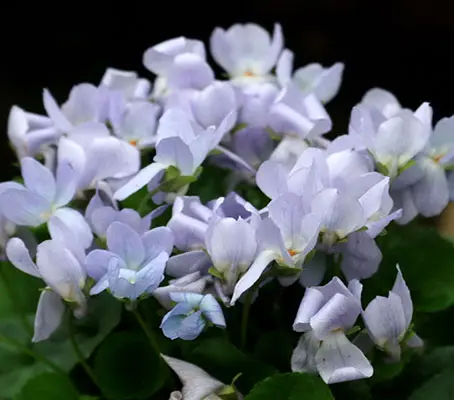
Cultivated in Switzerland in 2004 from the famous ‘Queen Charlotte’, One would think that ‘Reine de Neiges’, or ‘Snow Queen’ would be a white bloomer. The flowers are almost white, a clear crisp ice-blue. Long blooming and upward facing, their fragrance is intense.