 Skip to content
 Sort by:
Sort by:
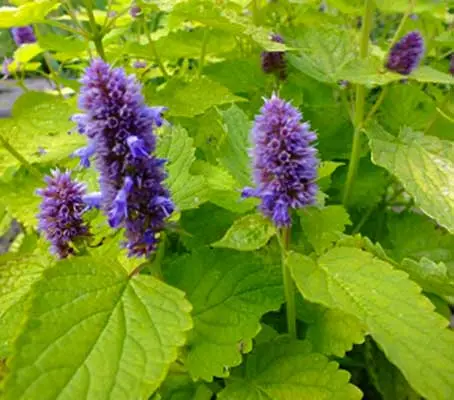
Mexican Hyssop, Hyssop-Anise
Originally bred by and developed in Japan, Agastache ‘Golden Jubilee’ was named to honour Queen Elizabeth II’s 50th year of rule, celebrating the Golden Jubilee in 2002. This bright gold-chartreuse beauty has one of the most remarkable leaf colour of any plant. Offering late season punctuation the flowers are a powerhouse source of nectar and pollen for bees, butterflies and other beneficial insects.
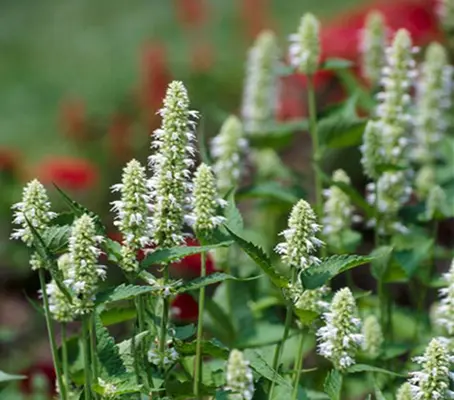
Korean Mint, Huo Xiang
Agastache ‘Liquorice White’ has tall spikes of white lipped flowers and like all Agastache produces copious amounts of nectar for bees and butterflies to feast upon. Flowering late in the season, it is a boon for building up bees’ honey reserves before winter and will produce a honey surplus where drifts are grown.
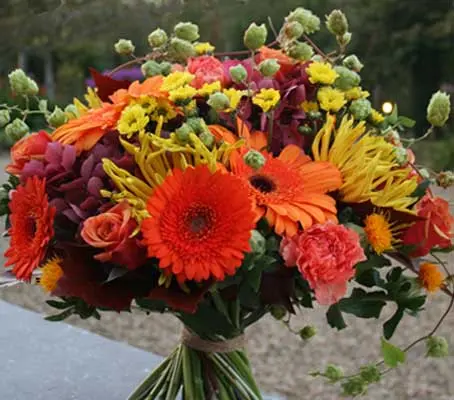
Ideal for naturalistic planting and for cut flowers
The Semi-Tall Flowers Mix is a richly flowering mixture of that produces large quantities of 50cm (20in) tall annual flowers for the border or for cutting. As well as being ornamental, they will provide nectar and pollen for bees, butterflies and other insects from early in the year to late in the season.
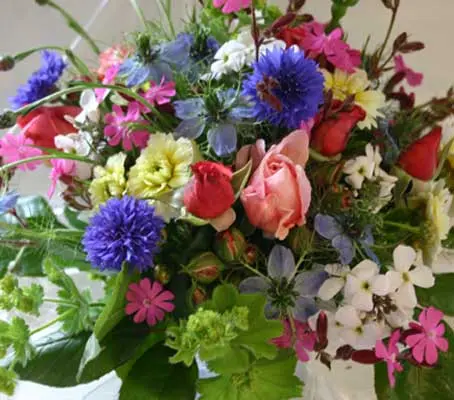
Ideal for naturalistic planting and for cut flowers
Composed of a finely balanced selection of annual flowers designed to provide a long succession of flowers from June to September, the Tall Flowers Mix grows 60 to 70cm (24 to 28in) tall and produces large quantities of flowers that are ideal for the border and for the vase.
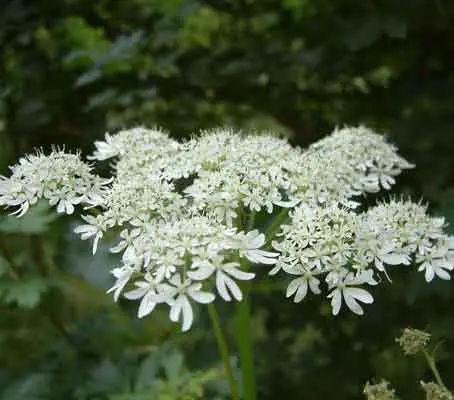
Gipsy Laces, Lady's Needlework.
Wildflower of Britain and Ireland
Anthriscus sylvestris is most characteristic of hedgerows, road verges and woodland edges. Our native Cow Parsley has a sophisticated form, with delicate, open, white lacy umbels, that from mid-spring to early summer look as though they’re erupting from a well shaken champagne bottle!
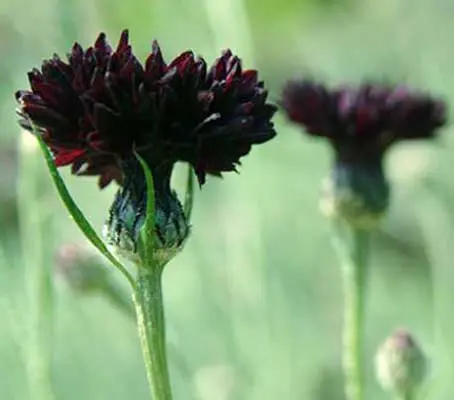
Also aptly named 'Witching Hour'
The Boy Series, which all feature double flowered blooms on tall stems for garden or cutting, are available in many colours. These beauties grow well as border plants and are wonderful in a cutting garden. ‘Black ball’ flowers are a lovely rich dark-chocolate hue, almost black on cloudy days.
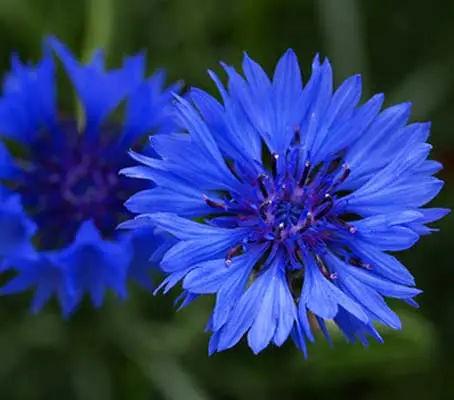
Double Cornflower, Bachelors Button
A favorite annual flower and cottage garden staple, Centaurea ‘Blue Boy’ has piercing, bright blue flowers with ruffled petals and violet-blue centres. The blooms appear from early to late summer. These beauties grow well as border plants and are wonderful in a cutting garden.
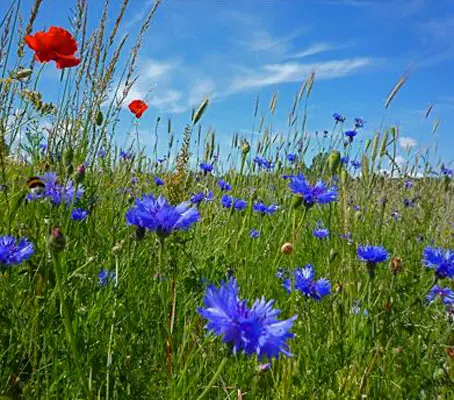
Bachelors Button,
Wildflower of Britain and Ireland
Today cornflowers are rare in the wild, they flourish instead in our gardens. They are the most splendid of annuals. Aside from their electric blue, which is breathtaking when they’re grown in dense drifts, they are easy to grow, they flower all summer, make great cut flowers and bees adore them.
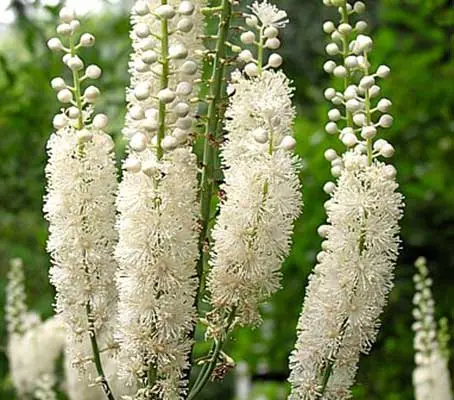
Actaea racemosa var. cordifolia
Actaea cordifolia comes into its own late in the season, when multiple stiff and stout stems emerge from the base of the plant. It displays impressive long racemes of chalky-white blooms that are composed of numerous, tiny individual star-like, fragrant flowers.
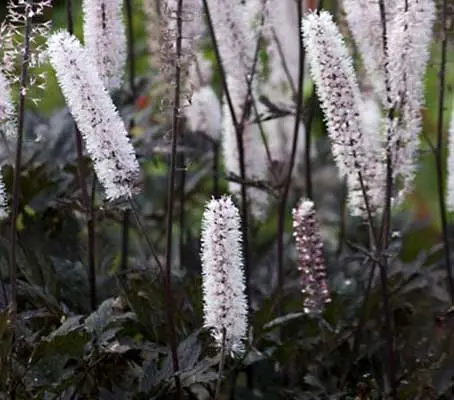
Actaea simplex Atropurpurea Group
Valued for its large purple-black leaves, Cimicifuga simplex ‘Atropurpurea’ is an exceptionally beautiful selection. The long, fluffy spires seem to float in mid-air, each flower studded with feathery stamens.
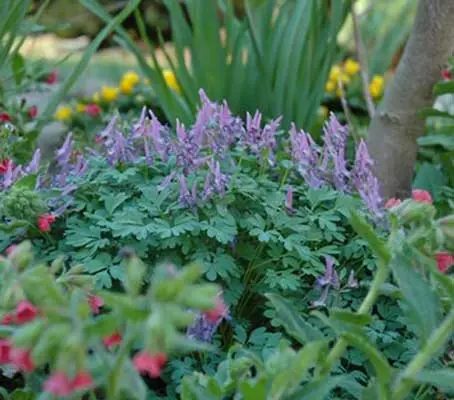
Bird-in-a-bush
European Wildflower
What gardener with a heart and soul could resist the spring flowers of Corydalis, whose winged petals with upswept spurs suggest a flight of elfin butterflies. These woodland ephemerals are highly useful at the front of the border, with miniature bulbs such as crocus, muscari or scillas.
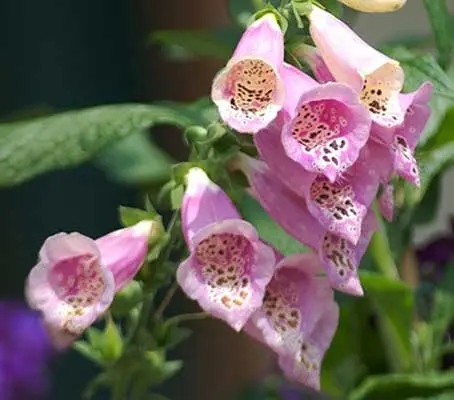
Native Pink Foxglove
Wildflower of Britain and Ireland
This lovely native European woodland plant is a beauty to add to any garden and a popular biennial for shaded places. Plants form rosettes of lance shaped leaves, the second year the rosette begins to shoot skyward with beautiful large spikes and drooping bell shaped blooms that are spotted inside.
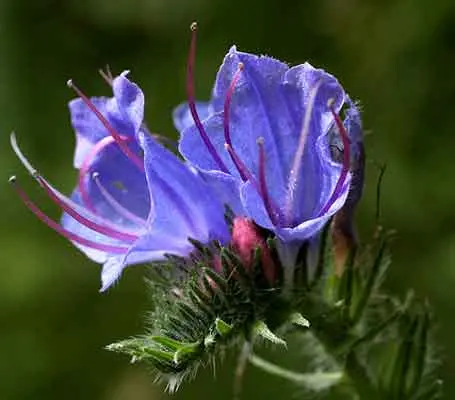
Wildflower of Britain and Ireland
Echium vulgare is a valuable native plant and is exotic enough to earn a place in a flower border. The plant is much loved by almost all bee species. If you don’t want plants that honeybees simply visit, but want to select plants that honeybees clearly love, choose Echium for your garden.
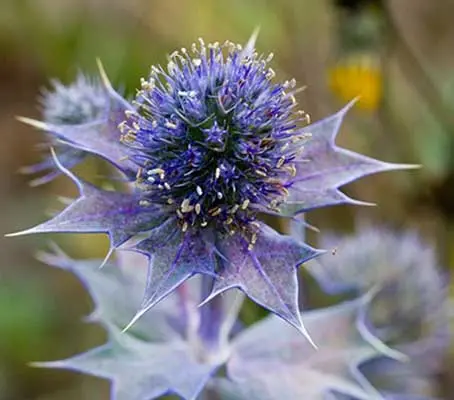
Seaside Eryngo, Sea Holly.
Ancient Crop. Wildflower of Britain and Ireland
Eryngium maritimum is an evergreen perennial plant native to Europe. Often found on sea shores, it is a protected species in many parts of the world. Highly ornamental, it is grown in gardens for its metallic bluish flowers and intensely whitish-glaucous leaves, it is very attractive to bees and butterflies.
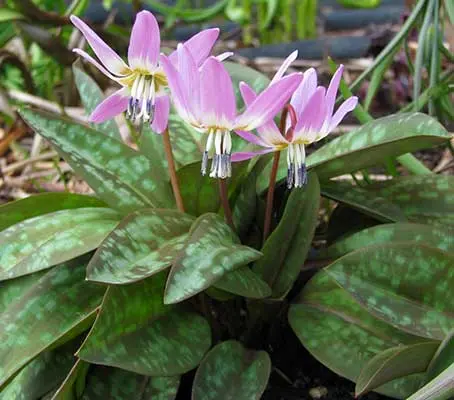
Dog's Tooth Violet
 Erythronium dens-canis is attractive from the moment it pokes up from the soil in early spring. The oval pointed leaves with bronze patterns appear in early spring and are followed shortly by nodding rose pink to purple, elfin-cap flowers that bloom for several weeks.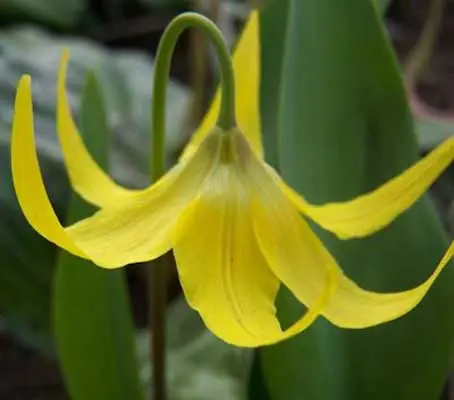
Yellow Avalanche Lily, Glacier Lily
Erythronium grandiflorum is a rarely offered species. Native to west North America, it is one of the largest of the genus. Blooming in early spring, each flower stem has up to ten golden yellow, nodding, star-shaped flowers with reflexed petals.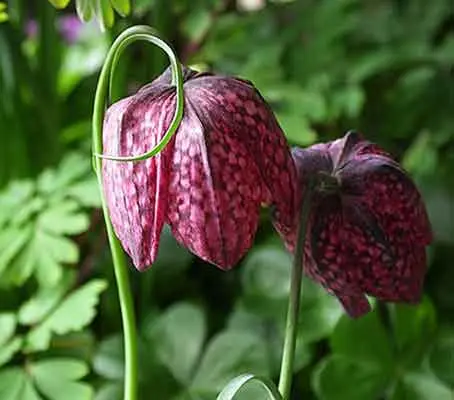
Snake's Head Fritillary, Chequered Lily,
Wildflower of Britain and Ireland
Snake’s head fritillaries always excite attention wherever they are seen. None of the other lovely members of the fritillaria genus can match this native wildflower for the bizarre and unmistakable colouring of its bell-shaped flowers.
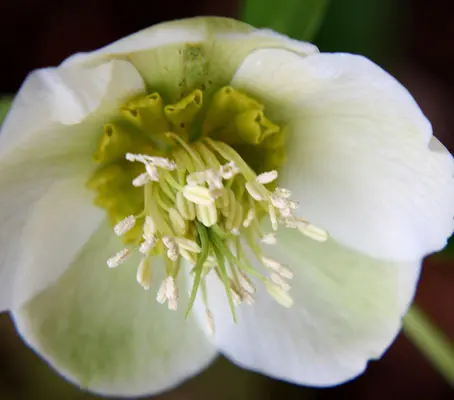
Christmas Rose, Christmas Hellebore, Black Hellebore
Helleborus niger is smaller and more compact than any of its relatives and is the first in bloom, producing a succession of delicate white flowers throughout winter. It is a welcome sight when the snow thaws to see something so pretty in bloom.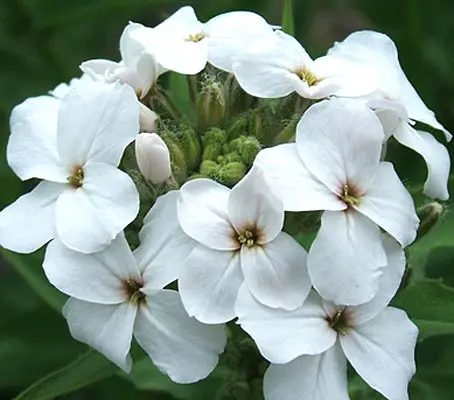
White Sweet Rocket, Dames Violet, Summer Lilac.
Gorgeously scented pure white flowers are held above rosettes of dark green leaves. Like all sweet rockets it is highly attractive to bees and other beneficial insects, the fragrant flowers perfume the air in late spring and early summer evenings. The night-scented stock is a close relative.
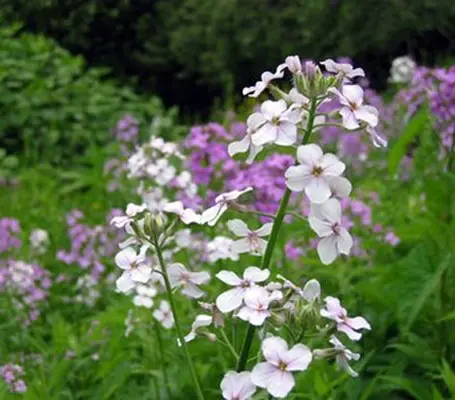
Sweet Rocket, Dames Violet, Summer Lilac.
Dames Rocket produce flowers varying in colour from deep rich purple, through all the paler lilac shades to white. Highly attractive to bees and other beneficial insects, the fragrant flowers perfume the air in late spring and early summer evenings.
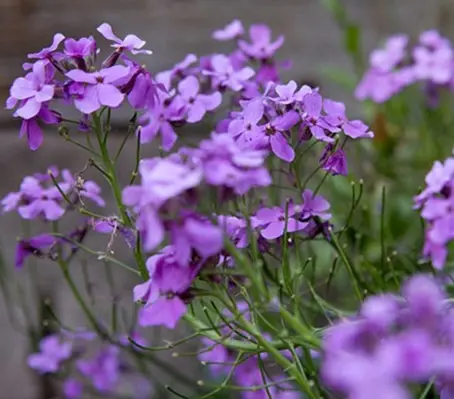
Sweet Rocket, Dames Violet, Summer Lilac.
In spring, Dame’s Rocket lights up the woodland edges with her blossoms, providing nectar for hummingbirds, moths and butterflies, and fragrance for the soul. Sow seeds directly where they are to flower in early summer
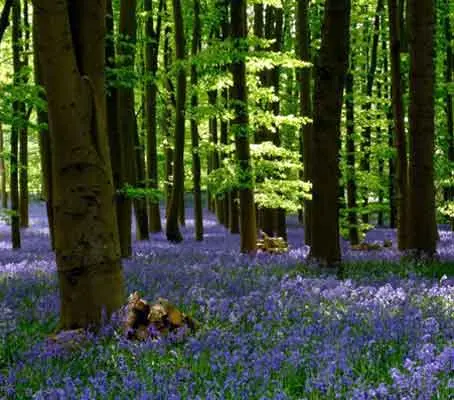
English Bluebell, Wildflower of Britain and Ireland
A deep blue carpet of bluebells is an unforgettable sight to anyone visiting many of our native woodlands. The spring spectacle of seeing a wood not only greening, but also ‘blueing’ is one of the joys of the year. When bluebells are in flower, spring has truly arrived.
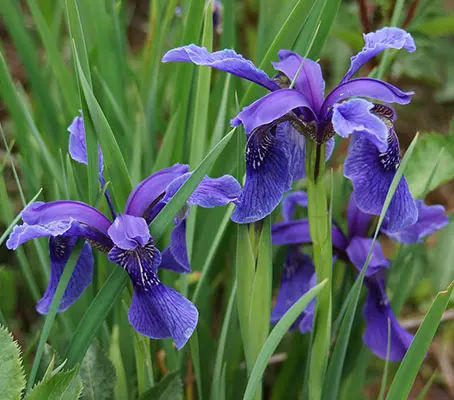
Bulley's Iris, Sino-Siberian Iris, Beardless Iris.
Iris bulleyana is a classic species Iris from western China. It belongs to a small group of oriental species which are entirely hardy and are of great value to the gardener. The plants are successful in any moist garden soil. Flowering from June to July, the blooms with mid purple flowers and dark purple veins.
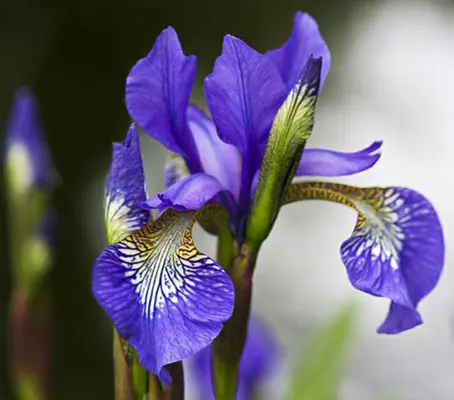
Northern Blue Flag Iris
Iris versicolor is one of the few species in garden cultivation. Although happiest at the waterside the plants will also perform well under average to moist border conditions. Flowering from May through to July, each stalk produces up to five violet-blue flowers with ruffled petals and bold purple veining.
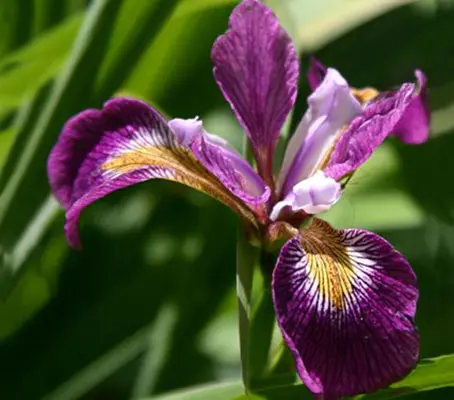
Northern Blue Flag Iris
‘Kermesina’ is an attractive and popular cultivar of Iris versicolor. Flowering from May through to July with claret-purple flowers with ruffled petals and bold purple veining. It may be grown in shallow standing water or moist shoreline soils and suitable to be grown in constantly moist humusy soils of a border.
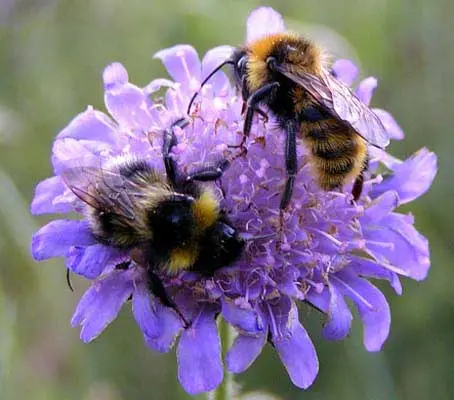
Field Scabious
Wildflower of Britain and Ireland
Knautia arvensis is an attractive native perennial herb of well drained grassland. It can be found throughout Europe in meadows, rough pasture, hedgerows and verges. Though it is by nature a perennial, it will flower and produce seed the first year if grown as an annual, either autumn or spring sown.
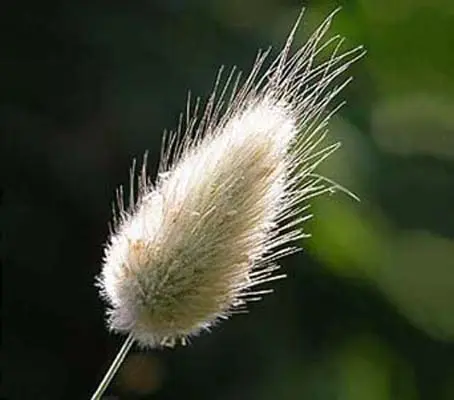
Hares-tail, Bouquet Grass, Ornamental Grass
Lagurus ovatus is probably the most appealing of all the ornamental grasses. The name ‘Hare’s Tail’ perfectly accurately describes the creamy-white flower heads, which are hare’s tail-shaped, fur-like and soft to the touch!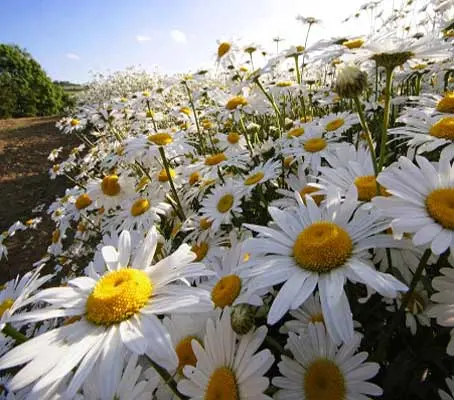
Field Daisy, Marguerite
Wildflower of Britain and Ireland
The Ox-eye Daisy is one of the most familiar of all summer flowers. They can be planted at almost any time of year. When seen naturalised in drifts in a sunny wildflower meadow, adorning roadside and meadows or even in a little corner of the garden they are spectacular.
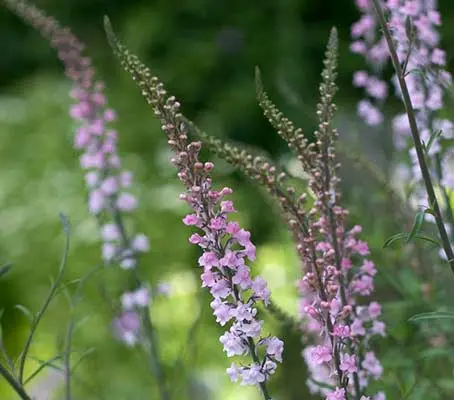
Toadflax
Linaria ‘Canon J Went’ is a delightful plant with tall spikes of pink and mauve tiny flowers. Easy to grow and flowering prolifically in a sunny spot, the delicate plants provide a softening haze in perennial borders.
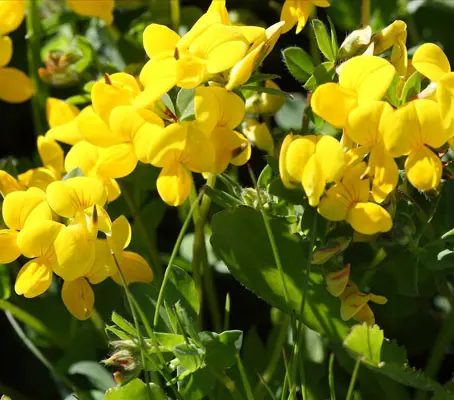
Wildflower of Britain and Ireland
The more I see of this rather attractive little plant, the more I grow to appreciate it. Now I seem to spot it all over the place, in meadows, woodland, road verges and gardens. The bright yellow fragrant flowers can be seen in blossom from the end of April through until mid September.
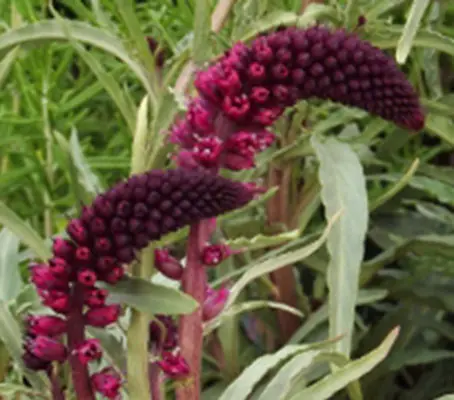
Crimson Loosestrife
Recently introduced to gardens and a hit Chelsea Flower Show, Lysimachia ‘Beaujolais’ feature flower spikes of deep claret which bloom continuously from May to September. The plants give a good effect used in tight drifts through grasses and other perennials. Ideal for cutting, the dark flowers are adorable in bunches.
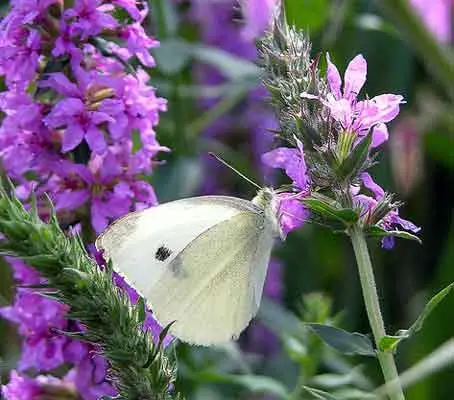
Red Sally, Long Purples
Wildflower of Britain and Ireland
Magnificent and spectacular spikes of rose-purple flowers, which last from June throughout the summer distinguish this tall wetland plant. Purple loosestrife is an easy garden plant, thriving in any soil. It is a beautiful subject for late summer colour in a border, shrubbery, large pond or slow-moving water.
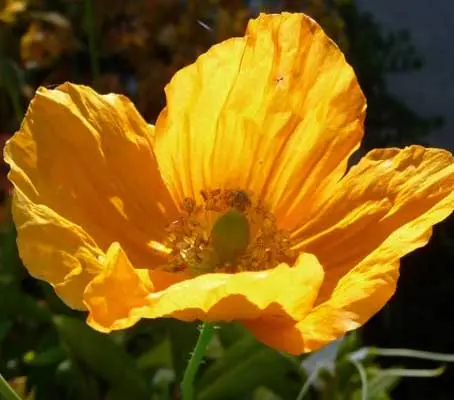
Welsh Poppy, Yellow Poppy.
Wildflower of Britain and Ireland
The Meconopsis genus contains some of the most exquisitely beautiful of all flowering plants. M. cambrica is the easiest to grow, and is reliably perennial. The delicate cup-shaped, golden-yellow flowers are borne in abundance from late spring to early autumn.
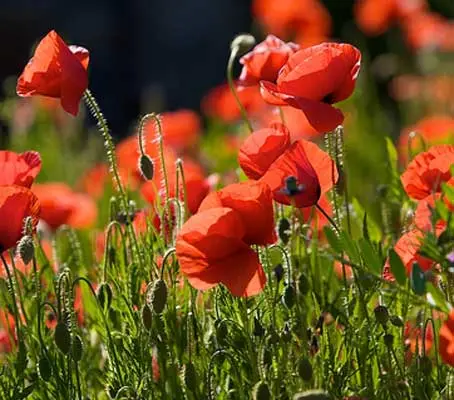
Corn Poppy, Flanders Poppy, Field Poppy, Wildflower
With its brilliant scarlet flowers, this native wild flower needs no introduction. Single, red, cup-shaped flowers usually with a black blotch at the base of the petals. It is the classic poppy bloom that paint a road verge or embankment a brilliant hue in their first year.
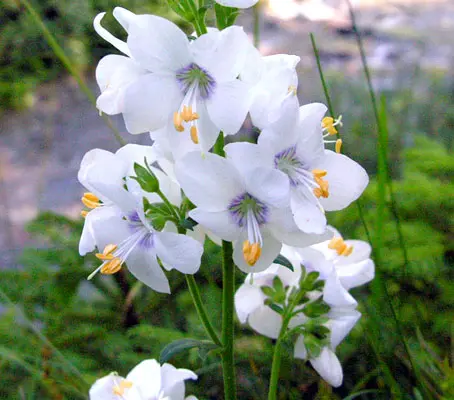
White Jacob’s Ladder, Greek Valerian
Wildflower of Britain and Ireland
The white form of the lovely Jacobs Ladder, named after the slender, fresh green leaflets arranged like the rungs of a ladder. Blooming in late spring to early summer, the bright foliage and white flowers will brighten shady locations. Both the flowers and the attractive ferny foliage are excellent for cutting.
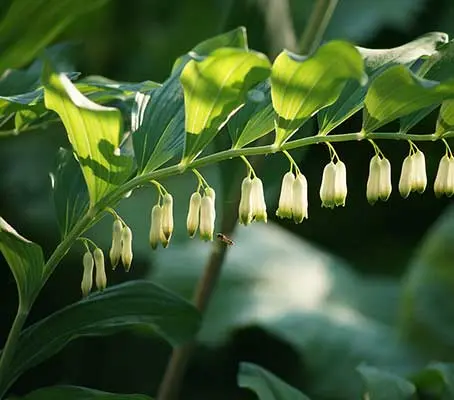
Common Solomon's Seal
Wildflower of Britain and Ireland
Whether you know this plant by its scientific name Polygonatum, or the more poetic variant Solomon’s Seal, this plant is a welcome addition to the shade garden. The bright green elliptical leaves look wonderful amongst native ferns.
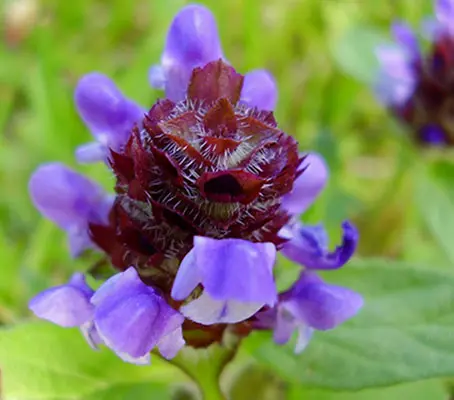
Wildflower of Britiain and Ireland
Prunella vulgaris is an interesting and quite beautiful little wildflower plant. The plants produce pretty blue-violet flowers in summer, the flowers freely produce nectar and are highly attractive to bees. If you’re looking for something to add to a meadow garden, or something for those shady areas this is the plant for you.
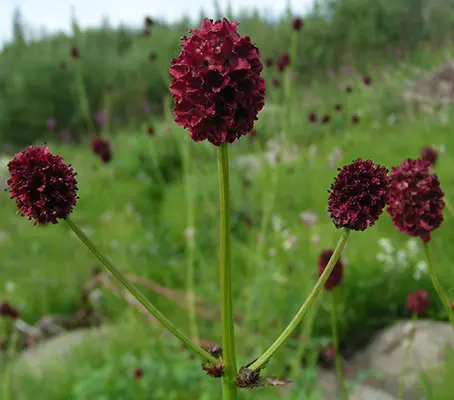
Greater Burnet, Di-Yu
Ancient Herb, WIldflower of Britain and Ireland
Sanguisorba convey a relaxed feel to the garden, indispensable to the modern gardener, but it is the summer when the unusual red flowers top the slender, upright stems that it really becomes a head-turner.
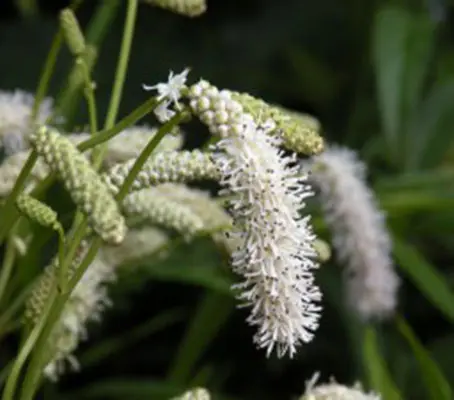
Japanese Burnet, Oriental Burnet
Sanguisorba tenuifolia ‘Alba’ is a Japanese species that has infiltrated our psyche. The most refined of perennials, the highly tactile flowers float like dainty ghosts at the tips of their slender stems.
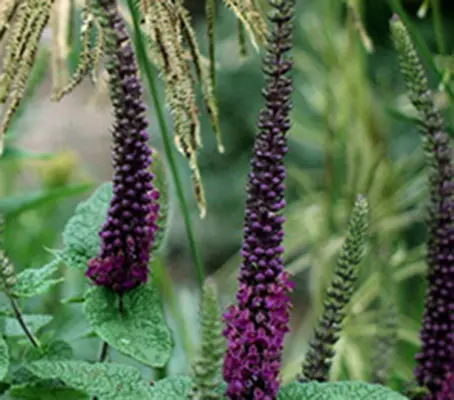
Caucasian Germander
Summer-blooming spiky flowering plants – in garden design parlance ‘the verticals’. We all need some, and there are lots of contenders, but a plant that can go just about anywhere in the garden, cope with almost all situations and bloom with copious plush spikes over several weeks is a very rare treat.
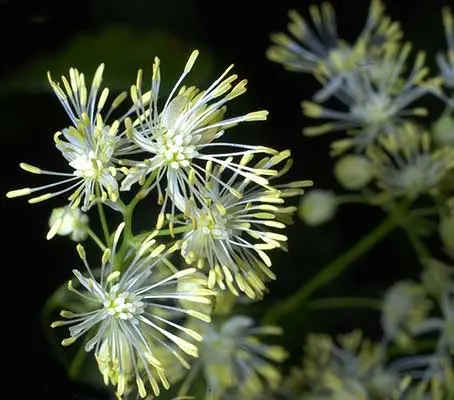
Shining Meadow Rue
Thalictrum lucidum is a less well known species of meadow rue, it sports luscious deep green, fern-like foliage. In mid-summer the plant is festooned with a superb array of fragrant flower stems, topped with airy puffs of soft cream flowers each with bright yellow stamens.
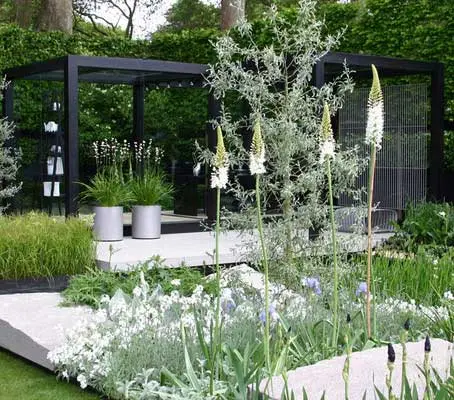
Ideal for beds and borders and for cut flowers
As they say, white goes with everything and among theme gardens, the white garden may be the most popular. The White Garden Flower Mix gives a selection of spectacular, bright white annual flowers. Calm, soft and serene this beautiful mix will carry borders into early winter with panache.
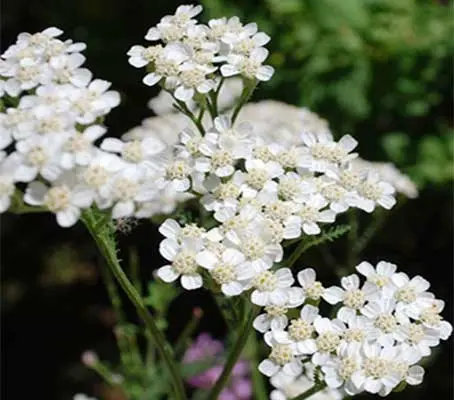
Yarrow, Wildflower of Britain and Ireland
Achillea millefolium ‘Proa’ is an improved yarrow, a selected form that is higher yielding, with higher essential oil content, better flower production, and the flowers are more uniformly white. Preferred by those who use yarrow medicinally.
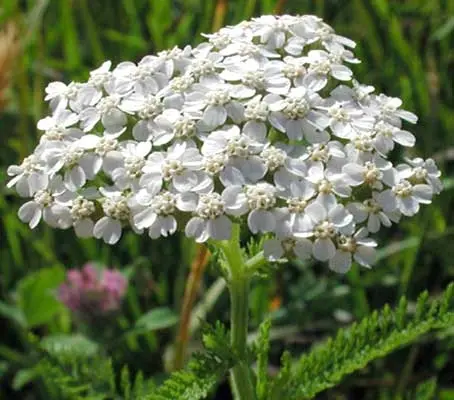
Wildflower of Britain and Ireland
These native wildflowers have clustered flower heads of tiny white flowers that from a distance look like little patches of snow resting on the grass. This famous herb is terrific as a wildflower clump in a blooming meadow, they are also a favourite for cut and dried flower arrangements.
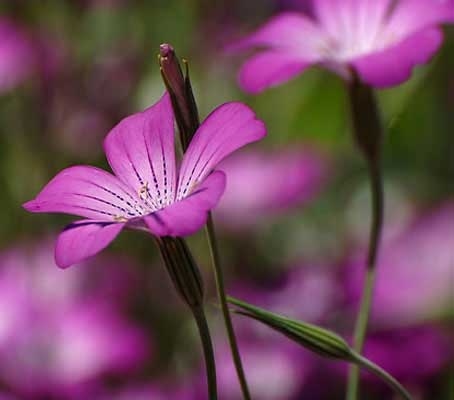
Corncockle. Wildflower of Britain and Ireland
An attractive cornfield plant with pale purple flowers. Corncockle makes a great wildflower or cottage garden selection
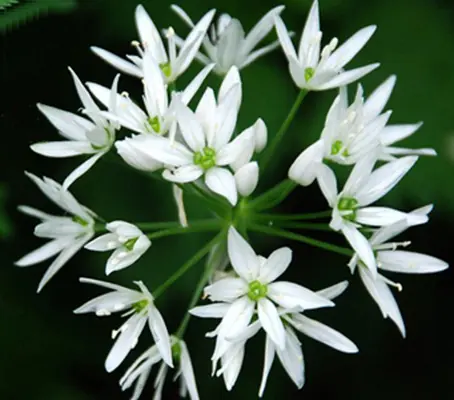
Ramsons Garlic, Wild Garlic, Broad Leaved Garlic
Wildflower of Britain and Ireland
Until a few years ago you would never have seen wild garlic on a menu, but these days is definitely a chefs’ favourite. The whole plant is edible, the flavour is softer, more pleasant than cloves from garlic bulbs. The leaves have a vibrant colour that brings food to life, use sparingly in salads, or add to sauces and dressings. It also makes splendid pesto.
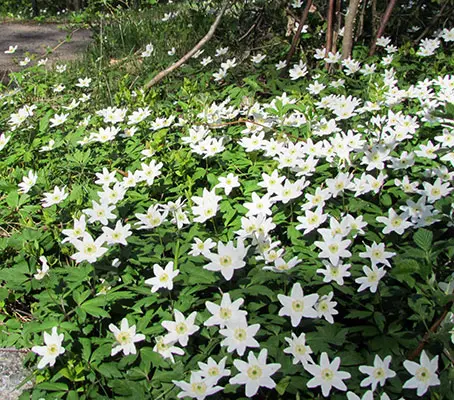
Windflower
Wildflower of Britain and Ireland
On a sunny day at the end of winter, when the branches of the trees are still bare, the sight of shady banks and glades lit by the white stars of the Wood Anemone leave you in no doubt that spring is truly here.
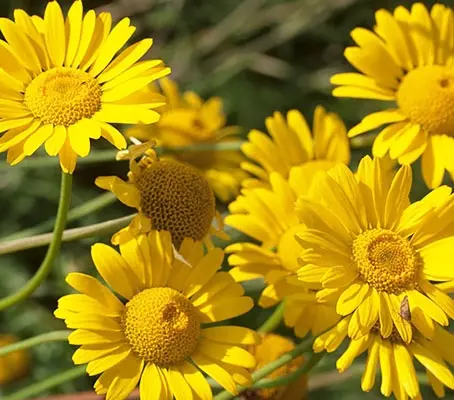
Golden Marguerite or Golden Chamomile.
 In horticulture Cota tinctoria is still widely referred to by its synonym Anthemis tinctoria. This beautiful aromatic, hardy perennial that is fast to flower and often used as a biennial produces masses of golden yellow daisies from June through to September. Historically used for natural dyeing, this is an ideal plant for naturalised and pollinator friendly plantings. Organic Seed.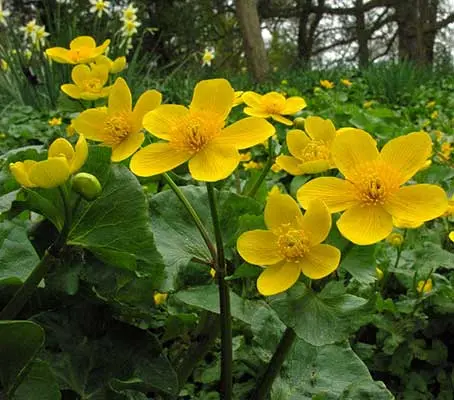
Kingcup, Marsh Marigold
Wildflower of Britain and Ireland
‘Caltha palustris, commonly called Marsh Marigold is one of the most cheerful native plants to adorn the edges of a pond or stream and possesses the added benefit of flowering in the shade. The plant’s yellow flowers and dark green shiny leaves cheer up the otherwise barren landscape as winter recedes.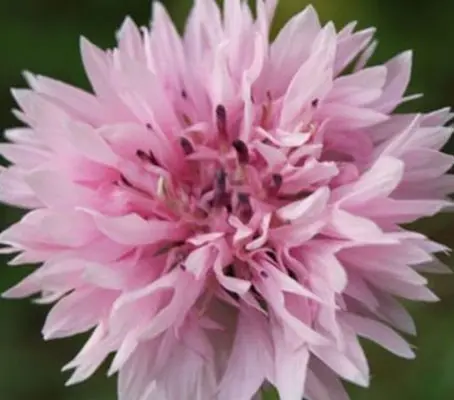
Double Cornflower, Bachelors Button
The Ball series, also known as the Boy series, feature double flowered blooms on tall stems for garden or cutting. This pink flowered cultivar boasts wonderful full flowers on densely branched upright plants. With lance shaped, long and graceful leaves, the upper half of the plant has multiple stems which produce many flowers from early summer until frost.
Double Cornflower, Bachelors Button
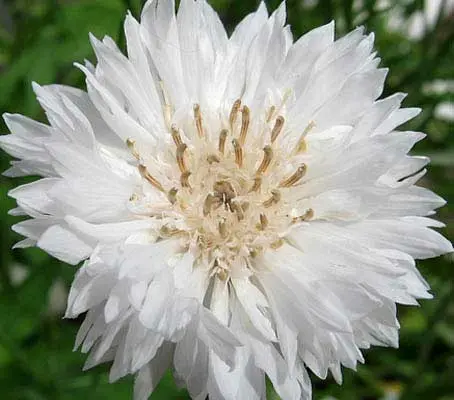
Cornflowers are great plants for the cutting garden or border, and this fine cultivar is no exception. Centaurea ‘White Boy’ is a double flowered cultivar with wonderful fluffy, white flowers on densely branched upright plants. This is the white member of the series which is also known as White Ball and Snowman
Wildflower of Britain and Ireland
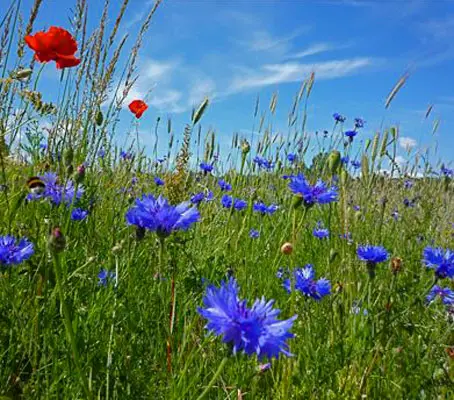
Today cornflowers are rare in the wild, they flourish instead in gardens. Aside from their electric blue flowers, breathtaking when grown in dense drifts, they are easy to grow, flower all summer, make great cut flowers and bees adore them. Organic Seed.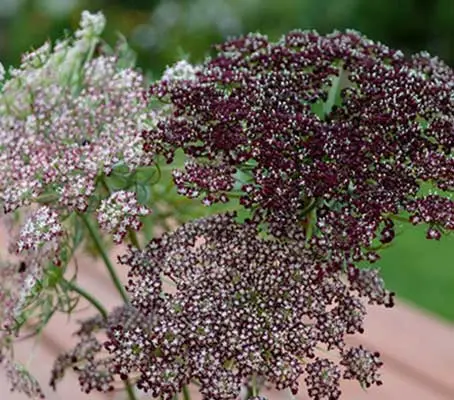
Also known as 'Chocolate Lace Flower' or 'Chocolate Queen Anne’s Lace'
Daucus carota ‘Dara’ is a large flowered chocolate coloured Queen Anne’s Lace, with delicate, lacy, flat-topped clusters that bloom for most of the summer from just one planting, they pair well with almost anything in the garden or the vase.
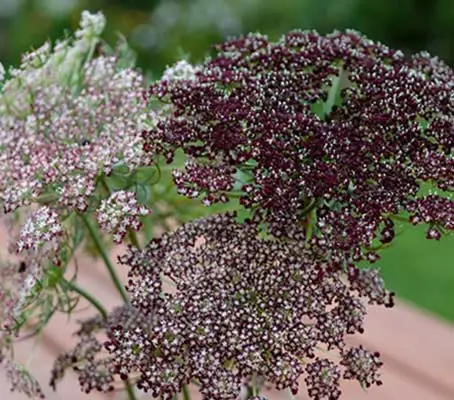
Also known as 'Chocolate Lace Flower' or 'Chocolate Queen Anne’s Lace'
Daucus carota ‘Purple Kisses’ is a striking ornamental carrot variety featuring delicate, lacy white flowers tinged with soft purple hues. The are spectacular when used in mixed bouquets or simply arranged in a great cloud of their own. The lacy umbels come in a range of sizes and shades and bloom for most of the summer from just one planting.
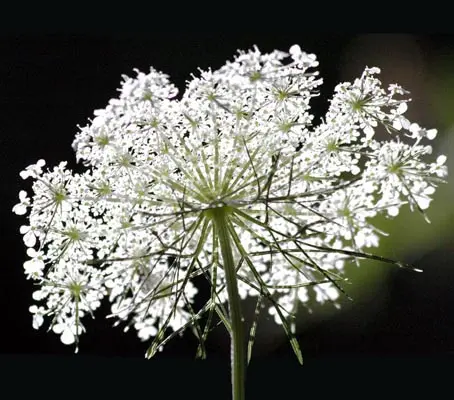
Queen Annes Lace, Wildflower of Britain and Ireland
Queen Anne’s Lace has up to a thousand tiny white flowers are produced in delicate, lacy, flat-topped, two- to four-inch clusters, sometimes with a solitary dark, purple flower in the centre. It is at home in informal settings and is a natural addition to a wildflower meadow. Organic Seed.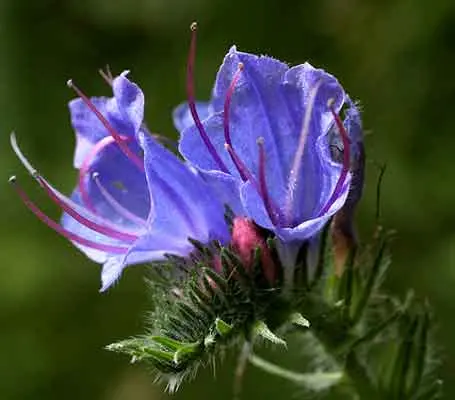
Wildflower of Britain and Ireland
Viper’s bugloss is one of, if not THE very best plant to attract bees to your garden. Along with Borage and Phacelia, the plant is much loved by almost all bee species, especially bumblebees. For months this plant is a stable source of nectar. Organic Seed.€3.50 – €19.50Price range: €3.50 through €19.50
€3.50 – €19.50Price range: €3.50 through €19.50
€1.95 – €7.95Price range: €1.95 through €7.95
€2.10 – €5.95Price range: €2.10 through €5.95
€3.25
€2.95
€2.95
€2.95
€3.75
€2.10
€2.75
€2.80
€2.75
€1.95 – €25.95Price range: €1.95 through €25.95
€2.45
€2.20
€3.95 – €23.95Price range: €3.95 through €23.95
€2.45
€2.75