 Skip to content
 Sort by:
Sort by:
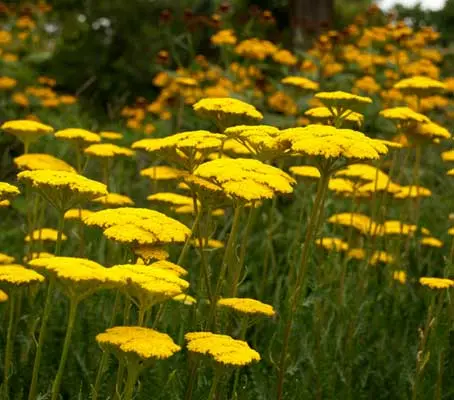
Fernleaf Yarrow
 Achillea filipendulina ‘Cloth of Gold’ is an easy to grow plant which tolerates a fair amount of neglect which makes it a very versatile plant for use in many situations. It does require full sun for best flower production, but this is little to ask for such a grand reward.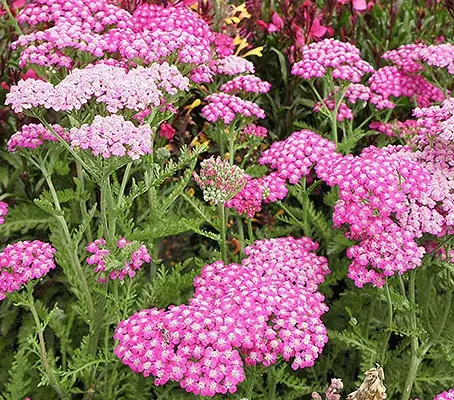
Yarrow, Milfoil
Achillea ‘Cerise Queen’ is a carefree and generously blooming perennial which requires little maintenance to create an explosion of late summer colour. Irresistible to butterflies they also make excellent cut flowers.
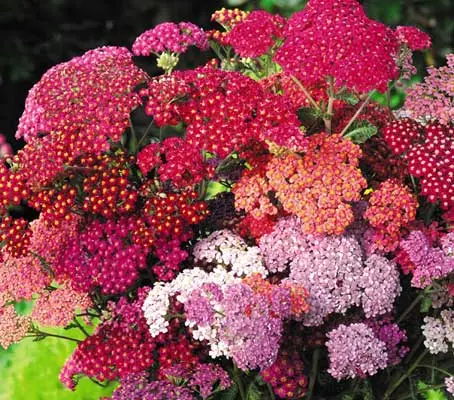
Yarrow, Milfoil
Achilleas are traditional border flowers valued for their feathery foliage and striking flat, circular heads of flowers ‘F2 Summer Berries’ is a compact variety growing to only 60cm tall at maturity. This beautiful improved mixture includes the richer tones of red, cerise and pink in addition to many pastel shades.
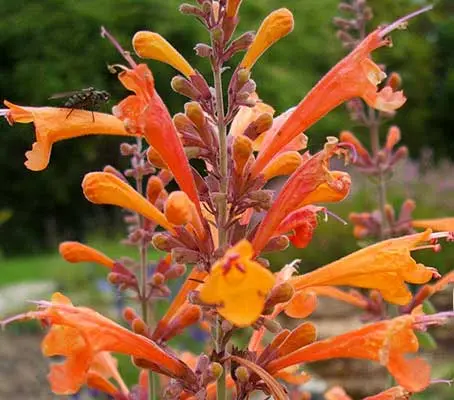
Jewel of the Sierra Madre
It is only within the past decade that a number of new noteworthy members of the genus Agastache have emerged from botanical obscurity. ‘Apricot Sprite’ is an outstanding perennial that provides a sizzling blast of tubular, peachy-apricot flowers. Compact and quick growing, they flower in the first year from seed.
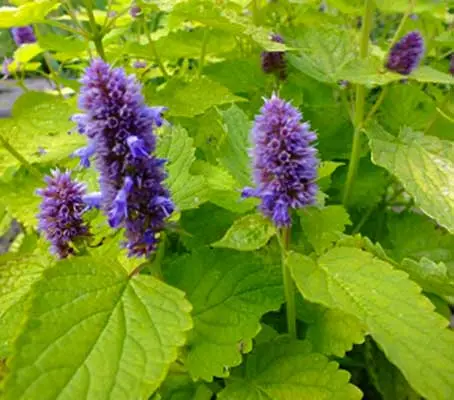
Mexican Hyssop, Hyssop-Anise
Originally bred by and developed in Japan, Agastache ‘Golden Jubilee’ was named to honour Queen Elizabeth II’s 50th year of rule, celebrating the Golden Jubilee in 2002. This bright gold-chartreuse beauty has one of the most remarkable leaf colour of any plant. Offering late season punctuation the flowers are a powerhouse source of nectar and pollen for bees, butterflies and other beneficial insects.
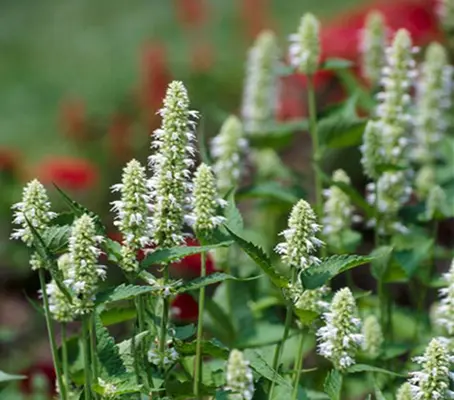
Korean Mint, Huo Xiang
Agastache ‘Liquorice White’ has tall spikes of white lipped flowers and like all Agastache produces copious amounts of nectar for bees and butterflies to feast upon. Flowering late in the season, it is a boon for building up bees’ honey reserves before winter and will produce a honey surplus where drifts are grown.
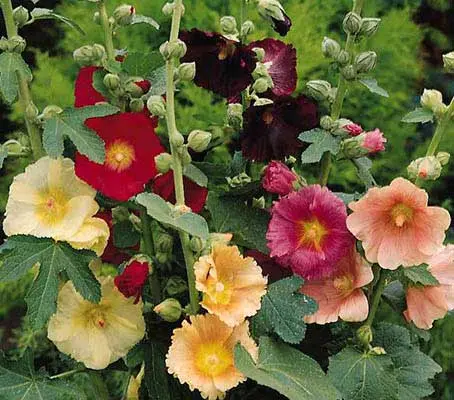
The Antwerp or Fig-leaved Hollyhock
Hollyhocks are almost as easy to grow as sunflowers and would probably be grown as often if gardeners were aware of their good nature. Alcea ficifolia ‘Happy Lights’ is a beautiful strain, reliably perennial they produce many upright stems, resulting in a bushy form.
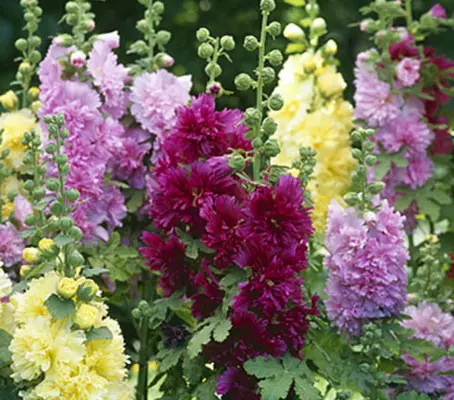
Althaea rosa, Hollyhock
This gorgeous award winning Hollyhock has the distinction of being the shortest in the Alcea rosea family. ‘Queeny’ is a dwarf Hollyhock that reaches only 60cm in height with fully double blooms. Unlike the tall varieties, it is a perennial that can also be used as an annual as it will bloom in its first year.
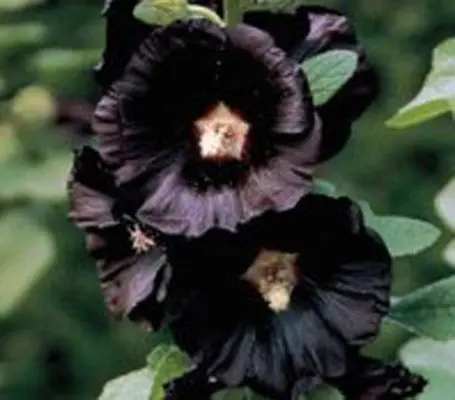
Althaea rosa, Black Hollyhock
Hollyhocks are a mysterious and prolific flower with a long and rich history. Traditionally associated with cottage-style borders, the dramatic, near-black flowers of Nigra work equally well in a contemporary, minimalist garden. This unique variety creates an impressive impact against most backgrounds.
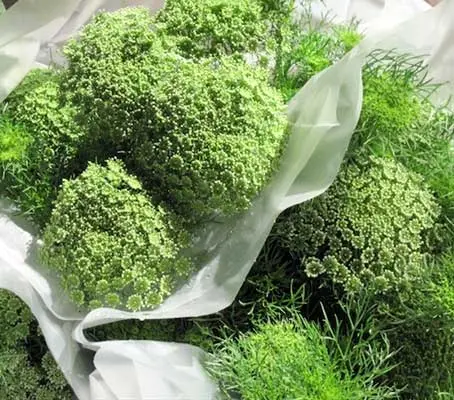
Queen Anne's Lace, (Syn Visnaga daucoides)
Ammi visnaga ‘Green Mist’ is a new variety of Queen Annes Lace, with larger, darker green and more mounded umbels than its cousin Ammi majus. It flowers from June to September the blooms are initially flattened and lime green, turning white. The textured flower heads are a flower arrangers dream.
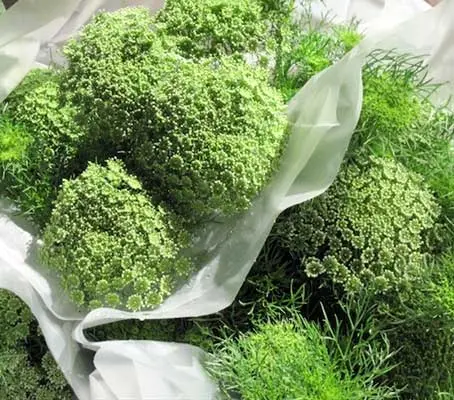
Queen Anne's Lace, (Syn Visnaga daucoides)
 Ammi lends a delicate airiness to any border and is often used to create a cohesive flower bed. It associates well with both annuals and perennials and makes an excellent addition to wildlife gardens, luring bees and butterflies to the nectar rich flowers. Organic Seed.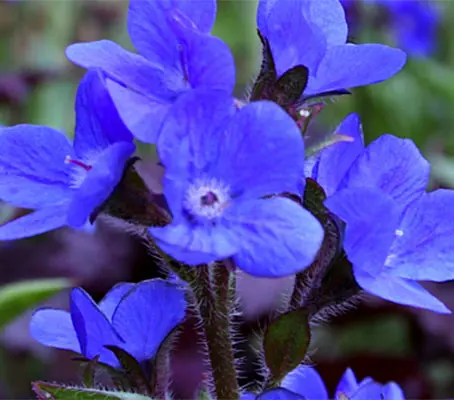
Aka Anchusa azurea or Italian Bugloss
Anchusa ‘Dropmore’ is a 1905 selection that is still available today. They will thrive in a sunny border, are much loved by almost all bee species and make a great companion to rich plums and purple tones.
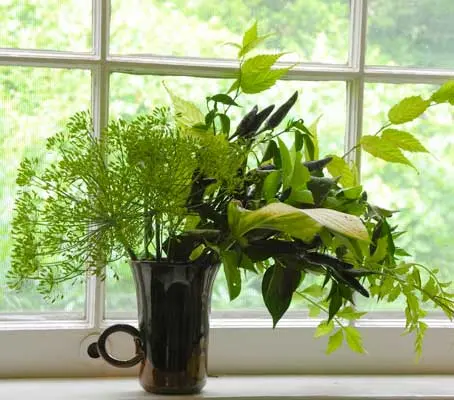
Florists Dill or Compact Dill
‘Mariska’ is a little known compact variety of Dill often referred to as ‘Florist’s Dill’. With starry bright yellow flower heads and abundant foliage it is an excellent variety for use as a cut flower, yet is still a great variety for the kitchen.
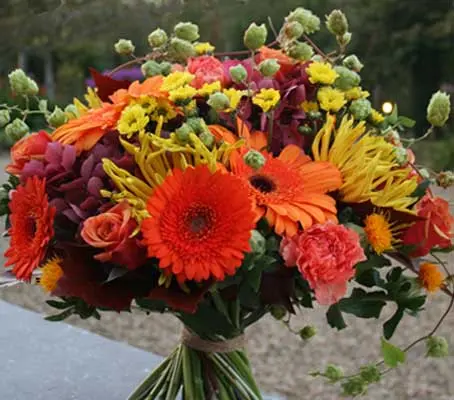
Ideal for naturalistic planting and for cut flowers
The Semi-Tall Flowers Mix is a richly flowering mixture of that produces large quantities of 50cm (20in) tall annual flowers for the border or for cutting. As well as being ornamental, they will provide nectar and pollen for bees, butterflies and other insects from early in the year to late in the season.
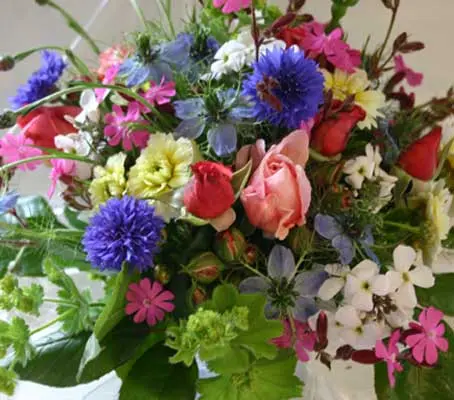
Ideal for naturalistic planting and for cut flowers
Composed of a finely balanced selection of annual flowers designed to provide a long succession of flowers from June to September, the Tall Flowers Mix grows 60 to 70cm (24 to 28in) tall and produces large quantities of flowers that are ideal for the border and for the vase.
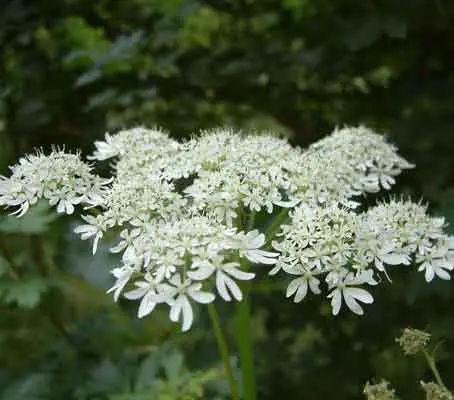
Gipsy Laces, Lady's Needlework.
Wildflower of Britain and Ireland
Anthriscus sylvestris is most characteristic of hedgerows, road verges and woodland edges. Our native Cow Parsley has a sophisticated form, with delicate, open, white lacy umbels, that from mid-spring to early summer look as though they’re erupting from a well shaken champagne bottle!
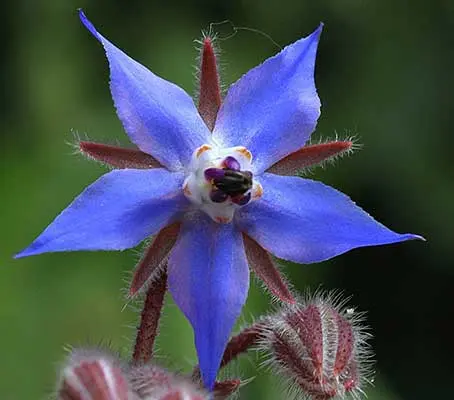
Starflower, Bee Bread, Blue Borage
The beautiful blue star-shaped flowers of Borage are edible with a cool cucumber flavour. Use them as garnish in fruit cups, summer drinks, wines and Pimms. Garden visitors can be converted to herbal advocates simply by offering a taste of its flower! Organic Seeds.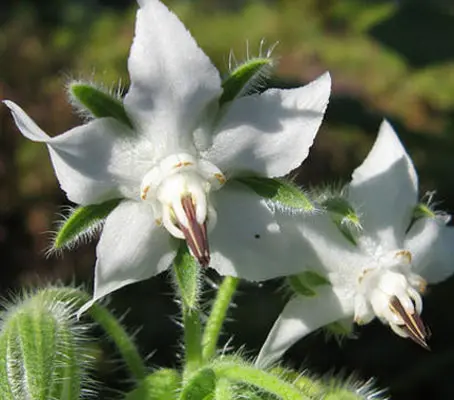
Starflower, Bee Bread, White Borage
The herb borage is a well known annual. Not so well known and not often written about is the equally beautiful form ‘alba’ which boast pure white, perfectly star-shaped flowers. Each flower is centred by five black stamens which heighten the drama. The flowers are edible, garden visitors can be converted to herbal advocates simply by offering a taste of its white flower.
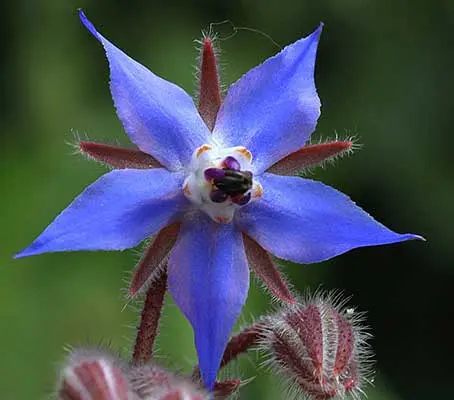
Starflower, Bee Bread, Blue Borage
Borage is one of the most reliable sources of blue flowers, often flowering lavishly for weeks after sowing. The beautiful blue star-shaped flowers are edible and very important for bees, providing pollen and nectar in prodigious amounts.
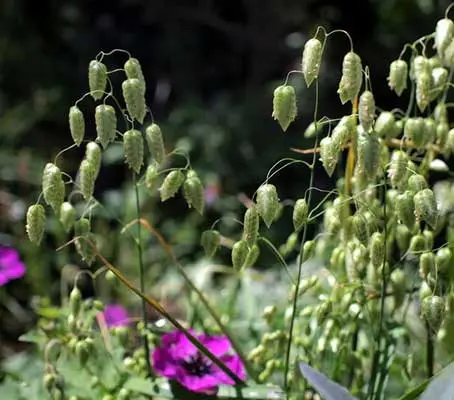
Greater Quaking Grass
Ornamental Grass Briza maxima has blue green leaves and flower heads that hang like scaly little heart shaped lockets that are tinged with pink from late spring to mid summer. They make a wonderful cut flower and flowering in 10 to 12 weeks from spring sowing, they are very easy to grow to perfection.
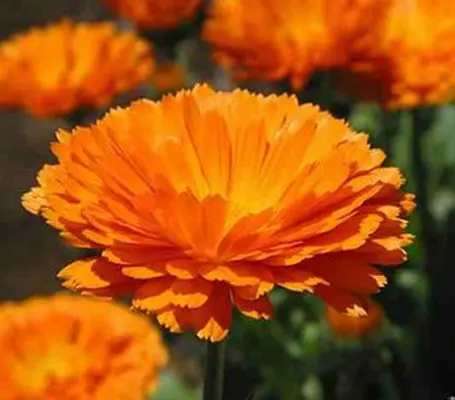
Pot Marigold, English Marigold. Herb Marigold
Cheerful and bright, use Calendula in beds, borders or containers. Calendula is prolific and durable, and like most hardy annuals it is easy to grow, simply sow where it is to flower. It is currently one of the top herbs used for medicinal use. Sprinkle salads and decorate cakes with the edible tangy petals.
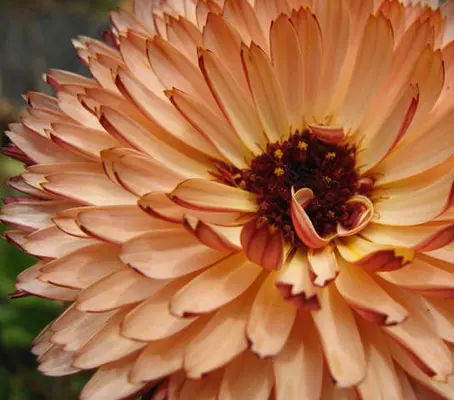
Pot Marigold, English Marigold. Herb Marigold
‘Sunset Buff’ is a lovely, more subtle coloured calendula. It is the soft apricot-buff version of ‘Indian Prince’ with the same crimson petal backs. They grow to a height of around 60cm and a spread of 45cm, are an excellent variety for borders and make a stunning cut flower.
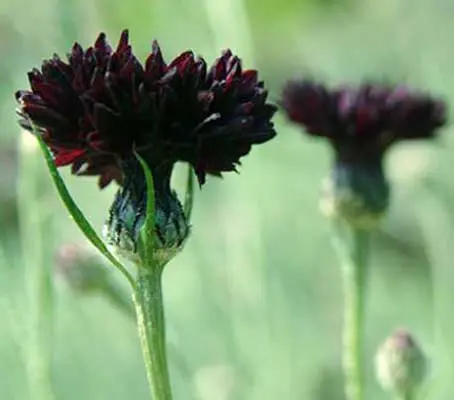
Also aptly named 'Witching Hour'
The Boy Series, which all feature double flowered blooms on tall stems for garden or cutting, are available in many colours. These beauties grow well as border plants and are wonderful in a cutting garden. ‘Black ball’ flowers are a lovely rich dark-chocolate hue, almost black on cloudy days.
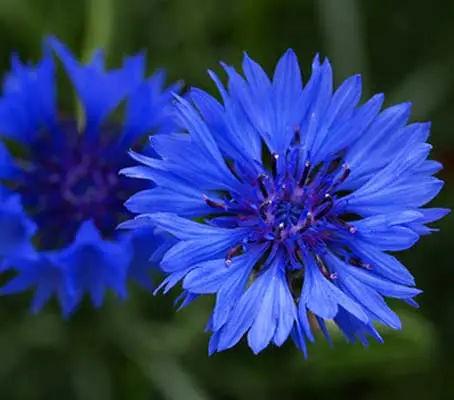
Double Cornflower, Bachelors Button
A favorite annual flower and cottage garden staple, Centaurea ‘Blue Boy’ has piercing, bright blue flowers with ruffled petals and violet-blue centres. The blooms appear from early to late summer. These beauties grow well as border plants and are wonderful in a cutting garden.
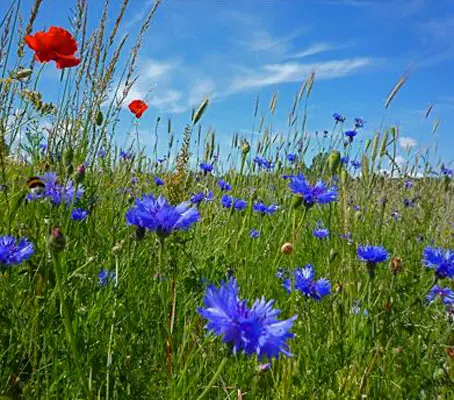
Bachelors Button,
Wildflower of Britain and Ireland
Today cornflowers are rare in the wild, they flourish instead in our gardens. They are the most splendid of annuals. Aside from their electric blue, which is breathtaking when they’re grown in dense drifts, they are easy to grow, they flower all summer, make great cut flowers and bees adore them.
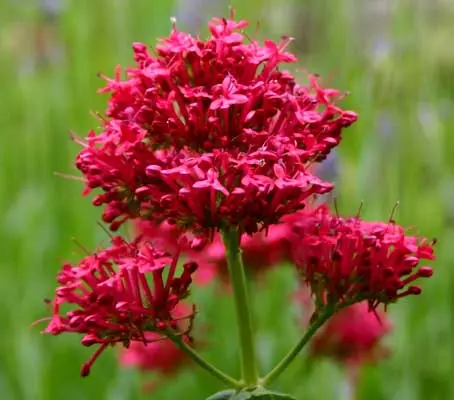
Keys of Heaven, Jupiter's Beard. Pretty Betsy
Centranthus ruber is a Cottage garden favourite that’s made it into the style books. Sweetly-perfumed, dense clusters of reddish-pink flowers appear from July to October. They are ideal for attracting bees and butterflies and other pollinating insects into the garden and lovely when used as a cut flower.
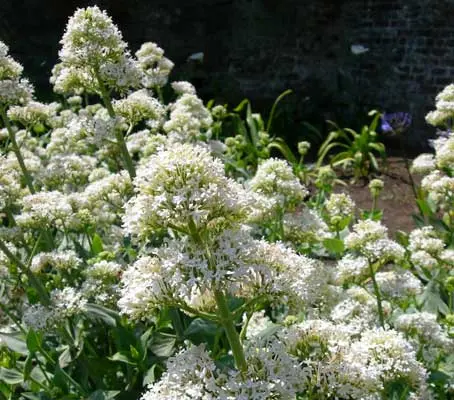
Keys of Heaven, Jupiter's Beard.
Centranthus ‘Snow Cloud’ produces airy clusters of white flowers that appear from July to October on tall, fleshy stems with glaucous leaves. Very long flowering, sweetly-perfumed and easy-to-grow from seed, given an early sowing Centranthus will flower from July right through to October.
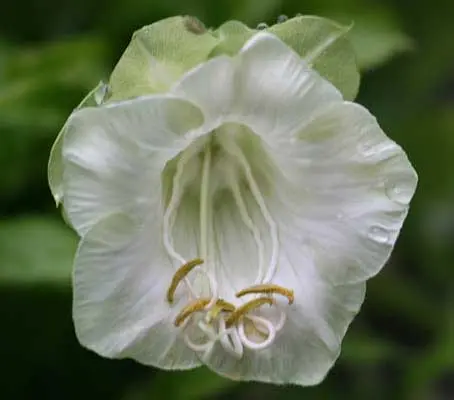
White Cup and Saucer Vine, White Cathedral Bells
Cobaea scandens alba will appeal to anyone who longs for something with panache and visual impact. This rare variety has clear white flowers and will fill the air with a very pleasant honey scent throughout the growing season. 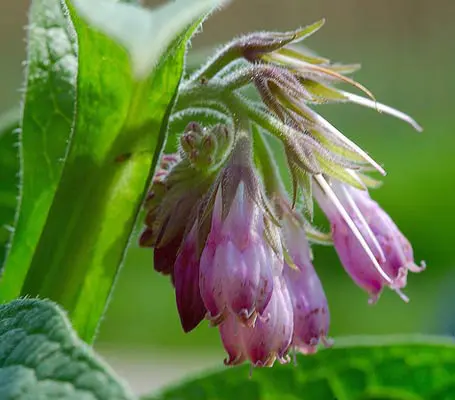
Knitbone, Bruisewort, Healing herb, Miracle herb.
To the organic gardener, Comfrey is invaluable. It’s easy to grow, easy to use and incredibly beneficial to the garden. Used to make organic liquid feed, it is especially valuable on crops that benefit from high doses of potassium. Organic Seed.
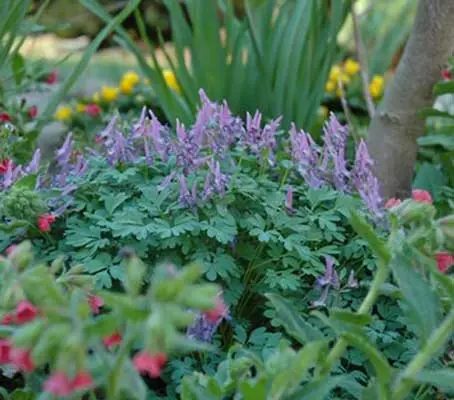
Bird-in-a-bush
European Wildflower
What gardener with a heart and soul could resist the spring flowers of Corydalis, whose winged petals with upswept spurs suggest a flight of elfin butterflies. These woodland ephemerals are highly useful at the front of the border, with miniature bulbs such as crocus, muscari or scillas.
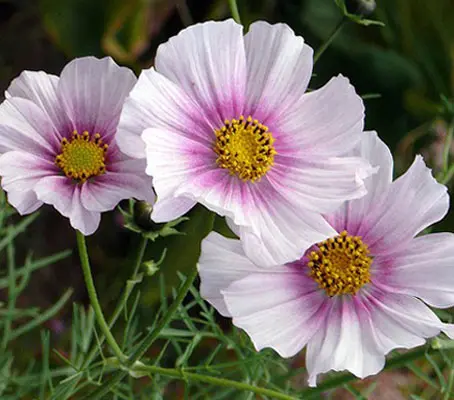
The Mexican Aster
Cosmos “Daydream” is a superb new colour, palest pink with a deep rose pink centre makes this a unique and delicate addition to any garden. The flowers are very early and are freely produced over a long period. Very easy to grow, making it a perfect choice for children or the less experienced gardener.
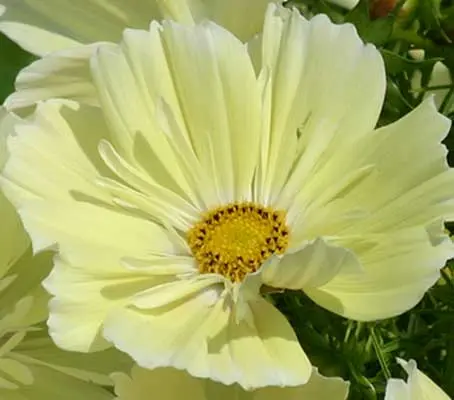
The Mexican Aster
A totally new cosmos that has been causing rather a stir in horticultural circles, the unique soft-yellow blooms are produced in profusion on compact dwarf plants. Cosmos bipinnatus ‘Xanthos’ was immediately granted one of the most prestigious horticultural awards, a Fleuroselect Gold Medal.
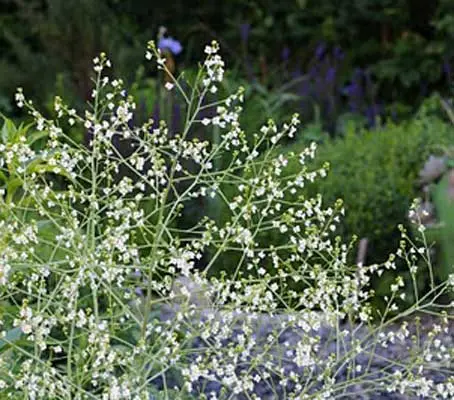
Heartleaf crambe
I like magnificence in the garden. Either those plants which over perform, or those which are so rare that they stop one in ones tracks, or those that designers call ‘statement plants’. Crambe cordifolia is one such plant. All about stature, plant them and stand well back. 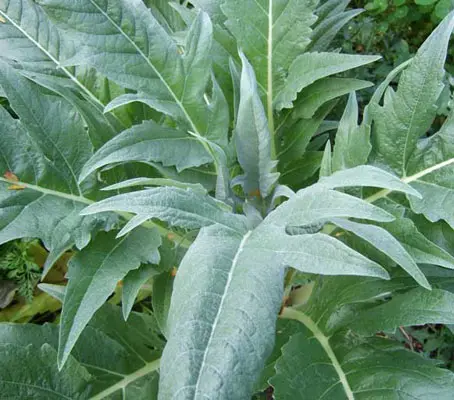
Cardoon
Whether you are into the culinary arts or edible landscapes, you may want to put this plant at the top of your list. Chosen by the RHS as one of the top plants of the last 200 years, Cardoons are aristocrats in both the ornamental and the vegetable world.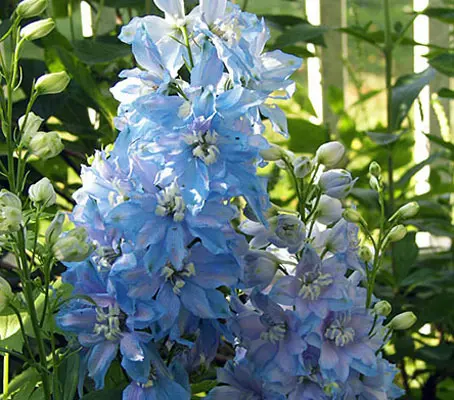
Belladonna Group. Aka “Clivedon Beauty"
No other blue quite measures up to the almost iridescent hues of Delphinium “Cliveden Beauty”. The multi-branching plants grow to just 75 to 90cm tall so are suitable for most gardens and do not need staking in most situations. The many individual blooms are clear light blue, each with a white centre.
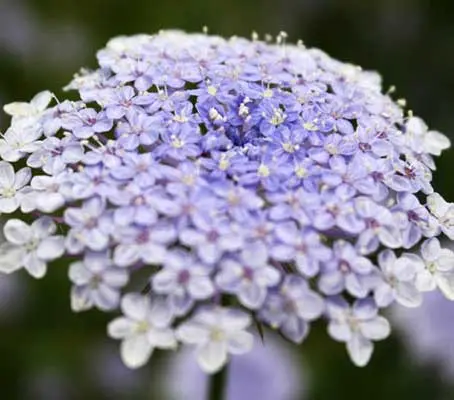
Marketed as 'Lacy Blue'
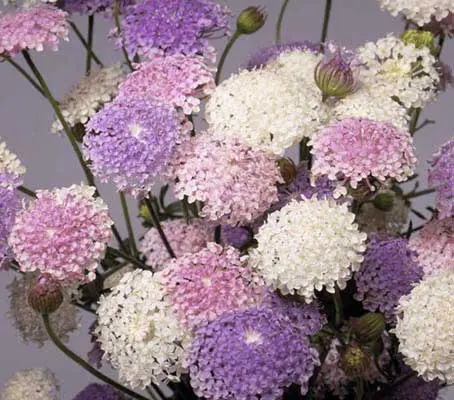
Didiscus caerulea is known as the Blue Lace Flower for its unusual colour. The delicate lavender-blue flowers, each composed of tiny, star-shaped, sweetly fragrant flowers are perfect for the cutting garden.
Marketed as 'Lacy Mix'
Recent developments of Didiscus caerulea have broadened the colour range. Didiscus ‘Lacy Mix’ produce the same lacy umbel shaped domes and finely cut foliage. In a pastel blend of powder-blue, lavender, soft pink and white, the plants branch freely, filling borders with a light, floaty feel and masses of stems for cutting.
Dwarf Perennial Foxglove, Willow Leaf Foxglove
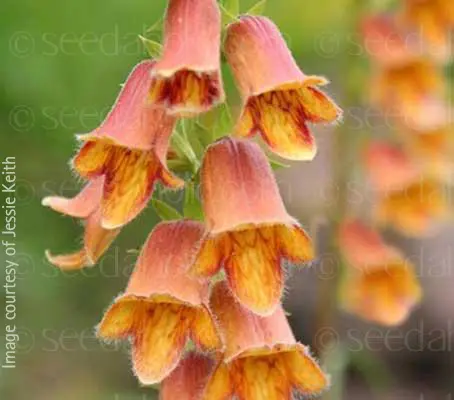
This rare and lovely foxglove is one of the very best in cultivation. Digitalis obscura, the Sunset Foxglove has striking bell-shaped blooms in all the colours of the sunset. Rusty orange and amber with red veining.
Dwarf Foxglove
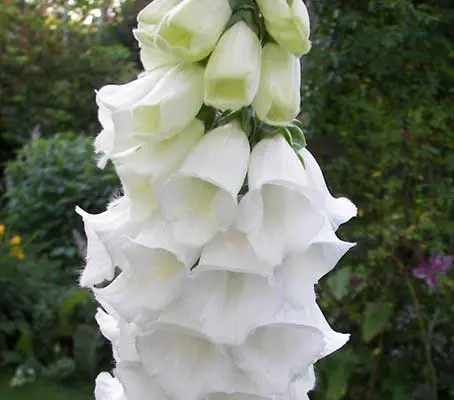
Digitalis purpurea ‘Snow Thimble’ is bred for its large pure-white, bell-shaped blooms, born on short spikes only 100cm tall. It is one of the most elegant dwarf Foxgloves, easy to place in the garden it is especially suited to cottage gardens, shade gardens, wildflower and cutting gardens.
Aka 'Pink Champagne'
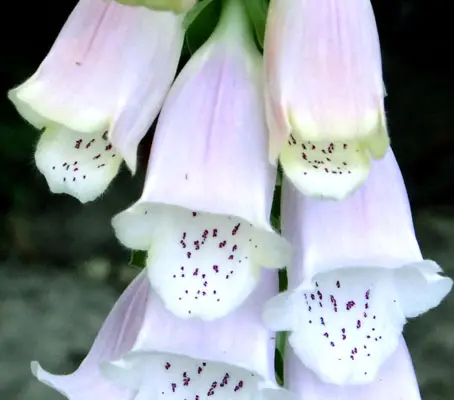
Digitalis ‘Silver Fox’ is one of the most beautiful dwarf Foxgloves for the cottage garden and border. Growing to just 60 to 70cm tall, the creamy-white speckled bells are flushed with soft lavender-pink. An elegant and rare foxglove that is ideal for borders or containers.
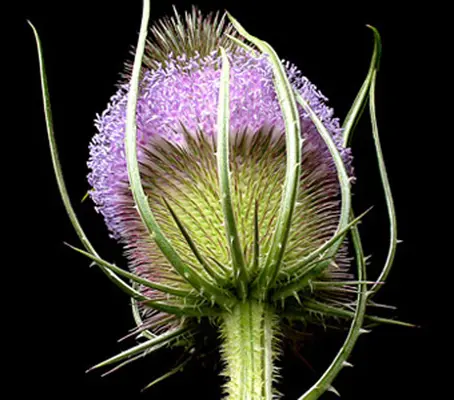
Fuller’s Teasel, Wildflower of Britain and Ireland
Fullers Teasel a sub-species of the common teasel. The bristly flower heads were cultivated, matured and dried. Inserted into wooden frames, they were used to bulk up the pile on woolen cloth. The variant name ‘fullonum’ refers to the name of the trade of the ‘fullers’ to raise the nap on woolen cloth – to ‘tease’ it. Teasel is still used today by some who weave wool by hand.
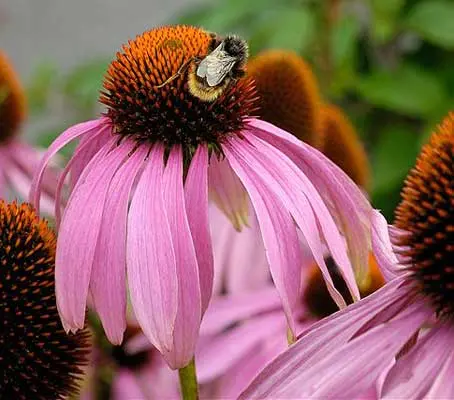
Western Coneflower, Narrow Leaf Coneflower Medicinal Herb
Native to the central and south-eastern parts of the United States, Echinacea angustifolia is valued as a short-term stimulant to the immune system. This classic purple flower is easy to grow and continues to be a favorite in home and public gardens, a ‘tried and true’ classic sure to please any home gardener.
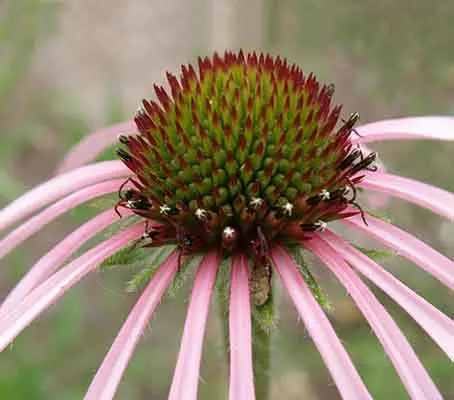
Pale Purple Coneflower
Echinacea pallida is one of the more rare members of the Echinacea family. They have much longer, ray flowers than those of the more familiar purple coneflower, the plants bloom earlier and continue to bloom sporadically through the autumn months.
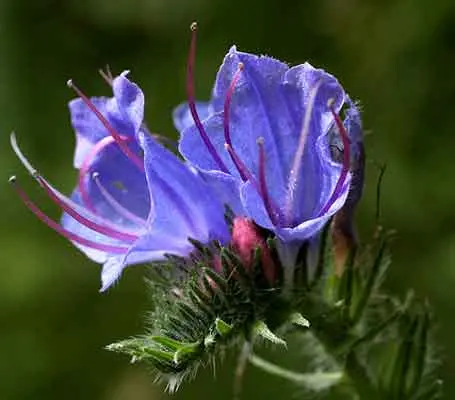
Wildflower of Britain and Ireland
Echium vulgare is a valuable native plant and is exotic enough to earn a place in a flower border. The plant is much loved by almost all bee species. If you don’t want plants that honeybees simply visit, but want to select plants that honeybees clearly love, choose Echium for your garden.
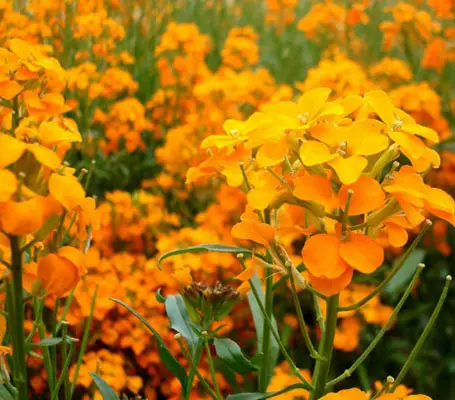
Siberian Wallflower
Siberian wallflowers are at their best in early to mid-May. With cheerful deep orange blooms, they are very easy to grow and combine well with other plants; indeed wallflowers demand companions and set the mind racing regarding potential planting combinations.
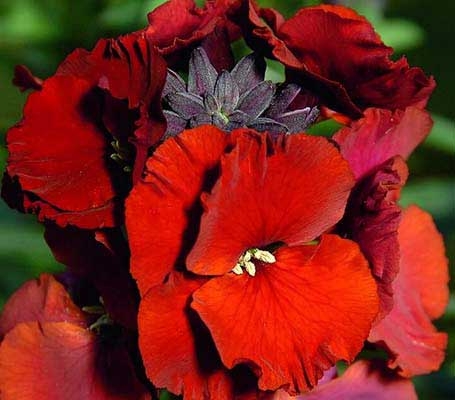
Wallflower, Siberian Wallflower
A favourite with gardeners, Erysimum cheiri ‘Scarlet Emperor’ is a classic wallflower with bold, fiery blooms in shades of rich scarlet and glowing crimson. Strongly scented, the flowers carry the sweet, spicy perfume that wallflowers are famed for.
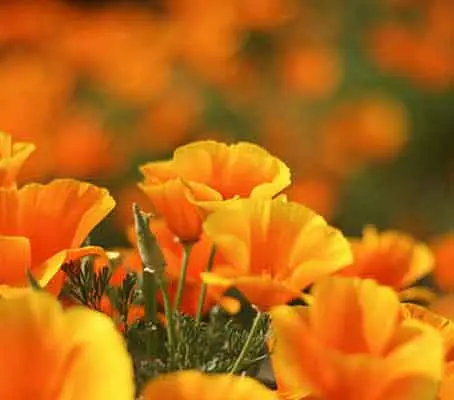
California Poppy. Aurantiaca Orange
Eschscholzia are of the easiest and most colourful annuals to grow, with masses of beautiful silky flowers in shades of gold. They bloom profusely over a very long season, succeed in all soils and garden positions and are heat and drought-resistant. They give a garden performance second to none!
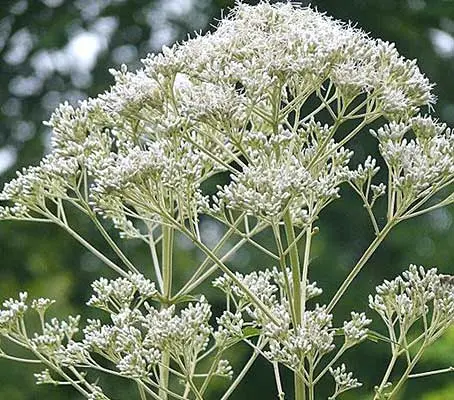
Hollow Joe Pye weed, Queen of the Meadow
Introduced in 2010, Eupatorium ‘Ivory Towers’ is relatively new to our gardens. This architectural plant bears generously clusters of ivory-white blooms which are long-lasting and beloved by butterflies. Given an early sowing, will flower the first year. 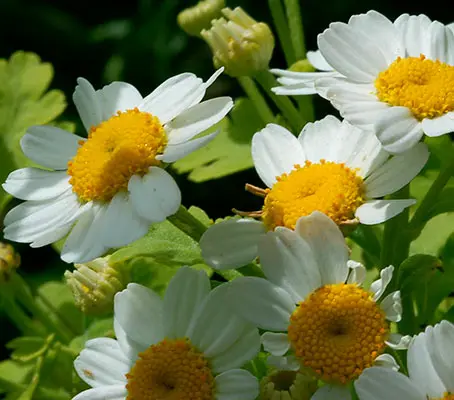
Whether your interest lies in medicinal herbs or simply its decorative qualities, growing Feverfew can be a welcome addition to any garden or allotment. Feverfew is a good companion plant and a natural insect repellent. Ideal for planting around outdoor seating areas and pathways
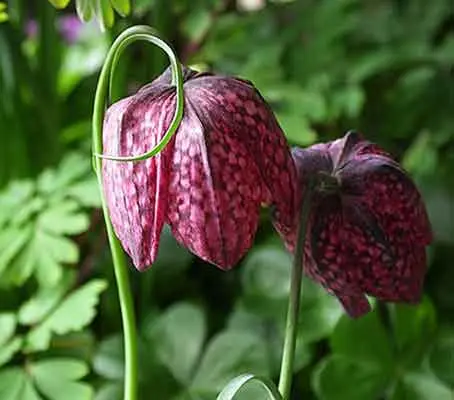
Snake's Head Fritillary, Chequered Lily,
Wildflower of Britain and Ireland
Snake’s head fritillaries always excite attention wherever they are seen. None of the other lovely members of the fritillaria genus can match this native wildflower for the bizarre and unmistakable colouring of its bell-shaped flowers.
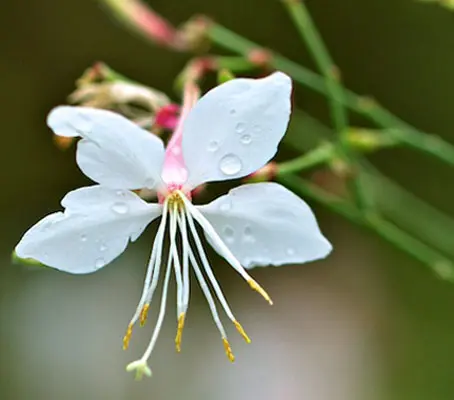
Lindheimer's Bee Blossom
In the last decade, Gaura ‘The Bride’ has skyrocketed to popularity among gardeners.A graceful, hazy plant with airy spikes of white, star-shaped flowers with long anthers like daddy long-legs, held on slender stems from May to September. RHS AGM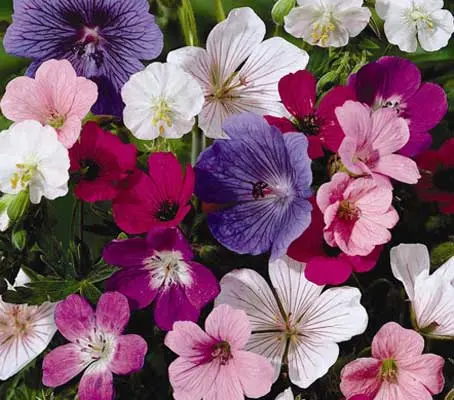
Mixture of species and cultivars
Hardy geraniums are undoubtedly one of the most popular groups of plants. Today’s hybrids are the modern flag bearers, they are beautiful, reliable and endlessly various produces jewel-tone, saucer-shape flowers for months at a time. Exceptionally good value this mix always contain a few real rarities.
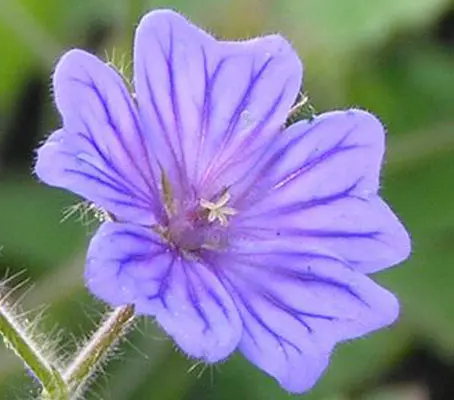
Hardy Geranium
Geranium ‘Orchid Blue’ is a simply stunning plant, producing clusters of saucer shaped flowers of a rarely seen shade of pure orchid-blue, each with purple-violet veins. This new-on-the-scene plant soon spreads to form low hummocks of deeply cut soft green, leaves.
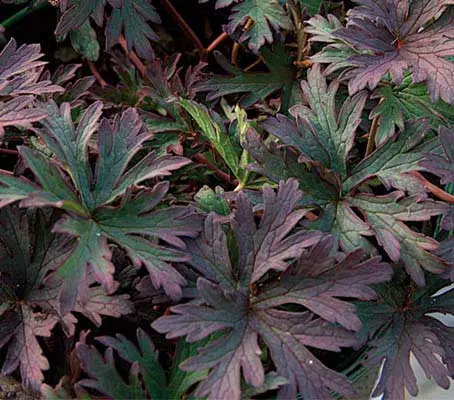
Hardy Geranium.
‘Dark Reiter’, is a fairly new cultivar originating from ‘Victor Reiter’ whose namesake was the legendary California nurseryman. What sets this plant apart is the new leaves that emerge a light maroon colour then fade to a purple-flushed deep green, it produces violet-blue flowers in spring.
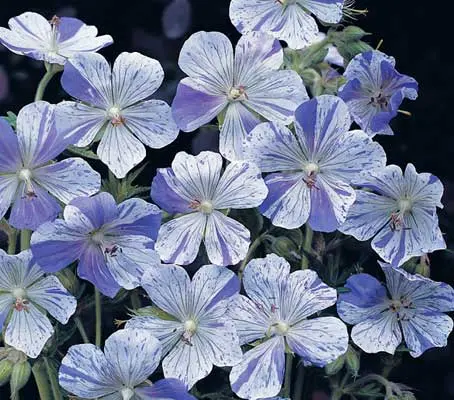
Hardy Geranium
“Splish Splash” is a fascinating, rare and prized border plant and one of the most beautiful, striking and unusual perennial geraniums. Very easy to grow, the clumps of divided foliage are topped with mauve-blue splashes and flecks on pure white petals, each petal appearing to be individually designed and painted.
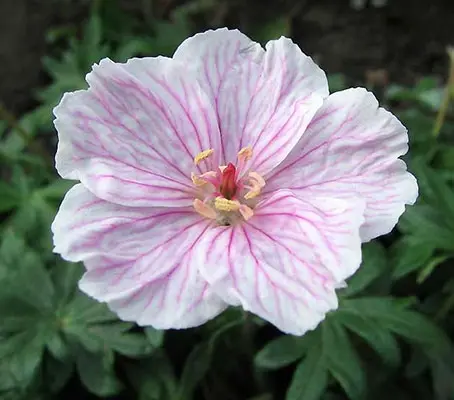
Hardy Geranium
‘Vision Light Pink’ produces masses of large luminescent light pink flowers with red veins from early spring through to late summer. This long-lived, drought-tolerant perennial is useful as a small scale groundcover and in mixed borders. Use it in rock gardens, stone walls or even in container plantings.
€3.50
€2.25
€2.95
€3.50 – €19.50Price range: €3.50 through €19.50
€3.50 – €19.50Price range: €3.50 through €19.50
€1.95 – €5.95Price range: €1.95 through €5.95
€2.25 – €7.95Price range: €2.25 through €7.95
€1.95 – €7.95Price range: €1.95 through €7.95
€3.25
€2.75
€2.95
€2.45
€1.95
€1.95
€2.95