 Skip to content
 Sort by:
Sort by:
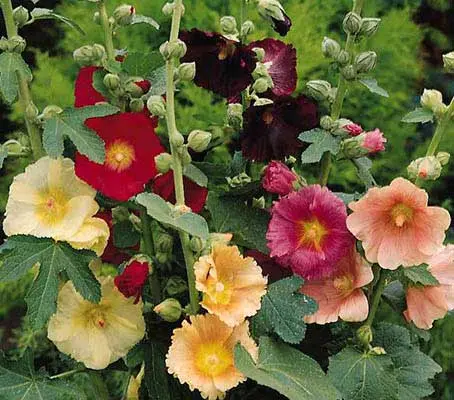
The Antwerp or Fig-leaved Hollyhock
Hollyhocks are almost as easy to grow as sunflowers and would probably be grown as often if gardeners were aware of their good nature. Alcea ficifolia ‘Happy Lights’ is a beautiful strain, reliably perennial they produce many upright stems, resulting in a bushy form.
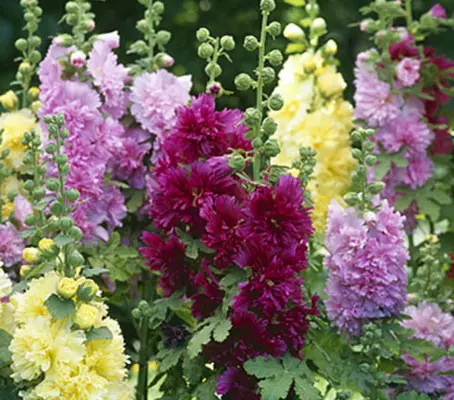
Althaea rosa, Hollyhock
This gorgeous award winning Hollyhock has the distinction of being the shortest in the Alcea rosea family. ‘Queeny’ is a dwarf Hollyhock that reaches only 60cm in height with fully double blooms. Unlike the tall varieties, it is a perennial that can also be used as an annual as it will bloom in its first year.
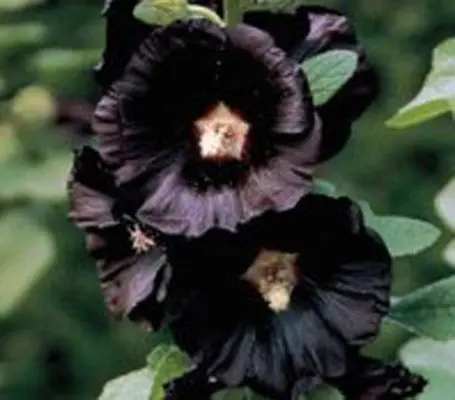
Althaea rosa, Black Hollyhock
Hollyhocks are a mysterious and prolific flower with a long and rich history. Traditionally associated with cottage-style borders, the dramatic, near-black flowers of Nigra work equally well in a contemporary, minimalist garden. This unique variety creates an impressive impact against most backgrounds.
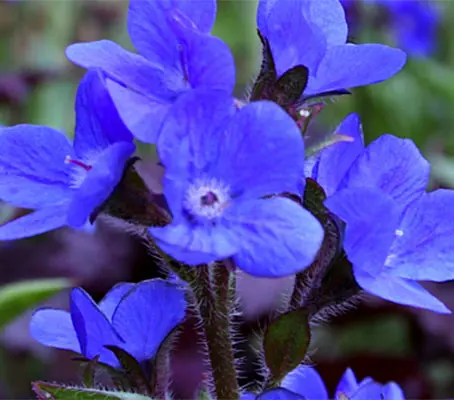
Aka Anchusa azurea or Italian Bugloss
Anchusa ‘Dropmore’ is a 1905 selection that is still available today. They will thrive in a sunny border, are much loved by almost all bee species and make a great companion to rich plums and purple tones.
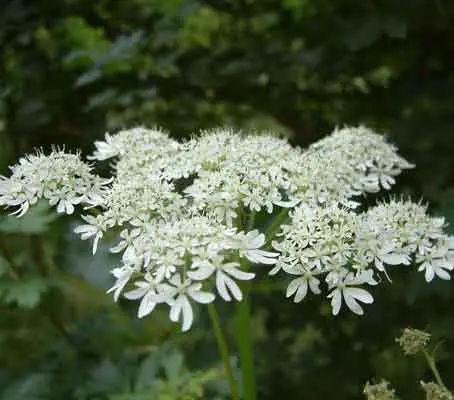
Gipsy Laces, Lady's Needlework.
Wildflower of Britain and Ireland
Anthriscus sylvestris is most characteristic of hedgerows, road verges and woodland edges. Our native Cow Parsley has a sophisticated form, with delicate, open, white lacy umbels, that from mid-spring to early summer look as though they’re erupting from a well shaken champagne bottle!
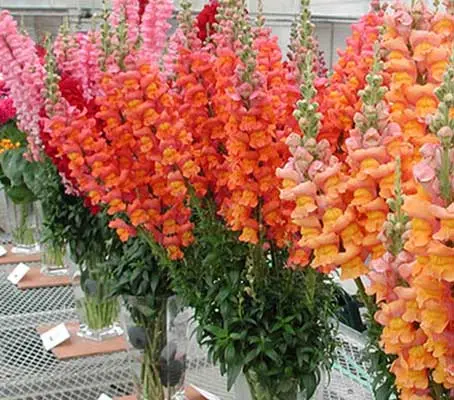
Snapdragon
Worldwide, Antirrhinum is one of the most important ‘summer cut-flowers’ grown from seed. Adored by florists and gardeners alike and available in a rich range of single colours, they are cultivated as an annual or as a biennial.
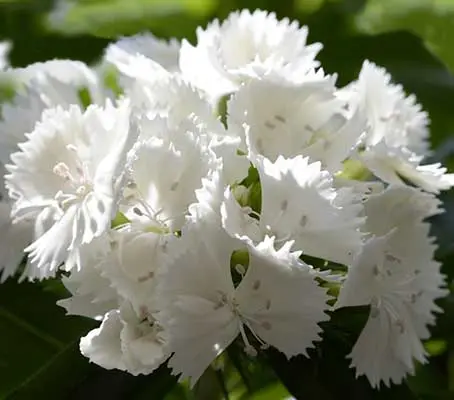
Poet's Pink, Sweet John, Sweet William
Intensely fragrant, with a delicious, sweet perfume, Dianthus barbatus ‘Alba’ is a pure white form of Sweet William. Absolutely beautiful and easy to grow, everybody can grow them to perfection.
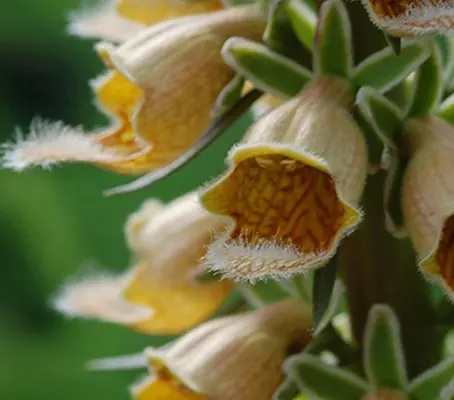
Perennial Foxglove, Rusty Foxglove
Digitalis ferruginea is an interesting and exotic looking foxglove. With elegant, leafy spires and closely packed golden blooms, each orchid-like flower has an interior of rich red-brown veins.
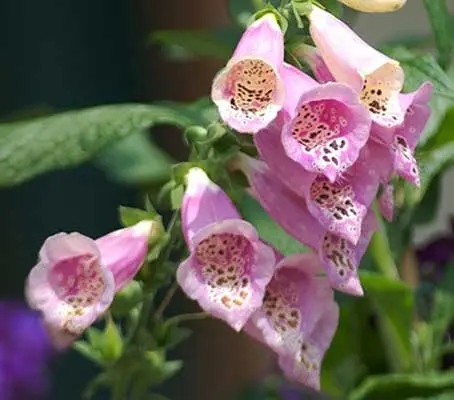
Native Pink Foxglove
Wildflower of Britain and Ireland
This lovely native European woodland plant is a beauty to add to any garden and a popular biennial for shaded places. Plants form rosettes of lance shaped leaves, the second year the rosette begins to shoot skyward with beautiful large spikes and drooping bell shaped blooms that are spotted inside.
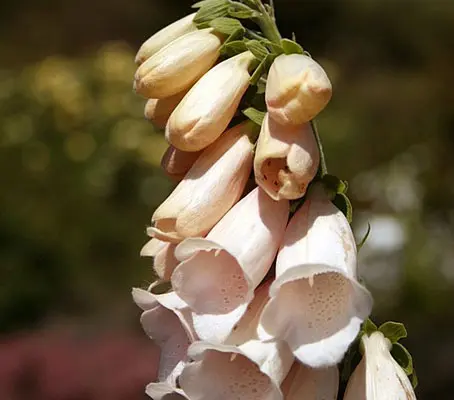
Aka Suttons Apricot, Apricot Delight, Apricot Beauty Foxglove
Digitalis purpurea ‘Apricot’ produces large spikes in the most beautiful shade of coral-apricot. One of its greatest assets is the ability to mingle, a quality particularly important in contemporary gardens where the accent is on informality.
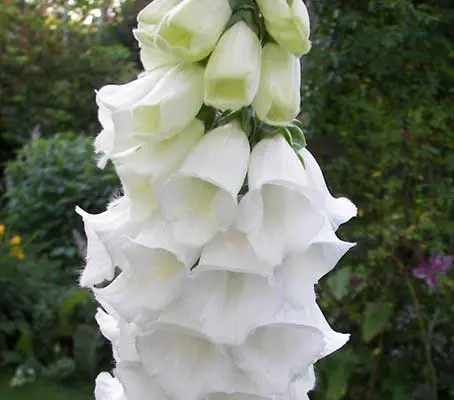
Dwarf Foxglove
Digitalis purpurea ‘Snow Thimble’ is bred for its large pure-white, bell-shaped blooms, born on short spikes only 100cm tall. It is one of the most elegant dwarf Foxgloves, easy to place in the garden it is especially suited to cottage gardens, shade gardens, wildflower and cutting gardens.
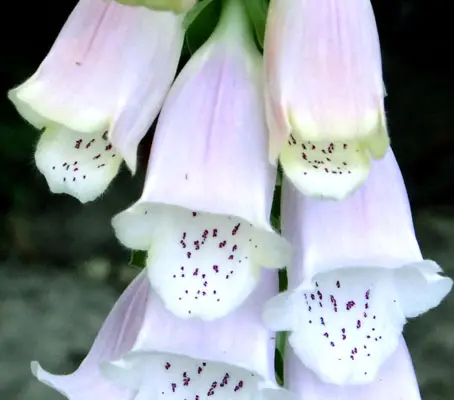
Aka 'Pink Champagne'
Digitalis ‘Silver Fox’ is one of the most beautiful dwarf Foxgloves for the cottage garden and border. Growing to just 60 to 70cm tall, the creamy-white speckled bells are flushed with soft lavender-pink. An elegant and rare foxglove that is ideal for borders or containers.
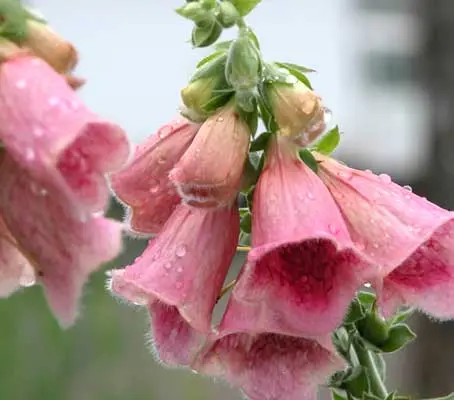
Merton's Foxglove
 This striking and robust foxglove, a hybrid between the pink flowered D. purpurea and the yellow flowered D. grandiflora produces a beautiful mix of the two shades. Warm pink, speckled flowers that are larger than the traditional foxglove.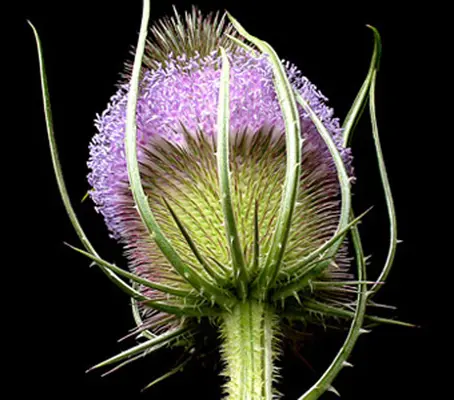
Fuller’s Teasel, Wildflower of Britain and Ireland
Fullers Teasel a sub-species of the common teasel. The bristly flower heads were cultivated, matured and dried. Inserted into wooden frames, they were used to bulk up the pile on woolen cloth. The variant name ‘fullonum’ refers to the name of the trade of the ‘fullers’ to raise the nap on woolen cloth – to ‘tease’ it. Teasel is still used today by some who weave wool by hand.
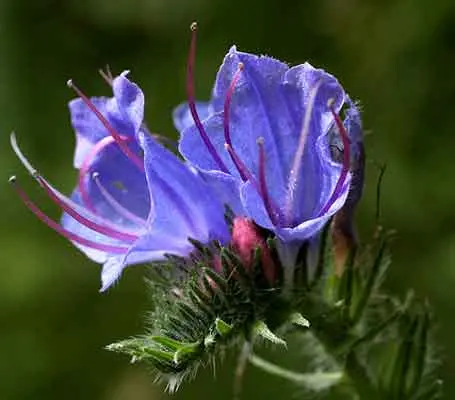
Wildflower of Britain and Ireland
Echium vulgare is a valuable native plant and is exotic enough to earn a place in a flower border. The plant is much loved by almost all bee species. If you don’t want plants that honeybees simply visit, but want to select plants that honeybees clearly love, choose Echium for your garden.
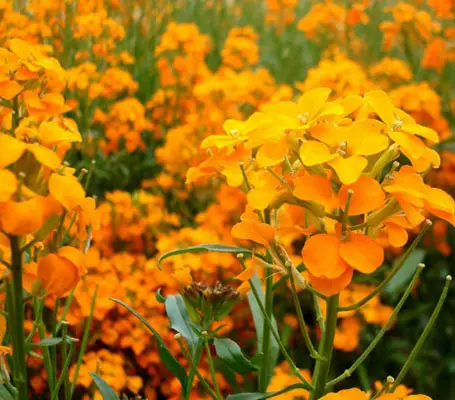
Siberian Wallflower
Siberian wallflowers are at their best in early to mid-May. With cheerful deep orange blooms, they are very easy to grow and combine well with other plants; indeed wallflowers demand companions and set the mind racing regarding potential planting combinations.
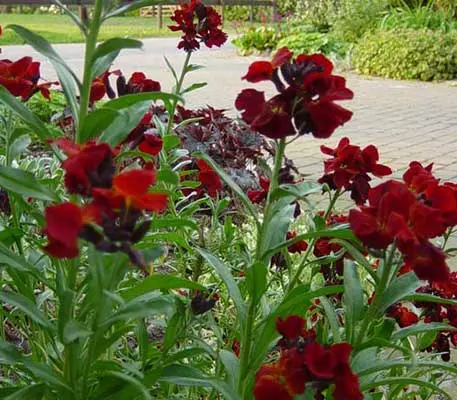
English Wallflower. Also known as 'Covent Garden'
This old English cottage plant is making a comeback, and no wonder. Blood Red’ is a favourite with gardeners, the astonishing, deep crimson, velvety red flowers they are sure to be a focal point. Ideal for borders and edging, they could also be used in large containers….and of course, walls!
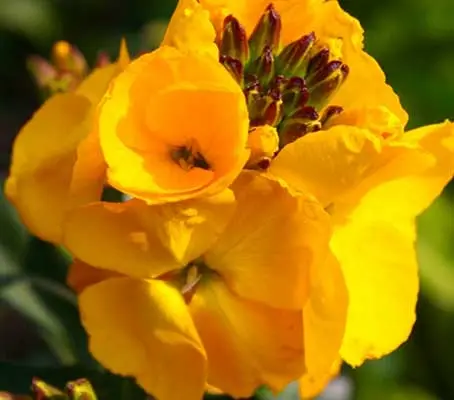
English Wallflower
‘Cloth of Gold’ is a favorite with gardeners, each plant wears a cloak of the finest gold and the large golden-yellow flowers are filled with a sweet fragrance, from mid-spring and throughout summer. They are a perfect foil for daffodils and many other spring bulbs.
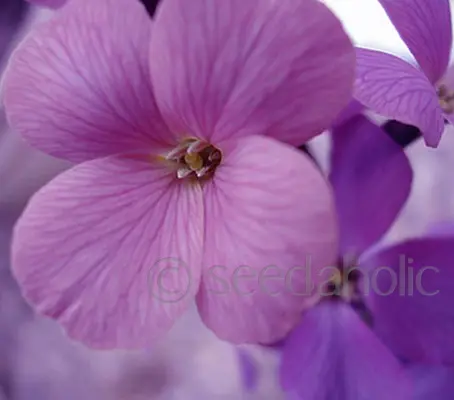
English Wallflower
‘Fair Lady Mixed’ is a classic tried and trusted variety. Reliably hardy, this uniform mixture blooms in a wide range of colours, both pastels and bright colours and includes the more unusual dusky-pink shades. This marvellous; fragrant, floriferous flower is extremely easy to grow and very rewarding.
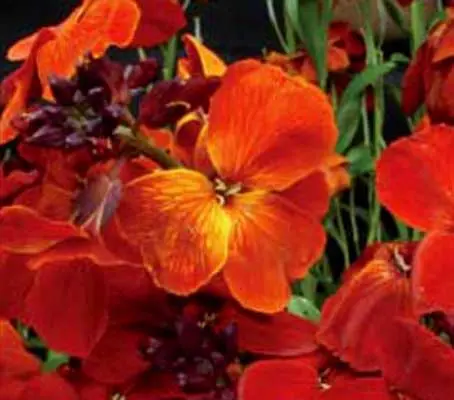
English Wallflower
Erysimum (formerly Cheiranthus) cheiri ‘Fire King’ is another old and tried variety, with striking, flame-like, glowing orange-scarlet flowers. A compact variety with a bushy habit and a rich fragrance, they will supply the household with an abundance of cut flowers for many weeks.
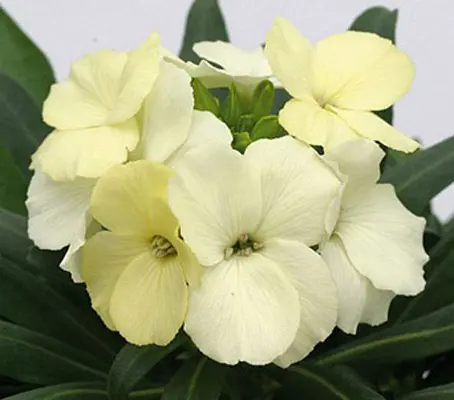
English Wallflower
What spring garden would be complete without a bed of delightful, sweet-scented Wallflowers, harbingers of warmer weather to come? Erysimum cheiri, formerly Cheiranthus cheiri ‘Ivory-White’ is a fabulous form. A compact variety with a bushy habit which is ideal as an underplanting to tulips and other spring bulbs.
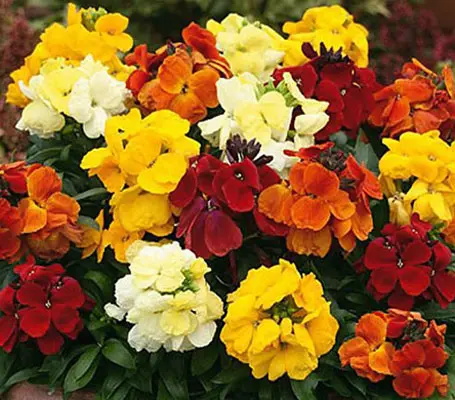
English Wallflower
This is a classic Wallflower mixture, with the super rich colours you’d expect to see in a Persian Carpet (at a fraction of the cost!) purple, gold, orange, rose, cream and apricot. It is not without reason that this bushy variety so impressed the RHS judges.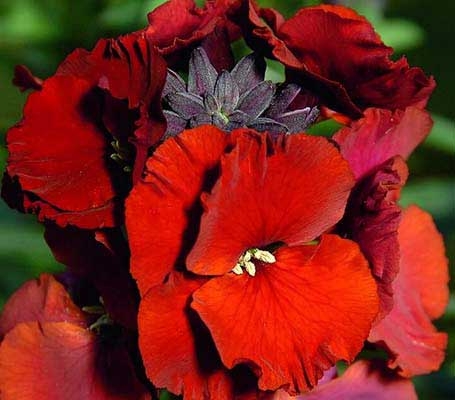
Wallflower, Siberian Wallflower
A favourite with gardeners, Erysimum cheiri ‘Scarlet Emperor’ is a classic wallflower with bold, fiery blooms in shades of rich scarlet and glowing crimson. Strongly scented, the flowers carry the sweet, spicy perfume that wallflowers are famed for.
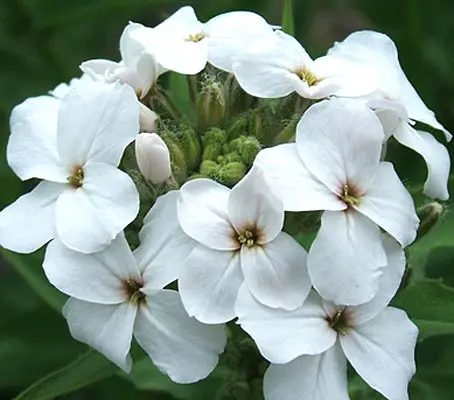
White Sweet Rocket, Dames Violet, Summer Lilac.
Gorgeously scented pure white flowers are held above rosettes of dark green leaves. Like all sweet rockets it is highly attractive to bees and other beneficial insects, the fragrant flowers perfume the air in late spring and early summer evenings. The night-scented stock is a close relative.
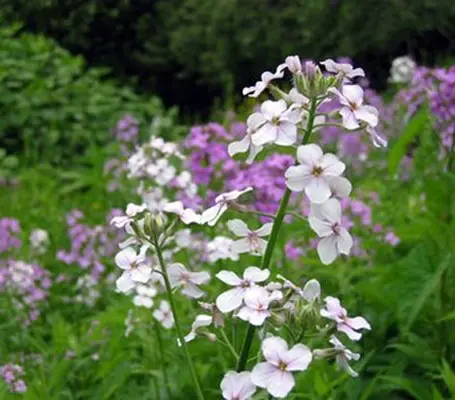
Sweet Rocket, Dames Violet, Summer Lilac.
Dames Rocket produce flowers varying in colour from deep rich purple, through all the paler lilac shades to white. Highly attractive to bees and other beneficial insects, the fragrant flowers perfume the air in late spring and early summer evenings.
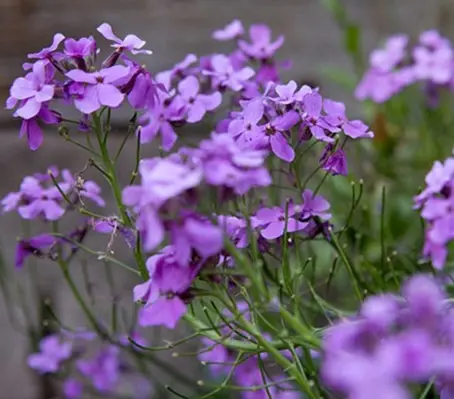
Sweet Rocket, Dames Violet, Summer Lilac.
In spring, Dame’s Rocket lights up the woodland edges with her blossoms, providing nectar for hummingbirds, moths and butterflies, and fragrance for the soul. Sow seeds directly where they are to flower in early summer
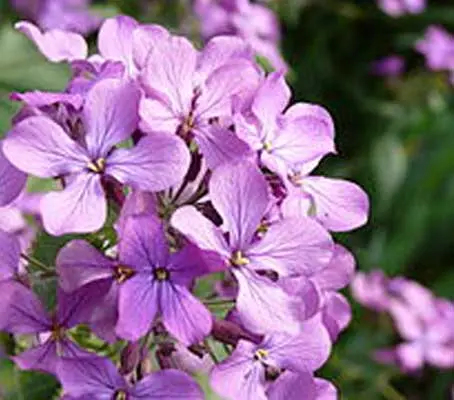
Silver Dollars, Silver Pennies
Honesty is a dual purpose plant, grown partly for its fragrant purple – pink flowers in spring and summer, but also for its unique seed-heads. Oval and translucent, gleaming with an eerie silver light and coveted by flower arrangers. It is a vital nectar plant and therefore popular with bees and butterflies.
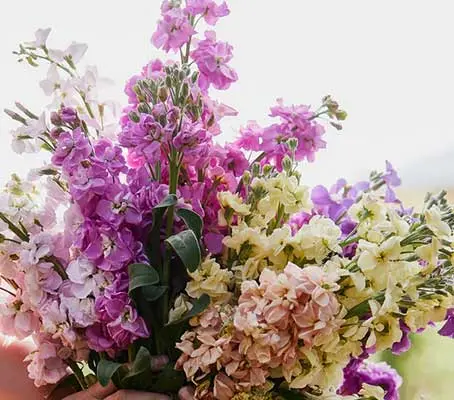
Brompton Stocks, Winter Stocks
Classic and richly scented, Brompton Stocks are the aristocrats of the stock family. These tall, elegant biennials produce dense spikes of double and single blooms in a sumptuous mix of colours. The flowers are extremely fragrant, in bloom from late spring and are excellent for cutting.
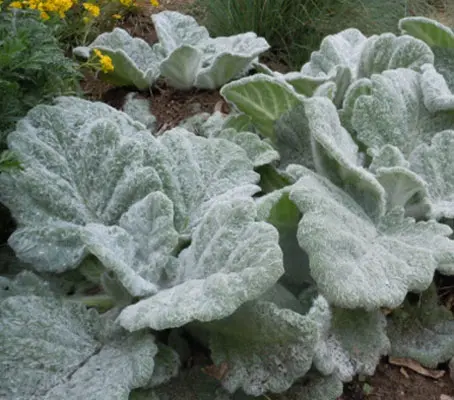
Silver Sage
Salvia argentea is prized for its spectacular, large, furry silver-grey leaves. The plants form an attractive mound that provide a dramatic background for colourful summer flowers. It complements purple or magenta flowers and looks gorgeous in a ‘white’ garden.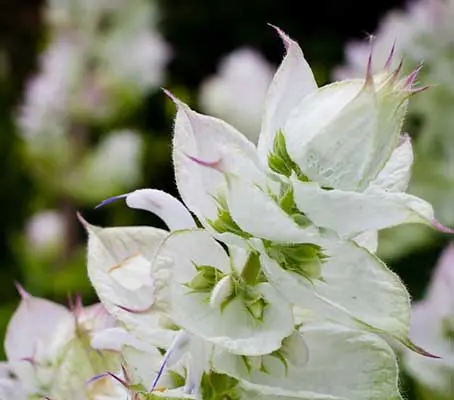
Biennial Clary, Muscatel Sage
Salvia sclarea var. turkestanica ‘Vatican White’ is a choice white cultivar that is not that easy to find. A nobly architectural Sage, each of its branched stems is topped with a profusion of blossoms with brilliant white bracts. The flowers are attractive and are boosted in impact by the large petioles that surround them.
Biennial Clary, Muscatel Sage
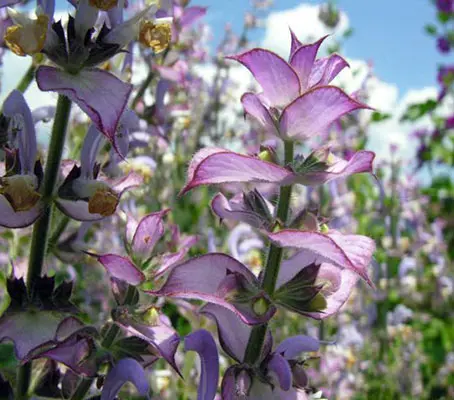
This hardy biennial Sage has been grown in almost every botanical sanctuary in human history and has many plus points: it grows well in poor soil resists slugs and other beasties, and doesn’t slump or need staking. It copes well in sun or light shade and the blooms are a magnet for bees and butterflies.
Biennial Clary, Muscatel Sage
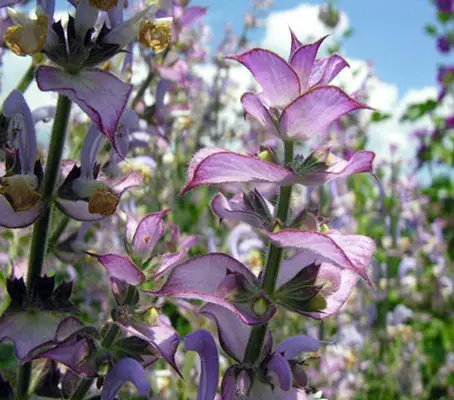
 This hardy biennial Sage has been grown in almost every botanical sanctuary in human history. Each stem is topped with a profusion of pale blue blossoms and large pinkish white bracts. A truly architectural plant. Organic Seed.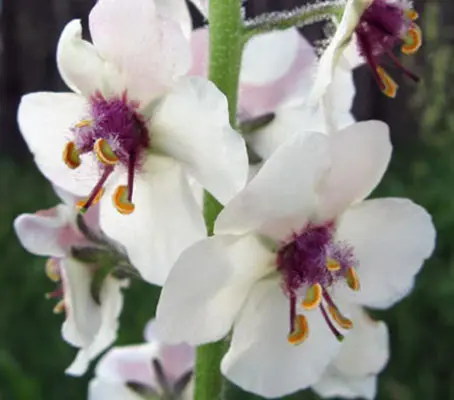
Moth Mullein
Verbascum are a wonderful plant for making a garden feel uncontrived, producing masses of flowers without taking up lots of space on the ground. ‘White Blush’ is one of the most popular varieties. Growing to just 100cm, the dark crimson buds open to reveal large white flowers with deep purple stamens.
Hollyhock
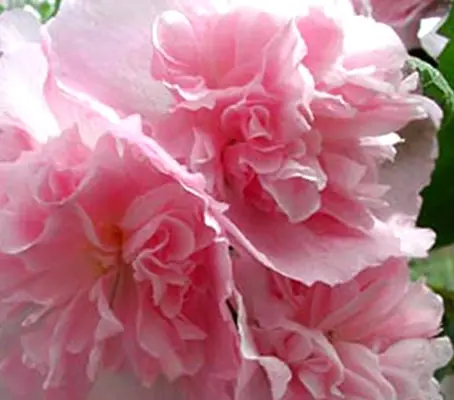
Alcea rosea ‘Chater’s Rose’ is a dramatic, upright plant, with a spike-like inflorescence that is covered with large buds that open, in a staggered manner, from June to September, from the bottom to the top. Fully double and almost pom-pom in appearance, the fine crepe texture of the petals is so delicate that it allows light to pass through.
Hollyhock
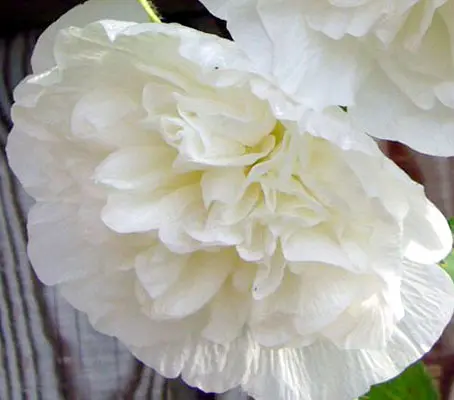
Alcea rosea ‘Chater’s White’ is a dramatic, upright plant, with a spike-like inflorescence that is covered with large buds that open, in a staggered manner, from June to September, from the bottom to the top. Fully double and almost pom-pom in appearance, the fine crepe texture of the petals is so delicate that it allows light to pass through.
Althaea rosa, Hollyhock
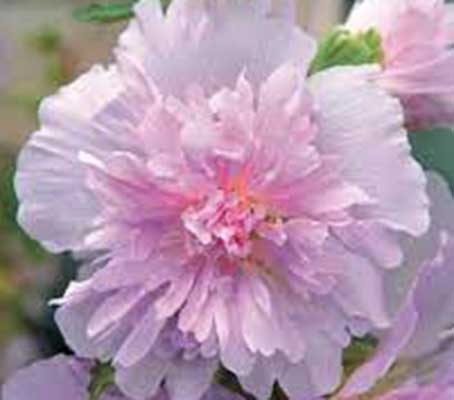
Softly ruffled, fully double blooms in a an elegant, romantic shade, a delicate blend of lilac-pink and rose. ‘Queeny Lilac Rose’ is a compact variety perfect for borders, pots, or small gardens. It flowers its heart out in the first year from seed, an unusual trick for a hollyhock.
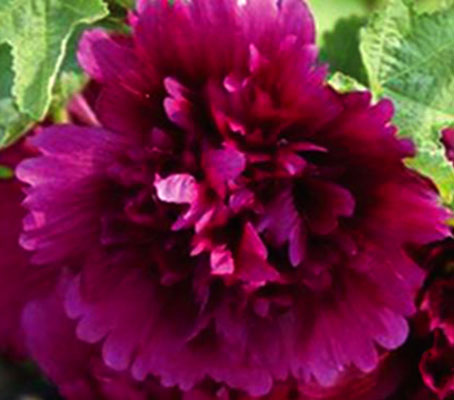
Althaea rosa, Hollyhock
Alcea ‘Queeny Purple’ is a charming, compact hollyhock bred to bring all the grandeur of the cottage garden to smaller spaces. Unlike the tall varieties, it is a perennial that will bloom in its first year. Sturdy, well-branched stems are resistant to rust and are topped with rich, royal-purple blooms that open through to autumn.
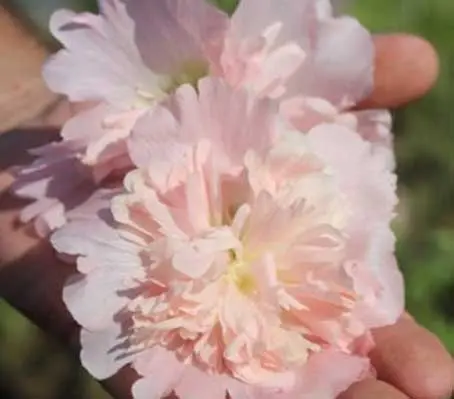
Althaea rosa, Hollyhock
‘Queeny Salmon’ is a knockout hollyhock, shorter, showier, and dressed in ruffled petals the colour of antique blush silk. Sow either in spring or in late summer, the blooms are almost peony like, a beautiful soft pink that catches the light.
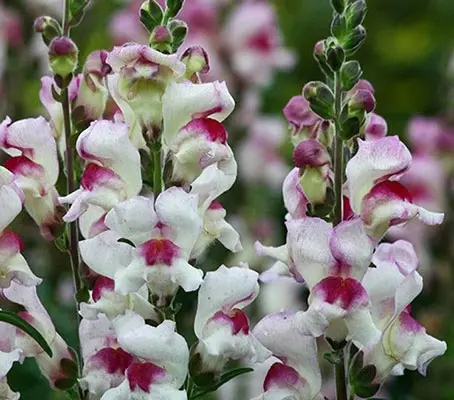
Snapdragon
Antirrhinum majus ‘Lucky Lips’ has been awarded the Fleuroselect Award. The judges were impressed by its height and compact plant habit. Blooming with distinctive contrasting bicolour purple-red and white flowers, a colour way that is often referred to as a ‘silver bi-colour’, it is ideal for adding height to borders or for cutting.
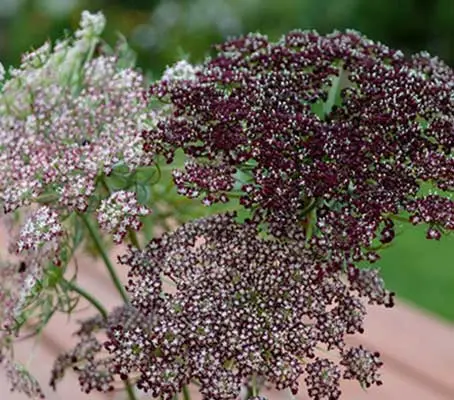
Also known as 'Chocolate Lace Flower' or 'Chocolate Queen Anne’s Lace'
Daucus carota ‘Dara’ is a large flowered chocolate coloured Queen Anne’s Lace, with delicate, lacy, flat-topped clusters that bloom for most of the summer from just one planting, they pair well with almost anything in the garden or the vase.
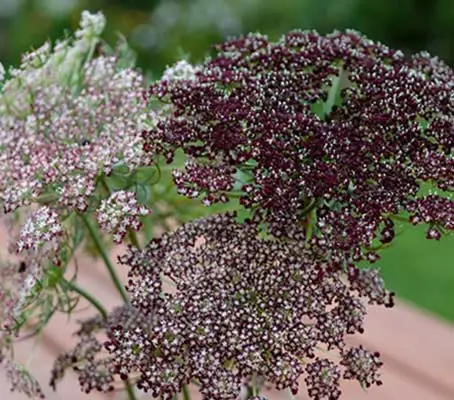
Also known as 'Chocolate Lace Flower' or 'Chocolate Queen Anne’s Lace'
Daucus carota ‘Purple Kisses’ is a striking ornamental carrot variety featuring delicate, lacy white flowers tinged with soft purple hues. The are spectacular when used in mixed bouquets or simply arranged in a great cloud of their own. The lacy umbels come in a range of sizes and shades and bloom for most of the summer from just one planting.
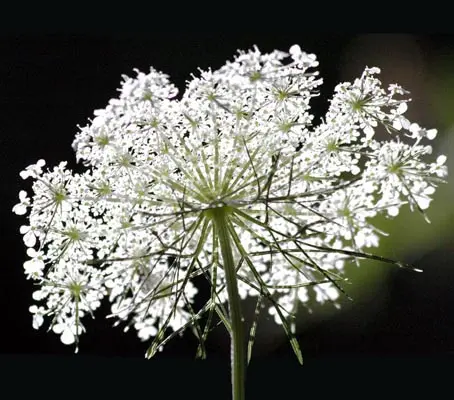
Queen Annes Lace, Wildflower of Britain and Ireland
Queen Anne’s Lace has up to a thousand tiny white flowers are produced in delicate, lacy, flat-topped, two- to four-inch clusters, sometimes with a solitary dark, purple flower in the centre. It is at home in informal settings and is a natural addition to a wildflower meadow. Organic Seed.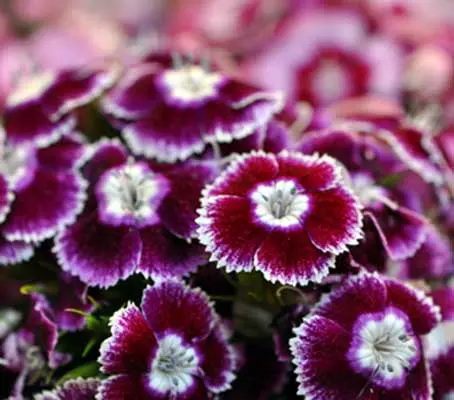
Poet's Pink, Sweet John, Sweet William
Sweet Williams are one of those lovely old-fashioned flowers, easy to grow and famous for their delicious spicy-scent. The Auricula-eyed Group are irresistible, dense clusters of flowers in dark tapestry rubies, fuchsia, scarlet, purple and white.
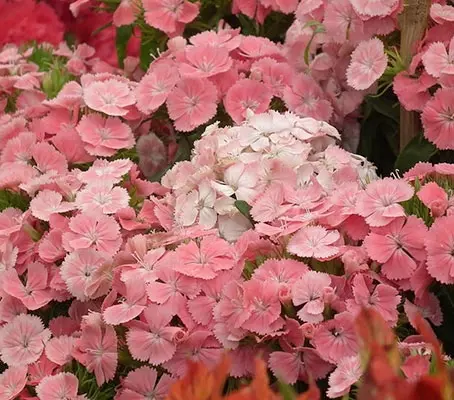
Poet's Pink, Sweet John, Sweet William
Sweet Williams are one of those lovely old-fashioned flowers, easy to grow and famous for their delicious scent. They are biennial, sown in May to July and will flower in late spring to early summer the year after sowing. ‘Newport Pink’ are irresistible, coral-pink flowers with delicately fringed petals.
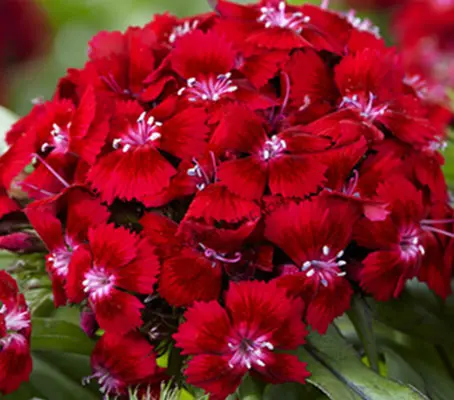
Poet's Pink, Sweet John, Sweet William
Treasured in the garden for their bright colour and strong fragrance, Dianthus barbatus ‘Scarlet Beauty’ flower all summer from May to August with clusters of single, brilliant scarlet red flowers, and best of all, they are intensely fragrant, with a delicious rich perfume.
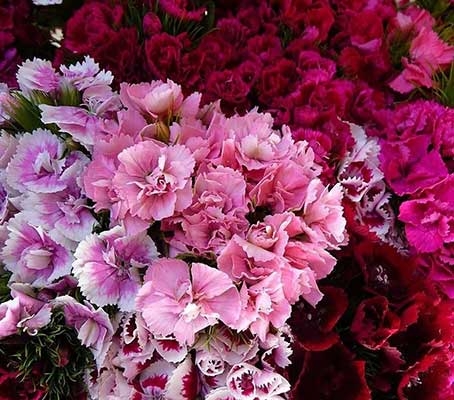
Poet's Pink, Sweet John, Sweet William
A striking strain of Sweet William, Dianthus barbatus ‘Super Duplex Mix’ has been bred for its exceptionally large, fully double blooms. The flowers form dense, rounded clusters, with ruffled petals in a very wide colour range. Easy to grow, with a light, sweet clove scent, everybody can grow them to perfection.
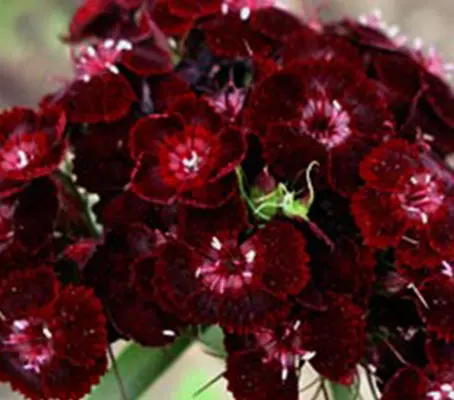
Back Sweet William
‘Sooty’ is one of the most unique of all Sweet Williams. It bears multiple densely packed heads of darkest ruby, almost black, fragrant blooms on red stems, and leaves that mature to a shimmering metallic mahogany.
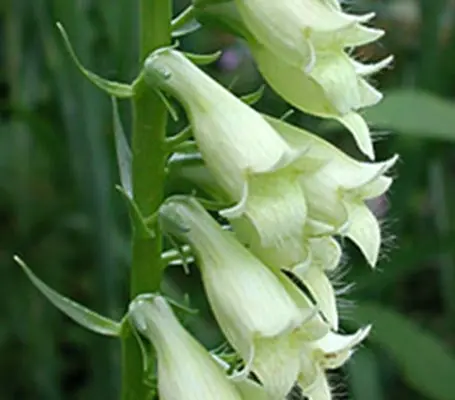
Small Foxglove, Straw Foxglove
Digitalis lutea is a quite a different species to the traditional cultivated foxglove, with delicate small flowers; it is an easily grown plant that is reliably perennial. It bears delicate pale cream-yellow tubular flowers and grows to just 60cm in height. This delicate foxglove is a charming beauty wherever it is planted.
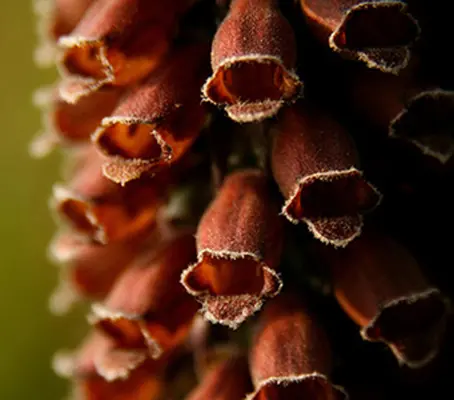
Foxglove
An aristocrat from Spain with densely packed spikes of cylindrical small chocolate funnels above dark green coloured glossy leaves. The rich foliage has a sheen that sets these dramatic flower spikes off wonderfully. A plant that will stop viewers in their tracks and have them enquiring its identity.
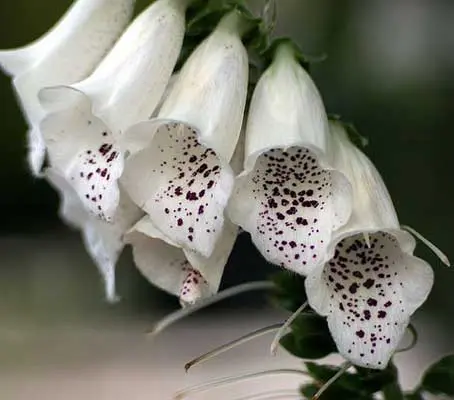
Foxglove. Aka Pam's Choice
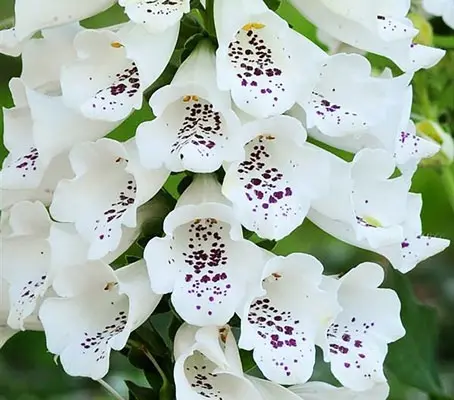
Digitalis ‘Elsey Kelsey’ is one of the best new foxgloves found in recent years. Their elegant upright habit, long spikes of flowers and their heavenly white bell shaped flowers with densely speckled throats of deep maroon-purple make impressive features in the garden.
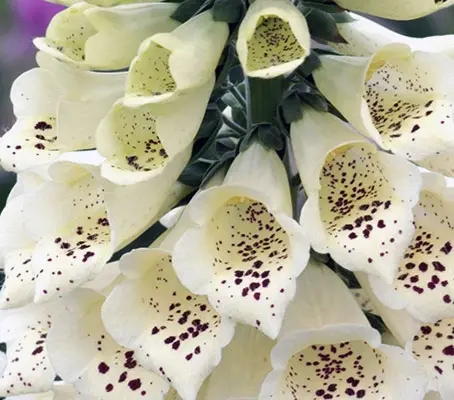
First Year Flowering, Florists Foxglove
Digitalis purpurea ‘F1 Camelot Cream’ produces towers of a delicate buttercream colour, the dense spikes of blooms are borne all the way around the stem. Developed to flower in the first year, they can be sown anytime from January to September. 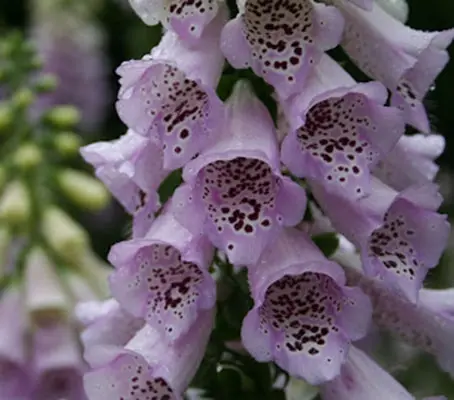
First Year Flowering, Florists Foxglove
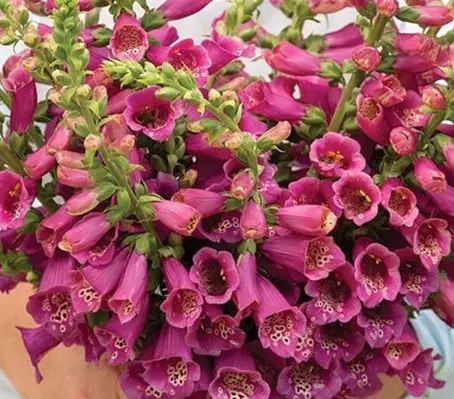
This premium series has been developed for florists to be first year flowering, with good-quality, dense spikes that are long flowering and well-branched, Digitalis ‘F1 Camelot Lavender’ produces towers of an exquisite colour with blooms borne all the way around the stem.
First Year Flowering, Florists Foxglove
Developed for florists to be first year flowering, this premium series produces dense spikes that are long flowering and well-branched. Digitalis ‘F1 Camelot Rose’ produces towers of an exquisite colour with outward facing blooms borne all the way around the stem.
First Year Flowering, Florists Foxglove
Digitalis purpurea ‘F1 Camelot Cream’ produces towers of a delicate buttercream colour, the dense spikes of blooms are borne all the way around the stem. Developed to flower in the first year, they can be sown anytime from January to September. 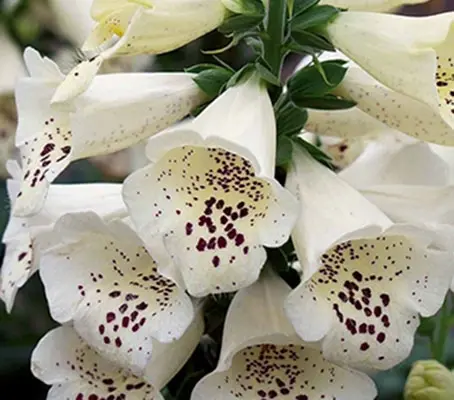
First Year Flowering, Florists Foxglove
Early flowering and fast growing, award winning Digitalis ‘Dalmatian Purple’ produces towers of gorgeous lavender-purple blooms with deep mauve interior markings. The good-quality spikes are uniform in height, well-branched with excellent habit and compact foliage. 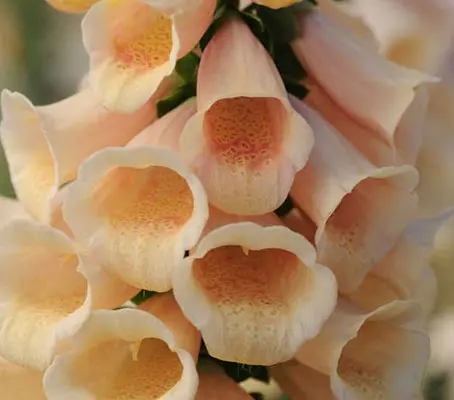
First Year Flowering, Florists Foxglove
Early flowering and fast growing, award winning Digitalis purpurea ‘Dalmatian Peach’ produces towers of swoon-worthy peachy blooms with freckled interiors. A huge bonus is that the series blooms the first year from an early indoor sowing. Sow successionally for continuity of blooms€3.50
€2.25
€1.95
€2.10 – €5.95Price range: €2.10 through €5.95
€2.10
€2.25
€3.75
€2.75