 Skip to content
 Sort by:
Sort by:
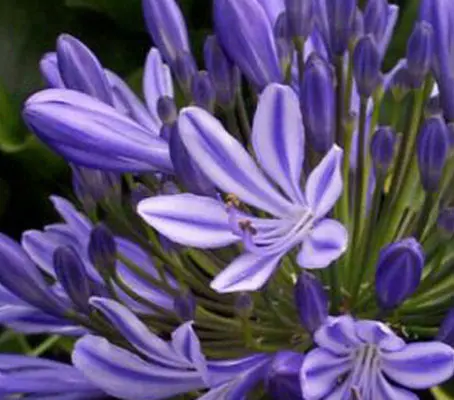
Lily of the Nile
The Agapanthus or Blue African Lily is one of the aristocrats of the late summer garden. Requiring only the minimum of care, the exotic combination of graceful foliage and stunning flowers is equally impressive in the border or large planter. This is a lovely plant to grow and they are very easy from seed.
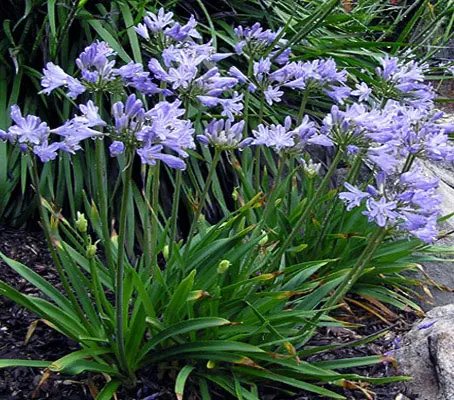
Lily of the Nile, Dwarf cultivar
The Agapanthus is one of the aristocrats of the late summer garden. ‘Peter Pan Blue’ is a fine dwarf hybrid with neat clumps of leaves and large clusters of light- blue flowerheads. The exotic combination of graceful foliage and stunning flowers is equally impressive in the border or container.
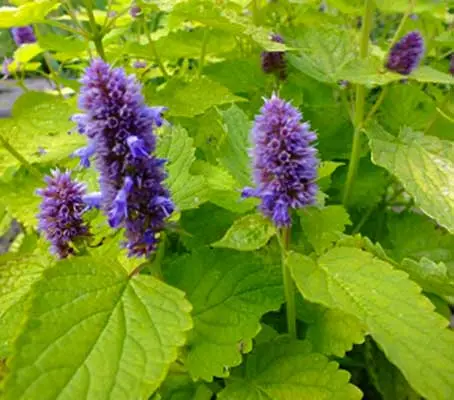
Mexican Hyssop, Hyssop-Anise
Originally bred by and developed in Japan, Agastache ‘Golden Jubilee’ was named to honour Queen Elizabeth II’s 50th year of rule, celebrating the Golden Jubilee in 2002. This bright gold-chartreuse beauty has one of the most remarkable leaf colour of any plant. Offering late season punctuation the flowers are a powerhouse source of nectar and pollen for bees, butterflies and other beneficial insects.
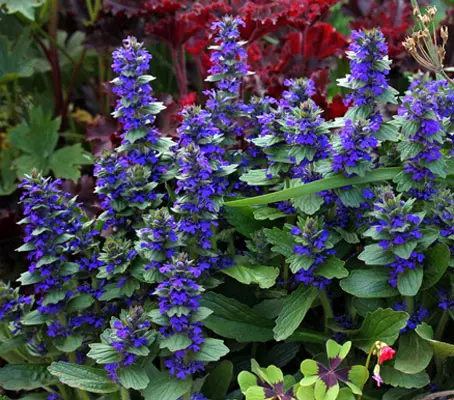
Geneva Bugle
Ajuga genevensis is used throughout the world yet this relatively uncommon form is less well known. This very well behaved, evergreen groundcover has deep gentian blue flower spikes and is by far the showiest of the species. It is often the plant of choice for smaller areas or along edges and pathways.
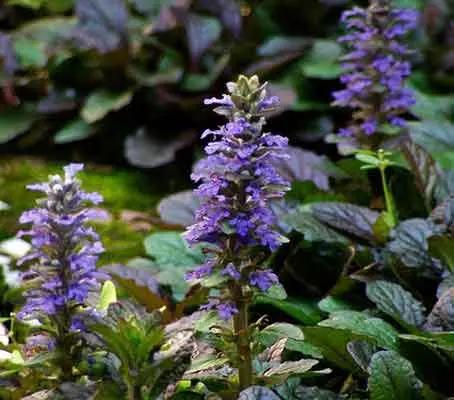
Bugle. Thunder and Lightning,
For most of the year Ajuga is a pleasant, quiet achiever, a very versatile low growing ground cover, with evergreen, rosette-like foliage that hugs the ground like an evergreen carpet but those weeks in spring when the blue flowers appear are simply quite magical.
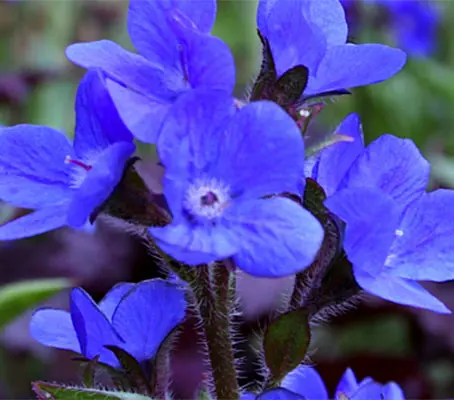
Aka Anchusa azurea or Italian Bugloss
Anchusa ‘Dropmore’ is a 1905 selection that is still available today. They will thrive in a sunny border, are much loved by almost all bee species and make a great companion to rich plums and purple tones.
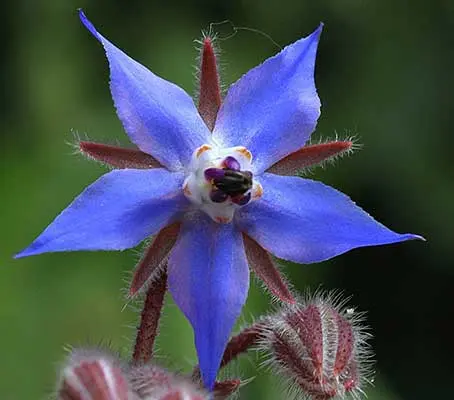
Starflower, Bee Bread, Blue Borage
 The beautiful blue star-shaped flowers of Borage are edible with a cool cucumber flavour. Use them as garnish in fruit cups, summer drinks, wines and Pimms. Garden visitors can be converted to herbal advocates simply by offering a taste of its flower! Organic Seeds.
Starflower, Bee Bread, Blue Borage
Borage is one of the most reliable sources of blue flowers, often flowering lavishly for weeks after sowing. The beautiful blue star-shaped flowers are edible and very important for bees, providing pollen and nectar in prodigious amounts.
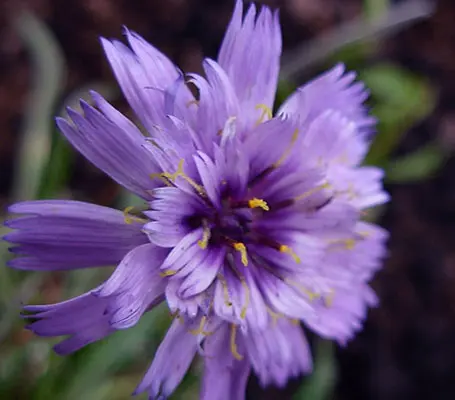
Cupids Dart, Love Plant.
Catananche caerulea ‘Amor Blue’ is a charming plant, with blue, star like flowers each with a dark eye and unique papery petals. They look best when grown in groupings, rather than one or two plants and don’t mind crowding. Plant en-masse in prairie style or meadow plantings, mix them up a little with other hardy perennials and grasses.
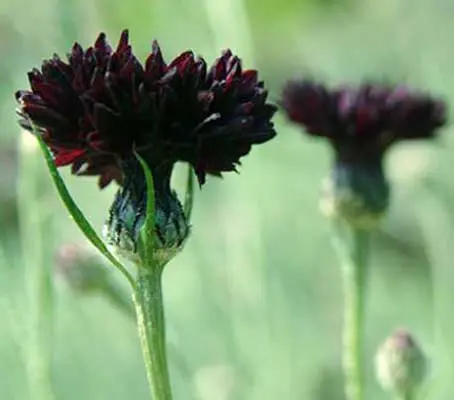
Also aptly named 'Witching Hour'
The Boy Series, which all feature double flowered blooms on tall stems for garden or cutting, are available in many colours. These beauties grow well as border plants and are wonderful in a cutting garden. ‘Black ball’ flowers are a lovely rich dark-chocolate hue, almost black on cloudy days.
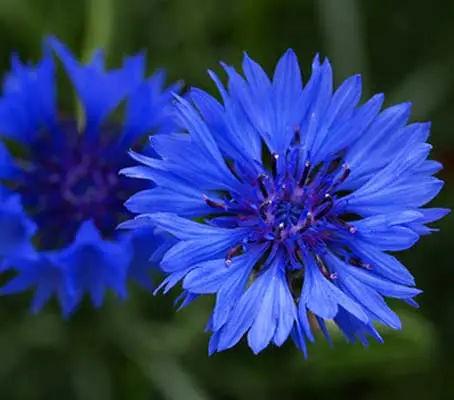
Double Cornflower, Bachelors Button
A favorite annual flower and cottage garden staple, Centaurea ‘Blue Boy’ has piercing, bright blue flowers with ruffled petals and violet-blue centres. The blooms appear from early to late summer. These beauties grow well as border plants and are wonderful in a cutting garden.
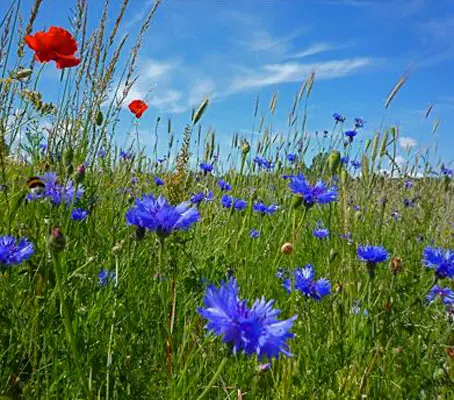
Bachelors Button,
Wildflower of Britain and Ireland
Today cornflowers are rare in the wild, they flourish instead in our gardens. They are the most splendid of annuals. Aside from their electric blue, which is breathtaking when they’re grown in dense drifts, they are easy to grow, they flower all summer, make great cut flowers and bees adore them.
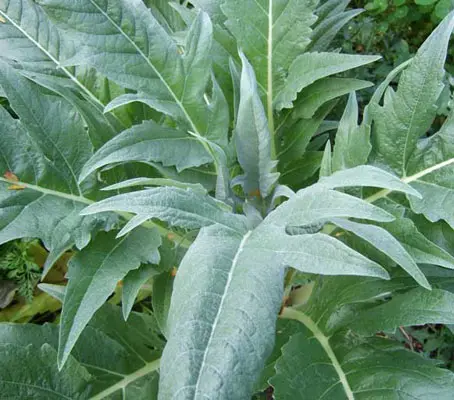
Cardoon
 Whether you are into the culinary arts or edible landscapes, you may want to put this plant at the top of your list. Chosen by the RHS as one of the top plants of the last 200 years, Cardoons are aristocrats in both the ornamental and the vegetable world.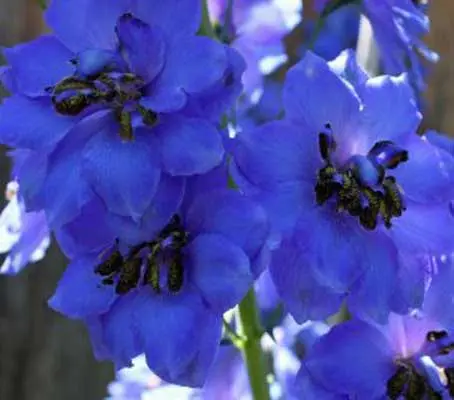
Dwarf Pacific Delphinium with a dark Bee
The Fountains series is a vigorous-growing strain that if sown early will flower in the current year. Delphinium ‘Magic Fountains Dark Blue’ has densely packed spires of dark blue flowers each with a dark bee. It is ideal for borders and can be grown as a container plant.
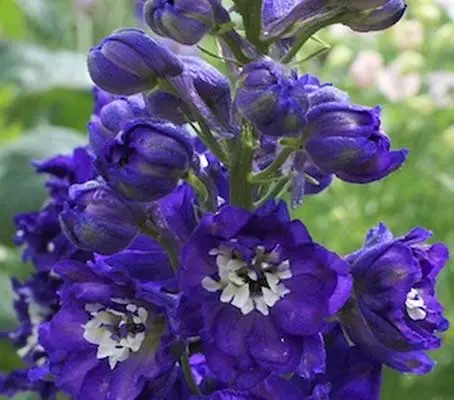
Dwarf Pacific Delphinium with a White Bee
The Fountains series is a vigorous-growing strain that if sown early will flower in the current year. Delphinium ‘Magic Fountains Dark Blue’ has densely packed spires of dark blue flowers each with a white bee. It is ideal for borders and can be grown as a container plant.
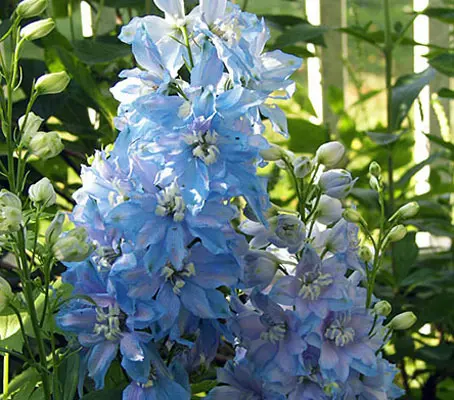
Belladonna Group. Aka “Clivedon Beauty"
No other blue quite measures up to the almost iridescent hues of Delphinium “Cliveden Beauty”. The multi-branching plants grow to just 75 to 90cm tall so are suitable for most gardens and do not need staking in most situations. The many individual blooms are clear light blue, each with a white centre.
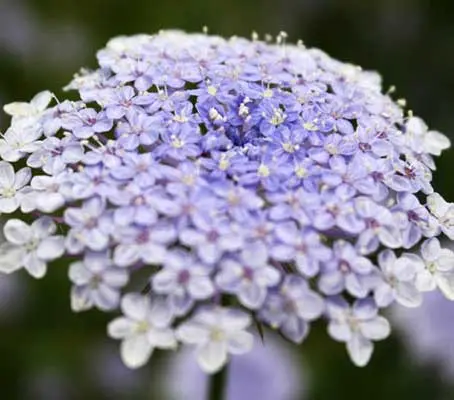
Marketed as 'Lacy Blue'
Didiscus caerulea is known as the Blue Lace Flower for its unusual colour. The delicate lavender-blue flowers, each composed of tiny, star-shaped, sweetly fragrant flowers are perfect for the cutting garden.
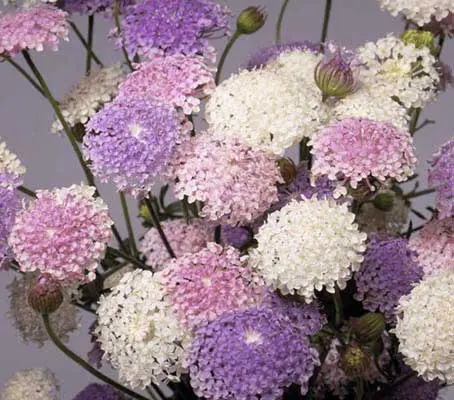
Marketed as 'Lacy Mix'
Recent developments of Didiscus caerulea have broadened the colour range. Didiscus ‘Lacy Mix’ produce the same lacy umbel shaped domes and finely cut foliage. In a pastel blend of powder-blue, lavender, soft pink and white, the plants branch freely, filling borders with a light, floaty feel and masses of stems for cutting.
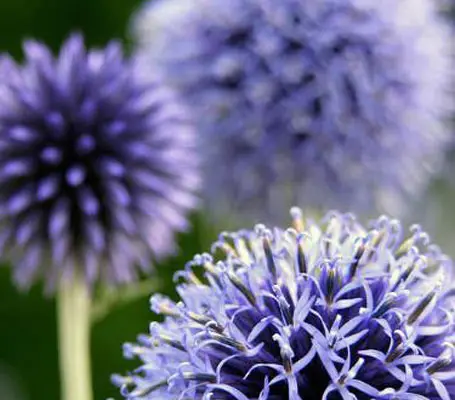
Globe Thistle
One of my favourites for the back row. The rounded, violet-blue flower heads on silvery, branched, leafy stems are actually much softer than they look. An unusual colour and structure, so a great conversation piece and an excellent dried flower.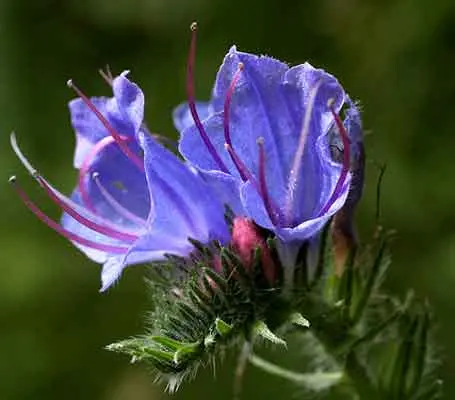
Wildflower of Britain and Ireland
Echium vulgare is a valuable native plant and is exotic enough to earn a place in a flower border. The plant is much loved by almost all bee species. If you don’t want plants that honeybees simply visit, but want to select plants that honeybees clearly love, choose Echium for your garden.
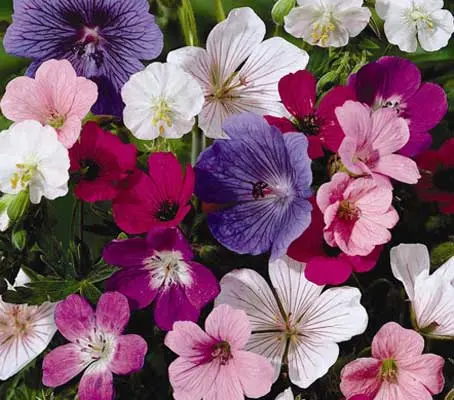
Mixture of species and cultivars
Hardy geraniums are undoubtedly one of the most popular groups of plants. Today’s hybrids are the modern flag bearers, they are beautiful, reliable and endlessly various produces jewel-tone, saucer-shape flowers for months at a time. Exceptionally good value this mix always contain a few real rarities.
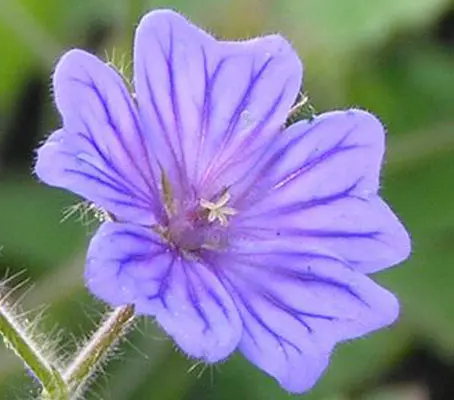
Hardy Geranium
Geranium ‘Orchid Blue’ is a simply stunning plant, producing clusters of saucer shaped flowers of a rarely seen shade of pure orchid-blue, each with purple-violet veins. This new-on-the-scene plant soon spreads to form low hummocks of deeply cut soft green, leaves.
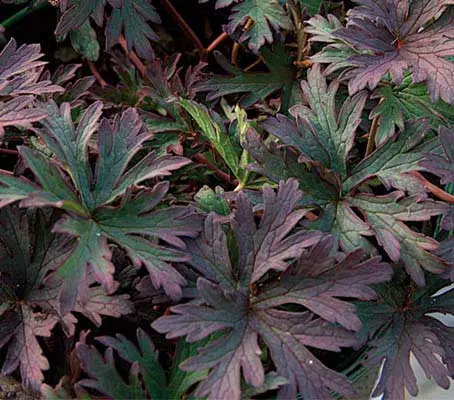
Hardy Geranium.
‘Dark Reiter’, is a fairly new cultivar originating from ‘Victor Reiter’ whose namesake was the legendary California nurseryman. What sets this plant apart is the new leaves that emerge a light maroon colour then fade to a purple-flushed deep green, it produces violet-blue flowers in spring.
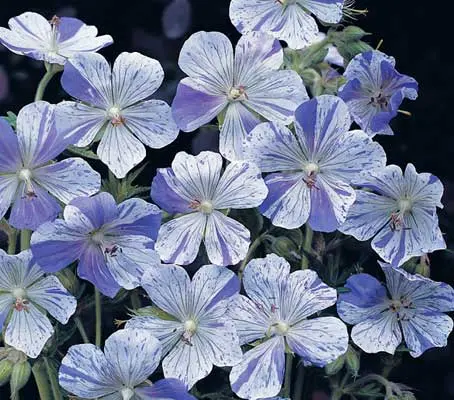
Hardy Geranium
“Splish Splash” is a fascinating, rare and prized border plant and one of the most beautiful, striking and unusual perennial geraniums. Very easy to grow, the clumps of divided foliage are topped with mauve-blue splashes and flecks on pure white petals, each petal appearing to be individually designed and painted.
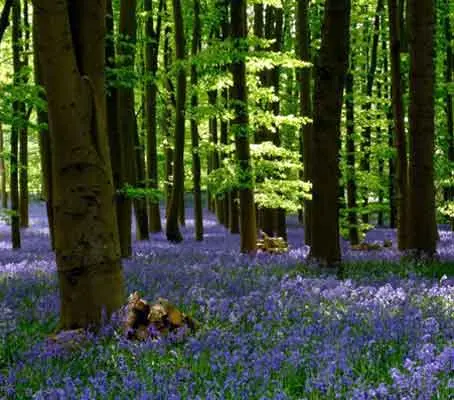
English Bluebell, Wildflower of Britain and Ireland
A deep blue carpet of bluebells is an unforgettable sight to anyone visiting many of our native woodlands. The spring spectacle of seeing a wood not only greening, but also ‘blueing’ is one of the joys of the year. When bluebells are in flower, spring has truly arrived.
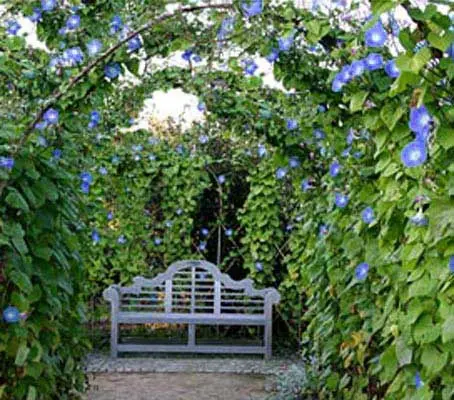
Morning Glory
‘Heavenly Blue’ is one of the loveliest of all climbers. The buds are long and tightly furled, but as the morning sunshine reaches them, they steadily unfold themselves into wide sky-blue trumpet-shaped flowers of deep azure-blue, the colour of a Mediterranean sky.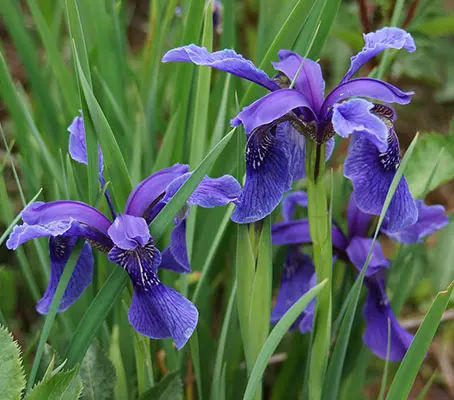
Bulley's Iris, Sino-Siberian Iris, Beardless Iris.
Iris bulleyana is a classic species Iris from western China. It belongs to a small group of oriental species which are entirely hardy and are of great value to the gardener. The plants are successful in any moist garden soil. Flowering from June to July, the blooms with mid purple flowers and dark purple veins.
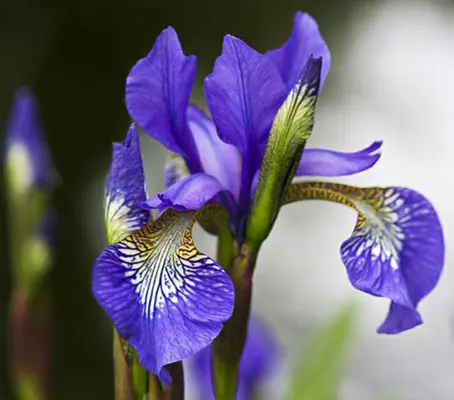
Northern Blue Flag Iris
Iris versicolor is one of the few species in garden cultivation. Although happiest at the waterside the plants will also perform well under average to moist border conditions. Flowering from May through to July, each stalk produces up to five violet-blue flowers with ruffled petals and bold purple veining.
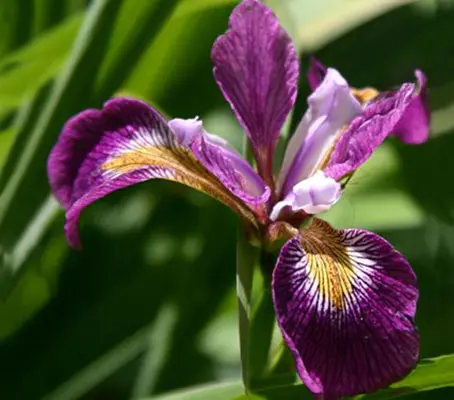
Northern Blue Flag Iris
‘Kermesina’ is an attractive and popular cultivar of Iris versicolor. Flowering from May through to July with claret-purple flowers with ruffled petals and bold purple veining. It may be grown in shallow standing water or moist shoreline soils and suitable to be grown in constantly moist humusy soils of a border.
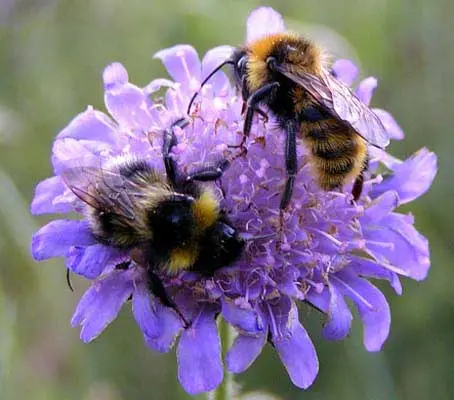
Field Scabious
Wildflower of Britain and Ireland
Knautia arvensis is an attractive native perennial herb of well drained grassland. It can be found throughout Europe in meadows, rough pasture, hedgerows and verges. Though it is by nature a perennial, it will flower and produce seed the first year if grown as an annual, either autumn or spring sown.
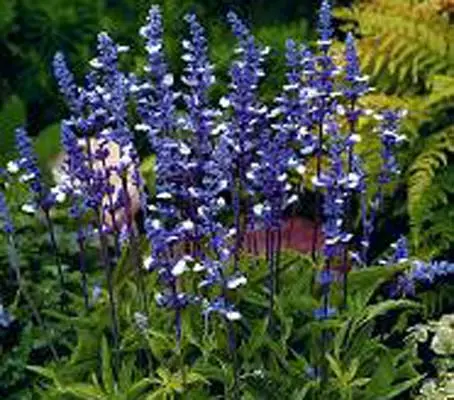
Bi Colour Sage, Flowering Sage
Salvia farinacea ‘Fairy Queen’ is an attractive new variety that bears multiple spikes of bicolour blue and white flowers on dark distinctive flower stems from June to October. With a bushy, compact habit and thick stems. A small white spot on each sapphire blue flower creates the illusion of fairy dust.
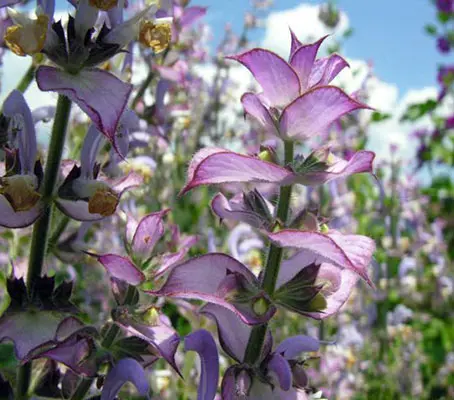
Biennial Clary, Muscatel Sage
This hardy biennial Sage has been grown in almost every botanical sanctuary in human history and has many plus points: it grows well in poor soil resists slugs and other beasties, and doesn’t slump or need staking. It copes well in sun or light shade and the blooms are a magnet for bees and butterflies.
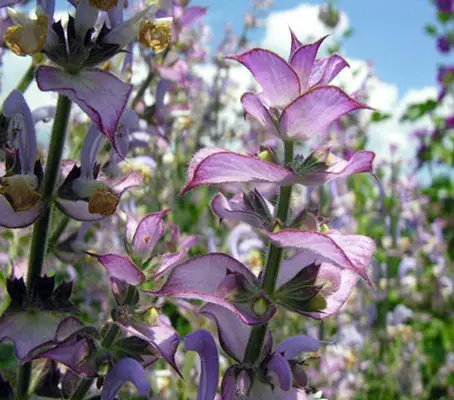
Biennial Clary, Muscatel Sage
This hardy biennial Sage has been grown in almost every botanical sanctuary in human history. Each stem is topped with a profusion of pale blue blossoms and large pinkish white bracts. A truly architectural plant. Organic Seed.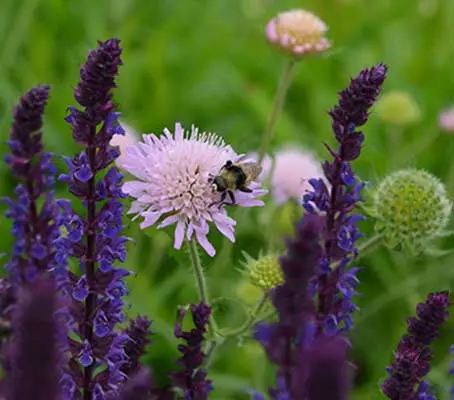
Ornamental Sage
Salvia x superba ‘Blue Queen’ is one of the finest Salvias we know. This plant is a spectacular source of dark, intense colour and narrow, vertical form. Masses of pencil-thin, vibrantly colourful bloom spires, so densely set that they present a solid wall of colour in the border.
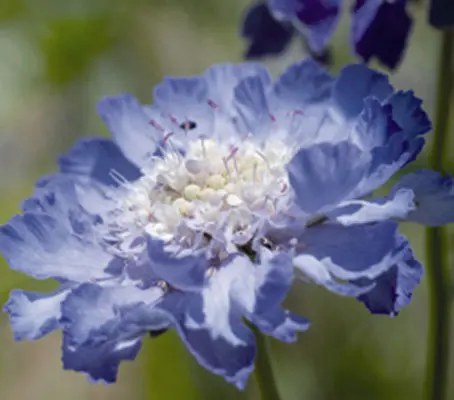
Pin Cushion, Perennial Pin Cushion
‘Fama’ is a most elegant flower. With long stems and intense blue blooms, it is the largest flowering and most uniform strain of the Blue Pincushion. They mature into dense tufts of lance shaped, grey-green leaves from which arise a beautiful display of intense lilac-blue flowers each with a silvery centre.
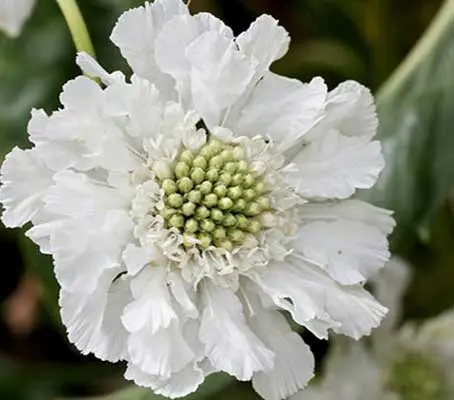
Pin Cushion, Perennial Pin Cushion
Scabiosa caucasica ‘Fama’ is a most elegant flower. With long stems and intense blue blooms. Beloved by flower arrangers, it is the largest flowering and most uniform strain of the perennial blue pincushion.
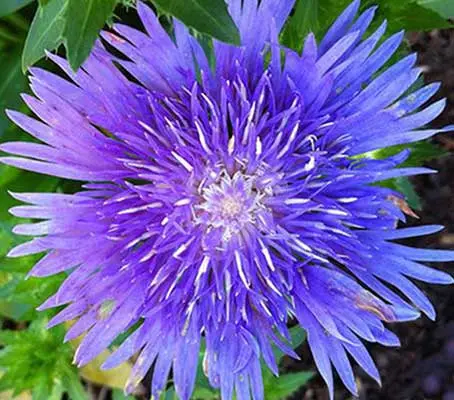
Stokes' Aster
Stokesia laevis is an adaptable and easy to grow perennial. With electric blue fringed petals and shaggy cornflower-like flower heads. It is considered by many as one of the most attractive late-flowering perennials.
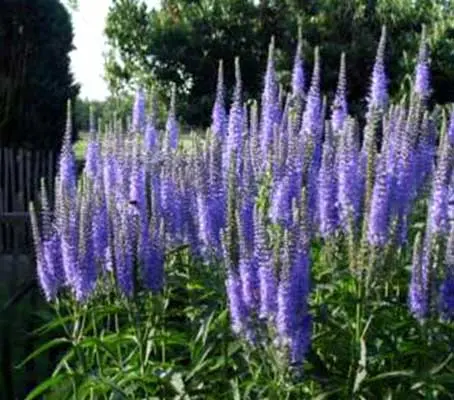
Longleaf Speedwell
Gardeners are often looking for good solid perennials that will have attractive flowers, be easy to take care of, grow nicely but not take over the garden. One group of plants that should be considered is the Veronicas.
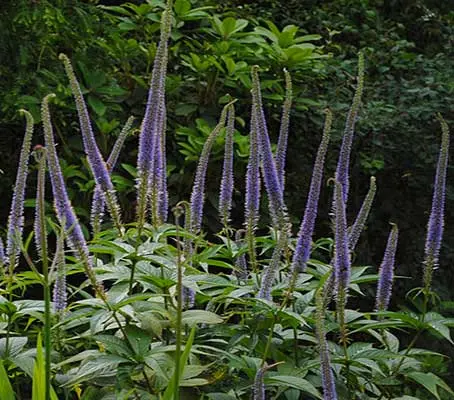
Siberian Culver's Root
Veronicastrum is one of the most fashionable plants around. It is an excellent genus, full of hardy, trouble-free plants. The multiple tapering, soft spikes of white flowers look like elegant, living candelabras.
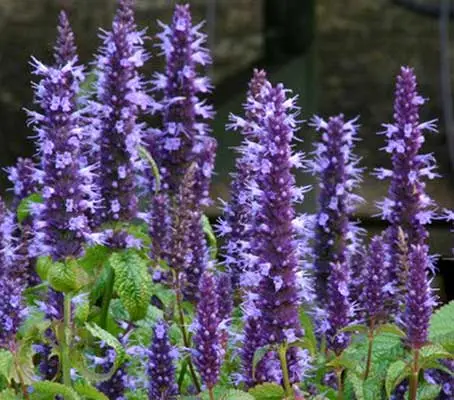
‘Astello Indigo’ is the most exciting breakthrough in Agastache yet. Awarded Europe’s coveted Fleuroselect Gold Medal, it is ideal for Northern European-type climates, they are at their best in more temperate conditions.
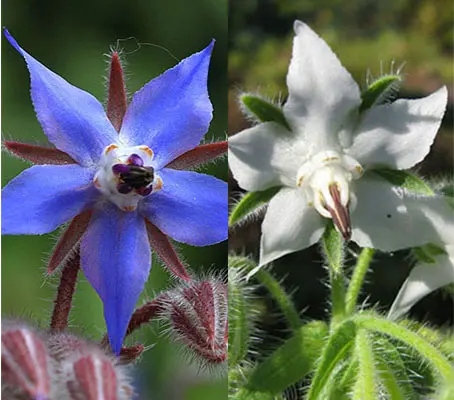
Starflower, Bee Bread, White Borage
The herb borage is a well known annual with beautiful sky blue flowers and succulent foliage. Not so well known and not often written about is the equally beautiful form ‘alba’ which boast pure white, perfectly star-shaped flowers. This mixed pack of seeds gives both blue and white forms.
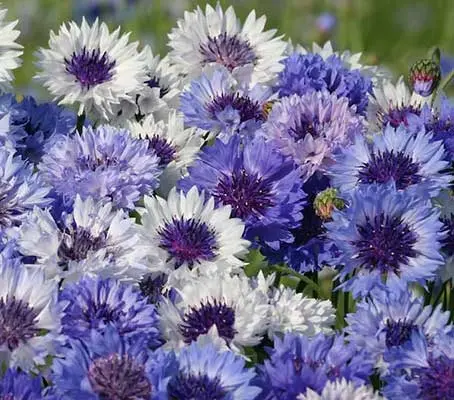
Classic Series, Cornflower
Cornflowers are the most splendid of annuals. Centaurea cyanus ‘Classic Fantastic’ blooms in a mixture of captivating blue shades, ranging from light heavenly blue to dark blue. The flowers are often in two shades of blue or have a dark center and lighter petals. They are breathtaking when they’re grown in dense drifts.
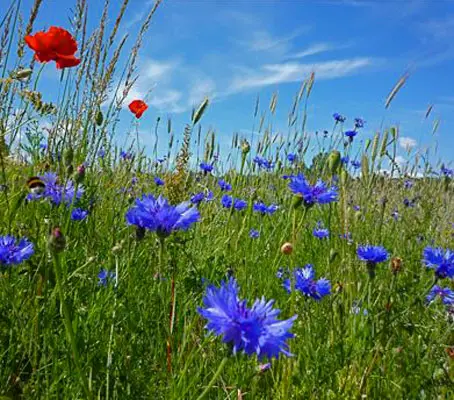
Wildflower of Britain and Ireland
Today cornflowers are rare in the wild, they flourish instead in gardens. Aside from their electric blue flowers, breathtaking when grown in dense drifts, they are easy to grow, flower all summer, make great cut flowers and bees adore them. Organic Seed.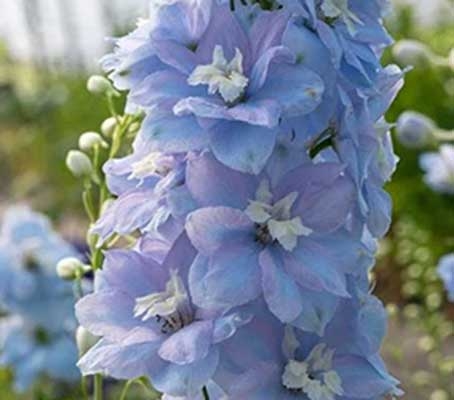
Dwarf Pacific Delphinium with a White Bee
The Fountains series is a vigorous-growing strain that if sown early will flower in the current year. Delphinium ‘Magic Fountains Sky Blue’ has densely packed spires of soft sky-blue flowers each with a white bee. It is ideal for borders and can be grown as a container plant.
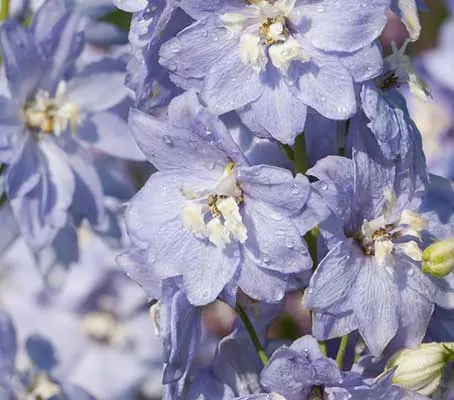
Candle Delphinium
Delphinium ‘Cameliard’ blooms feature spires of lavender blue flowers each with white bees. They will bloom the first year from an early sowing. Bring a touch of nostalgia back to the garden – They are excellent for cutting, ideal as feature plants and are worth almost any effort to grow because they are so beautiful.
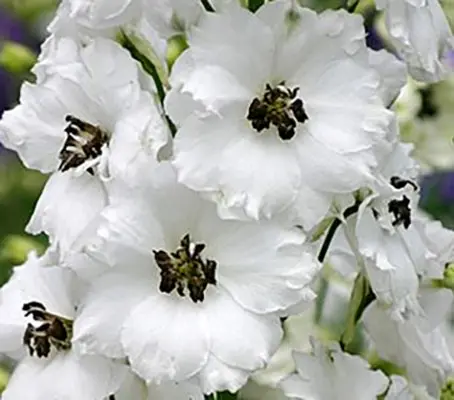
Candle Delphinium
Delphinium ‘Cameliard’ blooms feature spires of lavender blue flowers each with white bees. They will bloom the first year from an early sowing. Bring a touch of nostalgia back to the garden – They are excellent for cutting, ideal as feature plants and are worth almost any effort to grow because they are so beautiful.
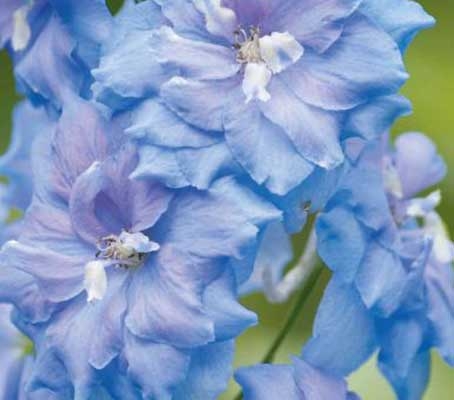
Delphinium ‘Summer Skies’ is a soft, airy sky-blue, more powdery pastel than sapphire. The petals often have a faint lavender wash, and the white ‘bee’ makes the blue look even cleaner and brighter. Interestingly, in cooler weather they can read slightly bluer and in strong sun look a little paler.
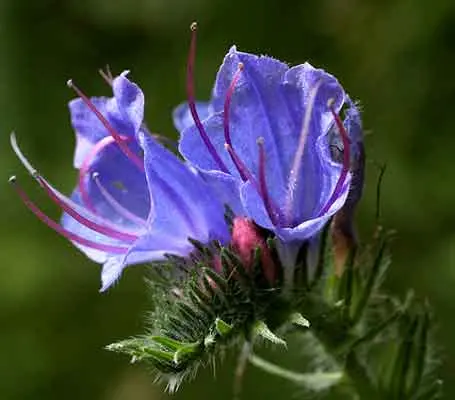
Wildflower of Britain and Ireland
Viper’s bugloss is one of, if not THE very best plant to attract bees to your garden. Along with Borage and Phacelia, the plant is much loved by almost all bee species, especially bumblebees. For months this plant is a stable source of nectar. Organic Seed.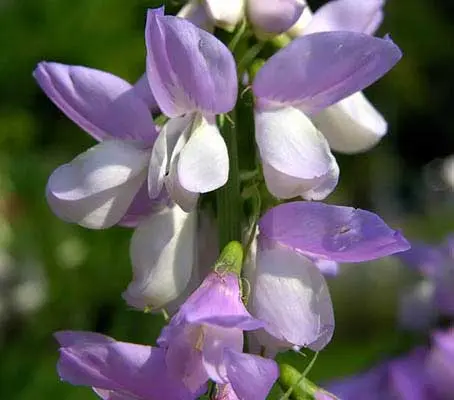
Goat's Rue
Galega officinalis is an ancient ornamental plant that produces a delightful natural effect in the garden. The plants errupt in spring to produce countless sprays of fragrant lavender-blue flower spikes.
Blue Hyssop
Wildflower of Britain and Ireland
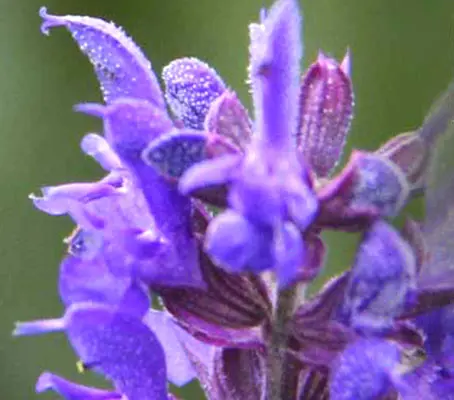
Hyssop famously attracts bees, hover-flies and butterflies. It makes excellent honey and is a must for any wildflower garden. Some beekeepers rub the hive with it to encourage the bees to keep to their home. In cooking, use the same way you would Rosemary. Organic Seed.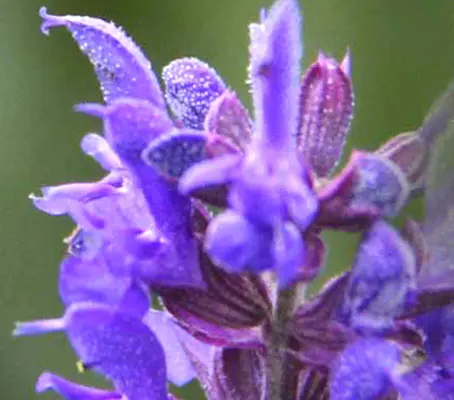
Blue Hyssop
Wildflower of Britain and Ireland
Hyssop is a strong-flavoured aromatic herb which is enjoying a revival with home gardeners. An ideal plant for use in containers or as a low hedge or border within the herb garden. Highly attractive to bees, it makes excellent honey and is a must for any wildflower garden.
Grandflora Sweet Pea. 1907
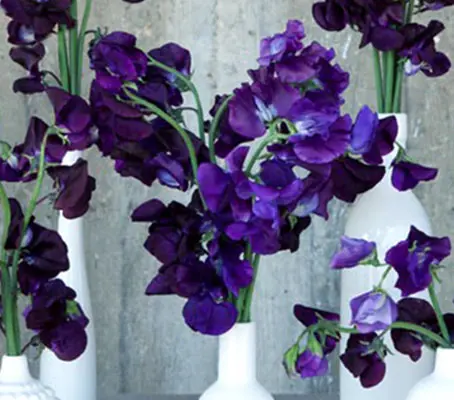
Sweet Pea ‘Lord Nelson’ is an old fashioned variety that received an RHS Award of Merit in 1907. With beautiful, rich dark blue flowers and a powerful scent, it combines magnificently with white or with lighter blue shades.
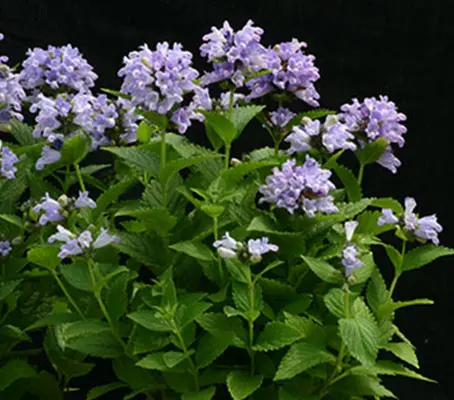
Misogawo-so, Japanese Catmint
Nepeta ‘Dark Blue Panther’ is the dark blue flowered variety and sister to ‘Pink Panther’ and the beautiful white ‘Snow’ Panther. This award winning variety starts to flower just 15 weeks after sowing and can be can be grown as an annual or as a flowering perennial.
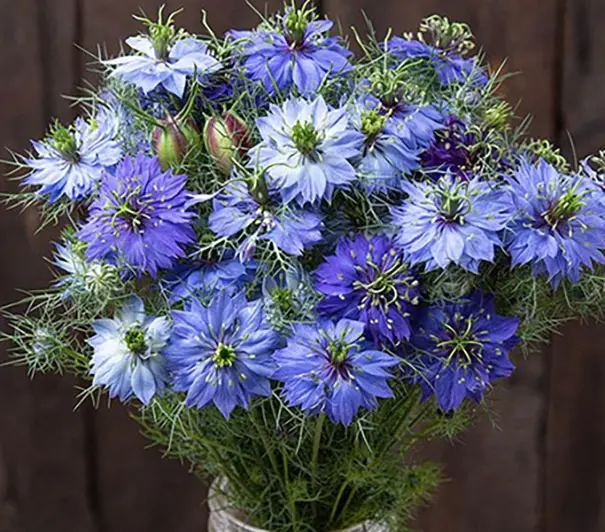
Love in a Mist
Nigella ‘Moody Blues’ is ridiculously easy to grow. Sown directly, they will be flowering in just three months and bloom through to October. In cool summer climates, additional sowings can be done every 3 to 4 weeks until mid-summer.
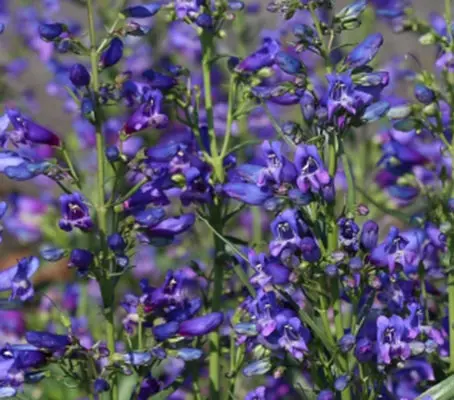
Beardtongue
Awarded the Fleuroselect Gold Medal for striking colour, plant habit, and flowering performance, Penstemon barbatus ‘Twizzle Scarlet’ is a first year flowering perennial that will add height and high-impact colour to the border. Giving superb flowering performance from mid to late summer.
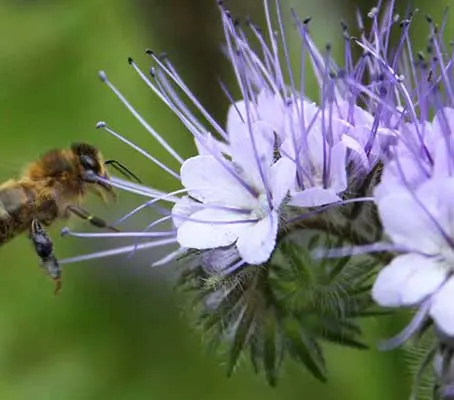
Wildlife, Set-aside, Cover Crop or Green Manure
Listed as one of the top 20 honey-producing flowers for honeybees, Phacelia is rich in both nectar and pollen and attracts bees, butterflies and other pollinating insects to the garden. The flowers have strong stems and also make an excellent cut flower. Organic Seed.€2.55
€2.65
€1.95 – €5.95Price range: €1.95 through €5.95
€1.95 – €7.95Price range: €1.95 through €7.95
€2.75
€2.80
€2.35