 Skip to content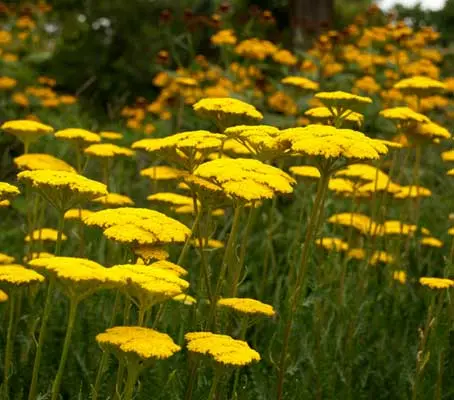
 Achillea filipendulina ‘Cloth of Gold’ is an easy to grow plant which tolerates a fair amount of neglect which makes it a very versatile plant for use in many situations. It does require full sun for best flower production, but this is little to ask for such a grand reward.
 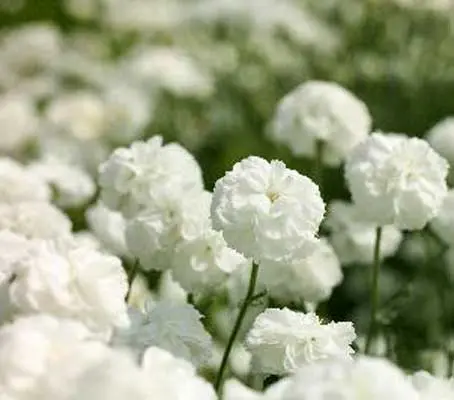 A favourite of garden designer Gertrude Jekyll. The ‘Pearl’ is excellent for the middle of a sunny, well-drained border, especially when planted as a large drift. A unique, easy and reliable plant to add to any border.
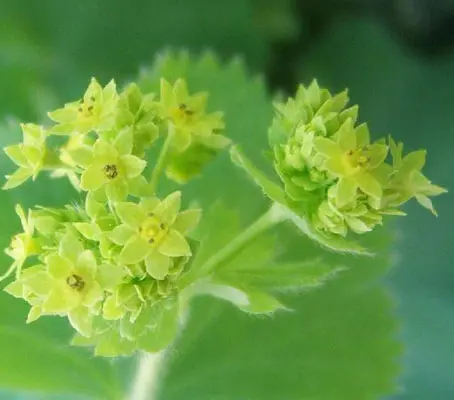 The unpretentious lady’s mantle is extremely useful for both its foliage and its flowers. The foliage has the additional virtue of looking especially beautiful after a rain, when it holds water droplets in the pleats of its surface like many pearls of liquid mercury.
 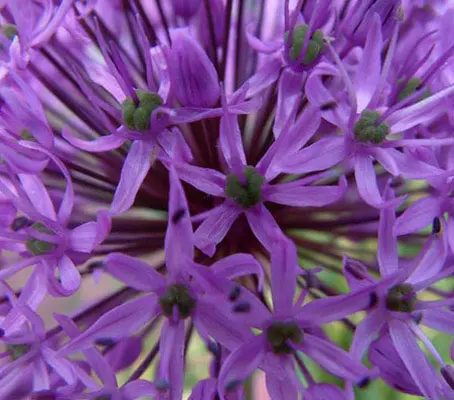 This is a stunning fashionable plant, with globes of rosy-purple crowded spherical umbels, and strap shaped leaves. The flowers are very long lasting and help fill that awkward gap between the later spring bulbs and the perennials.
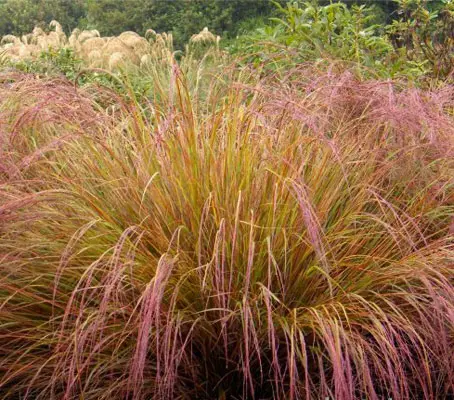 In summer Anemanthele lessoniana produces open, airy panicles of purple-green flowers that give the plant a pleasing overall arching habit. The leaves become bronzed and turn orange-red in winter – This is still one of the most beautiful of all light grasses.
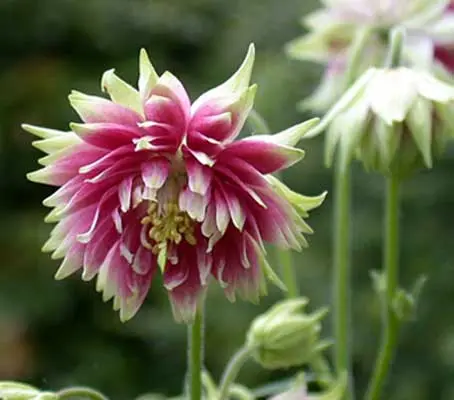 Emma Nora Barlow was a formidable woman and a granddaughter of Charles Darwin. She enjoyed hybridising plants and gave some seeds to the nurseryman Alan Bloom who named his commercial stock after her. They produced a cottage garden classic.
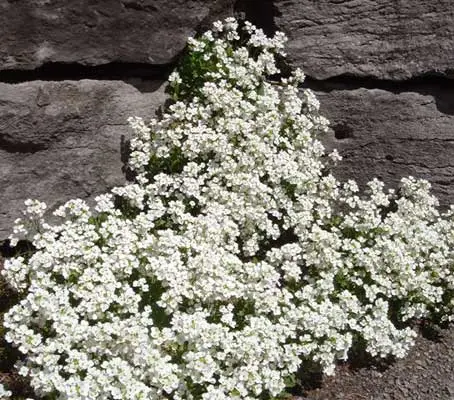 One of the earliest spring flowers to appear, Arabis ‘Snowcap’ with dense masses of snow-white flowers looks wonderful in containers or under spring-blooming bulbs, the pretty white flowers will fill the void when yearning for blooms is tugging at your core.
 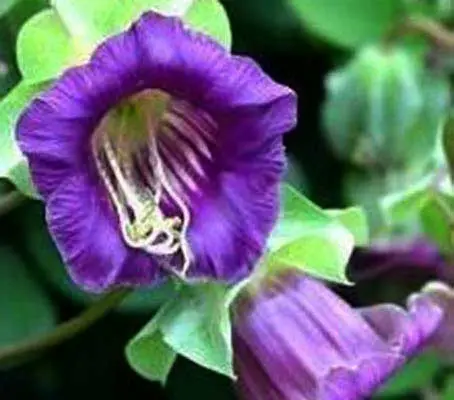 Cobaea scandens is an impressive climber and is one of the fastest-growing and most trouble-free vines you will ever grow. Extremely attractive when scrambling upward through trellis work, archways, over small buildings or old trees.
 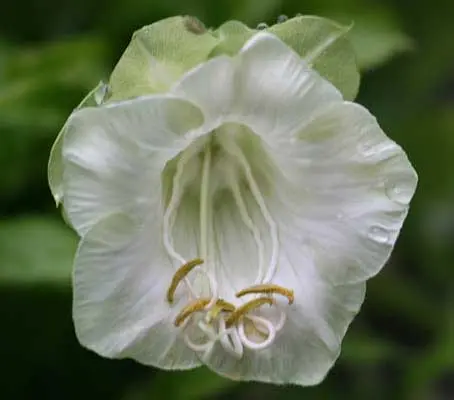 Cobaea scandens alba will appeal to anyone who longs for something with panache and visual impact. This rare variety has clear white flowers and will fill the air with a very pleasant honey scent throughout the growing season.
 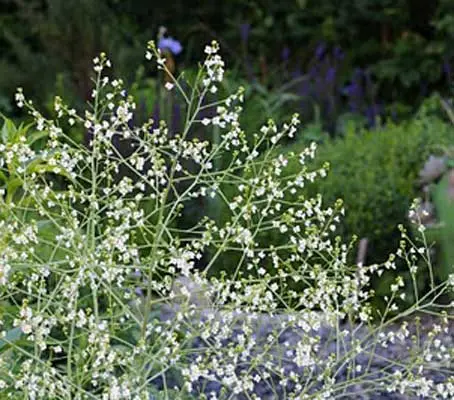 I like magnificence in the garden. Either those plants which over perform, or those which are so rare that they stop one in ones tracks, or those that designers call ‘statement plants’. Crambe cordifolia is one such plant. All about stature, plant them and stand well back.
 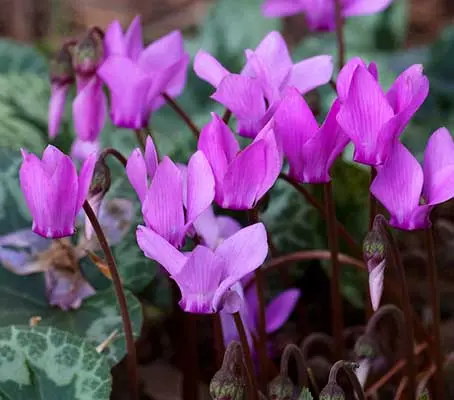 Cyclamen coum is adored as a cultivated ornamental plant. The flowers vary from white to rosy-purple with every hue in between and in such quantity to obscure the leaves. They open from early winter and continue unabated into spring.
 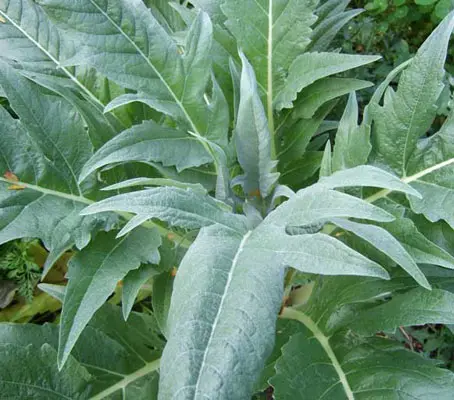 Whether you are into the culinary arts or edible landscapes, you may want to put this plant at the top of your list. Chosen by the RHS as one of the top plants of the last 200 years, Cardoons are aristocrats in both the ornamental and the vegetable world.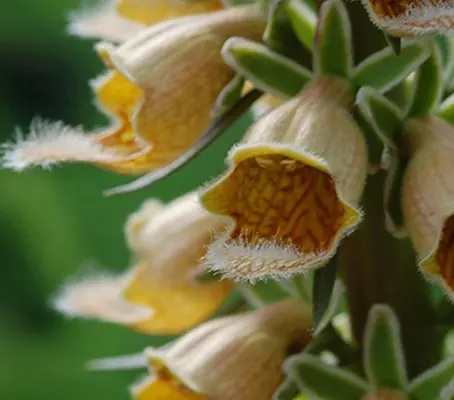
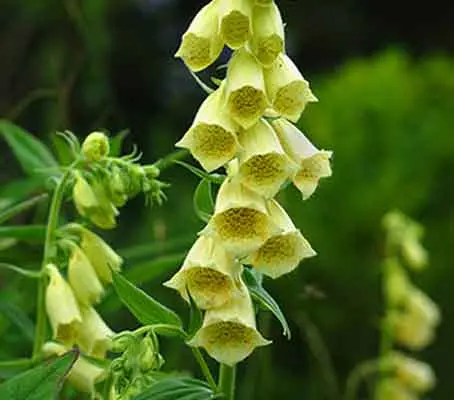 Digitalis grandiflora is one of the few truly perennial foxgloves. Extremely hardy and one of the best performers. Bearing upright stalks of beautiful creamy-yellow bells through the summer, the lovely soft shade allows this plant to blend with almost anything in the garden.
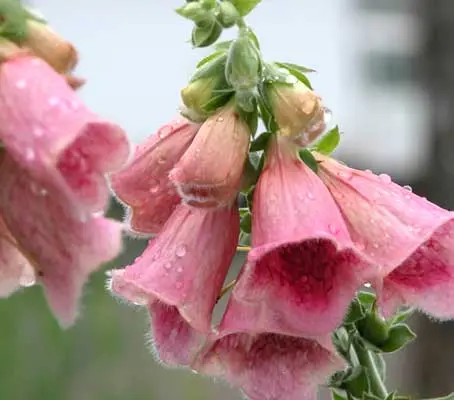 This striking and robust foxglove, a hybrid between the pink flowered D. purpurea and the yellow flowered D. grandiflora produces a beautiful mix of the two shades. Warm pink, speckled flowers that are larger than the traditional foxglove.
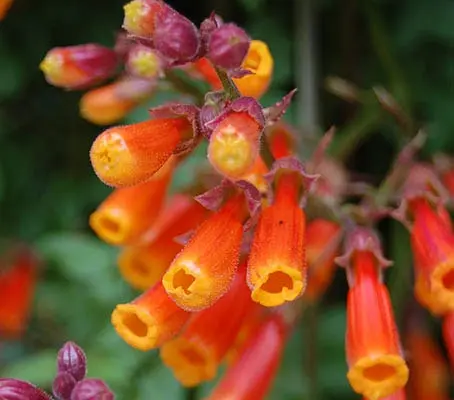 The Chilean glory flower is an exotic-looking climber with dark fern-like foliage and twining tendrils that cling to fences and trellises.This useful climbing plant will quickly cover walls, archways or pergolas. The clusters of small tubular flowers range from bright orange-scarlet and carmine rose to clear golden yellow.
 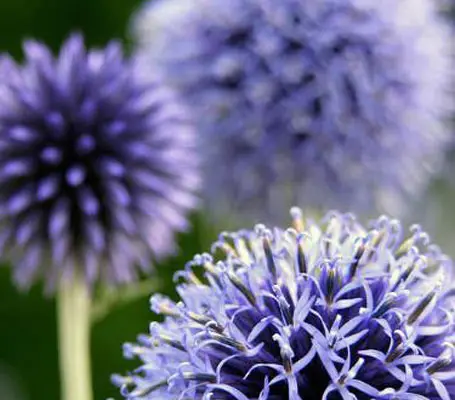 One of my favourites for the back row. The rounded, violet-blue flower heads on silvery, branched, leafy stems are actually much softer than they look. An unusual colour and structure, so a great conversation piece and an excellent dried flower.
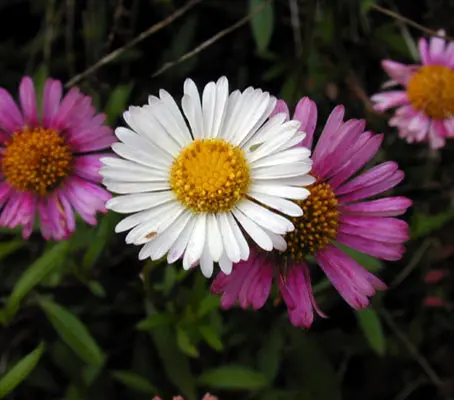 Producing a profusion of daisy like blooms from May right through till November, Erigeron is easy to grow and an amazingly versatile plant, being low-growing, happy in sun or partial shade and thriving in any well-drained soil.
 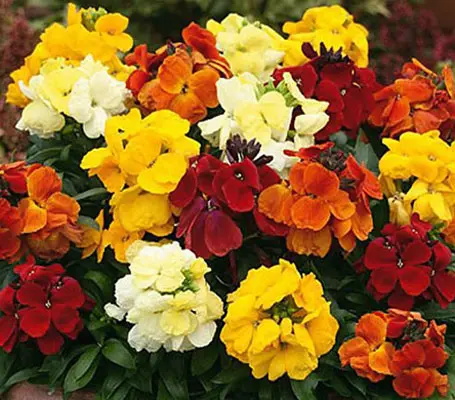 This is a classic Wallflower mixture, with the super rich colours you’d expect to see in a Persian Carpet (at a fraction of the cost!) purple, gold, orange, rose, cream and apricot. It is not without reason that this bushy variety so impressed the RHS judges.
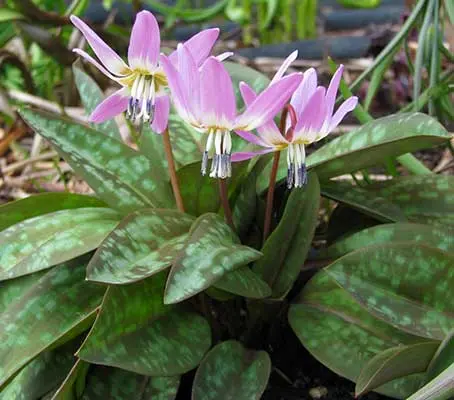 Erythronium dens-canis is attractive from the moment it pokes up from the soil in early spring. The oval pointed leaves with bronze patterns appear in early spring and are followed shortly by nodding rose pink to purple, elfin-cap flowers that bloom for several weeks.
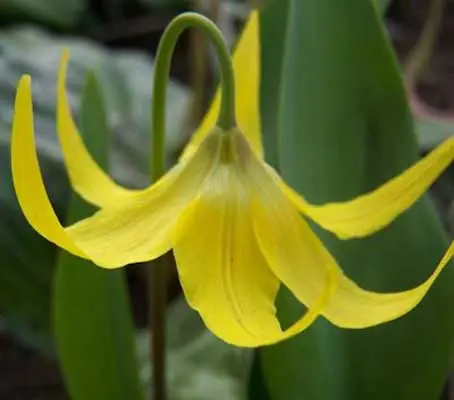 Erythronium grandiflorum is a rarely offered species. Native to west North America, it is one of the largest of the genus. Blooming in early spring, each flower stem has up to ten golden yellow, nodding, star-shaped flowers with reflexed petals.
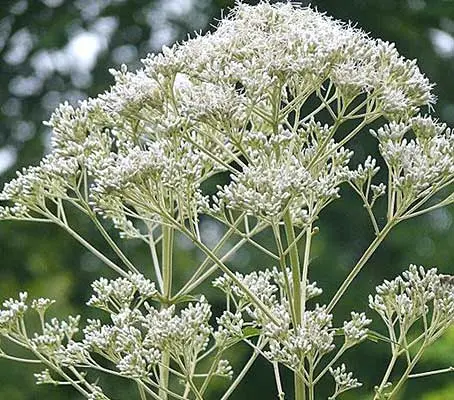 Introduced in 2010, Eupatorium ‘Ivory Towers’ is relatively new to our gardens. This architectural plant bears generously clusters of ivory-white blooms which are long-lasting and beloved by butterflies. Given an early sowing, will flower the first year.
 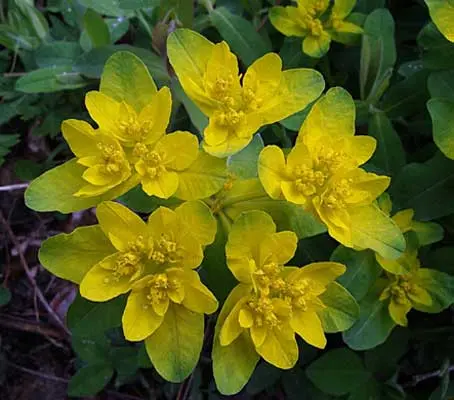 Euphorbias give us some of the best early spring herbaceous colour, but Euphorbia polychroma has the most impact. This compact variety grows to only 50cm with a great mound of yellow-green flowers in spring and echoes the daffodils.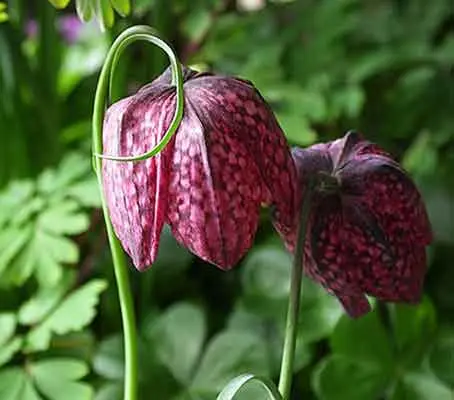
Snake’s head fritillaries always excite attention wherever they are seen. None of the other lovely members of the fritillaria genus can match this native wildflower for the bizarre and unmistakable colouring of its bell-shaped flowers.
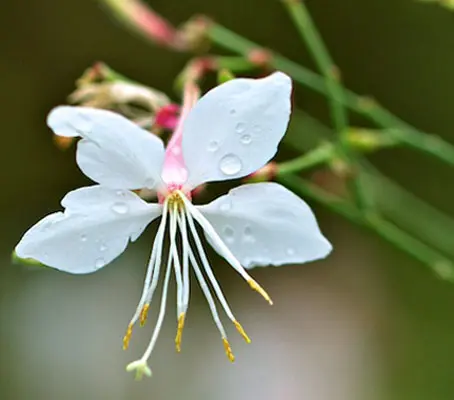 In the last decade, Gaura ‘The Bride’ has skyrocketed to popularity among gardeners.A graceful, hazy plant with airy spikes of white, star-shaped flowers with long anthers like daddy long-legs, held on slender stems from May to September. RHS AGM
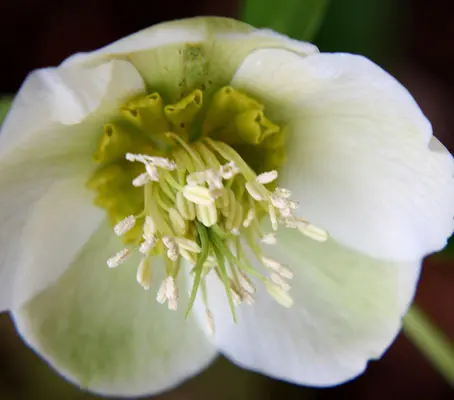 Helleborus niger is smaller and more compact than any of its relatives and is the first in bloom, producing a succession of delicate white flowers throughout winter. It is a welcome sight when the snow thaws to see something so pretty in bloom.
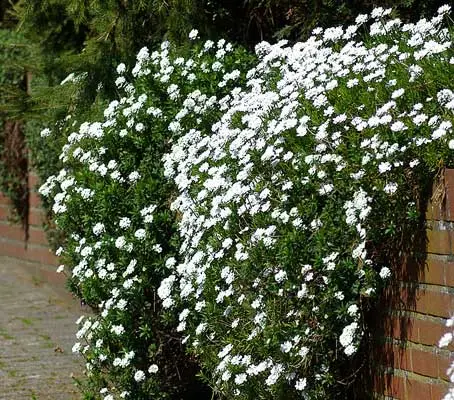 Iberis sempervirens is an early season favorite. This low bushy plant produces mounds of blinding white flowers in spring to early summer. An all round tough plant suitable for problem areas, use for containers, for pathways and crevices of ornamental walls.
 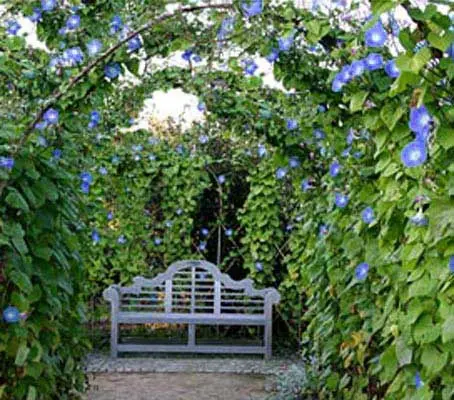 ‘Heavenly Blue’ is one of the loveliest of all climbers. The buds are long and tightly furled, but as the morning sunshine reaches them, they steadily unfold themselves into wide sky-blue trumpet-shaped flowers of deep azure-blue, the colour of a Mediterranean sky.
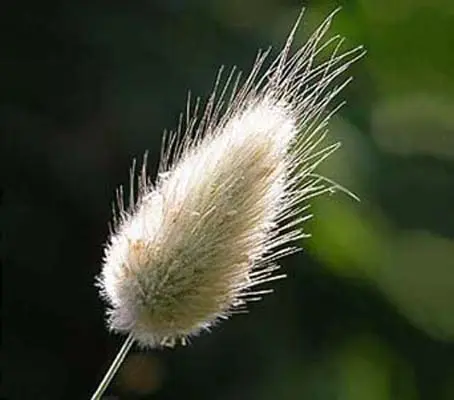 Lagurus ovatus is probably the most appealing of all the ornamental grasses. The name ‘Hare’s Tail’ perfectly accurately describes the creamy-white flower heads, which are hare’s tail-shaped, fur-like and soft to the touch!
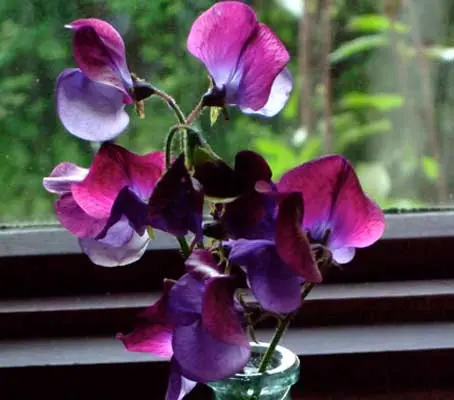 ‘Matucana’ was first introduced into this country from Sicily in 1699, this delightful heirloom dates back at least three centuries, highly valued for its wonderfully strong, sweet scent as well as its brilliant bicoloured blooms of richest purple and violet .
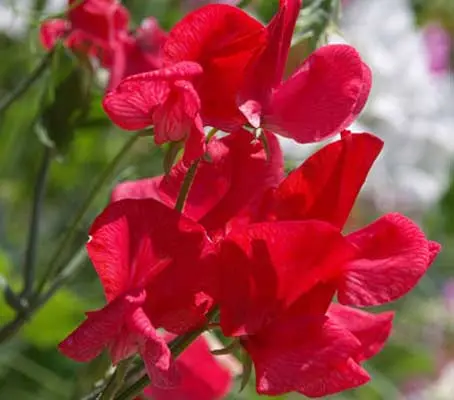 A highly scented heirloom sweet pea introduced by Henry Eckford in 1905 and named in honour of Queen Alexandria, wife of King Edward VII. Lathyrus odoratus ‘Queen Alexandria’ has bright scarlet-pink blooms with three flowers per stem. Strongly scented too.
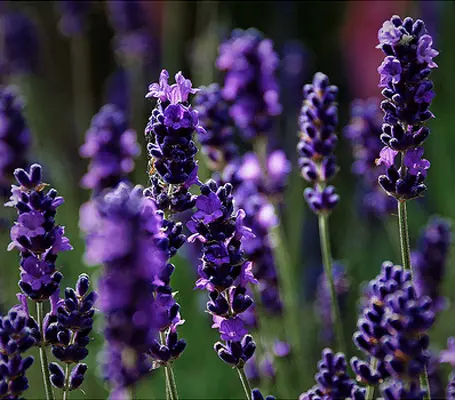 The deepest purple of all and one of the most popular lavenders is ‘Hidcote Blue’. A compact variety, suitable for growing in borders or as dwarf hedging, with dense silver-grey foliage covered in fragrant, dark purple-blue flower spikes in mid-summer.
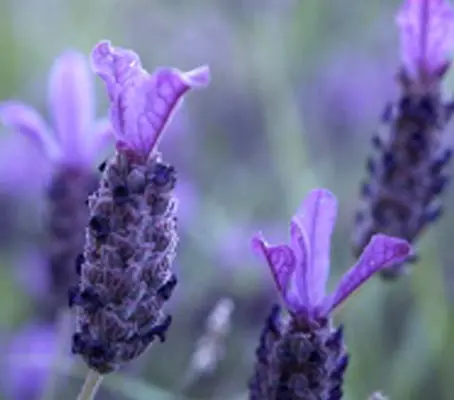 Lavender stoechas is an old variety, cultivated for more than 400 years, it is a favourite both for its intense fragrance and for the short dense flower spikes. French Lavender blooms from spring to frost and has a good clean scent.
 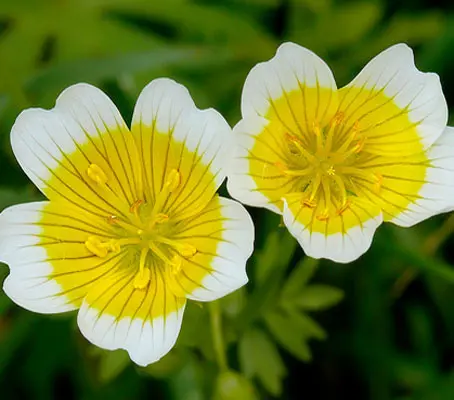 The fragrant, abundant flowers of Limnanthes appear from summer to autumn and attract bees and butterflies for the duration. This lovely plant provides a carpet of fragrant golden and white blooms that will grace the front of the border, rockery or path edging.
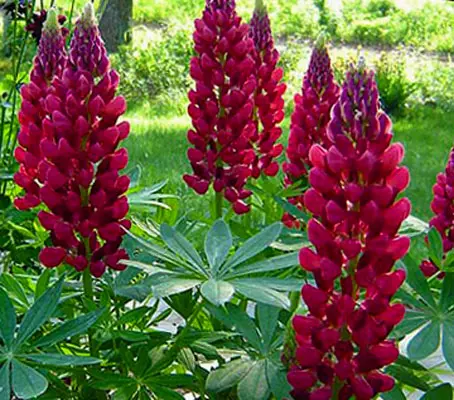 The Russell Hybrids ‘Band of Nobles’ series have exceptionally bright and strong colours. ‘The Pages’ produce magnificent vertical stems of carmine red blooms. These hardy plants will surviving extreme temperatures withstanding frost to at least minus 25°C.
 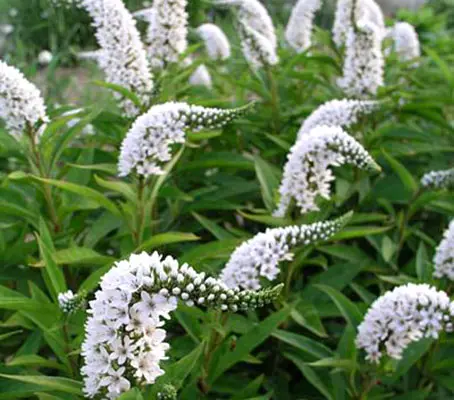 Lysimachia ‘Lady Jane’ produces spires of white blossoms right above the foliage, they arch over then tip up at the ends and grow in beautiful curvy forms. Absolutely loved by butterflies, an additional feature is the good autumn foliage colour.
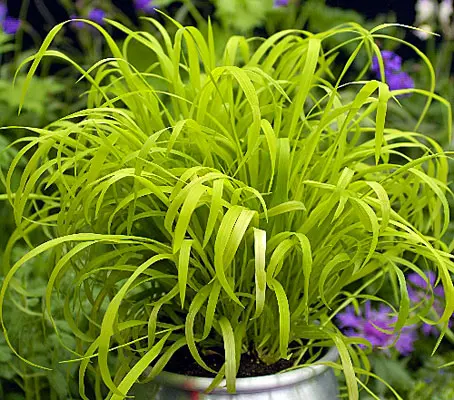 Milium effusum Aureum has a magical quality, bringing incandescent light to the shady places it prefers. As the season progresses tiny golden, bead-like flowers on hair-thin stems arch gracefully creating fountains of gold.
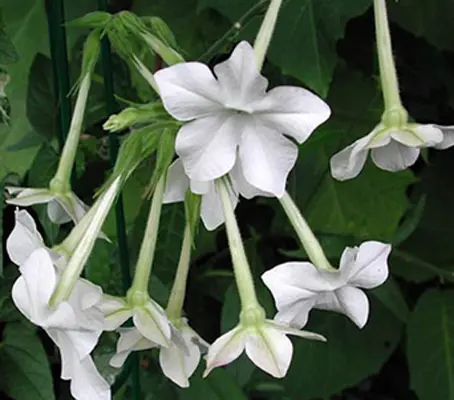 Nicotiana affinis, also known as N. alata, is a classic tobacco plant with a delicious evening scent. It has been justly popular for over a century and a firm favourite with generations of gardeners: it is far lovelier than the modern improved forms of Nicotiana alata.
 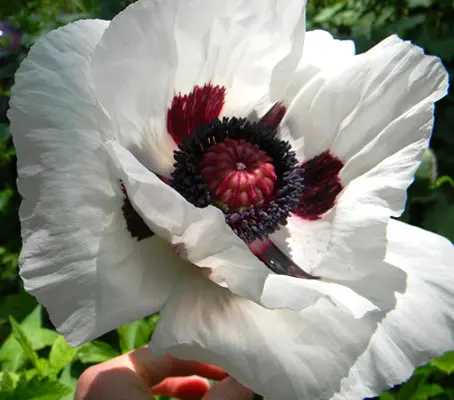 Nothing compares to the grace of the Oriental poppy, and ‘Royal Wedding’ is perhaps one of the most striking examples. It exhibits immense pure white satiny blooms with intricately decorated, deep purple-black hearts. They provide a real spectacle year after year.
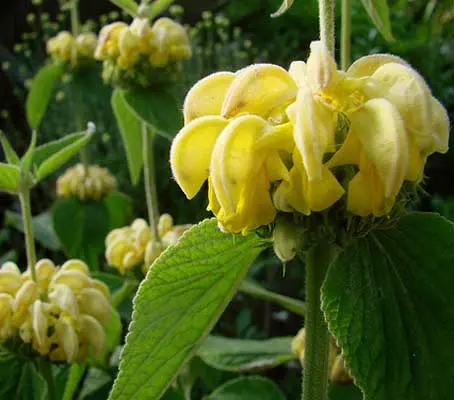
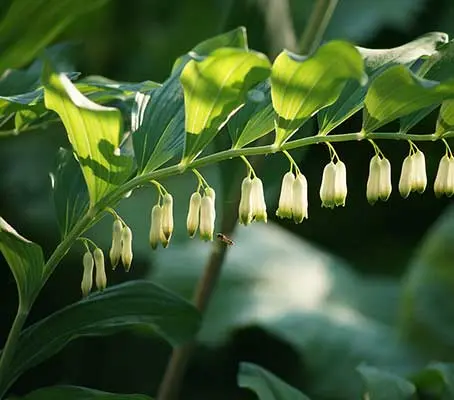
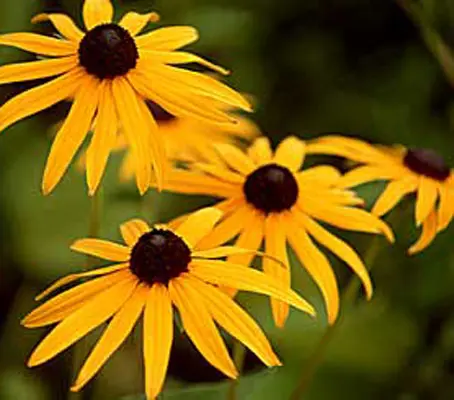 Rudbeckia are one of the top ten favorites of many gardeners’. Goldsturm is a compact form of the yolk-yellow black-eyed Susan, it is short enough not to need staking and never flops. An excellent cut flower and a great choice for mass planting.
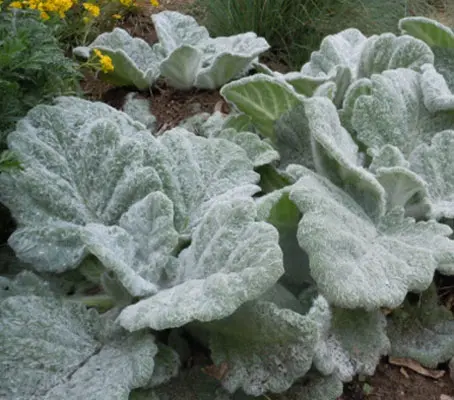 Salvia argentea is prized for its spectacular, large, furry silver-grey leaves. The plants form an attractive mound that provide a dramatic background for colourful summer flowers. It complements purple or magenta flowers and looks gorgeous in a ‘white’ garden.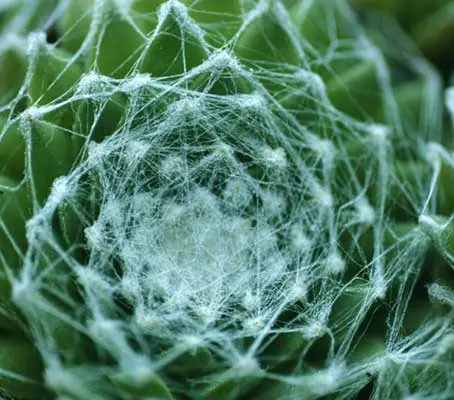
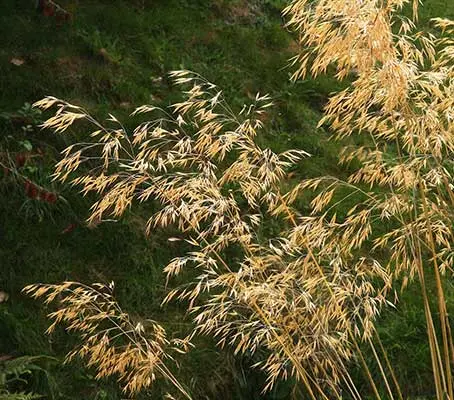 Stipa gigantea is the most dramatically beautiful of all grasses. It has the wonderful and fashionably transparent quality of providing height without bulk, tall stems of golden oat-like flowers allow glimpses into the garden beyond.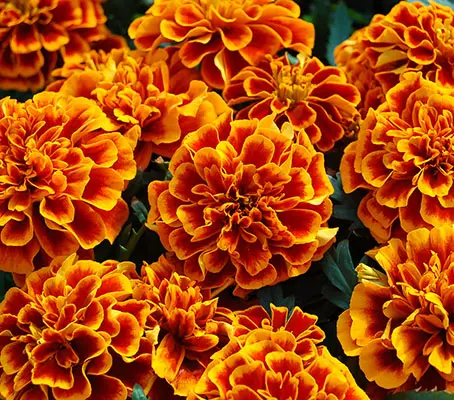
 Tagetes patula ‘Queen Sophia’ is an extremely popular, award winning variety that was introduced in the early 1900’s. Gorgeous to the point of excess, it produces semi-double blooms. Deep orange-to-russet petals that are intricately edged with russet and gold.
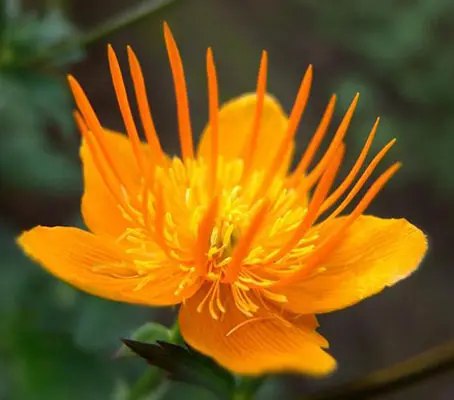 Trollius ‘Golden Queen’ has strong erect stems, rising up to three feet from out of its clump of serrated foliage. Each stem is topped by the largest brightest tangerine blossoms. Excellent for bouquets and magnets for butterflies and bees.
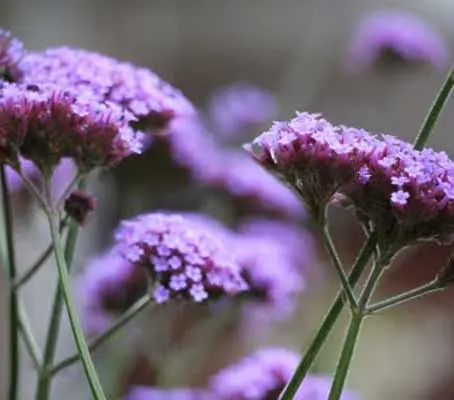 Verbena bonariensis is a very useful plant. The flowers, on tall, slim delicate stalks dance in the wind. It is a graceful counterpart to larger flowers and invariably compliments the landscape without overwhelming any of it.
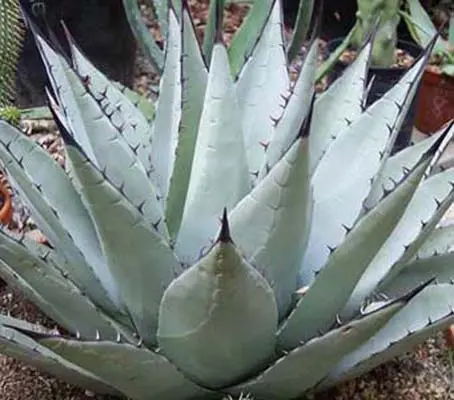 Agave parryi is a dramatic specimen. This native Mexican succulent forms a compact rosette of soft fleshy, bluish green leaves. The foliage is wide and heavily armed with dark tipped spines. With the ability to grow 60cm wide and as tall, it is one of the most cold hardy Agave species.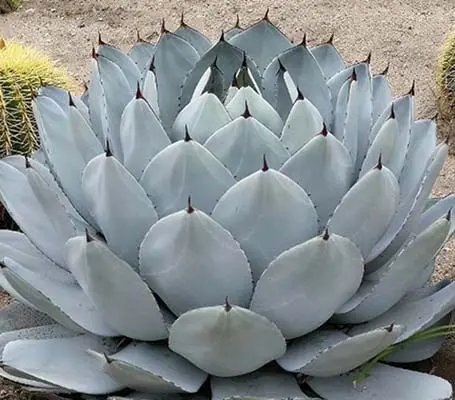
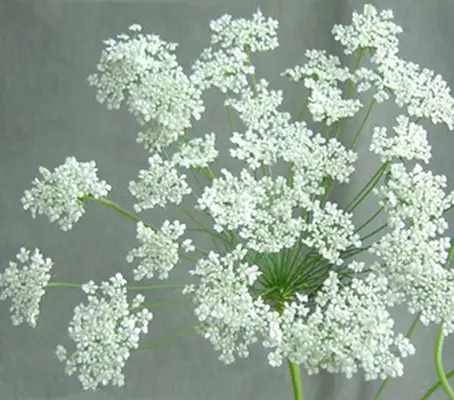 Ammi majus is tall, branching flower, with finely divided, feathery foliage. In summer, it bears an abundance of large round blooms made up of clusters of tiny white florets on tall, branched, slender stems. The delicate clusters add beauty and depth to bouquets and meadows alike.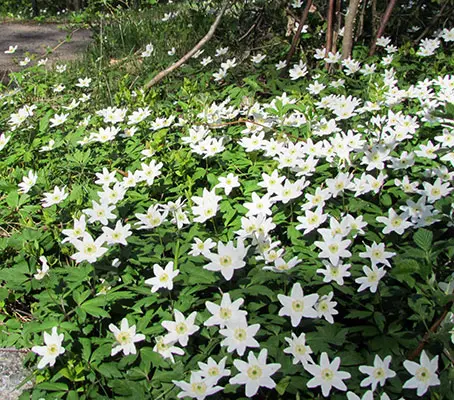
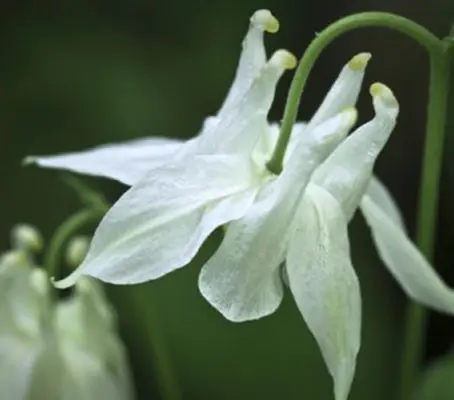
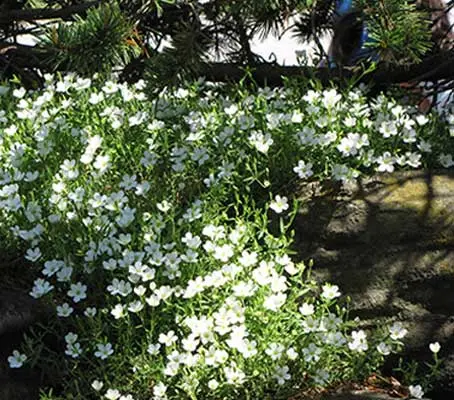 Arenaria montana is a classic little alpine or rock garden plant, still relatively unknown to many gardeners. The plant forms prostrate mats of evergreen foliage, blanketed by large white flowers. They are at their loveliest spilling over walls and will quickly fill in the spaces between stepping stones.
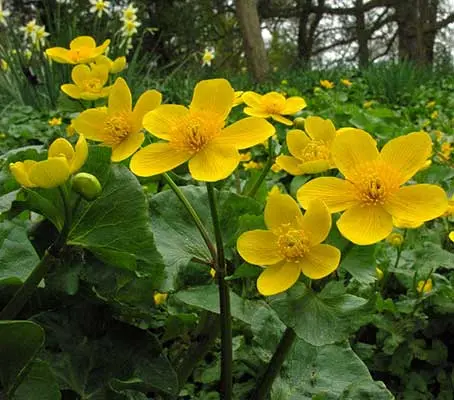 ‘Caltha palustris, commonly called Marsh Marigold is one of the most cheerful native plants to adorn the edges of a pond or stream and possesses the added benefit of flowering in the shade. The plant’s yellow flowers and dark green shiny leaves cheer up the otherwise barren landscape as winter recedes.