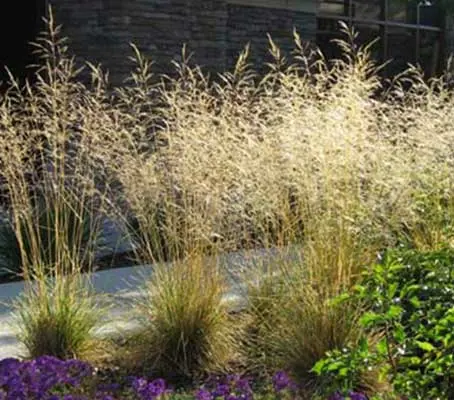
Deschampsia cespitosa is a lovely variety of ornamental grass especially valued for it’s tall flower plumes. The sprays of airy delicate flowers, eventually changing to bronze add texture and colour to the winter garden and deliver a knock-out punch to cut-flower arrangements.
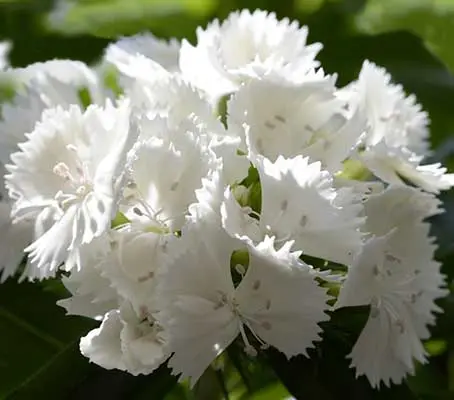
Intensely fragrant, with a delicious, sweet perfume, Dianthus barbatus ‘Alba’ is a pure white form of Sweet William. Absolutely beautiful and easy to grow, everybody can grow them to perfection.
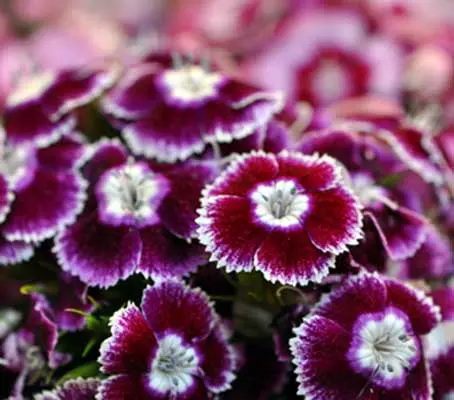
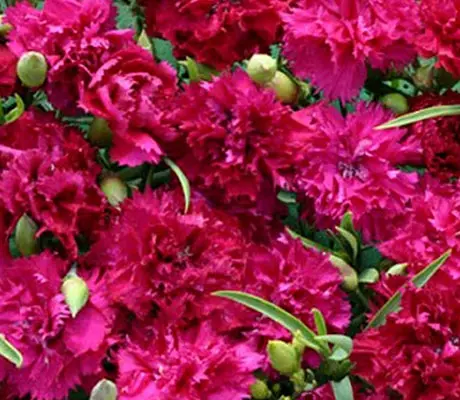
Sweet Williams are one of those lovely old-fashioned flowers, easy to grow and famous for their delicious spicy-scent. The Auricula-eyed Group are irresistible, dense clusters of flowers in dark tapestry rubies, fuchsia, scarlet, purple and white.
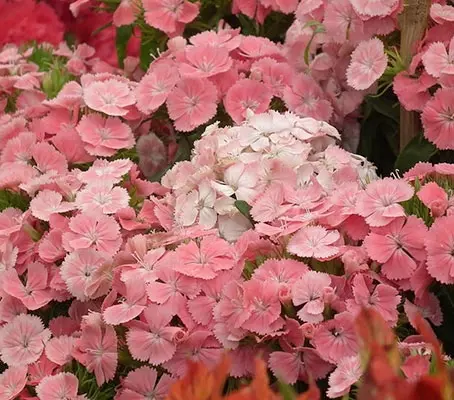
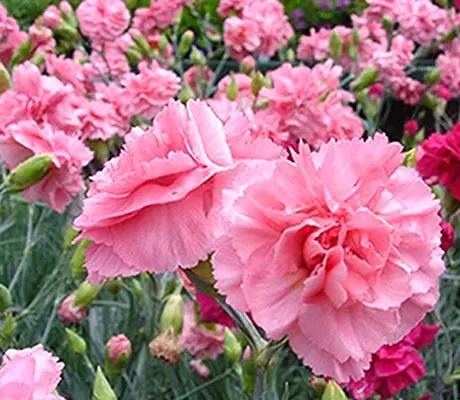
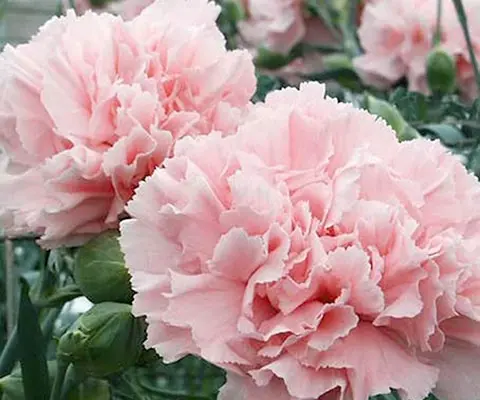
Sweet Williams are one of those lovely old-fashioned flowers, easy to grow and famous for their delicious scent. They are biennial, sown in May to July and will flower in late spring to early summer the year after sowing. ‘Newport Pink’ are irresistible, coral-pink flowers with delicately fringed petals.
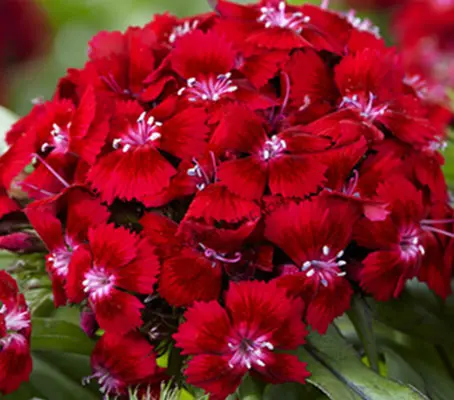
Treasured in the garden for their bright colour and strong fragrance, Dianthus barbatus ‘Scarlet Beauty’ flower all summer from May to August with clusters of single, brilliant scarlet red flowers, and best of all, they are intensely fragrant, with a delicious rich perfume.
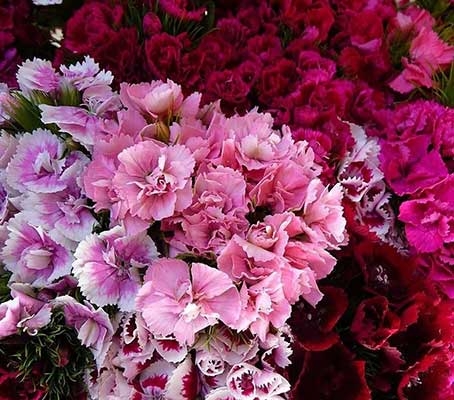
A striking strain of Sweet William, Dianthus barbatus ‘Super Duplex Mix’ has been bred for its exceptionally large, fully double blooms. The flowers form dense, rounded clusters, with ruffled petals in a very wide colour range. Easy to grow, with a light, sweet clove scent, everybody can grow them to perfection.
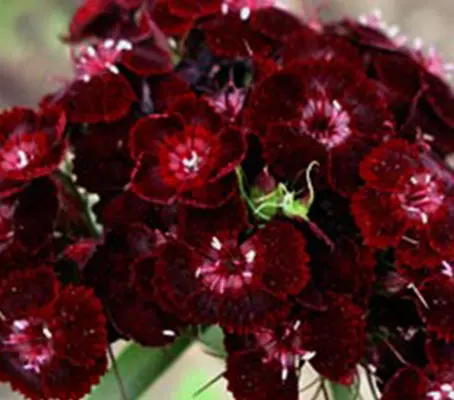
‘Sooty’ is one of the most unique of all Sweet Williams. It bears multiple densely packed heads of darkest ruby, almost black, fragrant blooms on red stems, and leaves that mature to a shimmering metallic mahogany.
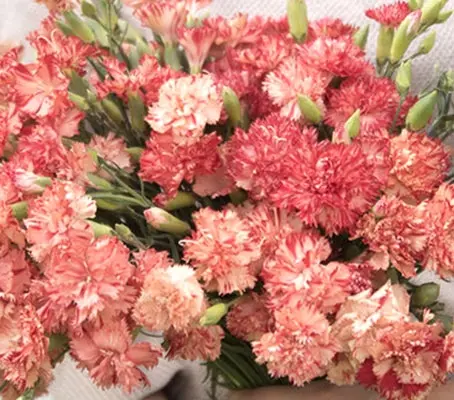
Developed for florists for use as a cut flower, the super tall stems of Dianthus ‘Chabaud Aurora’ display the most beautiful range of coral, salmon, blush, pink and cherry flowers. They will provide a continuous harvest of blooms for cutting from the end of April until the end of September.
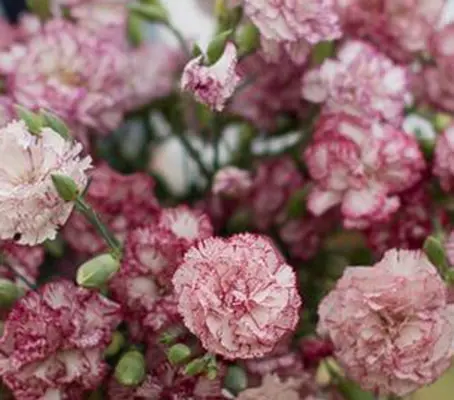
Dianthus Chabaud is a vintage carnation, developed for florists around 1904. With long stems, they are famously scented and provide a continuous harvest of blooms from April until September. Deliciously coloured, the creamy white petals of ‘Benigna’ are outlined with the fruitiest of plums and raspberry reds.
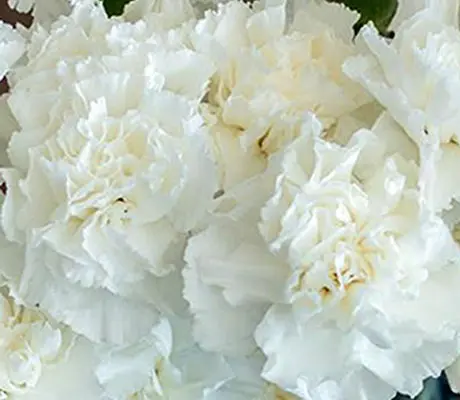
Boasting ruffled white petticoat-like blooms on strong stems, Dianthus ‘Chabaud Jeanne Dionis’ has the fullest of flowers. An ideal cut flower and perfect for wedding work, they will bloom all summer long from an early sowing.
Developed for florists for use as a cut flower, the super tall stems of Dianthus ‘Chabaud La France’ are topped with blooms in the most delicate shades of seashell pinks to creamy blush. They will provide a continuous harvest of blooms for cutting from the end of April until the end of September.
‘Chabaud Magenta’ provides armfuls of deep magenta, frilly double blooms with the spicy fragrance of clove. Pronounced shab-o, they were developed specifically for florists for use as a cut flower. With a heavenly scent, tall stems and an extremely long vase life.
Developed for florists for use as a cut flower. Dianthus Chabaud is a vintage carnation that dates back as early as 1904. Displayed profusely on slender, sturdy stems, the apricot and soft orange blushing petals of Chabaud ‘Orange Sherbet’ are striped with dark raspberry red and coral.
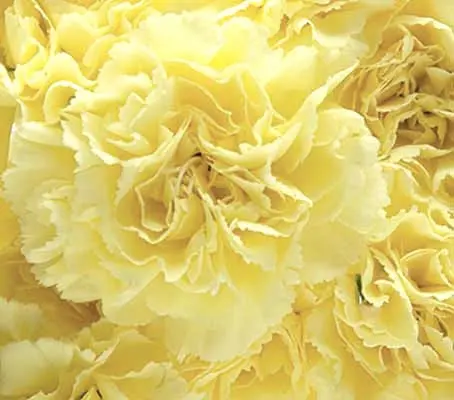
Hardy, tough and very easy to grow, Dianthus Chabaud were developed for florists for use as a cut flower and will provide a continuous harvest of blooms for cutting. ‘Marie Chabaud’ provides armfuls of delicate, pale lemon yellow, frilly double blooms.
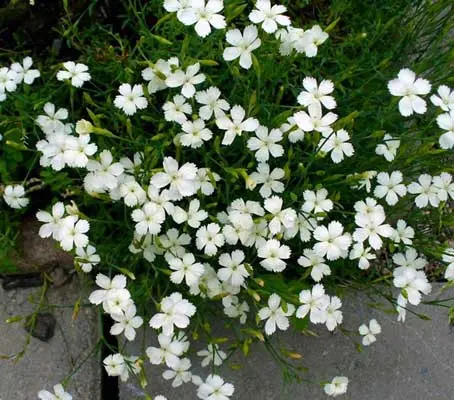
Dianthus deltoides ‘Confetti White’ is a quite exceptional little plant. Growing to just 10cm tall it will spread up to 50cm wide. The pure white blooms appear in abundance, just poking their heads above the deep green foliage. In the early morning dew or after a shower of rain they sparkle like clear white diamonds.
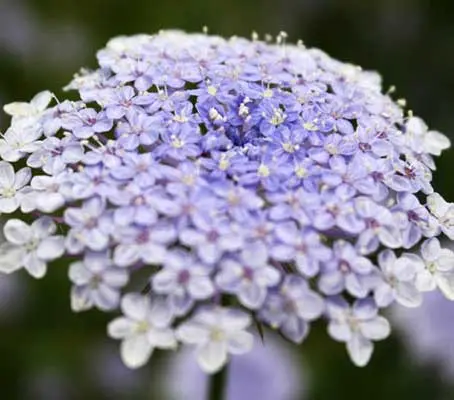
Didiscus caerulea is known as the Blue Lace Flower for its unusual colour. The delicate lavender-blue flowers, each composed of tiny, star-shaped, sweetly fragrant flowers are perfect for the cutting garden.
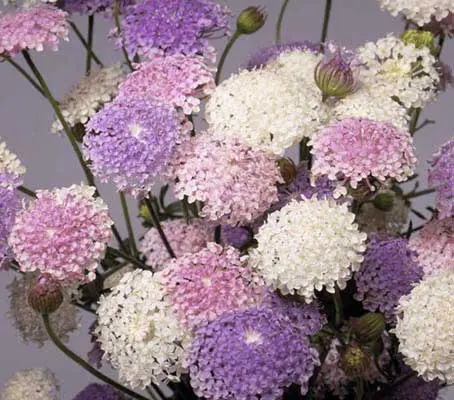
Recent developments of Didiscus caerulea have broadened the colour range. Didiscus ‘Lacy Mix’ produce the same lacy umbel shaped domes and finely cut foliage. In a pastel blend of powder-blue, lavender, soft pink and white, the plants branch freely, filling borders with a light, floaty feel and masses of stems for cutting.
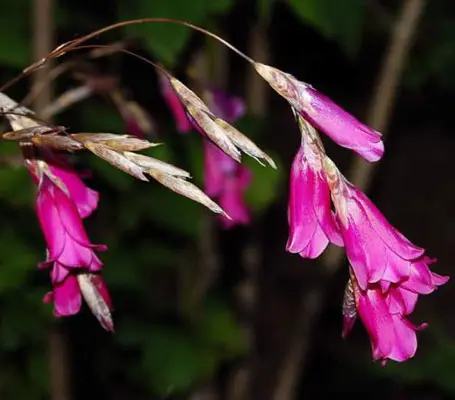
Dierama pulcherrimum is a distinctive-looking perennial with tall arching stems of bell-shaped, flowers. The flowers bloom in shades of pink, mauve and carmine appear in mid summer. Each stem drops with the weight of the flowers which earns them the most romantic of names – Angel’s Fishing Rods.
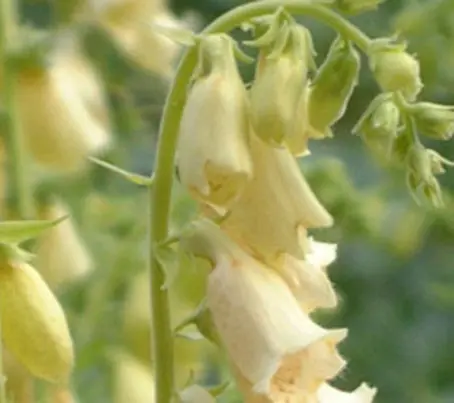
There are not many yellow flowering foxgloves and as they are so rare each one is joyfully celebrated. Digitalis ‘Cream Bell’ is one of the few truly perennials. Extremely hardy it bears upright stalks of beautiful creamy-yellow bells. A lovely soft shade that blends with almost anything in the garden.
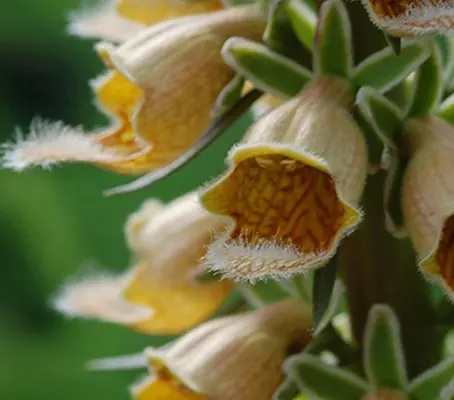
Digitalis ferruginea is an interesting and exotic looking foxglove. With elegant, leafy spires and closely packed golden blooms, each orchid-like flower has an interior of rich red-brown veins.
Digitalis grandiflora is one of the few truly perennial foxgloves. Extremely hardy and one of the best performers. Bearing upright stalks of beautiful creamy-yellow bells through the summer, the lovely soft shade allows this plant to blend with almost anything in the garden.
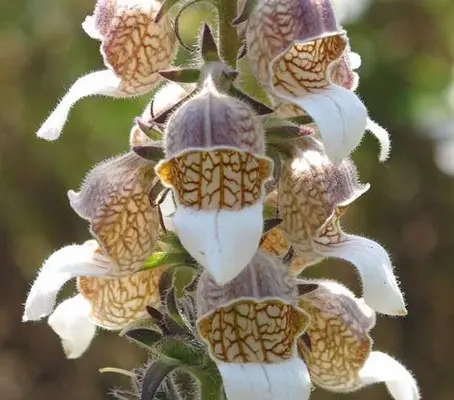
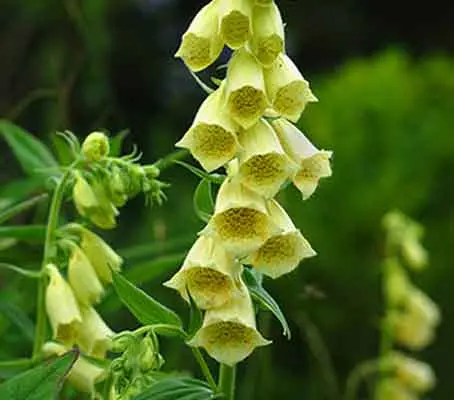
Digitalis lanata has a beautiful colouration, from late spring to mid summer it produces spikes of densely packed, fawn-coloured flowers each with a pearl coloured lower lip. Each of the blooms is delicately patterned with dark brown veins. Digitalis lutea is a quite a different species to the traditional cultivated foxglove, with delicate small flowers; it is an easily grown plant that is reliably perennial. It bears delicate pale cream-yellow tubular flowers and grows to just 60cm in height. This delicate foxglove is a charming beauty wherever it is planted.
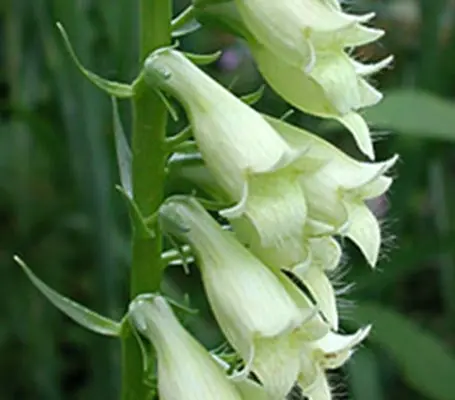
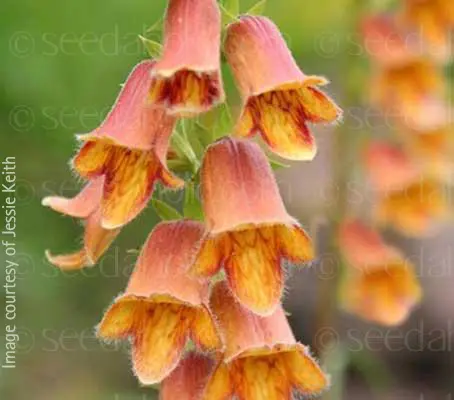
This rare and lovely foxglove is one of the very best in cultivation. Digitalis obscura, the Sunset Foxglove has striking bell-shaped blooms in all the colours of the sunset. Rusty orange and amber with red veining.
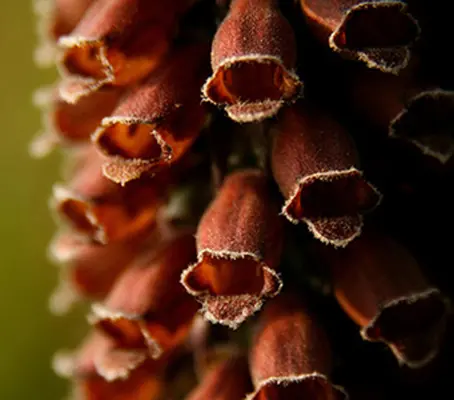
An aristocrat from Spain with densely packed spikes of cylindrical small chocolate funnels above dark green coloured glossy leaves. The rich foliage has a sheen that sets these dramatic flower spikes off wonderfully. A plant that will stop viewers in their tracks and have them enquiring its identity.
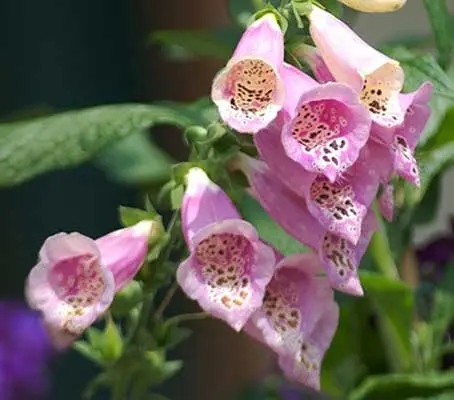
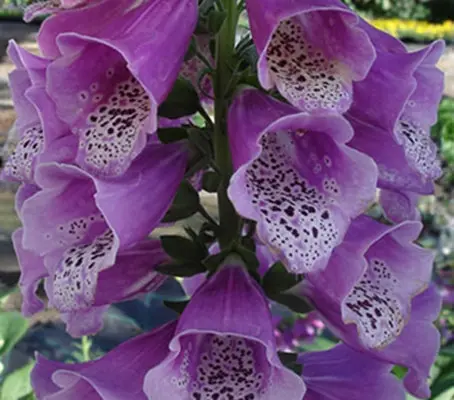
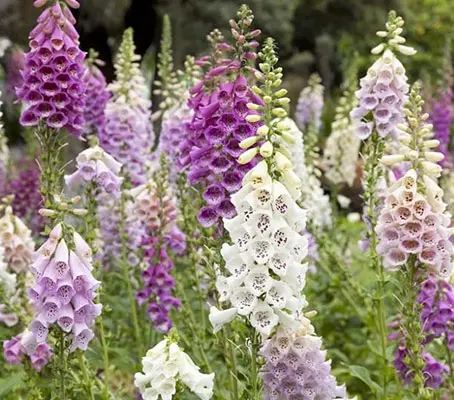
This lovely native European woodland plant is a beauty to add to any garden and a popular biennial for shaded places. Plants form rosettes of lance shaped leaves, the second year the rosette begins to shoot skyward with beautiful large spikes and drooping bell shaped blooms that are spotted inside.
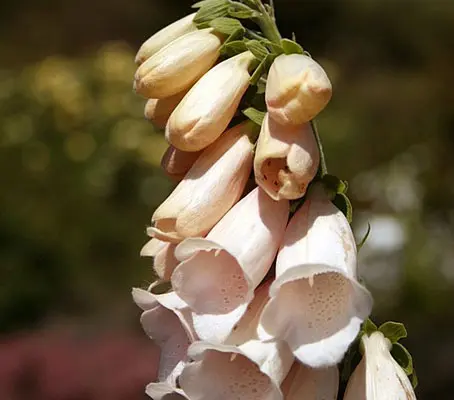
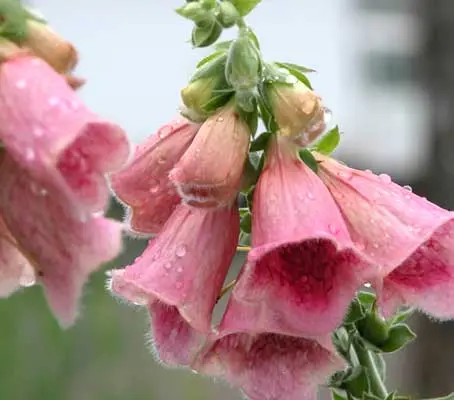
Digitalis purpurea ‘Apricot’ produces large spikes in the most beautiful shade of coral-apricot. One of its greatest assets is the ability to mingle, a quality particularly important in contemporary gardens where the accent is on informality.
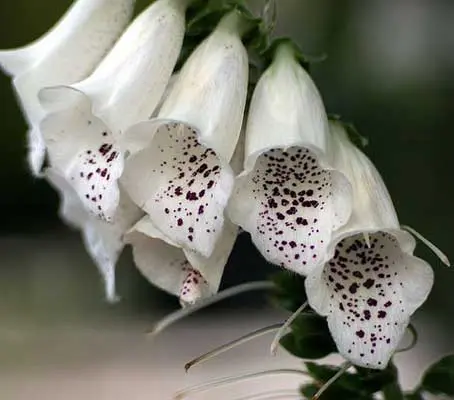
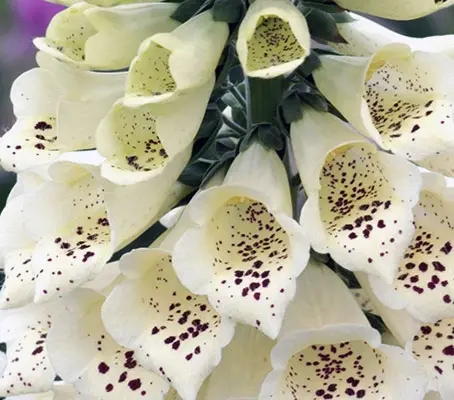
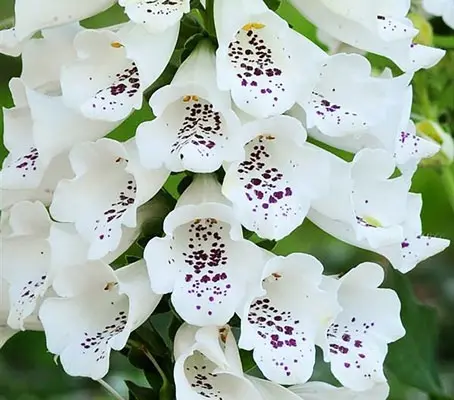
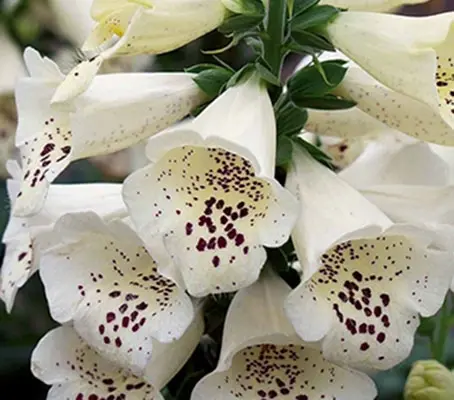
Digitalis ‘Elsey Kelsey’ is one of the best new foxgloves found in recent years. Their elegant upright habit, long spikes of flowers and their heavenly white bell shaped flowers with densely speckled throats of deep maroon-purple make impressive features in the garden.
Digitalis purpurea ‘F1 Camelot Cream’ produces towers of a delicate buttercream colour, the dense spikes of blooms are borne all the way around the stem. Developed to flower in the first year, they can be sown anytime from January to September. This premium series has been developed for florists to be first year flowering, with good-quality, dense spikes that are long flowering and well-branched, Digitalis ‘F1 Camelot Lavender’ produces towers of an exquisite colour with blooms borne all the way around the stem.
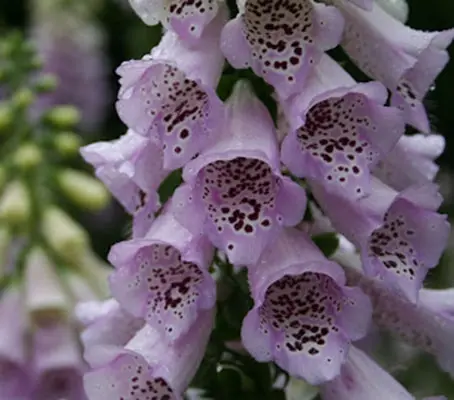
Developed for florists to be first year flowering, this premium series produces dense spikes that are long flowering and well-branched. Digitalis ‘F1 Camelot Rose’ produces towers of an exquisite colour with outward facing blooms borne all the way around the stem.
Digitalis purpurea ‘F1 Camelot Cream’ produces towers of a delicate buttercream colour, the dense spikes of blooms are borne all the way around the stem. Developed to flower in the first year, they can be sown anytime from January to September.
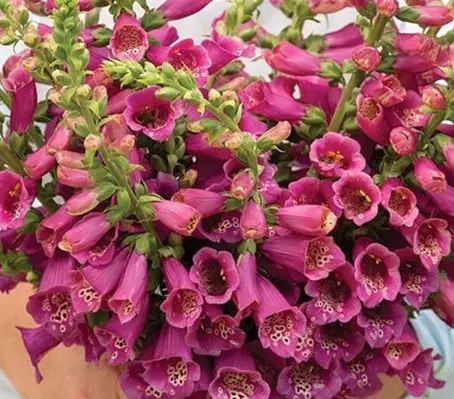
Early flowering and fast growing, award winning Digitalis ‘Dalmatian Purple’ produces towers of gorgeous lavender-purple blooms with deep mauve interior markings. The good-quality spikes are uniform in height, well-branched with excellent habit and compact foliage.
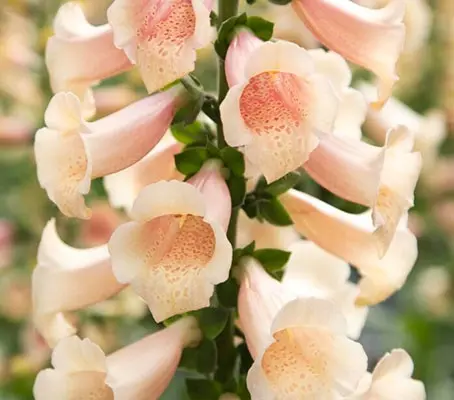
Early flowering and fast growing, award winning Digitalis purpurea ‘Dalmatian Peach’ produces towers of swoon-worthy peachy blooms with freckled interiors. A huge bonus is that the series blooms the first year from an early indoor sowing. Sow successionally for continuity of blooms
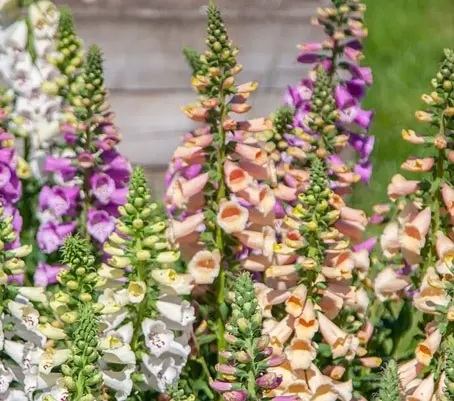
Early flowering and fast growing, award winning Digitalis ‘Dalmatian Purple’ produces towers of gorgeous lavender-purple blooms with deep mauve interior markings. The good-quality spikes are uniform in height, well-branched with excellent habit and compact foliage. A new a super-fast, first year flowering perennial, Digitalis ‘Dottie Mix’ produces flowers in five gorgeous, soft colours just 20 to 24 weeks from sowing. The plants grow quickly to 75cm tall and are more compact at flowering than other F1 series, the showy spikes carry big blooms and quickly fill large 15 to 25cm pots with ease
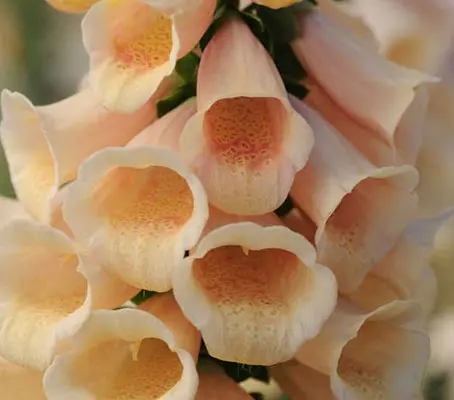
A new a super-fast, first year flowering perennial, Digitalis ‘Dottie Mix’ produces flowers in five gorgeous, soft colours just 20 to 24 weeks from sowing. The plants grow quickly to 75cm tall and are more compact at flowering than other F1 series, the showy spikes carry big blooms and quickly fill large 15 to 25cm pots with ease
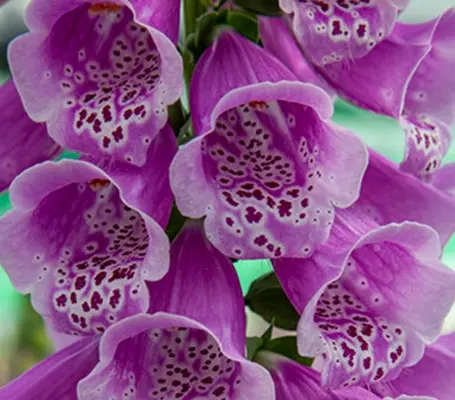
Digitalis ‘F1 Dottie Purple’ is an outstanding colour, deep purple tubular flowers with contrasting dark speckling. The showy spikes provide numerous high quality stems for a flower-packed display. This first year flowering type that lends itself to successional planting. Sow in late summer to autumn for the earliest spring blooms.
A new a super-fast, first year flowering perennial, Digitalis ‘Dottie Mix’ produces flowers in five gorgeous, soft colours just 20 to 24 weeks from sowing. The plants grow quickly to 75cm tall and are more compact at flowering than other F1 series, the showy spikes carry big blooms and quickly fill large 15 to 25cm pots with ease
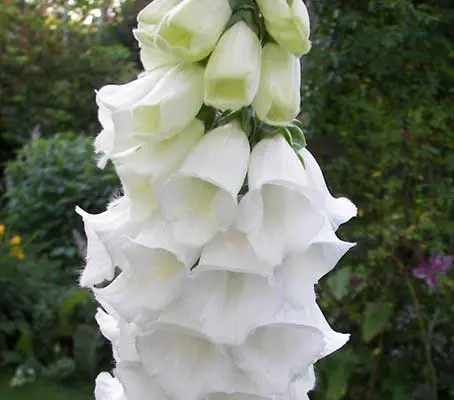
Digitalis purpurea ‘Snow Thimble’ is bred for its large pure-white, bell-shaped blooms, born on short spikes only 100cm tall. It is one of the most elegant dwarf Foxgloves, easy to place in the garden it is especially suited to cottage gardens, shade gardens, wildflower and cutting gardens.
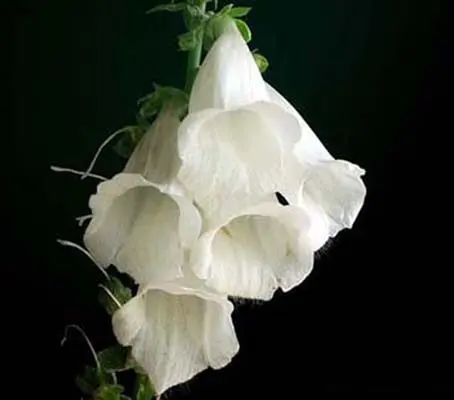
The pure unadulterated white form of this supremely elegant woodlander. Pure white foxgloves lighten up those shaded corners, giving a sense of depth and interest to an otherwise dark area. Grown as a single colour in a perennial bed they are outstanding for their simplicity alone.
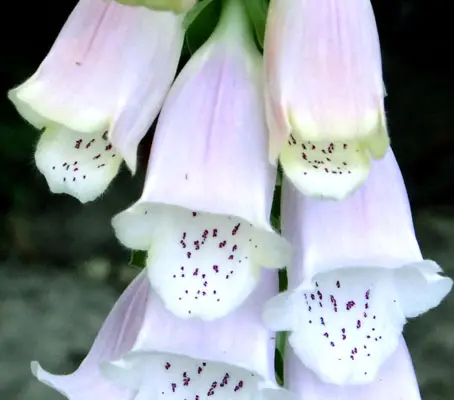
Digitalis ‘Silver Fox’ is one of the most beautiful dwarf Foxgloves for the cottage garden and border. Growing to just 60 to 70cm tall, the creamy-white speckled bells are flushed with soft lavender-pink. An elegant and rare foxglove that is ideal for borders or containers.
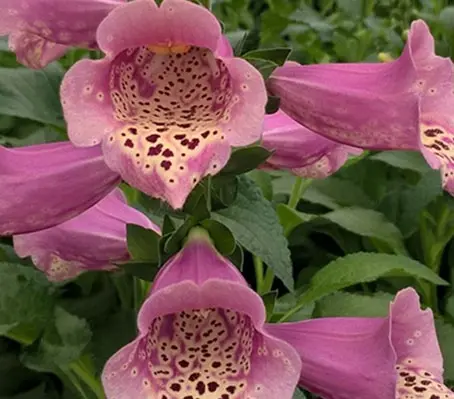
Digitalis purpurea var gloxinioides is an outstanding and unusual strain of Foxglove. Resembling the Gloxinia plant, the open flowers are tubular, each with frilled edges. With tall dense spikes of blooms, they are held horizontally and display the heavily spotted throat markings to better advantage.Digitalis thapsi ‘Spanish Peaks’ foxglove is a lovely compact foxglove that produces elegant, apricot-cream to raspberry-rose blooms with interior markings. A superb perennial species that can be counted on for a glorious floral show each spring. Very easy to grow in virtually any location, it is often the first foxglove to flower.
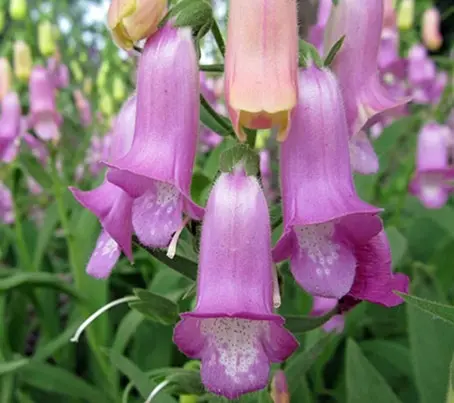
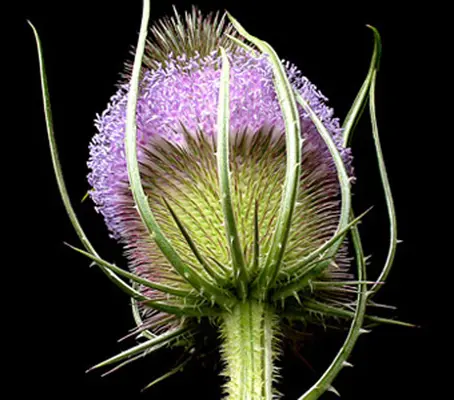
This striking and robust foxglove, a hybrid between the pink flowered D. purpurea and the yellow flowered D. grandiflora produces a beautiful mix of the two shades. Warm pink, speckled flowers that are larger than the traditional foxglove.Fullers Teasel a sub-species of the common teasel. The bristly flower heads were cultivated, matured and dried. Inserted into wooden frames, they were used to bulk up the pile on woolen cloth. The variant name ‘fullonum’ refers to the name of the trade of the ‘fullers’ to raise the nap on woolen cloth – to ‘tease’ it. Teasel is still used today by some who weave wool by hand.
€1.95
€1.95
€2.25
€2.10 – €5.95Price range: €2.10 through €5.95