 Skip to content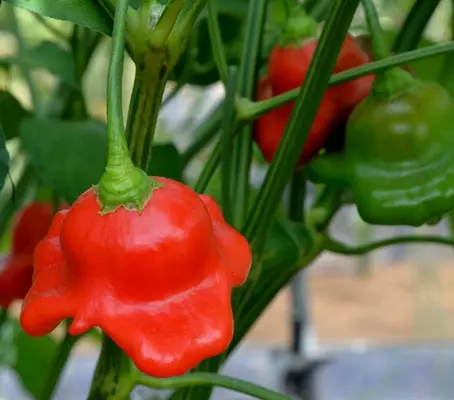

Pepper, Chili Pepper ‘Bishops Crown’
Mild & Fruity, 14,000 SHU
€2.50
Packet Size:20 Seeds
Packet Size:20 Seeds
With a great fruity tang, and not too hot, this rare little beauty originates from Barbados. With an unusual three-sided shape, the pods are wrinkled, and mature from green to red, and have a mild, fabulously fruity, flavour.
Pepper ‘Bishop’s Crown’ is named for its distinct three-sided shape resembling a bishop’s crown, the exotically shaped chillies have a multitude of names – Jamaican Bell, Christmas Bell, Joker’s Hat, Peri Peri and Friar’s Hat among others. In Europe it can usually be found as Cambuci or Chapéu de Bispo
The actual plant is relatively large, being three to four feet in height with an open habit. It carries a good crop, producing 30 to 50 peculiar, three or four flat-winged, wrinkled pods. These somewhat flying saucer-like peppers grow to approximately 4cm (1.5in) wide. The flesh inside each pepper is thin, yet crisp. The fruits mature to red from a pale green colour about 90 to 100 days after the seedlings emerge.
‘Bishops Crown’ produces bright red chillies that have a crisp texture, a sweet pleasant flavour and only a mild pungency. It comes in at a respectable 14,000 SHU on the Scoville scale. They are great to eat raw as an edible decoration in salads or a cold buffet. Cut the chillies in half, remove the core and add to salads or garnish hors d’oeuvre.
A cultivar of the species Capsicum baccatum var. pendulum, this rare little beauty originates from Barbados. The distinctive flowers of C. baccatum cultivars make them easy to recognise. Interspecific hybrids exhibit the same markings, and the baccatum fruit shape seems to be equally dominant as does the fairly open plant habit. These hybrids often have rich complex flavours combining the tastes of both parents.
Baccatums are generally easy to grow, but do tend to take up quite a lot of space due to their open growth habit. They compensate for this by fruiting fairly early in the season, being very productive, and having rich fruity flavours, frequently with citrus overtones. Most baccatums have no more than medium pungency, are thin fleshed and dry well; these make excellent chilli powder.
Storage of Seeds:
Store seeds away from children, sealed in their packaging in a cool, dry, dark place, or in a fridge. Never store them in a freezer as the sudden temperature drop is likely to kill them. Don’t leave the seeds in direct sunlight as the heat generated may kill them.
Sowing: Sow early December to January under glass, or for maincrop sow March to April.
Fill small cells or trays with a good sterile seed compost and sow the seeds on the surface. Just cover with a fine sprinkling (3mm) of soil or vermiculite.
Keep the compost moist – don’t let the top of the compost dry out (a common cause of germination failure) If you wish, spray the surface with a dilute copper-based fungicide.
Cover the pot or tray with plastic film or place in a heated propagator, south facing window or a warm greenhouse. The ideal temperature is around 18 to 20°C (65 to 72°F)
Transplanting:
When the seedlings have produced their first pair of true leaves they can be potted on into individual 7 to 10cm (3 to 4in) pots. Use good quality potting compost and mix in some organic slow release fertiliser. Pot the chilli on again before it becomes root-bound.
Water the seedlings regularly, but don’t let them become waterlogged as this encourages rot. Don’t let them dry out as they rarely recover at this stage. Water the soil, not the foliage. Once the plants have established, it is better to water heavy and infrequently, allow the top inch or so to dry out in between watering.
Seedlings should be grown in good light, but should not be exposed to direct sunlight from late spring to early autumn. Weaker sunlight from autumn to spring is unlikely to do them harm. Once seedlings have put on some growth they need lots of light. Growing them under a grow-light produces excellent stocky plants, as will a warm sunny windowsill. Adult chilli plants need lots of light. However, more than 4 hours or so in hot direct sunlight will dry them out quickly.
Acclimatise to outdoor conditions for 2 to 3 weeks before they are moved permanently outside. Plant them into rich moist soil. Flower do not form and fruit will not set if the temperature is much below 17°C (62°F) for most of the day, so wait until June/July for best results with outdoor planting.
Fertilising:
After the first flowers appear, feed every one or two weeks with a half-strength liquid tomato feed. You could also add some Seaweed extract to the water once a week.
Pollinating Flowers: (optional)
Chilli plants are self fertile and will generally pollinate themselves. However, if you want to give them a helping hand to ensure that lots of fruit are set indoors, use a cotton wool bud to gently sweep the inside of the flowers, spreading the pollen as you go. The flower’s petals will drop off as the green middle part of the flower starts to swell slightly. This is the chilli pepper beginning to grow.
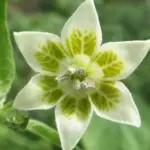
Capsicum baccatum flowers are white with distinctive yellow-green spots or blotches at the base of each petal — that marking is the tell for the species and sets them apart from other capsicums. Five petals, star-shaped, nodding slightly downward on the plant. Anthers are yellow. Neat and pretty without being showy.
Harvesting:
Chillies will take a few weeks to develop and a further couple weeks to turn from green to red. Popular as much for ornamental value as eating, the fruits hang like little decorations and ripen through yellow, orange, and red.
You may pick them off the plant any time after they are fully developed but the longer you leave them on the hotter they will become. Do not leave them on for too long, as delaying after the chili is ready for harvest will result in a decline of further yields.
Storage:
After picking, if you aren’t going to eat them fresh, dry the peppers by putting them into a mesh bag, hang the bag up in a dry, airy, but not sunny spot. When they are completely dry, you can make paprika by grinding the peppers. Don’t grind the stalks. You can regulate the spiciness of the result by including more or less of the seeds and veins.
Warning:
Be careful handling the seeds as even they can cause a painful burning sensation. We recommend you wear nitrile or latex gloves to protect your hands and avoid touching your face while harvesting or handling these peppers.
When finished, dispose of the gloves then wash your hands thoroughly. Do not rub your eyes, or visit the bathroom (ouch!) before washing thoroughly!
Origin:
Native to the Caribbean and South America, though it’s particularly associated with Barbados — it’s often called the Barbados pepper or Christmas Bell pepper. Been around for centuries; there are records of it in Europe as far back as the early 1700s.
It’s a Capsicum baccatum species, which sets it apart from most Caribbean chilis (which tend to be chinense). The shape is the thing, with three distinctive ‘wings’ or flanges spreading out from the base like a bishop’s mitre, with a small dome on top. Unmistakable once you’ve seen one.
Mild to medium heat, nothing scary, maybe 5,000–15,000 SHU, with a bright, slightly sweet, fruity flavour. The thick wings are almost bell-pepper-like in taste, while the central crown carries more heat. Makes it genuinely useful in the kitchen rather than just a novelty.
Nomenclature:
Chilli pepper ‘Bishop’s Crown’ belongs to the species Capsicum baccatum. The word Capsicum originally comes from the Greek kapto, meaning ‘to bite’, a reference to pungency or heat. The Latin name Capsicum baccatum neatly describes the plant. Capsicum means ‘pepper’, while baccatum means ‘berry-like,’ a nod to the small, fleshy fruits the plant produces. Together, the name simply translates as a pepper plant that bears berry-like fruits.
Chilli terminology is confusing; pepper, chili, chile, chilli, Aji, paprika and Capsicum are used interchangeably for chilli pepper plants. In Mexico a Capsicum is called a Chile pepper, while Chile enthusiasts around the world often use the spelling Chile or Chili.
Bishop’s Crown shows all the hallmarks of a baccatum type, with tall, open, freely branching plants and the distinctive three-lobed, hat-shaped fruits that give it its name. The flavour is lightly fruity and the heat is mild to moderate, making it far gentler than the often intense, pungent heat associated with chinense varieties.
These exotically shaped chilies have a multitude of names – Jamaican Bell, Christmas Bell, Joker’s Hat, Peri Peri and Friar’s Hat among others. In Europe it can usually be found as Cambuci or Chapéu de Bispo.
The German name is Glockenpaprika, ‘Glocke’ means bell, ‘Paprika’ is just pepper, so Glockenpaprika, bell pepper, fits the shape well.
Overwintering:
Many people are unaware of the fact that pepper plants are perennials. We typically plant the seeds, reap the benefits of our labour and then let the plants die off when the cold weather hits. However, with a little effort, you can over-winter your pepper plants and have a more fruitful harvest the following year. Over-wintering your plants will bring you a number of benefits. While everyone else is planting seeds in the spring, your plants will have a head start with well-established root systems and stems. The harvest will come much sooner and last much longer, producing much more that a first year plant would.
At the end of the growing season, when the temperature begins to drop, pepper plants will become dormant. They are finished producing flowers and pods for the year and require much less sunlight and water. This is the time to begin the over-wintering process.
The first step for over-wintering your pepper plants is to cut them back drastically, leaving only a short stem. This may seem a bit harsh, but it will make your plant concentrate its energy on re-growth, rather than trying to sustain older, un-productive vegetation. Re-potting your plants in a smaller container will also help your plant reserve its energy for hibernation.
The most important step is to place your plants in a warm area that will give them the best chance of surviving the winter. Most of us don’t have a greenhouse, so a sunny windowsill will work well. If the temperature inside is comfortable to you, chances are your plants will enjoy it as well. Continue to water your plant, but do so much less often. The soil should be moist, but not damp as this will promote the growth of mould.
If you are successful in over-wintering your pepper plants, you can be sure to have an incredibly fruitful harvest the following year. While everyone else is still watering seedlings, you will be enjoying fresh, delicious peppers.
| Common Name | Mild & Fruity, 14,000 SHU |
| Other Common Names | Peppers, Capsicum, Chilli, Chile or Chilli |
| Botanical Name | Capsicum baccatum 'Bishops Crown' |
| Family | Solanaceae |
| Genus | Capsicum |
| Cultivar | Bishops Crown also known as Jamaican Bell, Barbados pepper or Christmas Bell pepper |
| Species | baccatum var. pendulum |
| Height | Spreading Plants, 3 to 4 feet in height with an open habit. |
| Fruit | The pods are an unusual three-sided shape and mature from green to red |
| Hardiness | Tender Perennial |
| Harvest | July to October |
| Soil | Rich moist soil. |
| Position | Grown in good light, but should not be exposed to direct sunlight |
| Time to Harvest | 90 to 100 days |
| Time to Sow | January to April |
| Notes | The no heat mutation is very uncommon in Capsicum baccatum. |
| Other Language Names | Cambuci or Chapéu de Bispo |