 Skip to content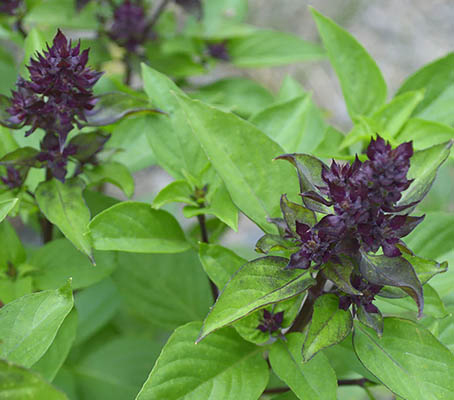



Basil, Spice Boys ‘Queen of Sheba’
Basil
€2.50
Packet Size:500mg
Ave. Contents:300 Seeds
Packet Size:500mg
Ave. Contents:300 Seeds
Sweet basil evokes hot summer nights beneath a starry sky, great platters of salad Caprese and endless bowls of pesto-tossed linguine. But sweet basil and the accompanying Italian foodie dream is only part of the story. Over the past decade, many unusual basils, new varieties from commercial breeding programs and long-forgotten heirlooms are finding a wider audience.
One of the best things about these unusual basils is their outstanding garden presence. While sweet basil is an attractive plant, few of us would grow it for its looks alone. But with some of the newer varieties, planting for ornament is a genuine possibility, many could easily be mistaken for a plectranthus or a salvia. Add the floral sweetness of their perfume and you have a plant well worth including in any ornamental scheme.
Basils are good mixers in the garden, their cultivation requirements similar to those of many warm-season annuals. Flowering varieties such as ‘Queen of Sheba’ and ‘Cinnamon’ combine well with brightly coloured tropicals, and a classic herb garden pairing worth repeating is orange marigold (Tagetes patula) alongside one of the purple-leaved basils.
Part of the ornamental Spice Boys range, ‘Queen of Sheba’ is one of the most ornamental varieties available. Intense purple flowers on tall flowering spikes rise above bright green, highly aromatic foliage. A genuinely striking combination in pots or herb borders. Harvest leaves regularly before flowering for the best flavour; once the flowers open, sit back and enjoy the show. Compact to around 40cm, the plants prefer full sun and well-drained soil. Sow under glass from March, or direct from May once the soil has warmed.
More complex than standard Genovese basil, the flavour is spicy with hints of lemon, tarragon and anise. In the kitchen ‘Queen of Sheba’ is particularly well suited to Thai and Asian cooking, though it works just as well stirred through a simple pasta or tomato sauce. It layers nicely with mint, coriander and flat-leaf parsley without any of them bullying each other, holds its own against stronger flavours and makes a pesto if you want something a bit less one-note than usual.
Timing:
Sow at any time if the plant is to be kept indoors. If sowing inside and planting outside, you can sow in late February. It is vital that Basil seedlings are not exposed to the last spring frosts so if sowing outside be patient and sow in late March.
It should be grown in a position that receives sunlight for around 6 to 8 hours a day. It can be grown indoors on a sunny windowsill or outdoors in containers or soil. Position the plants in a sheltered spot that avoids cold winds.
Growing Basil:
All basils are tender herbs that prefer daytime temperatures of around 25 to 30°C (77 to 86°F), they cannot withstand frost and will only thrive with night temperatures above 12°C (54°F). This tender perennial is usually grown as an annual but can be successfully grown indoors throughout the year.
Basil can be grown indoors on a sunny windowsill or outdoors in containers or soil. It should be grown in a position that receives sunlight for around 6 to 8 hours a day. The dark varieties need a significant amount of full sun to achieve their deep and distinctive coloration. Position the plants in a sheltered spot that avoids cold winds. You can bring basil inside as a window herb if you plant the seeds during the warm weather in pots and bring inside to grow in a bright and sunny window.
Micro-leaf Basil:
Tiny basil leaves, ‘micro leaves’ are grown similar to cress and harvested while still small. They can be grown indoors all year round and look great sprinkled sparingly around the edge of a plate or top of a salmon fillet, they taste great added to sandwiches or mixed into salads. Simply line a tray with a double layer of moist tissue paper, cotton wool or similar. Sprinkle the seeds relatively thickly. Place on a sunny window-ledge, keep warm and moist at all times and harvest after a couple of weeks.
Prepare the site:
If growing outdoors, the plants prefer a fertile soil that has been well dug to allow good soil air circulation. Introducing well rotted organic compost or manure into the soil a month or so before sowing will help this. Before sowing ensure that the compost or soil is weed free and moist. If growing in pots then a general purpose compost is a suitable soil solution. Ensure that adequate drainage is allowed from the base of the pot.
Sowing:
It is vital that the plants are not exposed to the last spring frosts so if sowing outside be patient and sow in late March. Sow at any time if the plant is to be kept indoors. If sowing inside and planting outside, you can sow in late February.
Sow the seed thinly and if growing in pots sow enough for a few plants in each pot. Cover with 6mm of compost and firm gently. The seeds usually germinate in 7 to 14 days at temperatures around 22°C (70°F). Once the seedlings have developed two pairs of true leaves, thin out the weakest seedlings, leaving each pots strongest.
Cultivation:
Once established the plants need very little care. If growing indoors in pots then weeds shouldn’t be a problem. If growing outdoors then you can add an organic mulch around the plants to help aid soil moisture retention and prevent weed establishment. Add a small amount of fertiliser every month or so to any pot plants. Water at the base of the plant avoiding showering the leaves and stems.
Basil once it flowers tends to produce a more bitter taste in the leaves. Pinching off the flowers is recommended unless you are specifically looking to harvest the seeds.
Basil takes about 80 days to flower. In summer remove about 2/3rds of the plant leaving just enough for regeneration, this gives an abundance of basil leaves and elongates the growing period. Dry or freeze any excess leaves for later use. It is also a good time to sow another batch of seeds, this will see you through the season.
Basil will grow all year round indoors but outdoor plants should be dug up and brought indoors before the first autumn frosts if you want to extend the plants growing season.
Harvesting:
Light harvesting of leaves may begin after plants have become established. It is best done in the early morning when the temperature is cooler, and the leaves are less likely to wilt.
Basil is a cut and come again crop. Harvest the top most leaves first, taking a few leaves from a number of plants. Use scissors to snip off the leaves, the leaves are easily bruised so handle with care.
Basil should be harvested periodically to encourage regrowth, A full harvest should be done just before plants start to flower. Cut the entire plant 10 to 15cm (4 to 6in) above the ground to promote a second growth. It is especially important to do a final harvest before the temperature drops, as the plant is not hardy.
Storing:
After harvesting, many gardeners prefer to freeze the herb, rather than dry it, because the flavour and colour are better preserved. One can simply strip, clean and freeze the leaves on baking sheets before transferring them to bags.
Alternatively, chop the leaves with olive oil and freeze in bags. You can also process the leaves with olive oil or a little water and freeze initially in ice cube trays, then transfer them to bags.
To dry, cut the stems at soil level and bind stems of several plants together, hang the bunches up to air dry in a warm room for about a week, then remove them from the stems. Store them in a dry airtight container for up to 12 months.
Medicinal Uses:
Basil has anti-inflammatory properties that may provide relief for conditions like rheumatoid arthritis or inflammatory bowel syndrome. It is a very good source of vitamin A since it is high in beta-carotene. An excellent source of vitamin K, basil also provides significant amounts of magnesium, calcium, iron, potassium and vitamin C.
Culinary Uses:
The leaves are best used fresh in salads, vinaigrettes, cheese or egg dishes, beverages, ice creams, sorbets, or with fruits, summer vegetables, seafood, and poultry. It is excellent in baked goods—cookies, cakes, muffins, and scones, which seem to capture its essence. Otherwise, cook it briefly or add it fresh as a garnish. Shred the leaves crosswise into a chiffonade, rather than always chopping them; it’s a nice texture, looks attractive, and is just the right bite full of lemony basil flavor. Basil leaves have a tendency to turn dark once they are cut, so prepare them at the last minute.
Dried Basil:
Dry the leaves whole, then crumble them into your preparation as needed. Whole leaves retain their essential oils and fragrance longer than crushed leaves, so they contribute a bright, pungent flavor to your dish.
Using a little more or less fresh basil will not make much difference to a dish in most cases. However, you need to be careful when substituting dried basil in a recipe that calls for fresh. When substituting any dried herb for fresh, the ratio is about one to three. For example, in a vinaigrette that calls for 3 tablespoons of fresh lemon basil, you would use 1 tablespoon dried. It is always a good practice to season lightly, taste, and then add more if necessary.
Companion Planting:
When interplanted, basil is said to improve the taste of tomatoes and peppers, as well as repelling tomato hornworms and aphids. It is also the one herb reputed to repel mosquitoes around its growing place.
Origin:
Basil is native to India, Asia and Africa but now grows in many regions throughout the world. It is prominently featured in varied cuisines throughout the world including Italian, Thai, Vietnamese and Laotian.
There are now more than 60 distinct varieties each with a distinctive flavour, aroma, colour, shape and its own essential oil composition. While the taste of sweet basil is bright and pungent, other varieties also offer unique tastes: lemon basil, anise basil and cinnamon basil all have flavours that subtly reflect their name.
Nomenclature:
The botanical name of this variety is Ocimum basilicum var. purpurascens. The genus name Ocimum derives from the Greek word ókimon, or which was used for a fragrant herb, likely basil. It essentially means ‘smelling sweet’ or ‘aromatic plant.’
The species name basilicum comes from the Greek basilikón, meaning ‘royal’ or ‘kingly.’ So Ocimum basilicum essentially means ‘royal fragrant herb’. It reflects that ancient culture’s attitudes towards an herb that they held to be very noble and sacred.
The tradition of reverence of basil has continued in other cultures. Many traditions about the herb’s powers have to do with love and the afterlife. In India, basil was cherished as an icon of hospitality, while in Italy, it was a symbol of love.
| Common Name | Basil |
| Average Seed Count | 300 Seeds |
| Seeds per gram | 600 to 700 seeds per gram |
| Family | Lamiaceae |
| Genus | Ocimum |
| Cultivar | Queen of Sheba |
| Species | basilicum var. purpurascens |
| Height | 40cm (16in) |
| Spread | 30cm (12in) |
| Hardiness | Tender Perennial |
| Germination | 3-6 days indoors or 10-14 days outdoors |
| Harvest | 60 days. |
| Notes | Tender perennial usually grown as an annual. |