 Skip to content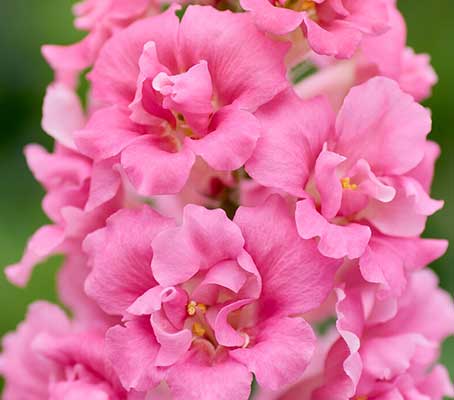




Antirrhinum majus ‘F1 DoubleShot Hot Pink’
Double Azalea form. Snapdragon
€3.50
Ave. Contents:50 Seeds
Ave. Contents:50 Seeds
Antirrhinum majus ‘F1 DoubleShot Hot Pink’ is a striking, fully double snapdragon in a vivid, electric pink that brings real brightness to beds, borders, containers, and cutting gardens. Part of the much-admired DoubleShot series, it produces tall, sturdy stems closely set with large, azalea-like blooms that combine the charm of old-fashioned antirrhinums with a fuller, more romantic form. Lightly scented and notably weather-tolerant, the flowers are held well above neat, bushy plants and are excellent for summer displays as well as for cutting.
Blooming over a long season, ‘F1 DoubleShot Hot Pink’ is quick to flower, reliable, and very uniform, usually reaching around 45 to 60cm (18 to 24in) in height. The strong stems stand up well to wind and continue to perform even in lower light conditions. Easy to grow and very rewarding, it is ideal for adding bold colour to the garden, where the saturated pink flowers combine beautifully with whites, purples, burgundy shades, and soft apricots.
This is the latest colour addition to the DoubleShot series, bred for both garden performance and cut flower use. Strong-growing and vigorous, each plant produces plenty of well-branched stems and a high flower count, with blooms that are especially long-lasting, often outlasting single-flowered varieties. At 45 to 60cm tall, it makes an excellent tall accent in borders and containers, and is a fine choice for the vase.
Snapdragons are tough, reliable plants that give a superb display on their own or mixed with other bedding plants. They are also attractive to bees and other pollinators, while their long stems make them especially valuable as cut flowers. Sow in autumn or spring; from seed to bloom usually takes around 60 to 70 days. For cutting, pick the stems when about one-third of the flowers are open; in water, the blooms generally last around 5 to 8 days.
Worldwide, Antirrhinum is one of the most important ‘summer cut-flowers’ grown from seed. They are grown year-round in greenhouses to be used by florists as cut flowers. Though technically classified as a short lived perennial, they are often cultivated as an annual, sown early in spring to flower in summer, or as a biennial, sown in late summer to overwinter and flower the following season.
Grow them in full sun, and space them 20 to 25cm (8 to 10in) apart. After they are done blooming, trim the plants back, and they will quickly be blooming again. Some plants will die back in mid to late December, although many of them actually live for more than one year before dying off.
Sowing: January to May or July to September.
Although technically short-lived perennials, snapdragons are usually grown as annuals or biennials. Sow January to May under glass in gentle heat for flowers June to October. Or sow July to September in a cold frame for planting out in the garden the following spring.
Sowing Indoors:
Sow at temperatures between 20 to 30°C (68 to 86°F). Sow on the surface of a good free draining, damp seed compost. Place the trays or pots in a propagator or seal container inside a polythene bag until after germination which usually takes 10 to 21 days. Do not exclude light or cover the seed as this helps germination. Keep the germinating seedlings moist at all times, remembering to water the soil only and keep water off the leaves.
Antirrhinum can be sensitive to damping-off and other root diseases, so well-drained soil is imperative. Pay attention to glasshouse hygiene and use a suitable fungicide if necessary.
Transplant seedlings when large enough to handle, usually after 5 to 6 weeks, into trays or 7.5cm (3in) pots. For bushier growth, pinch back young plants when 5 to 10cm (2 to 4in) tall. Grow on in cooler conditions for 10 to 15 days before planting out after all risk of frost.
Sowing Direct:
Snapdragons are slow to germinate, and gardeners have the best success from seed sown indoors but in mild areas they can be sown from mid April until end of May in beds in open ground. Select a sunny or lightly shaded location with moderately rich and well drained soil and sow outdoors only after all danger of frost is past. Cultivate soil and firm seed into the soil, keeping it moist until the plants are established.
Cultivation:
Snapdragons need frequent watering for the first couple of weeks after transplanting (daily watering in sandy soils). Once established, water when the top 2.5cm (1in) of soil feels dry to the touch. They do best in full sun, but can tolerate partial shade.
Snapdragons need a very well drained soil that is rich in organic matter. Pinch back your snapdragons when they are a few inches tall to encourage branching, and remove old flowers after they have bloomed to encourage further blooming.
Snapdragons are usually planted as bedding annuals, often with petunias or pansies. The short and dwarf snapdragon cultivars are excellent for border edges, raised beds and rock gardens. The dwarf and trailing cultivars are great in containers too. Use the taller varieties in the background or as the main feature in a mixed bed. Don’t plant too deeply, or they may rot at the stem. Some of the tall varieties may need to be staked, use a twiggy branch for an inconspicuous support. They make great cut flowers, and are often grown in the cutting garden for use in bouquets.
To encourage autumn blooming, cut back spent flower stalks after their primary late spring, early summer bloom period.
Under favourable conditions, snapdragons will self-sow in the garden, most cultivars come true from seed.
Cold tolerant to minus 8°C (18°F)., they are also deer and rabbit resistant.
Plant Uses:
Beds, borders, patio containers and cut flowers. Wildlife gardens. Deer and rabbit resistant.
Cut Flowers:
Snapdragon flowers will last 1 to 2 weeks in water, longer in floral preservative. They are also suitable for drying. The flowers have a slight fragrance, depending on cultivar.
Remove bottom leaves if present, recut stems under water and place into a fresh flower food solution. However, be careful not to remove too much foliage as excessive foliage removal can promote premature flower drop. Stem tip breakage can occur during harvesting and subsequent handling and is related to both flower colour and cell wall chemistry. In particular, red flowered cultivars break higher on the stem compared to yellow ones, which break lower. At this time there is no known cure other than preventative care by handling stems carefully.
Stems are geotropic, tips bend up if stems held horizontally. Laying on a table for less than an hour may cause permanent bending. Therefore, store upright or if they have to be held horizontally, hold them at 0°C (32°F) to reduce or stop bending. Some references say removal of the top bud helps to deter the stem’s geotropic bending.
Seed saving:
Allow flowers to mature and fade on the plant. Seed pods develop at the base of the flower and turn light tan to brown when mature. Attach a paper bag around seed pods using an elastic or string to catch the seeds as they fall. When the seeds are fully ripe, cut the stem at the base of the plant and shake the seed head inside the bag to dislodge the seeds from the casing.
Origin:
Native originally to North Africa, Spain and along the Mediterranean to Italy, snapdragons have become naturalised in temperate regions. They were favourite flowers in the earliest English gardens, research indicates that snapdragons were grown more for their beauty than for their medicinal usefulness.
Snapdragons are easy to grow and have a long been used in gardens and in the cut flower industry. The brightly coloured blossoms can also be used to dye cloth. Snapdragons perform best in cooler weather and most cultivars can tolerate frost and an occasional light freeze. They don’t do well in summer heat, and in hot areas, snapdragons are grown in the winter.
Snapdragons belong to the Scrophulariaceae, or figwort, family. There are more than 3000 species in the family; common relatives include Foxglove, Veronica, Penstemon and Calceolaria.
There are now hundreds of snapdragon cultivars, available in almost every colour except true blue. They are usually listed in one of five groups:
- Tall (2-3 ft/0.6-0.9 m in height)
- Intermediate (1-2 ft/0.3-0.6 m)
- Short (9-12 in/22.9-30.5 cm)
- Dwarf (4-9 in/10.2-22.9 cm)
- and Trailing.
Nomenclature:
The genus name Antirrhinum, pronounced an-ti-RYE-num, comes from the Greek. anti meaning ‘like,’ and rhinos meaning ‘nose’, referring to the shape of the flowers. They often called ‘calves’ snout’ for the flower’s snout or nose like shape.
The specific epithet majus indicates that this is one of the taller members of the genus.
Commonly called Snapdragons, with their two-lipped flowers, they have delighted children for generations. Pinching the blossom makes the dragon’s mouth open, and snap shut.
There are about forty species of snapdragons, but the common snapdragon, which the famous garden writer, Gertrude Jekyll called “one of the best and most admirable of all garden plants”, is by far the most well known.
| Common Name | Double Azalea form. Snapdragon |
| Other Common Names | Calves’ Snouts |
| Botanical Name | Antirrhinum majus 'Twinny Appleblossom' |
| Average Seed Count | 50 Seeds |
| Family | Scrophulariaceae |
| Genus | Antirrhinum |
| Cultivar | F1 DoubleShot Hot Pink |
| Species | majus |
| Flowers | Large 'butterfly' (double) azalea flowered blooms in vivid, electric hot pink |
| Height | 45 to 50cm (18 to 20in) |
| Spread | 20 to 25cm (8 to 10in) |
| Foliage | Mid Green |
| Natural Flower Time | Spring thru to summer |
| Hardiness | Tender Perennial often used as an Annual |
| Hardiness Degrees | Hardy to minus 8°C (18°F) |
| Germination | 10 to 21 days at 20 to 30°C (68 to 86°F) |
| Position | Full sun preferred |
| Time to Sow | January to May or July to September. |
| Other Language Names | IR. Srubh lao |