 Skip to content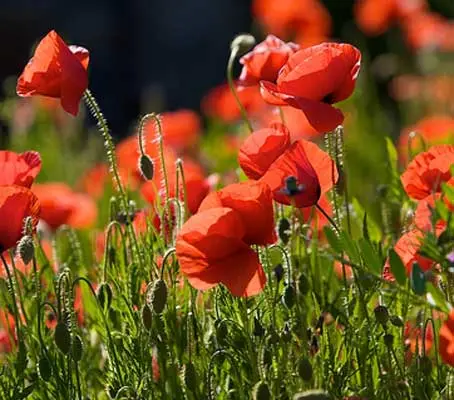
Papaver rhoeas 10gm ~100,000 seeds
Corn Poppy, Flanders Poppy, Field Poppy, Wildflower
€5.95
Out of stock
With its brilliant scarlet flowers, usually with a black blob at the base of the petals, this native wild flower needs no introduction.
Papaver rhoeas self-sows readily and is a good choice for naturalizing in a meadow garden.
Single, red, cup-shaped flowers have a black blotch in the centre. It is the classic poppy bloom: a native wildflower of the British Isles, poppies paint a new road verge or embankment a brilliant hue in their first year. Once a common sight in cornfields, more effective seed cleaning and use of selective herbicides have made poppies much rarer.
The original species of this plant was introduced from Russia in 1876 by William Thompson, the founder of the Thompson and Morgan Seed Company. Leaves are deeply lobed and the plant is fully hardy.
One point worth mentioning is that, if after cutting, the base of the stems are held for a few seconds in a flame or boiling water, the flowers will last several days in water.
Sowing:
Sow directly in March to May
Seeds are best sown directly where they are to flower in short drills ½ in deep from March to May (at around 20°C / 68°F).
Cover lightly with soil, mark the sowing areas with a ring of light coloured sand and label if sowing more than one annual in the same bed.
Seeds germinate in less than two weeks. The seedlings will appear in rows approx 6-8 weeks after planting and can be told from nearby weed seedlings quite easily. Thin the seedlings out so they are finally 4–6 in apart by early summer.
Alternatively, leave them to grow as small clumps, of 4-6 plants every 12in or so. Compost should be kept slightly moist, but not wet at all times.
Cultivation: Prefers well drained soil enriched with manure or compost ahead of planting. Feeding is rarely needed but water well if there are prolonged periods of drought.
Aftercare:
Remove spent flowers to encourage prolific blooming. At the end of the season, if required, leave a few plants to die down and self seed. Others can be pulled up and composted
For Cut Flowers:
Cut when flowers are in bud, hold the base of the stems for a few seconds in a flame or boiling water, and the flowers will last several days in water.
Plant Uses:
Cottage/Informal Garden, Flower Borders and Beds, Wildflower meadows, Butterfly & Bee Gardens, Cut Flowers.
| Common Name | Corn Poppy, Flanders Poppy, Field Poppy, Wildflower |
| Other Common Names | Other |
| Genus | Papaver |
| Cultivar | Wildflower of the British Isles |
| Species | rhoeas |
| Flowers | Late Spring to Mid Summer |
| Height | 30-45cm (12-18in) |
| Spread | 30-38cm (12-15in) |
| Hardiness | Hardy Annual |
| Aspect | West or South facing. Sheltered. |
| Soil | Well drained, Light. |
| Position | Full sun |