 Skip to content



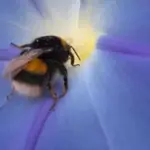
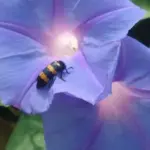

Ipomoea tricolor ‘Heavenly Blue’
Morning Glory
€2.75
Packet Size:2 grams
Ave. Contents:50 seeds
Packet Size:2 grams
Ave. Contents:50 seeds
Ipomoea tricolor ‘Heavenly Blue’ is one of the loveliest of all climbers with huge trumpet-shaped flowers of deep azure-blue, the colour of a Mediterranean sky.
Each trumpet-shaped bloom opens fresh in the morning, creating a dazzling display against the heart-shaped green leaves and vigorous twining stems. Fast-growing and floriferous, it will quickly clothe trellis, netting, arches or sunny fences, bringing height, colour, and a rather shameless amount of summer charm to the garden.
Easily grown, annual climber it is best grown in a warm, sheltered, sunny position where it can scramble upwards with support. The trumpet shaped flowers up to 6cm (2½in) across are produced freely from midsummer into autumn, especially in a good summer, and are highly attractive to bees and butterflies. Perfect for cottage gardens, containers, or covering an unsightly corner, Heavenly Blue is one of the most beautiful and best-loved climbing annuals.
Awarded the RHS Award of Garden Merit
Ipomoea tricolor ‘Heavenly Blue’ has been awarded the Royal Horticultural Society’s Award of Garden Merit (AGM) which is the highest accolade, awarded only to plants that are reliable, vigorous, and exceptionally beautiful in a garden setting.
Preparation:
Choose a sunny position with moist soil, they cannot grow or bloom properly in the shade. The seed coating is rather hard, and it will hasten germination if you stand the seeds in tepid water for a day or two before sowing.
Sowing: Sow indoors in late winter, or outdoors in early spring
Sow indoors in early spring no sooner than three to four weeks before the last expected frosts, and four weeks before you plan to plant them outside. Alternatively, the seed can also be sown directly where they are to flower once all risk of frosts has passed. Keep soil moist during germination. Germination will take place in 5 to 14 days
Sowing Indoors:
Sow into individual pots or trays of seed compost. Paper or peat pots are preferable. Use well drained soil and cover to a depth of 3mm (1/8in). Maintain a temperature of around 20°C and keep compost moist.
Plants are extremely resentful of root disturbance, even when they are quite small, and should be potted up almost as soon as they germinate. Prick out to individual pots, transplant into 7.5cm (3in) pots or trays.
Gradually acclimatise to outdoor conditions for 10 to 15 days before planting out in growing position after the last expected frosts. Space 15cm (6in) apart. Consider giving them some protection such as a cloche until they are growing away actively.
Sowing Direct:
Sow once the soil has warmer and all risk of frost has passed. Prepare the ground well and rake to a fine tilth. If sowing more than one annual in the same bed, mark the sowing areas with a ring of sand and label. Sow 1mm (1/18th in) deep in rows 7cm (3in) apart. Sow seed sparingly or they will choke out other seedlings.
The seedlings will appear in rows approx three to four weeks after planting and can be easily told from nearby weed seedlings. Thin the seedlings out so they are finally 30cm (12in) apart. Carefully replant thinned plants.
Cultivation:
Ipomoea needs a sunny position for best flowering, but is quite happy to be planted in dappled shade as long as there is room for the plant to climb up to the sunlight.
The plants can grow to a height of 2 to 3 metres (6 to 10ft) and will require the support of a trellis, canes or wires fixed to a wall.
Ipomoea is quite happy to be grown in a container, as long as due care is taken with watering and feeding. In hot climates provide a saucer under the container to maximise the water available to the plant. The size of the container will determine the ultimate size of the plant. A larger pot will need a trellis as a larger plant will be able to be grown.
Remove spent flowers to encourage prolific blooming. Plants will self sow in the right conditions, remove spent flowers or collect dried seed pods if you do not wish to have volunteer seedlings next year.
Plant Habit:
Ipomoea have a twining habit and are ideal for clambering up trellis, obelisks and trees. They do not cling by aerial roots, suction pads or tendrils, instead, it climbs by twining, with the stems winding themselves around slender supports such as trellis, wires, garden twine, or netting, rather than attaching to a flat wall.
Plants climb in four main ways:
Aerial roots: Ivy (Hedera helix), climbing Hydrangea (Hydrangea anomala subsp. petiolaris), and Trumpet Vine (Campsis radicans).
Suction pads: Boston Ivy (Parthenocissus tricuspidata) and Virginia creeper can also form adhesive pads at the tips of tendrils.
Tendrils: Sweet Peas, Cucumbers, Grapevines, Passionflower, Cobaea scandens, and many Gourds use tendrils which curl around wires, twigs, or netting.
Plants with a twining habit include Runner Beans, Pole Beans, Black-eyed Susan, Honeysuckle, Wisteria, Hop, Cobaea scandens, and many climbing Nasturtiums.
Seed Collecting:
The seeds of Ipomoea are one of the easiest for gardeners to harvest themselves for sowing the following year.
Soon after the petals fade from the flowers, you’ll notice the seed pods begin to swell. Wait until the seed pods turn brown and begin to dry. Ripe seeds turn black and hard once they are ready to be harvested and the rounded brown pod turns crisp. If you squeeze a seed pod and it is ready to release the seeds, it will crumble in your hands. If you apply pressure to a seed pod that isn’t quite ready it may be soft or pliable and won’t break apart. Eventually the pod will dry out and open naturally to release the seeds, they will self sow themselves and begin growing into plants the following spring.
Squeeze the black seeds from their pods and place them into a brown paper bag or envelope. Do not forget to label and date them and store somewhere cool and dry for next year. By the time you have finished you will have shelves stuffed with the makings of next year’s garden.
Note that seeds of Ipomoea along with many other species, can be harmful if eaten especially if eaten in quantity. Store seeds somewhere cool and dry and always keep them safely out of reach from both children and pets.
Origin:
The genus Ipomoea, with over 500 species, is the largest genus in the family Convolvulaceae. The genus occurs throughout the tropical and subtropical regions of the world, and comprises annual and perennial herbaceous plants, vines, shrubs and small trees. Most of the species are twining climbing plants.
Ipomoea purpurea species are native to Mexico and Central America and are naturalised throughout warm temperate and subtropical regions of the world. The plant is predisposed to moist and rich soil, but can be found growing in a wide array of soil types.
Although Ipomoea purpurea was introduced into the United States from Mexico, little is known about the specific geographic origins. Based on genetic assignment analysis, haplotype composition, and the degree of shared polymorphism, Ipomoea purpurea samples from the Southeastern United States have been found to be genetically most similar to samples from the Valley of Mexico and Veracruz State. This supports earlier speculation that Ipomoea purpurea in the Southeastern United States was likely to have been introduced by European colonists from sources in Central Mexico.
Nomenclature:
Ipomoea is from the Greek ips meaning ‘a worm’ and homoios meaning ‘resembling’ thus ‘like a worm,’ referring to the twining habit of the plant’s growth
The species name tricolour (spelt tricolor in the US) simply means three colours.
Many Ipomoea species are known as Morning Glory, a name shared with some other related genera. It is the common name for over 1,000 species of flowering plants in the family Convolvulaceae. The name of Morning Glory refers to the plants habit of opening its new blooms at the beginning of each day.
In cultivation, Ipomoea tricolor is very commonly grown misnamed as Ipomoea violacea, actually a different though related species.
Ipomoea is a member of the Convolvulus family, pronounced kon-volv-yoo-lus is taken from the Latin convolvere, meaning to twine around.
Synonyms include: Convolvulus purpureus, Ipomoea hirsutula, Ipomoea purpurea var. diversifolia, Pharbitis purpurea
| Common Name | Morning Glory |
| Average Seed Count | 50 seeds |
| Seeds per gram | 25 to 35 seeds per gram |
| Family | Convolvulaceae |
| Genus | Ipomoea |
| Cultivar | Heavenly Blue |
| Species | tricolor |
| Flowers | June to September |
| Height | 2.4 to 3m (7.5 to 9ft) |
| Spread | 30cm (12 in) |
| Hardiness | Hardy Annual |
| Germination | 5 to 21 days |
| Position | Full Sun |
| Notes | Very easy to grow. Vine/Climber |