 Skip to content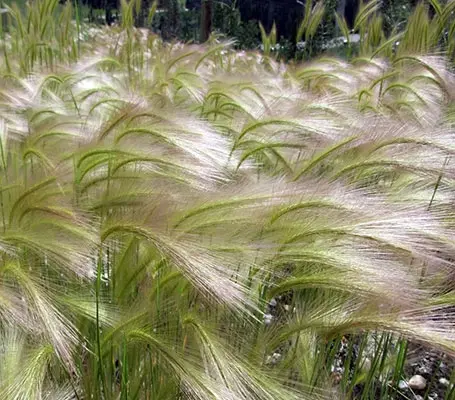


Hordeum jubatum
Squirrel-Tail, Foxtail Barley
€2.25
Packet Size:500 mg
Ave. Contents:250 Seeds
Packet Size:500 mg
Ave. Contents:250 Seeds
Hordeum jubatum is a beautiful small grass that grows to 50cm (20in) high. It carries silky, golden-greyish panicles in early and mid summer, which develop a reddish or purple tinge at the tips. Fantastic in massed groups, or around taller, more stately plants.
Squirrel-Tail grasses are the ultimate architectural plant, adding see-through effects, gentle rustling, autumn colour and winter shapes. The feathery foliage glows in slanting light, it comes to life in a breeze.
The plants tolerate a range of conditions, from gravel gardens to solid lumpy clay and is great in seaside plantings as it is quite tolerant of salt.
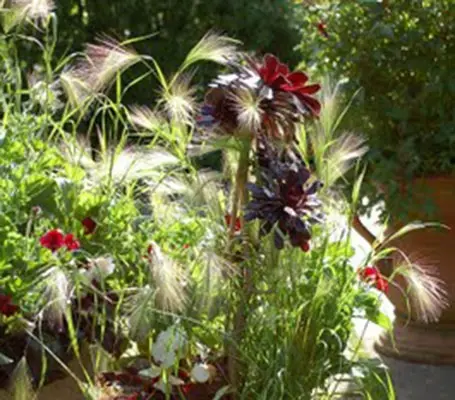
Hordeum is beautiful in clusters. It is lovely to see when the wind blows it around and watch the way the light reflects off of it. The plants are perfect grown in borders or in containers, the feathery flower spikes are also useful for cutting and drying if picked early.
- Awarded the RHS Award of Garden Merit
Hordeum jubatum has been awarded the Royal Horticultural Society’s Award of Garden Merit (AGM).
Sowing: Sow in March to May or September to October
Sow in well drained soil and keep at around 20ºC (68ºF). Squirrel Tail Grass usually germinates easily from seed sown in spring, but is occasionally slow and erratic so be patient.
Once seedlings are large enough to handle, take a small clump of seedlings and put them all in a one-litre pot of gritty compost. They will form a bushy plant and be ready to go into the garden in summer.
Grow in sun and in well drained soil. Sow 6mm (¼in) deep in rows 30cm (12in) apart in well cultivated soil which has been raked to a fine tilth.
Thin out the seedlings to 23cm (9in) apart. Replant the seedlings that have been removed
Cultivation:
Feed in spring like ordinary perennials, with a single dressing of a general fertiliser. Even without an annual feed, most grasses will put on a first-rate show. The more nitrogen grasses receive the greener and further they’ll grow. This spreading habit is fine in a field, but in a garden they may become too lush and the flower quality may suffer.
The feathery flower spikes are useful for cutting and drying if picked early. They usually produce loads of seed, so will come back year after year if they are in a good spot. It is great in seaside plantings as it is quite tolerant of salt, but avoid planting near livestock as the barbed awns around the seeds can cause problems.
Drying:
Squirrel Tail Grass can be dried and make interesting focal or secondary flowers in dried arrangements.
To dry, gather when the heads have changed colour but before they start to break up, cut the flower at the height of bloom and hang upside down in a cool, dark place to dry. If dried correctly they will hold their colour well.
Plant Uses:
Architectural, Cottage/Informal Garden, Drought Resistant, Flower Arranging, Flowers Borders and Beds, Low Maintenance or Mediterranean.
Origin:
Hordeum jubatum occurs wild mainly in northern North America and adjacent north-eastern Siberia. However, as it escaped often from gardens it can be found worldwide in areas with temperate to warm climates, and is considered a weed in many countries. This ornamental species originated via hybridisation of an East Asian Hordeum species with a close but extinct relative of Californian H. brachyantherum.
Foxtail barley is distinguished from cultivated barley (Hordeum vulgare) and Meadow barley (Hordeum brachyantherum) by the awn length. H. brachyantherum has awn lengths of 12mm (½in)., Foxtail barley has lengths of 1 to 7cm (½ to 3in) and cultivated barley of 10 to 15cm (4 to 6in) in length.
Nomenclature:
The genus name Hordeum is an ancient Latin name for barley.
The species name jubatum means ‘crested’ referring to the long awns.
It is commonly called Squirrel Tail Grass or Foxtail Barley Grass
| Common Name | Squirrel-Tail, Foxtail Barley |
| Average Seed Count | 250 Seeds |
| Family | Poaceae |
| Genus | Hordeum |
| Species | jubatum |
| Height | 50cm (20in) |
| Spread | 15 to 22cm (6 to 9in) |
| Foliage | Grey-green with purple tinge |
| Hardiness | Hardy Annual |
| Aspect | All aspects, exposed or sheltered |
| Soil | Needs sharp drained soil |
| Position | Full Sun to partial shade |